

Getting a Gas Safety Certificate for a New Tenant: A Landlord’s 2026 Checklist
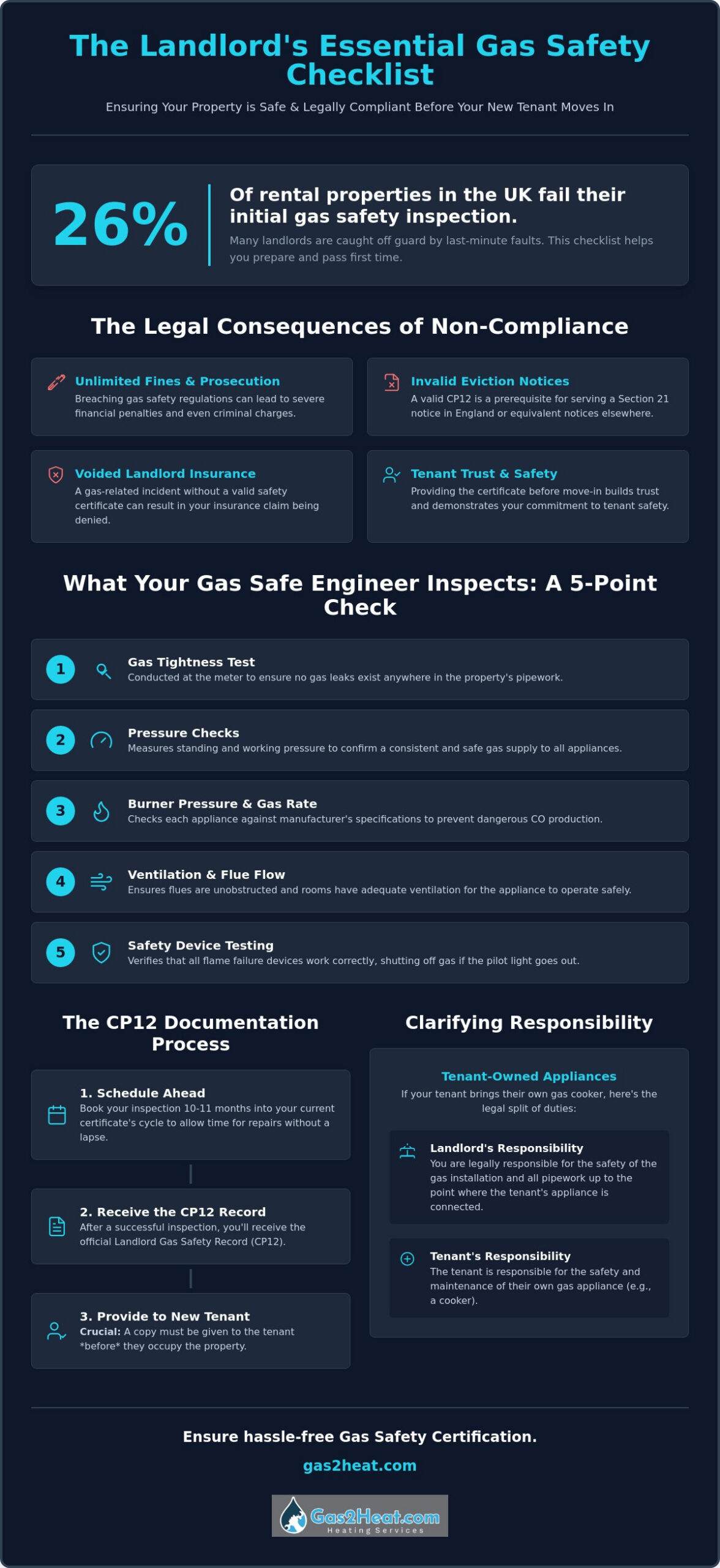
Did you know that 26% of rental properties in the UK fail their initial gas safety inspection? According to a report by the National Residential Landlords Association, many landlords are caught off guard by faults they didn’t know existed until the last minute. Getting a gas safety certificate for a new tenant is a critical legal milestone that protects both your investment and your reputation. You likely feel the pressure of coordinating access between tenancies while fearing the heavy fines that come with non-compliance.
We understand that the transition period is often the most stressful time for a property owner. This professional checklist ensures you meet every legal requirement before your new tenant signs the lease. You’ll learn how to navigate the latest digital record mandates, where to place mandatory carbon monoxide alarms, and how to secure a valid CP12 without the typical delays. We’ve simplified the process so you can focus on a smooth move-in day with total peace of mind and full legal protection.
Key Takeaways
- Secure your legal standing by understanding how a valid CP12 is a mandatory prerequisite for serving Section 21 or equivalent eviction notices.
- Follow our streamlined process for getting a gas safety certificate for a new tenant to guarantee your property meets the latest 2026 safety standards.
- Identify exactly what your Gas Safe engineer will inspect, including gas tightness tests and pressure point checks, to ensure a smooth pass.
- Resolve confusion over appliance ownership by learning which pipework you are legally responsible for and how to handle tenant-owned gas cookers.
- Master the documentation trail to ensure your new tenant receives a correctly verified digital record before they cross the threshold.
The Legal Necessity: Why You Need a Gas Safety Certificate Before Move-In
Protecting your investment starts with total legal compliance. Under the Gas Safety (Installation and Use) Regulations 1998, landlords carry a non-negotiable duty to ensure all gas appliances, fittings, and flues are safe for use. Getting a gas safety certificate for a new tenant isn’t just a professional courtesy; it’s a legal hurdle you must clear before the keys change hands. If you skip this step, the consequences are severe. You face unlimited fines, potential criminal prosecution, and the inability to serve a valid Section 21 notice in England or equivalent eviction notices in Scotland.
Your legal obligation doesn’t end with the inspection itself. You must provide a copy of the record to your new tenant before they occupy the premises. This transparency builds trust and establishes a clear safety record from day one. Without this paper trail, you leave your property and your business vulnerable to litigation. Beyond the courtroom, failing to produce a valid certificate can even invalidate your landlord insurance. This means a single gas-related incident could result in total financial loss without any safety net. By prioritising the safety check, you protect your property’s value and your financial future simultaneously.
Scottish Landlord Regulations and CO Alarms
Scottish landlords face unique requirements compared to those in England. By June 2026, every rental home in areas like Dumfries and Moffat must have a carbon monoxide alarm in every room with a fixed gas appliance. Your Gas Safe engineer will verify these alarms are correctly positioned and operational during their visit. Additionally, you must maintain interlinked smoke and heat alarms to meet the Scottish Repairing Standard. These systems must be checked alongside your gas appliances to ensure your property is legally fit for habitation.
The 12-Month Rule vs. New Tenancy Starts
Timing is everything when managing a transition between tenants. While the law mandates an inspection every 12 months, the certificate must be active on the day the new tenancy begins. It’s best to stay ahead of the curve by booking your check 10 or 11 months into your current cycle. This 2-month window allows you to keep your original expiry date while giving you time to handle repairs. In the industry, this Landlord Gas Safety Record is universally known as a CP12 certificate.
Pre-Tenancy Gas Safety Checklist: What Your Engineer Will Inspect
Getting a gas safety certificate for a new tenant involves a rigorous, multi-point assessment of your property’s gas infrastructure. A Gas Safe registered engineer doesn’t just perform a visual check. They execute a systematic series of technical tests to confirm the entire system is leak-free and operating at peak efficiency. This comprehensive process fulfills your landlord responsibilities for gas safety, providing you with a robust legal defense and your tenant with a secure home. When the engineer arrives, they follow a strict protocol to verify every component from the meter to the exhaust.
The inspection focuses on five critical areas of safety and performance:
- Gas tightness test: The engineer performs this at the meter to ensure there are no leaks anywhere in the pipework or connected appliances.
- Pressure checks: They measure both standing and working pressure at all available points to confirm the gas supply is consistent and safe.
- Burner pressure and gas rate: Every appliance is checked against the manufacturer’s data plate. This ensures the unit isn’t over-firing or under-firing, which can lead to carbon monoxide production.
- Ventilation and flue flow: The engineer verifies that all flues are clear of obstructions and that the room has adequate permanent ventilation for the appliance type.
- Safety device testing: All flame failure devices and safety controls are tested to ensure the gas shuts off immediately if the flame is extinguished.
Boiler and Heating System Verification
The boiler is the heart of your rental property. During the inspection, the engineer conducts a detailed check of the primary heat source, whether it is a modern combi or a traditional system boiler. They pay close attention to the flue, ensuring it is properly supported throughout its length and terminates safely outside, well away from windows or doors. To avoid the stress of mid-winter repairs, many landlords choose to bundle their safety check with expert boiler servicing in Moffat. This proactive approach identifies wear and tear before it becomes a costly emergency for your new tenant.
Gas Cookers and Fires
Secondary appliances often present the highest risks if neglected. For free-standing gas cookers, the engineer checks for mandatory stability brackets that prevent the unit from tipping. They also inspect gas fires, examining the fire backings and hearths for signs of heat damage or cracks. If an appliance is deemed unsafe, the engineer is legally required to label it. They will ensure no “at risk” or “immediately dangerous” labels are present on your equipment before they issue a successful CP12 record. If you are preparing for a move-in date, you can arrange a landlord gas safety certificate today to ensure your property is ready for its new occupants.
Managing Tenant-Owned Appliances and Failed Inspections
While you are legally responsible for the gas pipework throughout your property, the lines of liability often blur when a tenant brings their own appliances. Understanding these boundaries is essential when getting a gas safety certificate for a new tenant. According to the landlord’s safety responsibilities, you must maintain all gas equipment you provide, such as the boiler and built-in hobs. However, you aren’t legally required to maintain a gas cooker owned by the tenant. Despite this, we strongly recommend including tenant-owned appliances in your annual check. A faulty tenant cooker will cause the entire property to fail a gas tightness test, preventing you from securing your certificate and delaying the move-in date.
If an appliance you provided fails the inspection, you have a strict legal obligation to repair or replace it promptly. Faults are categorized as “At Risk” (AR) or “Immediately Dangerous” (ID). An AR classification indicates a fault that could become a danger but isn’t one yet. Conversely, an ID classification means the appliance is a direct threat to life. In these instances, the engineer must disconnect the gas supply to that specific unit. You cannot leave a tenant with a dangerous appliance, nor can you allow them to use it until a qualified professional confirms it’s safe.
Handling an “Immediately Dangerous” Notice
Receiving an ID notice can be alarming, especially with a move-in date looming. The engineer will disable the appliance and issue a warning notice to ensure no one accidentally uses it. If the fault lies with the boiler, your priority is restoring heat and hot water before the tenant arrives. Using reliable plumbing and heating services in Moffat and Dumfries ensures that remedial work happens quickly. Rapid response times from Gas2Heat.com Ltd prevent the tenant from being left in a cold home and keep your legal compliance on track without costly delays.
Liability and Tenant-Owned Gas Goods
Documentation is your best defense against liability. When getting a gas safety certificate for a new tenant, ensure the engineer notes any tenant-owned appliances on the record. If the tenant’s cooker causes a tightness test failure, the record will clearly show that your pipework is sound but their appliance is the culprit. You should also include a clause in your tenancy agreement stating that tenants must ensure their own gas appliances are safe and installed by a Gas Safe professional. This clarifies expectations and protects your investment from third-party risks while maintaining a safe environment for everyone.
The Documentation Trail: Providing the CP12 to Your New Tenant
Securing a successful inspection is only half the battle. The legal process of getting a gas safety certificate for a new tenant is complete only once the documentation is safely in their hands. This paper trail is your primary defense against compliance disputes. If you cannot prove the tenant received the record before they crossed the threshold, your legal standing is compromised. Follow this systematic handover process to ensure you remain fully protected.
- Step 1: Receive the record. Obtain your digital or paper Landlord Gas Safety Record (CP12) immediately after the engineer completes the check.
- Step 2: Verify the details. Check that every appliance and flue is listed. Ensure all results are marked as a “Pass” and that the property address is accurate.
- Step 3: Immediate handover. Provide a copy to your new tenant before they move any furniture into the property. This is a strict legal requirement.
- Step 4: Confirm receipt. Get a signed receipt or an email confirmation from the tenant acknowledging they have received the document. This creates a timestamped audit trail.
- Step 5: Secure filing. Store your copy for a minimum of two years. Digital storage is recommended to prevent loss or damage.
Digital vs. Paper Records
The industry has seen a decisive shift toward digital CP12 certificates in 2026. These electronic records are easier to share via email and harder to lose than traditional paper pads. When you receive your certificate, verify that the engineer’s Gas Safe ID number and signature are clearly visible. Digital copies provide a superior long-term audit trail, allowing you to produce evidence of compliance instantly during a property inspection or legal inquiry. If you need to secure your documentation today, you can book your landlord gas safety certificate through our streamlined digital platform.
Record Keeping for Multiple Properties
Managing several rentals in Dumfries & Galloway requires a centralized approach to avoid missing renewal dates. For Houses in Multiple Occupation (HMOs), the rules are even stricter, as you must often display a copy of the gas safety record in a prominent common area. Centralizing your safety dates helps you coordinate engineer visits across your portfolio, saving time and reducing travel fees. For a deeper look at managing your obligations this year, read our 2026 Landlord Guide for Moffat & Dumfries. Staying organized ensures that getting a gas safety certificate for a new tenant remains a routine task rather than a last-minute crisis.
Hassle-Free Gas Safety Certification with Gas2Heat.com Ltd
Landlords across South West Scotland rely on Gas2Heat.com Ltd to navigate the complexities of property compliance with absolute certainty. We eliminate the guesswork involved in getting a gas safety certificate for a new tenant by providing a streamlined, end-to-end service that respects your time. Our team understands the unique challenges of local housing stock in Dumfries and Lockerbie, from traditional sandstone builds to modern developments. This regional expertise allows us to identify potential issues quickly, ensuring your inspection is thorough and accurate from the moment we step through the door.
Financial transparency is a core pillar of our business identity at Gas2Heat.com Ltd. You’ll never encounter hidden fees for the certificate itself or the minor adjustments often needed to pass a safety check. We provide clear, upfront communication so you can manage your maintenance budget with total confidence. This commitment to quality is shared by other industry veterans; for instance, Fast Plumbing, LLC provides over 29 years of professional experience to property owners in Austin, Texas. If an appliance fails its inspection, our rapid response team is ready to carry out remedial repairs immediately. This prevents your move-in schedule from slipping and ensures your property is safe for the incoming tenant without the frustration of coordinating multiple trade visits or facing unexpected costs.
Professional Service Across SW Scotland
Our engineers provide comprehensive coverage across the entire region, including Moffat, Dumfries, Annan, and Gretna. Every member of our team is fully Gas Safe registered and brings years of experience specifically within the domestic rental sector. We prioritize tenant safety and landlord peace of mind in every interaction. All Gas2Heat.com Ltd engineers carry valid ID cards and will present them upon arrival at your property. This professional approach reassures your tenants that their home is being handled by a dependable, qualified expert who values their security and comfort.
Book Your Pre-Tenancy Check Today
Booking your inspection is a straightforward process designed to fit around a busy property management schedule. You can use our simple online booking system or call us for a phone consultation to discuss your specific property needs. For maximum value and efficiency, many of our clients choose to combine their gas safety check with an annual boiler service. This dual approach ensures your heating system is both legally compliant and mechanically sound for the year ahead. It’s the most effective way to protect your investment while getting a gas safety certificate for a new tenant. Get your Landlord Gas Safety Certificate from Gas2Heat.com Ltd today and secure your property with a partner you can trust.
Secure Your Property and Protect Your Investment
Getting a gas safety certificate for a new tenant should be a seamless part of your property management routine. Gas2Heat.com Ltd has been serving Moffat, Dumfries, and South West Scotland since 2017. Our Gas Safe registered engineers provide transparent pricing guarantees to remove all uncertainty from your maintenance costs. We handle the technical details so you can focus on building a positive relationship with your new residents while we secure your legal compliance.
Book Your Landlord Gas Safety Certificate with Gas2Heat.com Ltd today to guarantee a smooth transition for your next tenancy. You’ve done the hard work of finding the right tenant. Let our experts ensure their new home is safe, efficient, and fully compliant from day one.
Frequently Asked Questions
Do I need a gas safety certificate if there are no gas appliances in the property?
You don’t need a certificate if the property has no gas supply and no gas appliances. However, if a gas supply is present but there are no appliances, you are still responsible for the safety of the pipework. If the property is entirely electric, these specific regulations don’t apply to your tenancy agreement.
Can a new tenant move in before the gas safety check is completed?
No, you must provide a valid gas safety record to your tenant before they occupy the premises. Getting a gas safety certificate for a new tenant is a legal prerequisite that must be satisfied before the keys are handed over. Moving a tenant in without this documentation is a serious breach of UK safety regulations and can lead to unlimited fines.
How long does a landlord gas safety inspection take?
A typical gas safety inspection takes between 30 and 60 minutes to complete. The duration depends on the number of appliances, such as boilers, fires, and cookers, that require testing. If the engineer discovers faults that need immediate remedial work, the visit will take longer to ensure the property is left in a safe condition.
What is the difference between a boiler service and a gas safety check?
A gas safety check is a legal requirement focused on safety, whereas a boiler service is a maintenance task for efficiency and reliability. The safety check ensures the appliance is safe to operate and won’t leak gas or carbon monoxide. A service involves deep cleaning and part replacements to keep the system running smoothly and prevent future breakdowns.
Do I need to install a carbon monoxide alarm for my new tenant?
Yes, Scottish law requires a carbon monoxide alarm in every room that contains a fixed gas appliance. This is a mandatory requirement for all landlords in Dumfries and Galloway. You must verify that these alarms are operational and correctly positioned before your new tenant moves in to meet the latest 2026 safety standards.
What happens if my tenant refuses access for the gas safety engineer?
You must demonstrate that you’ve taken all reasonable steps to comply with your legal duties. Keep a detailed log of every attempt to contact the tenant, including dates of letters, emails, and phone calls. If access is repeatedly denied, you may need to seek legal advice or a court order to fulfill your statutory safety obligations.
Can I carry out a gas safety check myself if I am competent?
No, you cannot legally perform the check yourself unless you are currently on the Gas Safe Register. The law is clear that only a qualified, registered professional can issue a Landlord Gas Safety Record. Carrying out gas work without the proper legal credentials is a criminal offense and will immediately invalidate your property insurance.
How much does a landlord gas safety certificate cost in Dumfries and Galloway?
The cost of a certificate depends on the number of gas appliances in your property and the complexity of the system. While prices across the UK vary based on location and property size, local rates in South West Scotland are competitive. We recommend requesting a transparent quote from a registered local engineer to ensure you receive a fair price with no hidden fees.
