
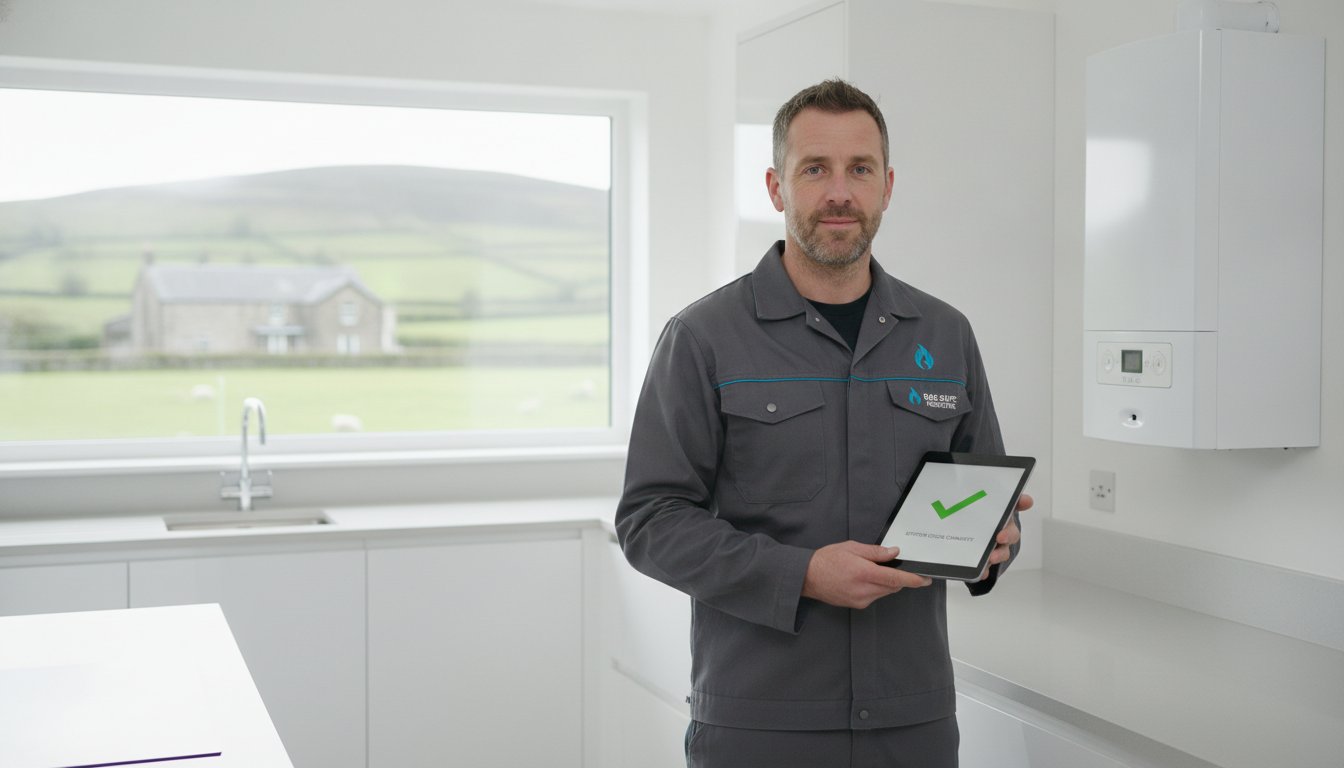
Landlord Gas Safety Certificate Moffat & Dumfries: The 2026 Legal Guide
Did you know that the Gas Safe Register identifies one in six UK homes as having an unsafe gas appliance? For landlords across Moffat and Dumfries, staying on top of these risks isn’t just about safety. It’s a critical legal requirement that keeps your property protected and your insurance valid. We understand that managing a rental portfolio often feels like a constant juggle between maintenance schedules and shifting regulations. Whether you’re planning a new boiler installation Moffat properties require for modern efficiency or simply need a routine check, you might feel uncertain about the MOT-style renewal window or worry about finding a local engineer who understands older South West Scotland homes.
This guide provides a clear roadmap to mastering your 2026 legal obligations, ensuring you secure a valid CP12 record quickly and affordably. You’ll learn how to navigate the new mandatory landlord database and avoid the heavy £6,000 fines that come with non-compliance. We’ll also explore how to combine your annual safety check with professional maintenance to ensure long-term property protection. By the end of this article, you’ll know exactly how to use the two-month early renewal window to your advantage, keeping your property safe and your paperwork perfect without the usual stress.
Key Takeaways
- Master your 2026 legal duties by understanding the Gas Safety (Installation and Use) Regulations 1998 and the new mandatory landlord database requirements.
- Ensure total compliance by learning exactly what a Gas Safe engineer tests during a CP12 inspection, including all gas-burning appliances and flues.
- Understand why a legal safety record isn’t a substitute for an annual service, particularly when maintaining a professional boiler installation Moffat landlords use to ensure tenant comfort.
- Protect your investment and stay safe by learning how to decode “At Risk” and “Immediately Dangerous” warning labels during a failed inspection.
- Streamline your property management with local Moffat specialists who offer digital record-keeping and convenient one-hour appointment slots.
Understanding Your Legal Obligations as a Landlord in Moffat and Dumfries
Compliance shouldn’t be a headache. As a landlord in South West Scotland, your primary responsibility is the safety of your tenants and the integrity of your property. The Gas Safety (Installation and Use) Regulations 1998 dictate that every gas appliance and flue in a rental property must be checked by a Gas Safe registered engineer every 12 months. This process results in the Landlord’s Gas Safety Certificate, often called a CP12. If you’ve recently invested in a high-efficiency boiler installation Moffat landlords often choose to lower energy bills, remember that even brand new systems require this legal sign-off before tenants move in.
The rules for 2026 are stricter than ever. With the introduction of the mandatory landlord database, local authorities can now track compliance status with pinpoint accuracy. You have a legal duty to provide a copy of the current certificate to existing tenants within 28 days of the check. For new tenancies, you must hand over a valid record before they take possession of the keys. Missing these deadlines isn’t just poor admin; it’s a legal breach that can prevent you from using standard possession notices if you ever need to regain control of your property.
Who Requires a CP12 in South West Scotland?
Whether you own a traditional stone cottage in Moffat, a modern townhouse in Dumfries, or a rural property running on LPG, the law applies to you. This includes private landlords, housing associations, and even short-term holiday let owners. Any property where a person pays to reside is covered. Because many properties in our region rely on complex older pipework or specialized LPG systems, you must ensure your engineer is specifically qualified for the appliance types in your building. Every Gas2Heat.com Ltd engineer carries a Gas Safe ID card that lists their specific qualifications on the back. Always ask to see it.
The “Stay Safe” Window and Record Keeping
You don’t need to wait until the last minute to book your inspection. The “Stay Safe” window allows you to arrange your safety check up to two months before the current certificate expires. This works like a car’s MOT; you keep the original expiry date but get the peace of mind of an early renewal. This is the smartest way to avoid the last-minute rush and ensure your boiler installation Moffat system remains compliant year-round. Failing to maintain a valid CP12 can result in fines up to £6,000, potential imprisonment, and the immediate invalidation of your property insurance. Transitioning to digital records in 2026 makes this easier, allowing you to store and share certificates instantly while keeping your portfolio organized and audit-ready.
What Happens During a Gas Safety Inspection (CP12)?
Safety isn’t a guessing game. It’s a technical verification. When a Gas Safe engineer arrives at your property, their first task is to prove they’re legally allowed to be there. Always check the engineer’s Gas Safe ID card. Flip it over to ensure they’re qualified for the specific appliances in your home, such as gas fires or LPG systems. This verification step is a core part of the official HSE guidance for landlords, designed to protect you from unqualified rogue traders who lack the proper insurance and training.
A professional inspection covers every gas-burning appliance you provide as a landlord. This includes the central heating system, gas cookers, and even decorative gas fires. The engineer doesn’t just look at the equipment. They perform active tests to identify hidden risks like carbon monoxide leaks or microscopic gas escapes. If you’ve recently upgraded your property with a high-efficiency boiler installation Moffat homes often require for the winter, the engineer will verify that the new unit is operating exactly as the manufacturer intended while also checking the rest of the property’s pipework.
The 5-Step Professional Inspection Process
To ensure nothing is missed, we follow a standardized, benefit-first protocol that guarantees thoroughness:
- Step 1: Tightness Testing. We test the entire gas system from the meter to ensure there are no pressure drops, which would indicate a leak in the hidden pipework.
- Step 2: Burner Pressure and Gas Rates. We verify that appliances are burning the correct amount of gas. Too much or too little can lead to dangerous carbon monoxide production.
- Step 3: Flue Flow Testing. This confirms that all combustion byproducts are exiting the building safely through the flue rather than lingering in the living space.
- Step 4: Safety Device Checks. We test flame failure components and sensors to ensure the gas shuts off automatically if the flame goes out.
- Step 5: Ventilation Inspection. We check that air bricks and vents are clear, as gas appliances need a steady oxygen supply to burn cleanly.
Local Considerations for SW Scotland Properties
Properties in Moffat and Dumfries present unique challenges. Many older buildings feature thick red sandstone or granite walls that require specialized flue routing. In traditional Scottish tenement-style flats, shared flue systems are common. These require expert knowledge to ensure that a neighbor’s appliance isn’t venting back into your tenant’s property. For rural homes in the Scottish Borders and Galloway, we also prioritize LPG compliance, ensuring that storage tanks and supply lines meet the same rigorous standards as mains gas. If you’re unsure about the status of your older flues, you can easily book a local gas safety check to get a professional assessment today.
Gas Safety Certificate vs. Boiler Service: Making the Strategic Choice
Many landlords assume that a Gas Safety Certificate covers everything needed to keep a heating system running perfectly. This is a common misconception that can lead to unexpected repair bills and tenant complaints. A safety check is a legal snapshot required by the official gas safety regulations for landlords. It proves that your gas appliances are safe to use at the time of inspection. It doesn’t, however, ensure the boiler is operating at peak performance or that it will survive a harsh winter in the Scottish Borders. When you invest in a professional boiler installation Moffat properties require, long-term reliability is the goal, but that reliability depends on proactive maintenance, not just annual compliance.
A CP12 inspection is effectively a pass/fail test. The engineer checks for gas leaks, correct operating pressures, and adequate ventilation. They won’t clean the internal components or adjust the settings for better fuel economy. If a boiler is functioning safely but is clogged with debris, it will pass the safety check but might break down a week later. Regular servicing prevents this by identifying wear and tear before it becomes a failure. It’s the difference between checking if your car’s brakes work and actually changing the oil and filters to keep the engine healthy.
Why a CP12 is Not a Maintenance Visit
Think of the safety check as a legal “MOT” for your gas system. A service is a technical tune-up. During a service, an engineer will strip down the appliance, clean the heat exchanger, and check the expansion vessel. This level of detail isn’t part of a standard safety check. Landlords should view the annual service as the primary way to protect their boiler installation investment. Skipping the service to save a few pounds often leads to “At Risk” warning labels during the safety inspection, which can result in the appliance being disconnected until expensive repairs are made.
The Gas2Heat Efficiency Advantage
We’ve streamlined our process to make property management easier for landlords in South West Scotland. We specialize in scheduling both services together to minimize disruption. Instead of two separate appointments, we complete the legal check and the technical service in a single, comprehensive 1-hour time slot. This approach ensures you meet your legal duties while simultaneously optimizing long-term heating efficiency. It’s a faster, cleaner, and more transparent way to manage your boiler installation Moffat system, keeping your tenants warm and your records perfect without the usual stress.
Handling Failures: If Your Property Is Non-Compliant
Failing a gas safety check is a scenario every landlord dreads, but it’s a vital part of property protection. If an engineer identifies a fault, they’ll issue a warning notice with specific industry codes. Understanding these codes helps you prioritize repairs and manage tenant expectations without panic. An “At Risk” (AR) label means the appliance has a fault that could become dangerous in the future. In contrast, an “Immediately Dangerous” (ID) label signifies a direct threat to life or property. If you’ve recently managed a boiler installation Moffat properties require for winter, a failure is unlikely, but older appliances in your portfolio may eventually show their age.
When an engineer finds a fault, they have a legal obligation to act. This isn’t a matter of opinion; it’s a mandatory safety requirement. They’ll explain the issue clearly and provide you with a written notice. As a landlord, you’re responsible for arranging remedial work as quickly as possible. Clear communication with your tenants is essential here. Explain the safety risk and provide a timeline for the repair. Providing temporary electric heating is a common best practice if the main heating system has been decommissioned for safety reasons.
The “Immediately Dangerous” Protocol
If a leak of gas or carbon monoxide is detected, the engineer will follow the “Immediately Dangerous” protocol. This involves physically disconnecting the appliance from the gas supply, often by “capping” the pipework. This step ensures that the dangerous unit cannot be turned back on by mistake. You cannot legally allow a tenant to operate a failed appliance under any circumstances. While this causes temporary disruption, it prevents catastrophic incidents and protects you from the severe legal penalties mentioned earlier in this guide.
Planning for Repairs and Compliance
Restoring compliance starts with a professional assessment. You should seek rapid quotes for plumbing and heating services to rectify the specific failures identified in the report. Once the repairs are finished, a Gas Safe engineer must re-test the system to issue a final passing Landlord Gas Safety Record. To prevent these failures in the first place, consider proactive maintenance like radiator care and system power flushing. These services remove sludge that often leads to the over-pressurisation or blockages that cause safety failures. If you need to resolve a compliance issue quickly, contact our team for a straightforward repair quote today.
Booking Your Local Gas Safety Check with Gas2Heat
Choosing a local specialist over a national aggregator makes a tangible difference in the quality of your property management. We’re a family-owned business based right here in Moffat, established in 2017 to provide reliable heating solutions across South West Scotland. National firms often struggle with the logistical nuances of rural Galloway or the specific requirements of historic Dumfries buildings. Our engineers live and work in the community, meaning we arrive on time and understand the local property types. Whether you’ve just completed a high-specification boiler installation Moffat tenants will appreciate or you’re managing a legacy portfolio, our local accountability ensures your compliance is never in question.
Transparency is the cornerstone of our service. We don’t believe in hidden surcharges or complicated fee structures that leave landlords guessing. Our booking process is streamlined and digital, providing you with clear communication from the moment you request a quote. Securing your Landlord Gas Safety Certificate becomes a simple, automated task rather than a stressful annual hurdle. For letting agents in Dumfries and Galloway, we offer comprehensive portfolio management. We can track multiple renewal dates and coordinate directly with tenants, removing the administrative burden from your desk while keeping every property under your care legally compliant.
Service Areas: Moffat, Dumfries, and South West Scotland
We provide full coverage across the region, ensuring that no landlord is left without expert support. Our service area includes:
- Moffat and Beattock: Rapid response for our immediate neighbors.
- Dumfries (DG1 and DG2): Comprehensive support for townhouses and urban rentals.
- Lockerbie and Annan: Dedicated scheduling for properties across the A74(M) corridor.
- Rural Galloway: Expert LPG compliance for homes off the gas grid.
We respect your tenants’ time. That’s why we offer convenient 1-hour time slots for all appointments. This minimizes disruption and helps maintain a positive relationship between you and your renters. Our engineers are trained to be professional, clean, and efficient, ensuring the boiler installation Moffat landlords have invested in remains in top condition during every visit.
Get Started with Gas2Heat
Ready to secure your property? You can request a quote or book your annual compliance check through our online tool or by calling 0800 009 6774. To provide an accurate and fast estimate, we’ll just need a quick list of the gas appliances in the property, such as the boiler, cooker, and any gas fires. Once booked, you’ll receive a digital confirmation. After the inspection, your CP12 record is delivered electronically, making it easy to share with tenants and store for your 2026 tax and legal records. We guarantee a professional, straightforward experience with no hidden complications.
Secure Your Property Compliance for 2026
Managing a rental property in South West Scotland requires a proactive approach to safety and legislation. You now have the roadmap to navigate the 2026 legal landscape, from decoding warning labels to maximizing the two-month renewal window. Remember that while a CP12 is a legal necessity, combining it with an annual service is the most effective way to protect your boiler installation Moffat investment and ensure long-term reliability for your tenants. Staying organized with digital records and local expertise removes the uncertainty and administrative burden that often comes with property maintenance.
As local Moffat and Dumfries experts, we’re here to help you maintain a safe and legal home. Our Gas Safe Registered Engineers have been trusted by South West Scotland landlords since 2017 to provide transparent, professional service with no hidden complications. We understand the unique challenges of local buildings and prioritize your peace of mind with convenient scheduling and digital record-keeping. Take the stress out of your annual obligations and secure your property today.
Book your Landlord Gas Safety Check in Moffat or Dumfries today and enjoy the confidence that comes with expert property protection.
Frequently Asked Questions
How long does a standard landlord gas safety check take in a Moffat home?
A standard inspection typically takes between 30 and 60 minutes. The exact duration depends on the number of gas appliances in your property. For a typical Moffat cottage with just a boiler and a gas hob, we can usually complete the technical checks quickly. If you’ve recently had a new boiler installation Moffat engineers have fitted, the process remains efficient as the system is modern and accessible.
Do I need a CP12 if the property only has electric heating but a gas supply is connected?
You generally need a CP12 if there are any landlord-owned gas appliances connected to the supply. If your heating is electric but you provide a gas cooker or a decorative gas fire, a safety check is mandatory. If a gas meter is present but there are no appliances, it’s a best practice to have the pipework tightness-tested to ensure there are no dormant leaks behind walls or under floorboards.
Can a tenant legally refuse entry for a gas safety check in Scotland?
Tenants can refuse entry, but you have a legal obligation to perform the check. You must provide at least 24 hours’ written notice before the appointment. If a tenant consistently blocks access, you should document every attempt to contact them. Scottish law expects landlords to take all reasonable steps to comply. This includes sending formal letters and, if necessary, seeking legal advice to gain entry for essential safety maintenance.
What is the difference between a CP12 and a Gas Safety Record?
There is no difference between a CP12 and a Landlord Gas Safety Record. CP12 is an older industry term from when CORGI was the regulatory body. While the name has stuck in common conversation, the official document issued by a Gas Safe registered engineer today is the Landlord Gas Safety Record. Both terms refer to the same legal proof that your appliances and flues are safe for tenant use.
Are carbon monoxide alarms a legal requirement for landlords in Dumfries & Galloway?
Carbon monoxide alarms are a strict legal requirement in Scotland for all rental properties. You must install a CO alarm in every room that contains a fixed combustion appliance, such as a boiler or a gas fire. These alarms must be either mains-powered or powered by a tamper-proof, long-life lithium battery. Ensuring these are operational is a key part of your annual safety inspection in Dumfries & Galloway.
How much does a landlord gas safety certificate cost in Dumfries for 2026?
Pricing for a gas safety certificate varies based on the number of appliances and the location of the property. For 2026, many factors influence the final cost, including whether you combine the check with an annual service. We recommend requesting a transparent, personalized quote to get an accurate figure for your specific building. This ensures you avoid hidden surcharges often associated with national firms operating in rural South West Scotland.
What should I do if I lose my physical landlord gas safety certificate?
You should contact the Gas Safe engineer or company that performed the original inspection to request a replacement. If you use a modern service provider like Gas2Heat, we maintain digital records of all your inspections. This means you don’t have to worry about losing a physical piece of paper. You can simply log in or check your email to download and print a fresh copy whenever you need it.
Do I need a separate certificate for each individual gas appliance in the house?
You do not need a separate certificate for every appliance. A single Landlord Gas Safety Record covers the entire property. The engineer will list every appliance they’ve tested, such as the boiler, oven, and gas fires, on that one document. This makes it easier to manage your records and provide your tenants with the necessary paperwork. If you’ve had a new boiler installation Moffat experts have handled, it simply gets added to the list.
