
Boiler Flashing Error Code: What It Means and What to Do
What if a flashing boiler code is a clue to investigate, not a sign that your boiler needs replacing? Seeing a boiler flashing error code can be worrying, especially when the display offers little explanation and you’re unsure whether it’s safe to keep using the heating. The code alone isn’t a universal diagnosis, and repeatedly resetting the boiler or attempting a repair could make things worse.
Start by noting the exact code and boiler model, then check the manufacturer’s instructions before taking action. This guide covers how to identify the display, which basic checks you can carry out safely without opening the boiler, and when to stop and call a Gas Safe registered engineer. You’ll also learn what to share when requesting help, so a local repair assessment can start with useful information about the fault and symptoms. If safe checks don’t resolve the issue, leave internal work to a qualified professional.
Key Takeaways
- Interpret a boiler flashing error code using your boiler’s make, model and manual. The same display can mean different things on different appliances.
- Photograph the display and note the code and symptoms before deciding what to do next.
- Stick to visible controls and accessible checks. Follow the manufacturer’s reset instructions and don’t keep resetting as a workaround.
- If the warning remains or returns, share the code, model and checks you’ve tried when requesting qualified help.
- A flashing code alone can’t tell you whether repair or replacement is right. An engineer can assess the fault and appliance condition.
Boiler flashing error code: what the warning can, and cannot, tell you
A boiler flashing error code is a light, symbol or message that indicates an operating status or a possible fault. Its meaning depends on the boiler’s make and model, so the display alone may not identify the cause or tell you what action is needed.
A flashing display isn’t automatically an emergency, and it doesn’t mean the boiler needs replacing. Some indicators show normal operation; others signal a warning or lockout. The manufacturer’s user manual is the safest guide to what a particular pattern means. Check the full display, including any letters, numbers and symbols, rather than interpreting a flashing light on its own.
Is a flashing boiler light always an error?
No. Depending on the model, a flashing light may indicate that the boiler is operating or responding to demand. Check the manual to distinguish normal status indicators from warnings. Note whether your heating and hot water still work, and whether the display changes when you use a control. These observations help you describe the issue, but they don’t confirm its cause.
Pay attention to the pattern and context. A symbol alongside a code may change its meaning, and a display that appears briefly may mean something different from one that remains or returns. Your boiler is one part of a central heating system, so note whether the problem affects heating, hot water or both. Don’t assume the same flashing light has the same significance on another appliance.
Why the boiler make and model matter
Find the make and model on the boiler’s front panel or in accessible user paperwork. Don’t remove the casing to look for a label. Then check the matching manufacturer’s manual using the exact code and display pattern shown. Error codes aren’t universal: a number or symbol can mean something different on another manufacturer’s boiler, or even another model from the same manufacturer.
Be cautious with generic online code lists. Unless an entry has been checked against documentation for your exact appliance, it may point you in the wrong direction. Record the display as it appears and keep track of any changes. This gives you a reliable starting point without guessing at the fault.
A code is a clue, not a diagnosis. It may indicate that the boiler needs attention, but it can’t establish whether repair or replacement is appropriate. That decision depends on an assessment of the fault and the appliance’s condition.
How to identify your boiler flashing error code accurately
Get the details straight before troubleshooting. A clear photo, the exact display and your boiler’s make and model help you find the right manufacturer guidance and explain the fault if you need professional help. Add a note of the symptoms, so an engineer can understand what the boiler is doing as well as what the display shows.
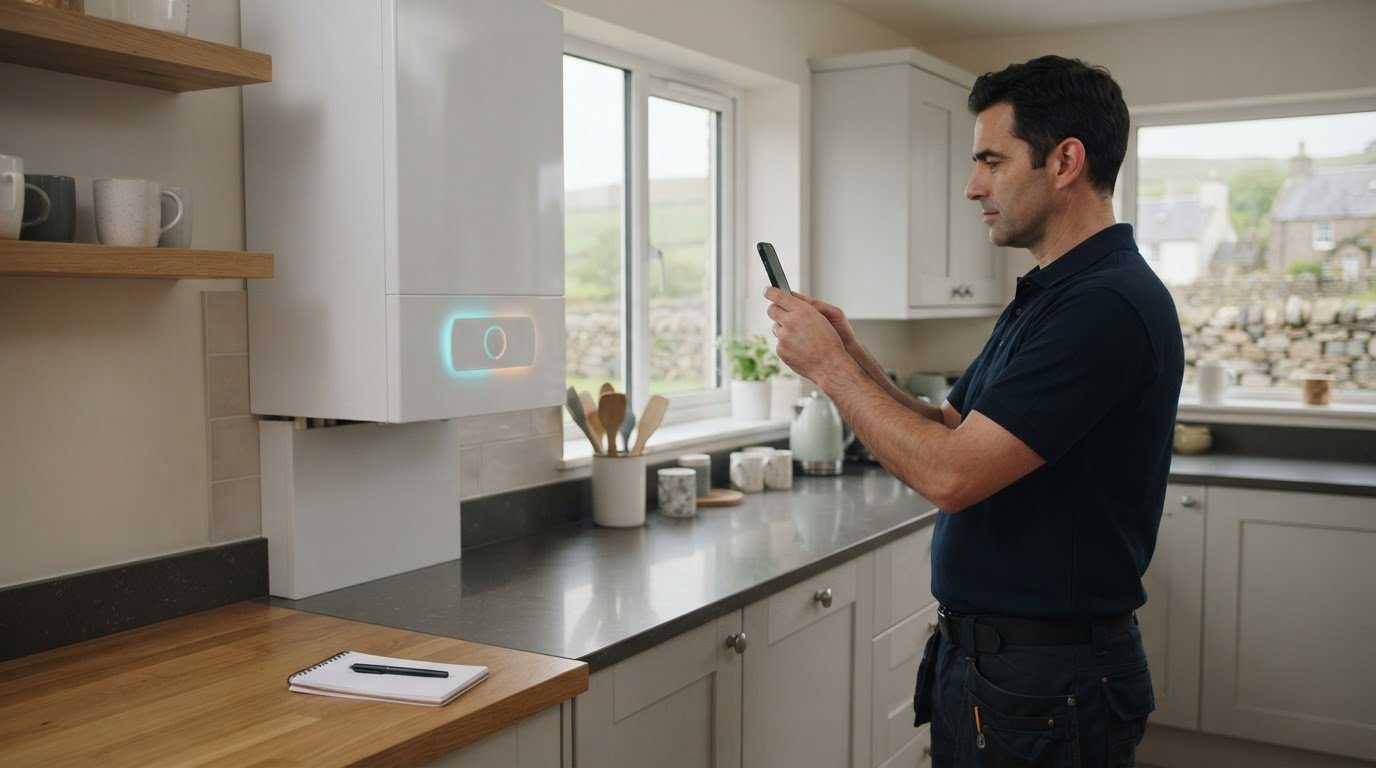
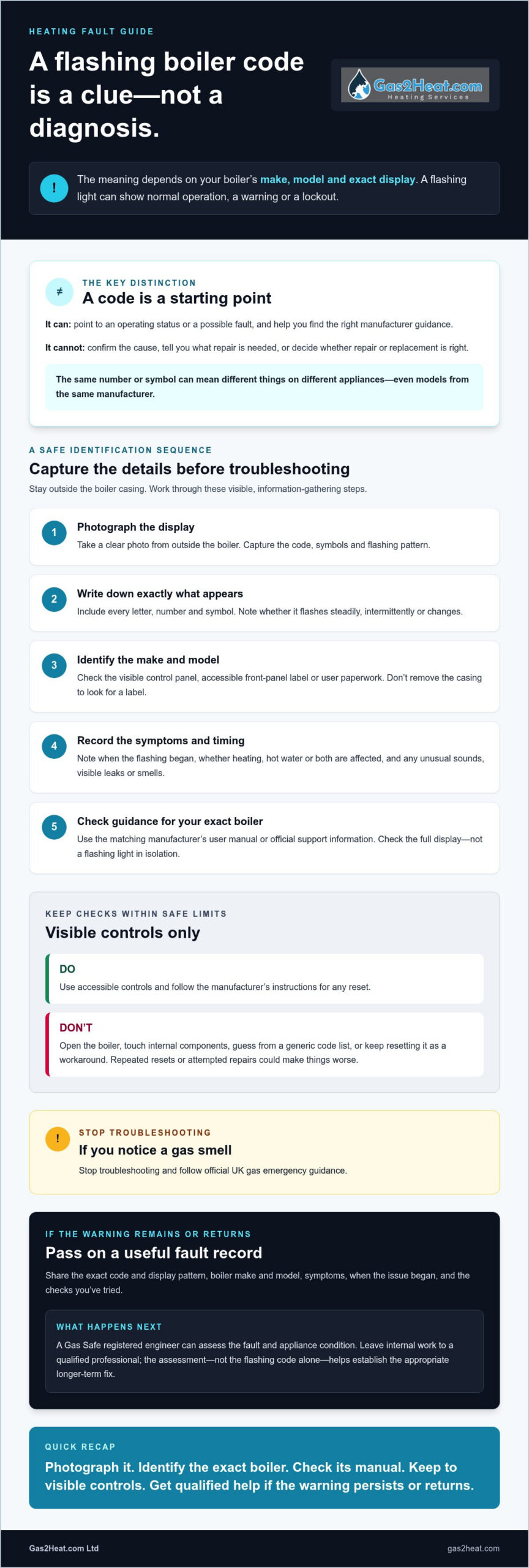
- Photograph the display. Capture the code, symbols and flashing pattern clearly. Take the photo from outside the boiler. Don’t remove its casing or touch internal components.
- Write down exactly what appears. Include every letter, number and symbol. Note whether the display flashes steadily, intermittently or changes.
- Identify the boiler. Check the visible control panel, front-panel labels or user paperwork for the manufacturer and model. Don’t open the appliance to search for a label.
- Record the symptoms. Note whether heating, hot water or both are affected, when the flashing began, and whether you’ve noticed unusual sounds, leaks or smells.
- Check model-specific guidance. Consult the user manual or the manufacturer’s official support information for your exact model and display.
Where to find the boiler model and fault code
Start with what you can see. The control panel may show the fault, while the make and model may appear on a visible label or in paperwork kept with the appliance. Take a clear photo without moving covers or reaching inside. If a label isn’t accessible, use the paperwork or ask a qualified engineer rather than removing the casing. For general reminders about safe handling of heating equipment, see these heating equipment safety precautions.
What details should you record before troubleshooting?
Make a brief note of what changed and when. Has the heating stopped? Is there no hot water, or are both still working? Record when you first noticed the flashing and whether it has changed since. Note any unusual sounds, visible leaks or smells. If you notice a gas smell, stop troubleshooting and follow official UK gas emergency guidance.
Don’t rely on memory. Record the display exactly as it appears, including its symbols and pattern. Use the manufacturer’s instructions for that boiler, not a generic code list or advice for a different model. If you need help, pass on the photo, make, model, symptoms and checks already completed. You can find information about boiler repair support from Gas2Heat.com Ltd.
Safe checks for a flashing boiler code, and DIY actions to avoid
Keep checks external and follow the instructions for your exact boiler. A flashing display may be worrying, but opening the appliance or trying an unfamiliar fix can introduce risk. You can check visible controls, consult the user manual and observe accessible conditions. Leave internal work to an appropriately qualified Gas Safe registered engineer.
Which external checks may help?
Start with what you can see without removing a cover. Check whether the boiler appears to have power and whether visible controls, such as the programmer or thermostat, show an obvious setting issue. Compare what you see with the manufacturer’s user manual before changing a setting.
If there’s an accessible pressure gauge, read it only if your manual explains the normal range for your model. There isn’t one pressure target that applies to every boiler. Don’t adjust pressure or operate unfamiliar valves based on a generic online guide. If the manual’s instructions aren’t clear, stop there and ask an engineer.
When should you stop and call an engineer?
Stop troubleshooting if the fault persists, the boiler repeatedly locks out, there’s a leak, or you’ve lost heating and hot water. Don’t remove the casing, adjust gas components or attempt internal electrical repairs. Reset the boiler only as instructed by the manufacturer. Repeated resets aren’t a safe workaround for a boiler flashing error code that keeps returning.
If you smell gas, leave the property. Don’t operate electrical switches or use naked flames. From a safe location in Great Britain, call the National Gas Emergency Service on 0800 111 999. If a carbon monoxide alarm sounds, get everyone outside into fresh air and follow emergency guidance. If anyone feels seriously unwell, call 999.
For persistent faults or safety concerns, arrange an assessment with a qualified Gas Safe registered engineer. Share the code, boiler model, symptoms and any checks you’ve already made. This gives the engineer useful context without asking you to investigate inside the appliance.
What to do next when the flashing boiler code will not clear
If the warning remains after the checks allowed by your manual, stop troubleshooting rather than trying more resets or adjustments. Follow a simple sequence: note the fault, consult the instructions for your exact boiler, then request help from a qualified engineer. A code that persists needs proper assessment, not guesswork.
How to prepare for a boiler repair visit
Keep the display photo and any boiler paperwork handy. When you contact an engineer, share the make and model, the exact code and flashing pattern, and whether heating, hot water or both are affected. Describe any changes in the appliance’s behaviour. If you’ve checked an accessible pressure gauge according to the manual, include what it shows.
Be accurate about any checks or resets you’ve already tried, and when you tried them. Don’t attempt further procedures just to see if the fault clears. These details help the engineer understand what’s happened so far, but they can’t confirm the cause or work needed before the boiler has been assessed. Don’t assume the fault means a particular repair, replacement, visit time or cost.
Routine maintenance is separate from diagnosing a current fault. For broader maintenance context, consult an expert boiler servicing guide, while keeping the persistent code as the main issue to report.
Finding local boiler repair help in South West Scotland
Gas2Heat provides domestic boiler repairs through local Gas Safe registered engineers and serves Moffat and nearby areas across South West Scotland. The local area includes Dumfries, Lockerbie, Annan, Lochmaben, Thornhill, Gretna and Castle Douglas. Check whether your specific address is within the current service area before arranging help.
When you discuss a boiler flashing error code, have the model, display photo, symptoms and checks attempted ready. These details give the conversation a clear starting point, but they don’t mean the fault can always be diagnosed remotely. Gas2Heat is a family-owned heating specialist established in 2017, offering repair assessments when safe checks haven’t resolved the problem.
If you’d like to discuss the fault and check service coverage for your town, contact Gas2Heat about boiler repairs.
When a flashing code points to a recurring problem, consider the right longer-term fix
If a warning keeps returning, the useful question is not simply how to clear it. A recurring boiler flashing error code is a reason to have the fault assessed, but it doesn’t prove that your boiler needs replacing. The right recommendation depends on what’s causing the problem, the appliance’s condition and its service history.
When a repair assessment is the sensible next step
Arrange professional diagnosis if the boiler repeatedly locks out, the same warning returns after you follow the manual, or heating keeps being interrupted. Note when the fault occurs and whether it appears alongside changes in heating or hot water. These details can help an engineer investigate the pattern rather than treating the display as a diagnosis.
A qualified engineer should assess the appliance and identify the cause before recommending work. Depending on the findings, a repair may be appropriate. If the boiler’s condition suggests replacement should be considered, that decision should be based on the assessment, not one code alone. A recurring fault doesn’t automatically mean a new boiler is needed.
If replacement is being considered, compare the engineer’s findings with information about boiler installation before deciding. Make sure you understand why replacement is being suggested and what options are suitable for your home.
How servicing can help prevent avoidable uncertainty
Boiler servicing and fault diagnosis are related, but they’re not the same task. A service is routine maintenance; it shouldn’t be treated as a substitute for investigating a warning that has appeared or keeps returning. An engineer can advise whether servicing is relevant once the fault and appliance condition have been assessed.
Record the code, follow the manual and escalate persistent faults. Keep the boiler’s model, symptoms and service history handy when discussing the issue. Clear information supports a more useful conversation, though the cause can’t always be confirmed remotely.
Gas2Heat is a family-owned heating specialist established in 2017, providing boiler repairs through local Gas Safe registered engineers in Moffat and nearby areas across South West Scotland. If your fault persists, contact Gas2Heat to discuss a repair assessment and check whether your town is covered.
Take the next step with confidence
A boiler flashing error code is a prompt to check the display and consult guidance for your exact make and model, not a diagnosis or an automatic sign that the boiler needs replacing. Stick to safe external checks, follow the manufacturer’s instructions and avoid repeated resets or work inside the appliance.
If the warning persists or returns, record the code, symptoms and checks you’ve already made, then arrange a qualified assessment. An engineer can investigate the fault and consider the boiler’s condition and service history before recommending whether repair or another option is appropriate.
Gas2Heat is a family-owned heating specialist established in 2017, with local Gas Safe registered engineers providing boiler repairs and servicing across Moffat and nearby areas in South West Scotland, including Dumfries, Lockerbie, Annan, Lochmaben, Thornhill, Gretna and Castle Douglas. Check whether your town is covered, and share your boiler model and fault details when you get in touch. Contact Gas2Heat to discuss your boiler fault.
With the right information and professional guidance, you can move from uncertainty to a clear next step.
Frequently Asked Questions
What does it mean when a boiler error code is flashing?
A flashing code or symbol indicates a boiler status or warning that needs interpreting using the instructions for your exact make and model. It doesn’t identify the cause on its own. The same code can mean different things on different boilers, and some flashing indicators may show normal operation. Check the user manual and note whether heating or hot water is affected before deciding what to do.
Can I reset my boiler if an error code is flashing?
Reset the boiler only if its manufacturer’s instructions say to do so for the displayed code and explain how. Follow those steps exactly, and don’t keep resetting it if the warning returns. Repeated resets can hide a persistent problem rather than resolve it. If the fault remains, stops heating or hot water, or the manual doesn’t recommend a reset, stop and contact a qualified engineer.
How do I find out what my boiler flashing code means?
Record the full code, symbols and flashing pattern, then identify the boiler’s manufacturer and model from its visible panel or your paperwork. Check the matching user manual or the manufacturer’s official support information. Don’t rely on a generic code list unless it’s verified for your exact appliance. If you contact an engineer, share the code, model, symptoms and any checks you’ve already made.
Is it safe to use a boiler when an error code is flashing?
Don’t assume it’s safe just because the boiler still appears to work. Check the manual to find out whether the display indicates normal operation or a fault, and follow its instructions. If you smell gas, leave the property and contact the UK gas emergency service from a safe place. If a carbon monoxide alarm sounds, get outside into fresh air and seek emergency help, especially if anyone feels unwell.
Why does my boiler keep flashing the same error code?
A recurring code means the warning hasn’t been resolved, but it doesn’t reveal the cause by itself. The boiler may need a qualified assessment, particularly if it repeatedly locks out or heating and hot water are interrupted. Avoid repeated resets or trying internal repairs. Record when the code appears, what still works and any changes in the boiler’s behaviour, then share those details with an engineer.
Should I replace my boiler because an error code is flashing?
No. One flashing code alone isn’t enough to decide whether replacement is necessary. The fault, the boiler’s overall condition and its service history all matter. Ask a qualified engineer to assess the appliance and identify the cause before recommending work. A repair may be suitable, while replacement can be considered if the assessment supports it. A recurring warning doesn’t automatically mean you need a new boiler.
Who should I call about a flashing boiler error code in Moffat or Dumfries?
Contact a qualified Gas Safe registered engineer for a persistent fault or a code you can’t resolve using the manual. Gas2Heat.com Ltd provides boiler repairs through local Gas Safe registered engineers. The family-owned business serves Moffat and South West Scotland, including Dumfries, Lockerbie, Annan, Lochmaben, Thornhill, Gretna and Castle Douglas. Check that your specific address is covered, and have the boiler model, code and symptoms ready.

Leave a Reply
You must be logged in to post a comment.