
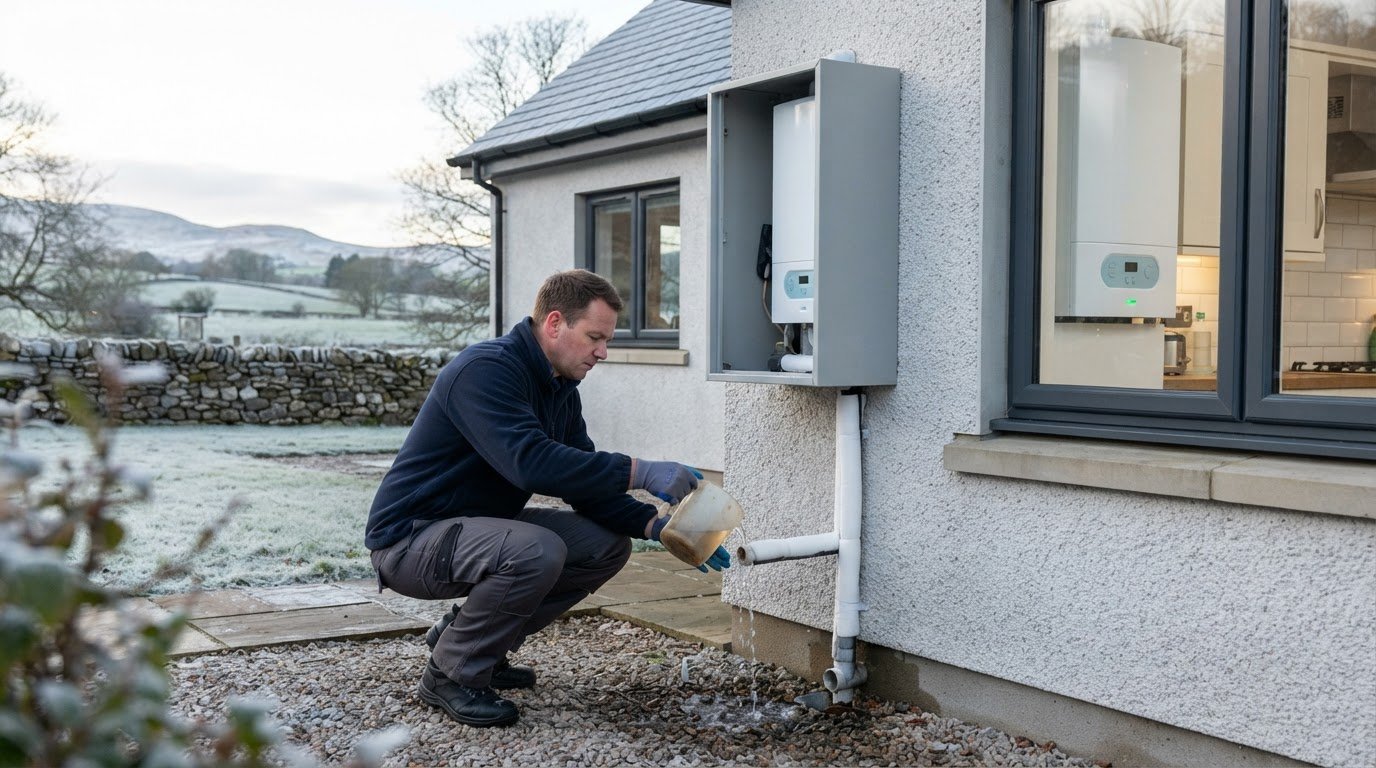
How to Thaw a Frozen Condensate Pipe Safely: A Step-by-Step Guide
A boiler fault in freezing weather doesn’t always mean the boiler itself has failed. If yours has stopped working or is showing an error code, a frozen condensate pipe could be the cause. Knowing how to thaw a frozen condensate pipe safely can help you clear an accessible blockage without risking damage to the pipe or boiler.
It’s understandable to be unsure which pipe to check or what’s safe to use. Condensate pipes can be hard to spot, and boiling water or opening the boiler casing can create further problems. In some cases, you can inspect an external pipe from ground level and gently thaw it with warm water or a warm cloth.
This guide explains how to recognise a possible blockage, where to look for the external condensate pipe and how to thaw it cautiously. It also covers what to check afterwards, how to reduce the chance of another freeze, and when to stop and contact a Gas Safe registered engineer.
Key Takeaways
- Recognise signs that a frozen condensate pipe may be preventing your boiler from draining.
- Check the boiler manual first, and inspect only pipework you can reach safely from ground level.
- Use warm water or a warm cloth, not boiling water, when thawing an accessible external section.
- Understand how suitable insulation may help, and why a qualified engineer should assess pipe routing.
- Know when to stop and call a Gas Safe registered engineer, particularly if the pipe is damaged or the boiler stays locked out.
How to tell whether your boiler condensate pipe is frozen
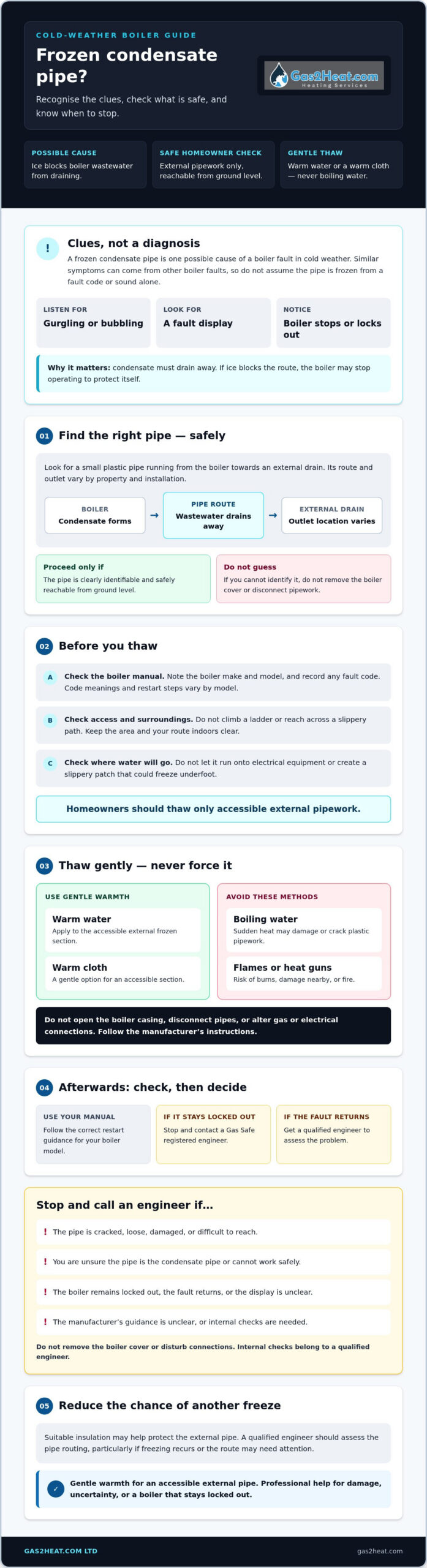
A condensate pipe drains wastewater away from a condensing boiler. As the boiler extracts heat from its exhaust gases, water forms and must drain away. You can read more about how a condensing boiler works. The practical point is that if condensate cannot drain, the boiler may stop operating to protect itself.
In brief: A frozen condensate pipe is blocked by ice, preventing wastewater from leaving the boiler and potentially causing it to shut down.
An exposed section outside the property can freeze in cold weather, especially if water is sitting in the pipe. Ice may restrict or block the drainage route. Gurgling or bubbling sounds, a fault display or a boiler lockout can be clues, but none confirms a frozen pipe by itself. Other boiler faults can cause similar symptoms.
Where to look for the condensate pipe
Look for a small plastic pipe running from the boiler towards an external drain. Its route and outlet depend on the property and installation, so there is no single location to check in every home. If you cannot identify it safely by looking, do not remove the boiler cover or disconnect pipework. Leave identification and internal checks to a qualified engineer.
Which boiler symptoms can point to freezing?
A boiler that stops during cold weather may have a frozen condensate pipe, particularly if you also hear gurgling or bubbling. Check the display and note any fault code, then consult the boiler manual. Codes differ between makes and models, so do not assume a particular code means the pipe is frozen or follow reset instructions for another boiler.
Treat these symptoms as clues, not a diagnosis. If the boiler remains locked out, the fault returns or you are unsure what the display means, contact a Gas Safe registered engineer. Checking whether freezing is plausible is a useful first step before deciding whether to thaw an accessible pipe.
What to do before thawing a frozen condensate pipe
Prepare first, then decide whether it is safe to continue. Your boiler manual and manufacturer’s instructions should guide checks and restart steps, which vary by model. Do not assume a reset method you have seen online applies to your boiler.
Check the manual and pipe route first
Note the boiler make and model, along with any fault code on the display. The manual may show the condensate outlet location and explain the correct restart procedure. If you cannot identify the pipe confidently, do not guess or attempt to thaw another pipe.
Inspect the external pipe only if it is clearly identifiable and safely reachable from ground level. Do not climb a ladder or reach across a slippery path. Stop if the pipe looks cracked, loose or otherwise damaged.
Homeowners should thaw only accessible external pipework.
Before applying warm water, check that it will not run onto electrical equipment or create a slippery patch that could freeze underfoot. Keep the area around the pipe and your route back indoors clear. If you cannot do this safely, contact a qualified engineer instead.
Avoid unsafe thawing methods
Never use boiling water on plastic pipework. Sudden heat may damage or crack the pipe. Open flames and high-temperature tools, including heat guns, can cause burns, damage nearby materials or create a fire risk. Use gentle warmth and follow the boiler manufacturer’s guidance.
Do not remove the boiler casing, disconnect pipes or alter gas or electrical connections. These are not homeowner thawing steps. If the manufacturer’s guidance is unclear, or the pipe is inaccessible or damaged, stop and seek professional advice.
- Do: check the manual and record the fault code.
- Do: work only from a stable position at ground level.
- Don’t: use boiling water, flames or heat guns.
- Don’t: open the boiler or disturb its connections.
These checks help you decide whether to continue or leave the fault to an engineer. If the boiler remains locked out or you are unsure what is causing the problem, read about boiler repair support from Gas2Heat.
How to thaw a frozen condensate pipe safely, step by step
If the external condensate pipe is accessible and appears frozen, gentle warmth may clear the blockage. Follow the manufacturer’s instructions and stop if you cannot work safely from ground level. Do not reach near hot boiler components or try to dismantle any part of the system.
Apply gentle warmth to the accessible frozen section
- Check the pipe and surroundings. Identify the likely frozen section of external pipework without touching the boiler or disturbing connections. Do not proceed if the pipe is damaged, difficult to reach or you are unsure it is the condensate pipe.
- Protect the area. Place a suitable container or towel below the section if practical, and keep water away from electrical equipment. Do not let runoff collect on a path or another surface where it could become slippery or freeze.
- Apply warm water carefully. Pour warm, not boiling, water over the frozen part of the pipe. Use a small amount at a time and take care not to splash yourself. Boiling water can damage plastic pipework.
- Use a warm cloth if it’s easier. Hold a warm, damp cloth against the accessible frozen section. Do not pull, twist or bend the pipe, and do not use a naked flame or heat gun.
- Repeat gently if needed. Ice may take more than one careful application to thaw. There is no fixed time that applies to every pipe. Be patient, and stop if the pipe shifts, leaks or appears damaged.
Check drainage and follow the boiler restart instructions
Once the section has thawed, check from a safe position whether water can drain freely from the pipe outlet. Do not poke inside the pipe or disconnect it to test for a blockage. If drainage still appears restricted, stop and arrange professional help.
If the pipe seems clear, follow the boiler manual’s reset or restart procedure for your model. Avoid repeatedly pressing reset or trying instructions intended for a different boiler. Knowing how to thaw a frozen condensate pipe safely also means knowing when to stop. If the boiler stays locked out, the fault returns or you are unsure what to do next, contact a Gas Safe registered engineer to investigate.
How to help stop the condensate pipe freezing again
A few checks before the next cold snap may reduce the chance of another blockage. Exposed pipework can be vulnerable during freezing weather, including cold snaps across South West Scotland. Insulation alone cannot guarantee the pipe will never freeze, and the right prevention depends on how it is routed and installed.
Insulate exposed pipework appropriately
Insulation may help protect an external condensate pipe, but it needs to suit outdoor conditions and the installation. From a safe position, look for insulation that is loose, split, missing or visibly damaged. Do not assume any covering is suitable or make changes if you are uncertain. Ask a qualified engineer to assess the pipe and advise what is appropriate.
Use this checklist before colder weather:
- Inspect safely: Look for exposed sections and signs of damage from ground level.
- Check insulation: Note whether it appears loose or deteriorated, and ask for an assessment if you are unsure.
- Know the route: Learn where the external pipe runs and where its outlet is, so you can recognise a problem without dismantling anything.
When a recurring freeze needs an engineer’s assessment
If the pipe freezes repeatedly, insulation may not be the only factor. The route, size or suitability of the installation could contribute, but a professional needs to assess those details. Do not cut, reroute, enlarge or otherwise modify the condensate pipe yourself. Ask a Gas Safe registered engineer to check the arrangement and advise whether changes are needed.
Technical requirements depend on the installation, so general advice about dimensions or routing is not a substitute for an on-site assessment. An engineer can consider the whole arrangement and identify whether it needs attention.
For homeowners in Gas2Heat’s South West Scotland service area, a recurring freeze or a boiler that continues to fault after thawing may need professional diagnosis. If you need help with a boiler fault, discuss a boiler repair with Gas2Heat.
When to call a Gas Safe engineer about a frozen condensate pipe
Stop troubleshooting if the pipe is out of reach, visibly damaged or leaking, or if you are unsure what is causing the fault. Only attempt how to thaw a frozen condensate pipe safely when the external section is clearly identifiable and accessible. Never open the boiler casing or work on gas components. Leave those checks and any boiler repairs to a Gas Safe registered engineer.
Signs the problem may be more than a frozen pipe
After following the manufacturer’s thawing and reset instructions, call an engineer if the boiler remains locked out or the fault code continues to appear. Stop as well if you see a leak, notice damaged pipework or the outlet still seems blocked. These signs need professional inspection but do not identify the cause on their own. Avoid repeated resets or trying to diagnose another boiler fault yourself.
Repeated freezing also needs attention. Thawing may temporarily restore drainage, but recurring blockages can point to an issue with the pipe arrangement. A qualified engineer can inspect the installation and determine what action is appropriate.
Getting local boiler help in South West Scotland
Gas2Heat is a family-owned heating business based in Moffat, serving South West Scotland, including Dumfries, Lockerbie, Annan, Lochmaben, Thornhill, Gretna and Castle Douglas. Its Gas Safe registered engineers carry out domestic boiler repairs and servicing. Check current service availability for your location when making an enquiry.
Regular boiler servicing helps maintain a heating system, but it cannot guarantee that an external condensate pipe will not freeze. For ongoing upkeep, consult the article’s boiler servicing guide.
If you are in Gas2Heat’s service area and your boiler remains faulty after safe thawing, contact Gas2Heat to discuss professional boiler repair or servicing. An engineer can investigate the cause and advise on the next step.
Thaw carefully and know when to get help
A frozen condensate pipe may be why your boiler has stopped, but symptoms alone cannot confirm the cause. If the external pipe is clearly identifiable and safe to reach, gentle warmth may clear the blockage. Use warm, not boiling, water, then follow your boiler manual for restart instructions.
Do not climb to reach pipework, repeatedly reset a locked-out boiler or open its casing. If the pipe is damaged or inaccessible, or the boiler still shows a fault after thawing, stop and arrange a professional diagnosis. Knowing how to thaw a frozen condensate pipe safely also means recognising when not to continue.
Gas2Heat is a family-owned heating business with Gas Safe registered engineers providing boiler repairs and servicing across South West Scotland. If you are in the area and need professional help, contact Gas2Heat about your boiler problem.
Take the cautious steps first, and leave persistent or uncertain faults to a qualified engineer. Contact Gas2Heat to discuss boiler repair or servicing in Moffat, Dumfries, Lockerbie, Annan, Lochmaben, Thornhill, Gretna or Castle Douglas.
Frequently Asked Questions
Can I thaw a frozen condensate pipe myself?
You may be able to thaw an accessible external pipe using gentle warmth, provided you can reach it safely and follow your boiler manual. Use warm water or a warm cloth, never boiling water, a naked flame or a heat gun. Do not open the boiler casing. If the pipe is damaged or inaccessible, or the boiler remains locked out, stop and contact a qualified heating engineer.
How do I know if my boiler condensate pipe is frozen?
A boiler that stops during cold weather, displays a fault code or makes unusual gurgling sounds may have a frozen condensate pipe. These clues are not conclusive because other faults can cause similar symptoms. Check the boiler manual and inspect only external pipework that is visible and safely reachable. If you cannot identify the pipe or the cause of the fault, ask a qualified engineer to investigate.
What can I use to thaw a frozen condensate pipe safely?
For an accessible external section, apply warm water carefully or hold a warm cloth against the pipe. Do not use boiling water, open flames or high-temperature tools, which can damage pipework or create a safety risk. Keep water away from electrical equipment and prevent runoff from making paths slippery. Once the pipe has thawed, consult the manufacturer’s instructions before resetting the boiler, as controls vary by model.
Can I pour boiling water on a frozen condensate pipe?
No. Boiling water can cause burns and may crack or damage plastic pipework. Use gentle warmth only on an external section you can reach safely. Do not force, bend or disconnect the pipe. If it is difficult to reach, appears damaged, or thawing does not restore drainage and boiler operation, stop troubleshooting. Contact a qualified heating engineer rather than trying stronger heat or taking apart any part of the system.
Should I reset my boiler after thawing the condensate pipe?
Follow your boiler manual’s reset instructions after the accessible pipe has thawed and drainage appears clear. Boiler controls differ, so do not rely on a generic reset sequence or keep restarting the appliance. Note any fault code that remains or returns. If you are unsure what the display means, or the boiler stays locked out, stop and contact a Gas Safe registered engineer to diagnose the problem.
How can I stop my condensate pipe freezing again?
Suitable insulation on exposed pipework may reduce freezing risk, but it cannot guarantee the pipe will not freeze again. Check from a safe position for damaged or loose insulation, and learn where the condensate pipe outlet runs. If freezing happens repeatedly, ask a qualified engineer to assess the route and installation. Do not alter or reroute the pipe yourself, as the right solution depends on the individual installation.
When should I call a Gas Safe engineer for a frozen condensate pipe?
Call a Gas Safe registered engineer if the pipe is unsafe or difficult to reach, looks damaged or is leaking, or the boiler stays locked out after you follow the manufacturer’s instructions. Get professional help if freezing recurs or you are uncertain about the fault. Never open the boiler casing or work on gas components. Gas2Heat provides boiler repairs and servicing across Moffat, Dumfries, Lockerbie, Annan, Lochmaben, Thornhill, Gretna and Castle Douglas.

Leave a Reply
You must be logged in to post a comment.