
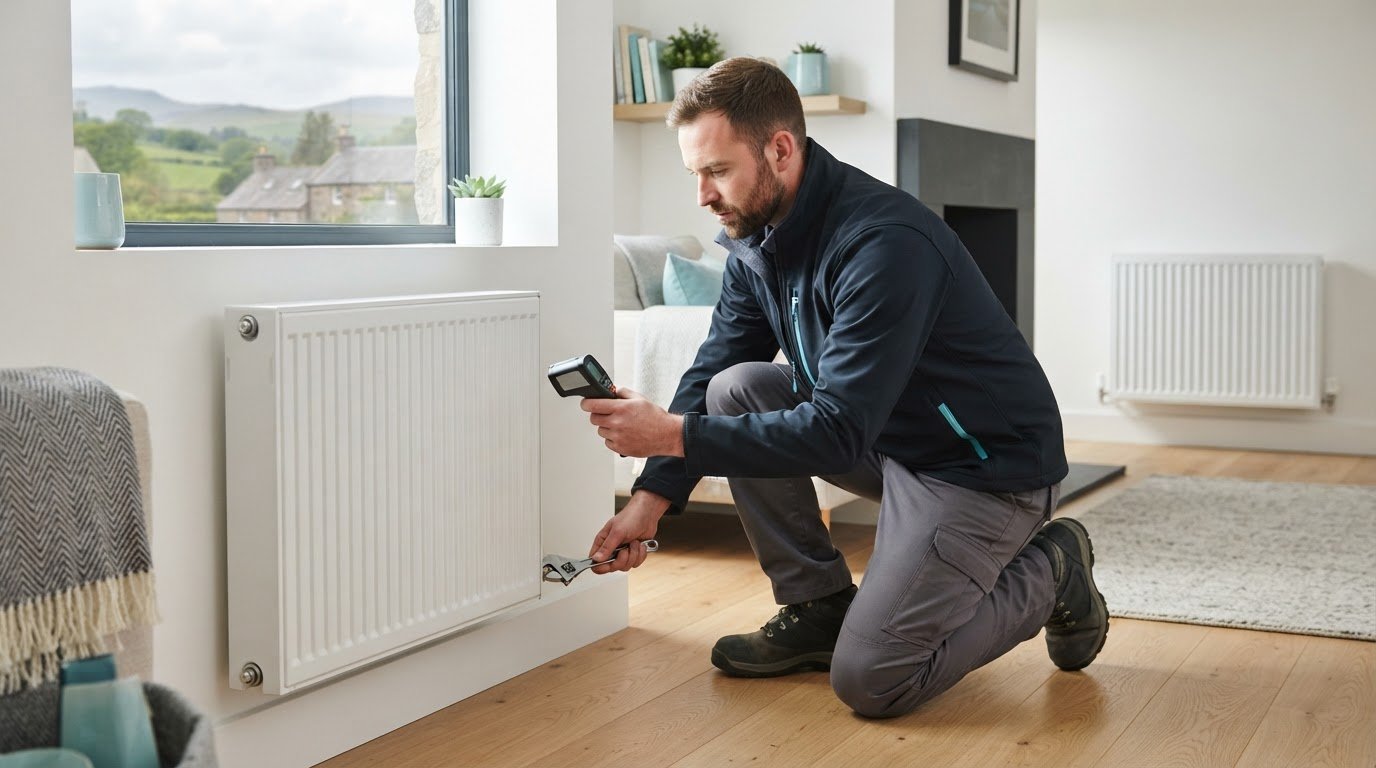
How to Balance Radiators for Even Heat: A Step-by-Step Guide
What if the radiator that feels easiest to adjust is the one that needs the least attention? If some rooms warm up quickly while others stay chilly, opening every valve fully may not solve the problem. Learning how to balance radiators for even heat means making measured changes to the flow of hot water, not simply turning controls up.
Balancing is easy to confuse with bleeding. Bleeding releases trapped air; balancing adjusts how much hot water flows through each radiator. Both can affect heating, but they address different problems. With a careful, step-by-step approach, you can make small adjustments, track what changes and avoid altering several controls at once.
This guide explains what balancing does and how to try it safely, from preparing your heating system to comparing which rooms warm up first. It also covers signs that uneven heat may point to another issue, such as restricted circulation or a system fault, rather than a valve adjustment. If the problem persists, Gas2Heat provides boiler servicing, repairs and power flushing for homes across Moffat, Dumfries and South West Scotland.
Key Takeaways
- Learn how the thermostatic radiator valve and lockshield valve affect heat and water flow through your system.
- Follow a measured approach to how to balance radiators for even heat, recording settings and checking each radiator consistently.
- Spot signs that uneven warmth may stem from air, restricted circulation, deposits, controls or a boiler issue rather than balancing alone.
- Understand when recurring cold radiators may need professional attention, including boiler servicing, repairs or power flushing.
- Find out how Gas2Heat supports homes across Moffat, Dumfries and surrounding areas when heating problems persist.
Why are your radiators heating unevenly?
One room feels stuffy while another stays chilly, even though the heating is on. This can happen when hot water doesn’t flow through the radiator circuit evenly. Radiator balancing means adjusting the flow to individual radiators so they warm up in a more consistent pattern.
Heating water tends to take the easiest routes through a system. Radiators close to the boiler, or connected to pipework with less resistance, may receive hot water sooner than others. Adjusting each radiator’s lockshield valve can regulate its flow and help distribute heat more evenly. This is the practical aim of hydronic balancing: getting the right flow to each part of the system.
Balancing won’t make every room reach the same temperature. Room size, insulation, draughts, radiator capacity and thermostat settings all affect comfort. Uneven heat can also have other causes, including trapped air, restricted circulation, deposits such as sludge, or a boiler or control issue. A symptom alone can’t confirm the cause, so don’t assume a valve adjustment will fix every cold radiator.
What does radiator balancing change?
Balancing changes how much hot water flows through each radiator, usually by adjusting its lockshield valve. It doesn’t increase the boiler’s heat output or remove air from the system. Instead, it aims to prevent some radiators from taking more than their share of the flow, helping others warm up as intended. The goal is a more consistent heating pattern, not identical temperatures in every room.
Is balancing the same as bleeding a radiator?
No. Bleeding releases trapped air; balancing adjusts water flow. A radiator that feels cold at the top and warmer lower down may have air in it, but that sign doesn’t prove the cause. Balancing is more relevant when radiators heat at noticeably different rates. If symptoms keep returning, or you’re unsure what you’re noticing, arrange a professional assessment rather than repeatedly changing valves.
Circulation problems or sludge may need a different investigation from balancing or bleeding. For example, a radiator that remains cool despite careful adjustments could point to a restriction, but a system assessment is needed to establish what’s happening. Understanding the difference helps you choose a sensible next step and avoid unnecessary adjustments.
How radiator valves and heating flow affect room temperature
Each radiator has controls that serve different purposes. Knowing which one you’re adjusting makes it easier to understand what affects heat in each room and avoid changing the wrong setting.
What do the thermostatic and lockshield valves do?
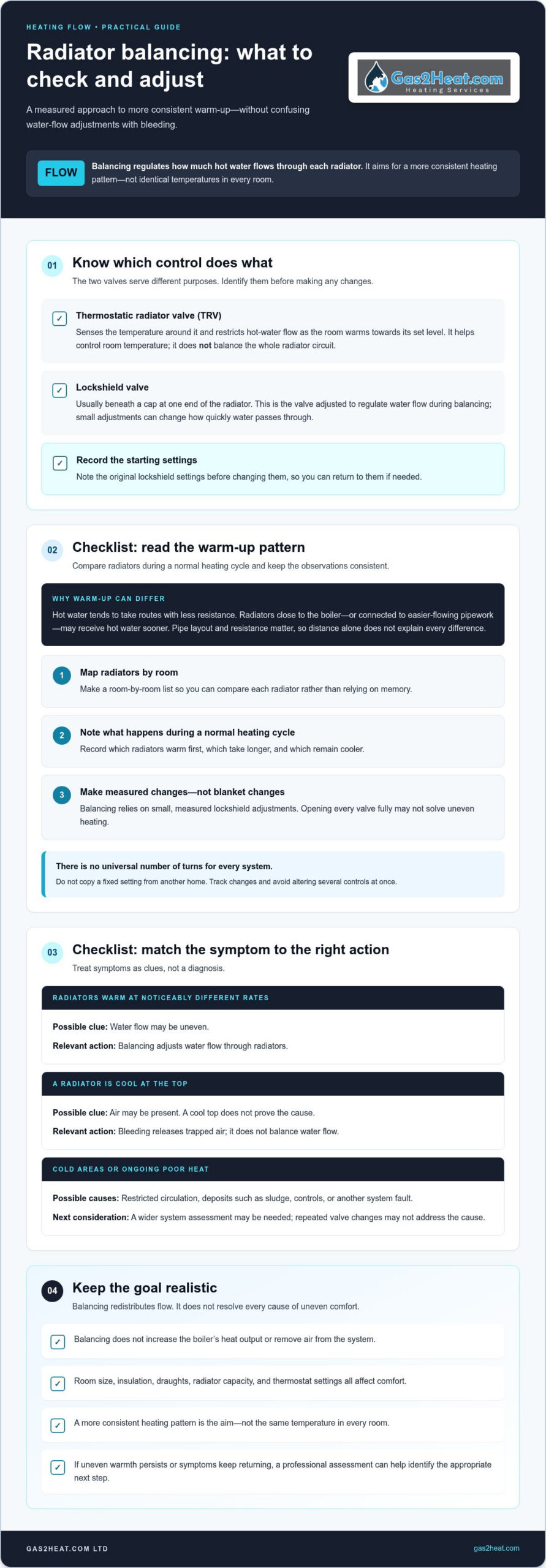
A thermostatic radiator valve (TRV) senses the temperature around it and restricts hot-water flow as the room warms towards its set level. It helps control room temperature, but it doesn’t balance the whole radiator circuit.
A lockshield valve is the valve, usually beneath a cap at one end of a radiator, used to restrict water flow through that radiator during balancing. Small adjustments can change how quickly water passes through it. Before making any changes, record the original settings so you can return to them if needed. The process of how to balance radiators for even heat relies on measured changes to flow, not simply opening every valve fully.
Why does radiator position affect warm-up?
Hot water tends to take routes with less resistance. A radiator close to the boiler or on an easier-flowing branch may warm before one further away. Pipe layout and resistance also matter, so distance alone doesn’t explain every difference. Balancing uses the lockshield valves to regulate flow around the circuit and improve the order and consistency of warm-up.
How can symptoms point to different heating problems?
Use symptoms as clues, not a diagnosis. A radiator that warms much earlier than others may suggest uneven flow, while a cold patch or a radiator cold at the top may be associated with trapped air. Persistent poor performance can also involve circulation restrictions, deposits or other system faults. Balancing redistributes water flow; bleeding releases trapped air, while addressing sludge or a circulation fault requires a different assessment.
| What you notice | Possible issue | What the action addresses |
|---|---|---|
| Radiators warm at noticeably different rates | Flow may be uneven | Balancing adjusts water flow through radiators |
| A radiator is cool at the top | Air may be present | Bleeding releases trapped air |
| Cold areas or ongoing poor heat | Circulation, deposits or another fault may be involved | A wider system assessment may be needed |
If symptoms continue after sensible checks, avoid repeated valve changes and arrange a professional assessment. Gas2Heat provides boiler servicing, repairs and power flushing across South West Scotland. A heating professional can assess persistent uneven warmth and identify the appropriate next step. Read more about heating system assessment.
How to balance radiators for even heat, step by step
Work slowly and keep a record. Balancing means comparing how radiators warm under consistent conditions, then making small changes to their lockshield valves. There’s no universal number of turns that suits every heating system, so don’t copy a fixed setting from another home.
-
Map the radiators and note the current pattern.
List each radiator by room. During a normal heating cycle, note which warm first, which take longer and which remain cooler. Use the same method for each one, such as carefully checking how the radiator warms, and avoid touching hot surfaces.
-
Record the existing valve positions.
Find each lockshield valve, usually beneath a cap at one end of the radiator. Note its starting position before making an adjustment. If you turn a valve, record the change so you can restore the original setting. Don’t force a stuck valve or remove valve components.
-
Prepare the heating controls.
Use a consistent setup for your observations. Set room controls and thermostatic radiator valves (TRVs) so they won’t change the comparison partway through, following the instructions for your controls. Keep the heating schedule and other conditions as consistent as possible between checks.
-
Observe the warm-up order.
Run the heating and compare the radiators using the same approach as in your initial notes. Look for a clear pattern, such as one radiator becoming warm well before the others while another lags behind. Don’t judge the result from a single quick check.
-
Make one small lockshield adjustment at a time.
If a radiator consistently warms much earlier, gently restrict its flow by a small amount. Avoid changing several valves at once, and don’t assume that a radiator warming late should automatically be opened fully. A change to one part of the circuit can affect flow elsewhere.
-
Allow the system to respond, then reassess.
Give the heating time to respond before comparing radiators again. Repeat the same observation method and note what changed. If comfort improves, continue cautiously; if it gets worse, use your record to return the valve to its previous position.
Keep adjustments measured and reversible. If a valve won’t move, the radiator stays cold, or repeated attempts don’t improve the pattern, stop rather than applying force or changing more settings. The system may need a different check, as the next section explains.
What to check when balancing does not fix cold radiators
Balancing can improve water distribution, but it can’t correct every cause of poor radiator heat. If a radiator remains cold or the heating pattern doesn’t change after careful adjustments, pause and consider what may be happening instead of continuing to turn valves.
When should you stop adjusting and investigate another cause?
Stop if a valve is stuck, leaking, damaged or unfamiliar. Don’t force it, dismantle it or attempt boiler repairs yourself. A radiator that stays cold, develops persistent cold areas or performs no better after adjustments may point to trapped air, restricted circulation, a control problem or a boiler fault. These symptoms are clues, not a diagnosis.
A heating engineer can assess the system as a whole, including circulation and boiler operation, to identify whether the issue is flow balance or something else. If you’re following advice on how to balance radiators for even heat but see no improvement, a broader assessment is a safer next step than making repeated changes. For practical ways to reduce wasted heat around the home, read this heating efficiency guide.
Could sludge or poor circulation be affecting several radiators?
Deposits can build up inside parts of a heating system and may restrict water movement. If several radiators perform poorly, or circulation seems weak across the system, the cause may extend beyond one valve. Air can also affect performance, while controls or boiler issues may need separate checks. Don’t assume one symptom identifies the fault.
Power flushing is a specialist method used to clean a heating system by moving water through it under controlled conditions. It may be considered when an assessment points to system deposits, but it isn’t a guaranteed solution for every cold radiator or circulation problem. A professional should establish whether it’s appropriate before work begins. Routine care also matters, so see the boiler servicing guide for information about keeping your boiler in good working order.
Gas2Heat’s Gas Safe registered engineers provide boiler servicing, repairs and power flushing for homes across South West Scotland. If careful adjustments haven’t resolved the issue, learn about Gas2Heat’s heating services.
When local heating help can restore even warmth in South West Scotland
Careful DIY balancing may help if radiators warm at noticeably different rates and the valves are in good condition. Keep a record, adjust gradually and reassess before making another change. If cold spots persist, several radiators perform poorly, or you’re unsure whether a valve is safe to adjust, stop and arrange a professional assessment.
What can a heating engineer assess?
An engineer can look beyond individual lockshield settings to assess radiator flow, heating controls and wider system performance. This helps distinguish a balancing issue from possible air, restricted circulation, deposits or a boiler fault. Gas2Heat’s Gas Safe registered engineers work across South West Scotland, including Moffat, Dumfries, Lockerbie, Annan, Lochmaben, Thornhill, Gretna and Castle Douglas. The right next step depends on the system and what the assessment finds.
Understanding how to balance radiators for even heat can help you describe what you’ve observed, but repeated adjustments aren’t a substitute for investigating persistent symptoms. Gas2Heat provides boiler servicing, boiler repairs and power flushing. Power flushing may be relevant if system deposits are identified, but it isn’t the answer to every heating problem.
How can homeowners maintain more consistent heating?
Make a note of which rooms stay cold, whether the same radiators are affected each time, and what you’ve already adjusted. Share those observations during a service visit. Clear notes can help an engineer understand the pattern without relying on memory alone.
Routine boiler servicing supports safe, reliable heating-system operation and can help identify issues that need attention. If uneven heating keeps returning, don’t keep turning valves in the hope that the problem will disappear. A professional can assess the system and explain the relevant maintenance or repair options.
For local information about Gas2Heat’s heating services in South West Scotland, visit Gas2Heat.
Take the next step towards more even warmth
Balanced heating starts with measured adjustments, not opening every radiator valve fully. Keep track of the original lockshield settings, change them gradually and compare how radiators warm using the same method. Remember that balancing changes water flow. It won’t remove trapped air or resolve every circulation, deposit or boiler problem.
Knowing how to balance radiators for even heat can help you make cautious adjustments and recognise when to stop. If radiators remain cold, symptoms return or a valve is stuck or leaking, leave further investigation to a heating professional.
Gas2Heat is a local heating specialist serving Moffat, Dumfries and South West Scotland. Its Gas Safe registered engineers provide boiler servicing, repairs and power flushing among other heating services. If uneven heating persists, get help with uneven heating from Gas2Heat.
With a careful approach and the right support when needed, you can work towards more comfortable, consistent warmth throughout your home.
Frequently Asked Questions
How do you balance radiators for even heat?
Balance radiators by comparing how they warm, then making small, recorded adjustments to their lockshield valves. Note which radiators heat first and which lag behind, keep the heating controls consistent, and reassess after the system has had time to respond. The aim of how to balance radiators for even heat is to improve water flow around the circuit, not to make every room reach an identical temperature.
Should I balance radiators when the heating is on or off?
Make valve adjustments with the heating off and radiators cool enough to handle safely, then run the heating to observe how the system responds. Hot radiators and pipework can cause burns, so don’t adjust them while they’re hot. Keep control settings consistent between observations and follow the instructions for your heating controls. If a valve is stuck or you’re unsure how it works, stop rather than forcing it.
What is the difference between balancing and bleeding radiators?
Balancing adjusts water flow through radiators using their lockshield valves. Bleeding releases trapped air from a radiator through its bleed valve. They address different issues: uneven warm-up may point to a flow imbalance, while a radiator that feels cold at the top may have air in it. Neither sign confirms the cause on its own. If the problem returns or you’re uncertain, arrange a heating-system assessment.
Which radiator should you balance first?
There’s no universal first radiator for every system. Begin by recording how all the radiators warm under the same conditions. If one consistently heats much earlier than the others, it may be a useful radiator to assess for a small lockshield adjustment. Change one valve at a time and check the effect across the system. Don’t rely on a fixed order or standard number of turns for every home.
How long does it take to balance radiators?
There isn’t a set time. It depends on the number of radiators, how quickly your system responds and how many observation and adjustment rounds are needed. Allow time for the heating to circulate after each small change before judging the result. Rushing through several adjustments can make it harder to identify what helped. Keep notes, compare radiators consistently and pause if performance worsens.
Why are some radiators still cold after balancing?
Balancing can’t fix every cause of poor heat. Trapped air, restricted circulation, deposits, faulty controls or a boiler issue may need separate investigation. A radiator that remains cold or develops persistent cold areas after careful adjustments needs a broader assessment rather than repeated valve changes. Don’t dismantle valves or try to repair the boiler yourself. A heating engineer can assess circulation and overall system condition.
Can I balance radiators myself?
You can try careful DIY balancing if the valves are accessible, appear undamaged and you’re confident making small, reversible adjustments. Record the original positions and stop if a valve is stuck, leaking or unfamiliar. Gas2Heat’s Gas Safe registered engineers serve Moffat, Dumfries, Lockerbie, Annan, Lochmaben, Thornhill, Gretna and Castle Douglas. Their heating work includes boiler servicing, repairs and power flushing.

Leave a Reply
You must be logged in to post a comment.