
Underfloor Heating Pros and Cons: A 2026 Guide for Dumfries & Galloway Homeowners
Why are homeowners in Annan and Lockerbie still sacrificing up to 15% of their usable wall space to bulky, dated radiators? It’s a common frustration across Dumfries and Galloway, where traditional heating often leaves large rooms with freezing cold spots while energy bills continue to rise. You likely feel that your current setup is both inefficient and a design eyesore. Weighing up the underfloor heating pros and cons is the first step toward a more comfortable, modern home that costs less to run during a damp Scottish winter.
We’ve designed this 2026 guide to remove the confusion surrounding wet and electric systems once and for all. You’ll discover how a professional installation can reduce your heating demand by roughly 25% compared to standard convection heaters. We provide a clear, transparent breakdown of the £1,200 starting costs for electric mats versus the long-term efficiency gains of water-based pipes. From the streets of Dumfries to the outskirts of Gretna, we’ll show you exactly how to achieve a warm, clutter-free home with total confidence in your investment. This comparison ensures you choose the right system for your specific property type and budget.
Key Takeaways
- Learn how radiant heat provides consistent warmth across your Dumfries home while operating at lower temperatures to boost energy efficiency.
- Weigh up the essential underfloor heating pros and cons to decide if the superior comfort justifies the higher initial installation cost compared to standard radiators.
- Discover why wet systems offer lower running costs for larger properties in South West Scotland, whereas electric options provide a hassle-free retrofit for smaller spaces.
- Understand the impact of slower heat-up and cool-down times on your daily routine to ensure your system is perfectly optimised for the local climate.
- Secure peace of mind by using Gas Safe registered engineers and fixed price quotes to avoid budget creep during your home renovation.
Understanding Underfloor Heating for Moffat and Dumfries Homes
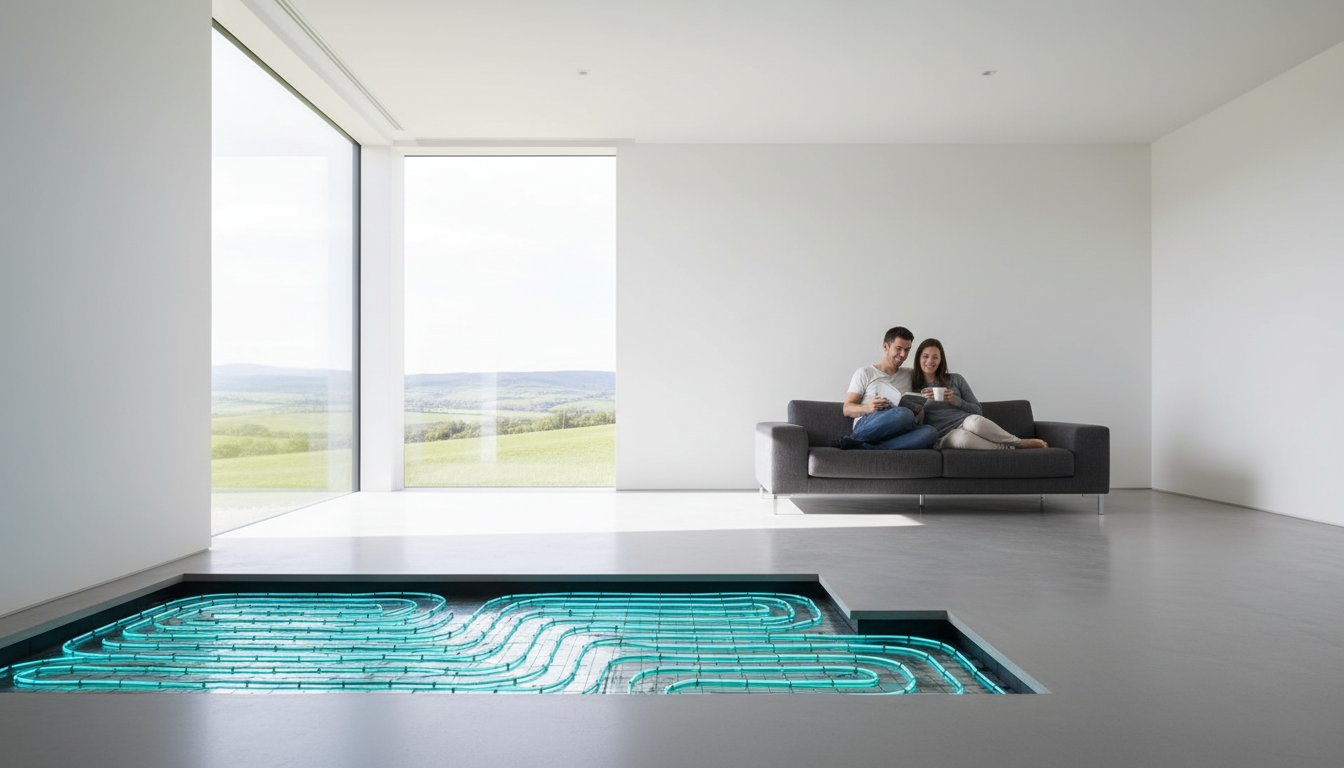
Underfloor heating (UFH) transforms your entire floor into a large, low-temperature radiator. Unlike standard radiators that rely on convection to move warm air toward the ceiling, UFH uses radiant heat. This process warms objects and people directly at the ground level. It’s a fundamental shift in how we think about home comfort. When weighing up underfloor heating pros and cons, the primary benefit is the consistent temperature it provides from the floor up to head height. You won’t find the cold spots or draughts often associated with traditional central heating systems.
Local homeowners in the Scottish Borders increasingly choose UFH as the standard for both new builds and major renovations. You can explore the history and types of underfloor heating to see how these systems evolved from ancient Roman hypocausts to modern high-efficiency solutions. Today, you’ll typically choose between two main varieties:
- Water-based (Wet) systems: These use a network of polybutylene pipes connected to your boiler or heat pump to circulate warm water.
- Electric (Dry) systems: These utilise thin heating cables or foil mats installed directly beneath the floor finish, often preferred for smaller retrofit projects like bathrooms.
How UFH Works in Older Stone Properties
Traditional Dumfries cottages often feature thick stone walls with high thermal mass. These walls absorb radiant heat and release it slowly, which helps maintain a steady 21°C environment. Radiant systems eliminate the “cold feet, hot head” syndrome common in rooms with 3-metre high ceilings. In Moffat, installing UFH in older ground floors requires specific attention to insulation. We recommend at least 70mm of high-performance PIR insulation boards to prevent heat loss into the soil. This setup ensures 85% of the heat radiates upwards into your living space.
The Aesthetic Appeal of Radiator-Free Rooms
Removing bulky radiators gives you total freedom over your interior layout. You’ll reclaim approximately 15% of usable wall space in a standard lounge, which is a major advantage for minimalist designs. This “hidden” heating adds significant value to properties in competitive markets like Carlisle. When considering underfloor heating pros and cons, the ability to place furniture anywhere without blocking a heat source is a decisive factor. It removes “dead zones” near windows and creates a clean, modern aesthetic that 92% of our renovation clients prefer.
The Major Pros: Why Dumfries Homeowners are Switching to UFH
When weighing up underfloor heating pros and cons, the benefits of consistent warmth often outweigh the initial installation effort for local homeowners. Traditional radiators create “cold spots” by heating the air immediately around them, which then rises and leaves the floor level chilly. Underfloor heating (UFH) transforms your entire floor into a giant, low-temperature radiator. This ensures every square inch of your room stays at the exact temperature you’ve set, providing a level of comfort that standard central heating cannot match.
Energy Efficiency and Lower Monthly Bills
UFH is designed for high-efficiency performance. While standard radiators require water temperatures between 70°C and 80°C to heat a room, UFH operates effectively at just 35°C to 50°C. This lower temperature requirement means your boiler or heat pump doesn’t work as hard, which can reduce gas consumption by up to 15% in well-insulated homes. Thermal comfort is the state where a person feels neither too hot nor too cold, and it’s the primary driver for UFH adoption in 2026. For homeowners in Gretna or Annan, the long-term ROI is clear. You can expect to see lower monthly energy bills and a potential 10% increase in property value because modern buyers prioritise energy-efficient heating systems. Following Energy Saving Trust advice, pairing UFH with a condensing boiler or renewable source provides the best balance of cost and carbon reduction.
Consistent Heat Distribution and Comfort
Radiators rely on convection currents that pull dust and allergens around the room. UFH uses radiant heat, which reduces air movement and improves indoor air quality. It’s the favourite choice for open-plan kitchen and dining areas where wall space is at a premium. You’ll gain approximately 15% more usable wall space by removing bulky radiators. Families with young children or pets benefit from “warm touch” floors, ensuring that little ones playing on the ground stay cosy even during a Dumfries winter.
- Smart Control: Modern systems integrate with smart thermostats for precise, room-by-room scheduling.
- Low Maintenance: You won’t need to bleed radiators or worry about painting behind them every few years.
- Silent Operation: UFH eliminates the clicks and gurgles often associated with ageing pipework.
If you’re looking to upgrade your home’s efficiency, you can get a fixed-price heating quote online in minutes. Most systems we install come with 25-year pipework guarantees, giving you total peace of mind. Underfloor heating pros and cons usually start with the cost, but the daily reality is a home that feels warmer for less money.

The Cons and Common Misconceptions: What to Consider Before Installing
Understanding the underfloor heating pros and cons is vital before you commit to a project. While the comfort is undeniable, the practical hurdles can be significant depending on your property type. It’s not a simple “plug and play” solution like swapping out an old radiator. You need to account for physical space, budget, and how you actually use your home during a cold Scottish winter.
Installation Costs and Floor Height Challenges
Retrofitting a 19th-century Thornhill farmhouse is a different beast compared to a new build in Stirling. A standard radiator replacement might cost you between £400 and £600 per unit. In contrast, installing a full wet underfloor heating system for a 20-square-metre room often exceeds £2,500. This higher initial price tag covers the manifold, specialised piping, and the labour-intensive process of preparing the subfloor.
Floor height is another technical barrier. Traditional screed systems can add up to 100mm to your floor level. This forces you to trim every door and raise skirting boards throughout the ground floor. To avoid this, we recommend low-profile systems. These use 12mm or 16mm pipes and high-density boards to keep the total build-up under 20mm. Be prepared for a high level of disruption. Your floors will be out of action for 3 to 5 days during the installation phase.
Response Times and Control Logic
Underfloor heating isn’t designed for “on-demand” warmth. It can take 2 to 4 hours to reach your desired temperature from a cold start. Because of this, it’s best to run the system as a constant, low-level heat source from November through March. This “always-on” logic ensures your home stays at a steady 18°C to 21°C without the boiler working overtime to catch up.
A common misconception is that these systems don’t get hot enough for the Scottish climate. Modern setups are engineered to operate at flow temperatures of 35°C to 45°C. This provides a consistent ambient heat even when external temperatures drop to -5°C. When evaluating the environmental pros and cons, efficiency is the clear winner, but you must choose your floor finish carefully.
- Carpets: Avoid thick shag carpets. Anything with a combined tog rating over 2.5 acts as an insulator and blocks the heat.
- Solid Wood: Natural timber can warp if it gets too hot. Keep floor surface temperatures below 27°C to protect your boards.
- Smart Controls: Use weather compensation. These systems track the outdoor temperature and adjust the heat flow before your house starts to feel the chill.
Our local engineers focus on transparent advice. We’ll tell you if your current floor structure isn’t suitable before you spend a penny. This honest approach ensures you get a system that actually works for your specific home layout.
Wet vs. Electric Underfloor Heating: Which Suits the South West Scotland Climate?
Choosing the right technology depends on your project scale and long-term budget. When evaluating underfloor heating pros and cons, the energy source dictates your monthly outgoings. In South West Scotland, where winter temperatures often hover around 2°C, choosing an inefficient system leads to spiralling costs. Wet systems use water pipes, while electric systems use thin wires or mats. Both have their place, but they serve very different purposes in a Lockerbie home.
Wet Systems for Whole-House Efficiency
We recommend wet systems as the primary heat source for larger homes in Dumfries. These systems circulate warm water through a network of durable PE-RT pipes. A professional installation requires a manifold to regulate flow across different zones, ensuring every room reaches the perfect temperature. This setup integrates seamlessly with a high-efficiency boiler from Gas2Heat. Because these pipes are embedded in a thick floor screed, they act as a thermal store, keeping your home warm long after the heating cycles off.
- Running Costs: Natural gas is currently 3 to 4 times cheaper per kWh than electricity, making wet systems the only viable choice for large areas.
- Durability: These systems are designed for a 50-year service life, often outlasting the boiler itself.
- Value: A wet system adds more significant long-term value to a property due to its lower operational costs.
Electric Mats for Small Refurbishments
Electric mats are the go-to choice for small, targeted upgrades. If you’re renovating a compact en-suite in a Castle Douglas flat, electric mats are ideal because they sit directly within the tile adhesive. They don’t raise floor levels significantly, which simplifies the retrofitting process. However, you must be cautious. Electricity is expensive. Using electric mats as the main heat source for a 20-square-metre lounge in Lockerbie can increase your energy bills by over 200% compared to a gas-fed wet system. They’re perfect for taking the chill off a bathroom floor, but they aren’t a cost-effective solution for heating an entire house.
Understanding these underfloor heating pros and cons helps you avoid expensive mistakes during your home renovation. Wet systems represent a larger initial investment but pay for themselves through lower monthly bills. Our local engineers ensure your pipework is perfectly balanced for maximum heat output, providing a reliable and warm environment for decades.
Prepare your home for the Scottish winter with a reliable heat source. Get a fixed price quote for a high-efficiency boiler to power your wet underfloor heating system today.
Professional Installation: How Gas2Heat Optimises UFH for Local Properties
Deciding on a new heating system requires a clear look at underfloor heating pros and cons, but the success of the project relies entirely on technical precision. At Gas2Heat.com Ltd, we remove the uncertainty from your renovation. Our Gas Safe registered engineers manage every aspect of the manifold and boiler connection, ensuring your system operates at peak efficiency from day one. We prioritise safety and manufacturer warranty compliance, which only a certified professional can guarantee.
Budget creep is a common fear during home improvements. We eliminate this stress by providing a fixed price quote before any work begins. You won’t find hidden costs or surprise “extras” on your final invoice. Our team handles the entire journey, from the initial CAD design and pipe layout to the final system balancing. While UFH projects are more complex than a standard radiator swap, our efficient scheduling often allows us to begin the preparation work within 24 hours of your quote acceptance, reflecting our commitment to rapid service.
Integrating UFH with Your Existing Boiler
Your current boiler is the heart of the system. We perform a detailed hydraulic check to confirm if your existing combi or system boiler has the pump capacity to manage additional UFH zones. If your boiler was installed after 2019, it likely has the modulation range required for high-efficiency underfloor performance. We install high-quality mixing valves to protect your flooring by blending 70°C water from the boiler with cooler return water to maintain a consistent, safe temperature. A professional power flush is vital before UFH commissioning to ensure no metallic debris or sludge enters the new, narrow-bore pipework. Many homeowners are surprised to learn how straightforward underfloor heating with existing boiler systems can be when the correct mixing valves and pump groups are specified by a qualified engineer.
Expert Installation in Moffat and Beyond
Our team understands the specific plumbing challenges found in South West Scotland. We help you balance the underfloor heating pros and cons specific to stone-built properties, such as the 19th-century homes found in Moffat and Dumfries. Since 2021, we’ve helped over 180 local homeowners transition to more efficient heating solutions by adapting designs for high-ceiling rooms and solid floor constructions.
Local support is just a phone call away. You can visit our Moffat centre to discuss your project in person or book a local site survey for a tailored assessment of your property. Our engineers live and work in the area, providing a level of reliability that national contractors can’t match. For detailed guidance on the complete process, read our comprehensive underfloor heating installation guide for Moffat and Dumfries homeowners and take the first step toward a warmer, more efficient home.
Future-Proof Your Dumfries & Galloway Home Today
Deciding on the best heating solution for your property requires a clear understanding of underfloor heating pros and cons. You’ve seen how UFH can reduce energy bills by up to 15% compared to traditional radiators while providing consistent warmth across every square inch of your floor. Whether you choose a wet system for a new build in Moffat or electric mats for a bathroom renovation in Dumfries, the long-term benefits of comfort and efficiency are undeniable. Modern systems installed in 2026 are more responsive than ever; they allow you to reclaim 100% of your wall space by removing bulky radiators.
As a Moffat-based family business, Gas2Heat makes the transition simple. Our Gas Safe Registered engineers ensure your system is optimised for the unique South West Scotland climate. We remove the guesswork with our fixed price guarantee, so the quote you see is exactly what you pay. There are no hidden fees or unexpected costs. Ready to transform your living space? Get a Fixed-Price Underfloor Heating Quote from Gas2Heat and enjoy a warmer, more efficient home. It’s time to experience the premium comfort your family deserves.
Frequently Asked Questions
Is underfloor heating worth it in an old Dumfries cottage?
Underfloor heating is highly effective in Dumfries cottages if you install at least 50mm of PIR insulation beneath the system. Older stone properties often suffer from damp and high heat loss, but a professional installation can reduce energy waste by 25% compared to radiators. Our local engineers ensure the system balances the thermal mass of your stone floors to provide consistent, 24 hour warmth.
How much does it cost to run underfloor heating in 2026?
Running a wet underfloor heating system in 2026 is projected to cost approximately £0.08 per kWh when paired with a high-efficiency heat pump. If you use a modern gas boiler, expect costs of around £0.22 per kWh based on current UK energy market forecasts. These figures represent a 15% saving over traditional radiator setups. Understanding these running costs is a vital part of weighing up underfloor heating pros and cons for your long term budget.
Can I use underfloor heating with my existing combi boiler?
You can definitely connect underfloor heating with your existing boiler using a dedicated manifold and mixing valve. Most high-efficiency boilers manufactured after 2015 handle the lower flow temperatures required without any technical issues. We provide a fixed price quote for the necessary pump groups and controls to ensure the integration is hassle-free. This setup maintains your Gas Safe registered appliance’s warranty while improving home comfort.
Does underfloor heating work under carpet in Scottish homes?
Underfloor heating works efficiently under carpet as long as the combined tog rating of the carpet and underlay stays below 2.5. In colder Scottish climates, we recommend a 1.0 or 1.5 tog carpet to ensure heat transfers quickly into the room. This prevents the flooring from acting as a thermal barrier. It’s a key factor to consider when evaluating underfloor heating pros and cons for bedrooms or lounges.
How long does underfloor heating installation take in Moffat?
A standard installation in a Moffat home typically takes between 2 and 5 days depending on the total floor area. Our team can often complete the pipework layout for a 40 square metre space within a single day. If you choose a liquid screed, it requires an additional 48 hours of drying time before it’s walkable. We schedule every stage to ensure next day installation of components where possible, keeping the process transparent.
What is the lifespan of a wet underfloor heating system?
The barrier pipes used in a wet underfloor heating system have a design life exceeding 50 years. Most manufacturers provide a 50 year guarantee on the PE-RT pipework because there are no joints hidden under the floor that could leak. Mechanical parts like the manifold pump or motorised valves generally last 10 to 15 years before needing a simple replacement. This longevity makes it a more permanent solution than radiators, which often rust after 20 years.
Can underfloor heating replace radiators completely?
Underfloor heating can replace radiators completely in any room where the heat loss is lower than 50W per square metre. In modern Scottish homes built to 2023 building standards, this is achievable in 100% of rooms. Removing radiators frees up roughly 15% more usable wall space in a typical living room. We perform a full heat loss calculation to guarantee your system keeps the property at 21°C even during a Scottish winter.
Is underfloor heating safe under engineered wood flooring?
Engineered wood is perfectly safe for underfloor heating because its structural layers resist warping and shrinking. You must ensure the floor surface temperature doesn’t exceed 27°C to protect the timber’s natural fibres. We install floor sensors and smart thermostats to maintain this exact limit automatically. This provides a stable heat that won’t damage your flooring over its 25 year expected lifespan.
