
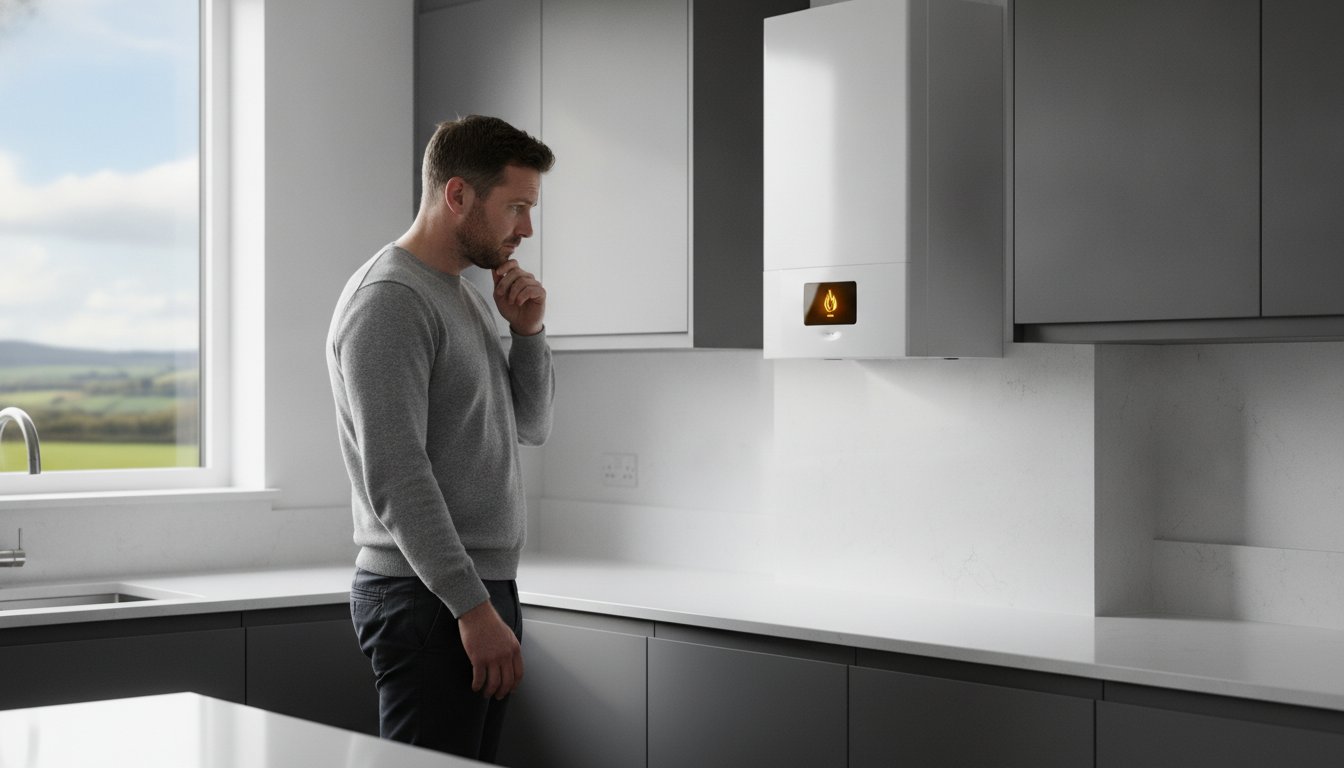
7 Critical Signs Your Boiler Is Dangerous: A 2026 Safety Guide for Homeowners
Could that faint, metallic scent in your hallway actually be a warning that your home is at risk? It’s completely natural to feel a sense of anxiety when your heating system starts acting up, especially if you’re worried about the potential for carbon monoxide poisoning or the stress of unexpected repair costs. You might be tempted to ignore a small leak or a strange soot mark, hoping it’s just a minor glitch. However, knowing the specific signs your boiler is dangerous is the only way to ensure your property remains a safe environment for your family.
We’ve designed this 2026 safety guide to remove the uncertainty from home maintenance. You’ll learn how to identify life-threatening boiler faults and the exact steps to take to protect your home and your loved ones. We provide clear, professional advice on which symptoms require immediate action and how to safely shut down your system if you suspect a serious fault. This guide offers a straightforward roadmap to follow, giving you the peace of mind that comes from being fully informed and in control of your home’s safety.
Key Takeaways
- Identify the specific signs your boiler is dangerous, including the invisible indicators of carbon monoxide that often go unnoticed.
- Learn why internal leaks and unusual noises are critical safety warnings rather than just symptoms of an aging system.
- Master the immediate safety checklist to follow if you suspect a fault, including the vital steps to take within the first ten minutes.
- Understand how regular professional servicing prevents the hidden sludge and neglect that lead to catastrophic failures.
- Gain clarity on the 2026 legal safety standards for homeowners and landlords to ensure your property remains protected and compliant.
Immediate Red Flags: The ‘Silent Killers’ of Boiler Safety
Safety starts with understanding the risks you can’t see. Carbon monoxide (CO) is the most significant threat in any home using gas appliances. It’s a toxic, invisible byproduct that occurs when fuel doesn’t burn completely. While modern systems include advanced Boiler safety features, mechanical wear or flue blockages can still lead to dangerous leaks. Identifying the signs your boiler is dangerous requires a mix of visual inspection and listening to your dedicated safety devices. When gas doesn’t burn properly, it creates ‘incomplete combustion’. This process produces carbon monoxide instead of harmless water vapour and carbon dioxide. Because CO is colourless and odourless, your senses alone cannot detect it. This is why gas smells or a triggered alarm must always be treated as a high-priority emergency. Understanding these mechanisms helps you move from fear to informed action.
Identifying Carbon Monoxide (CO) Leaks
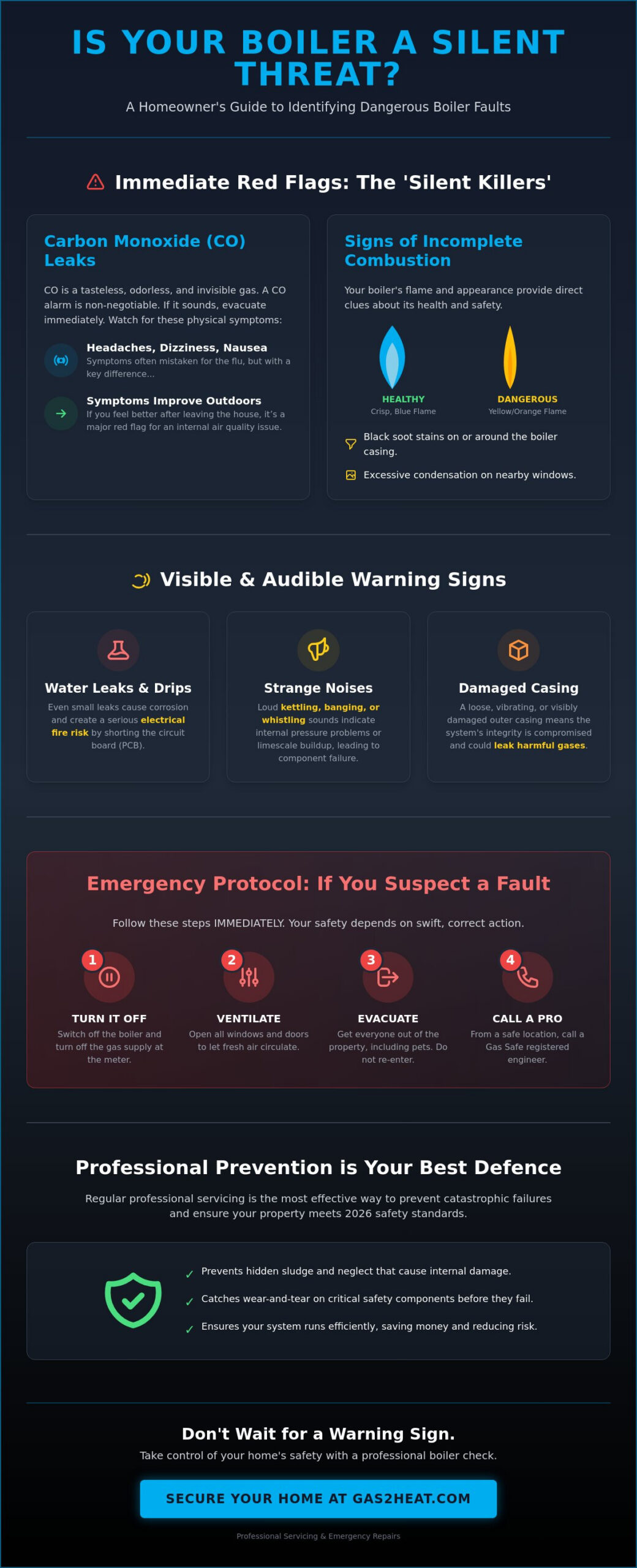
Carbon monoxide is a tasteless, odourless gas that prevents your body from absorbing oxygen correctly. If your CO alarm sounds, treat it as a life-threatening event. Do not wait. Evacuate all residents and pets immediately. You should also watch for physical symptoms that seem to follow a specific pattern. If you or your family experience persistent headaches, nausea, or dizziness that improve once you step outside, your boiler could be leaking toxic gas. These symptoms are often mistaken for the flu or a common cold, but the key difference is how quickly they subside when you breathe fresh air. Reliability in your home’s safety depends on acting the moment these red flags appear.
The Tell-Tale Signs of Incomplete Combustion
You can often spot the signs your boiler is dangerous by looking for visual evidence of poor burning. A healthy boiler should have a crisp, steady blue flame. If the pilot light or burner flame appears lazy, yellow, or orange, it’s a clear indicator that the fuel isn’t getting enough oxygen. This is the primary mechanism behind CO production. When the burner is dirty or the air intake is restricted, the combustion process fails to complete, leaving behind toxic gases.
Keep a close eye on the boiler casing and the surrounding walls for physical changes. Dark brown or black soot stains, scorching, or ‘burning’ marks on the exterior are critical warnings. These marks suggest that combustion gases are escaping the internal chamber where they should be contained. Additionally, watch for excessive condensation on windows in the same room as the appliance. While some moisture is normal in winter, a sudden, heavy increase often points to a blocked flue or a failing ventilation system. These visual cues are your boiler’s way of signalling a serious internal fault before it becomes a disaster.
Visible and Audible Warning Signs You Should Never Ignore
Many homeowners assume that a noisy unit is simply a result of age. This is a dangerous misconception. While modern heating systems are designed for quiet operation, sudden mechanical sounds often indicate a failure in safety components. Your boiler’s outer casing acts as a critical seal. It keeps combustion byproducts contained and ensures the internal pressure remains stable. If you notice the casing is loose, damaged, or vibrating excessively, it’s one of the primary signs your boiler is dangerous. These physical changes suggest the integrity of the system is compromised, potentially allowing harmful gases to escape into your living space.
Water Leaks and Electrical Hazards
Internal leaks are often dismissed as minor plumbing issues, but they represent a severe fire risk. A small, persistent drip inside the cabinet leads to rapid corrosion of copper pipes and steel components. This weakens the system’s ability to handle high pressure, which can lead to a sudden, catastrophic burst. More importantly, water often migrates toward the Printed Circuit Board (PCB). When moisture hits these sensitive electrical controls, it causes short circuits that can trigger an electrical fire. Never attempt to ‘patch’ a visible leak with tape or sealant. These temporary fixes mask the underlying signs your boiler is dangerous without resolving the pressure imbalance. If you spot moisture pooling beneath your unit, it’s time to book a professional boiler repair to secure the system.
Dangerous Boiler Noises: Kettling, Banging, and Whistling
Distinguishing between a ‘nuisance’ noise and a ‘danger’ noise is vital for your safety. Kettling sounds like a whistling tea kettle and occurs when limescale builds up on the heat exchanger. This restricts water flow, causing the water remaining in the exchanger to overheat and turn into steam. This creates immense internal pressure that can crack the heat exchanger.
- Banging or Loud Vibrations: These often signal a failing pump or a delayed ignition fault. If the gas doesn’t ignite instantly, it builds up in the chamber and creates a small explosion when it finally catches.
- Whistling: High-pitched whistling usually points to air trapped in the system or a blocked flue. Both issues cause pressure imbalances that stress the internal seals.
Listen to your system. A healthy boiler should run with a consistent, low-level hum. Any sharp change in volume or tone is a signal that the mechanical safety limits are being pushed. Addressing these sounds early prevents a minor mechanical fault from escalating into a high-risk emergency.
The Hidden Dangers of Boiler Neglect and Sludge
Adopting an “out of sight, out of mind” approach to your heating system is a risky strategy. Many homeowners ask why they should bother with maintenance if their radiators are still warm. The reality is that internal deterioration often happens silently, long before the system completely shuts down. One of the most common causes of catastrophic failure is the buildup of ‘Magnetite’, a thick, black iron oxide sludge. This substance forms when water reacts with the internal metal surfaces of your radiators and pipes. While it starts as a minor efficiency issue, it eventually becomes one of the primary signs your boiler is dangerous. Sludge settles in the heat exchanger, creating localized hot spots where the metal becomes brittle and prone to cracking. A cracked heat exchanger is a direct pathway for toxic gases to enter your living space, significantly increasing the risk of carbon monoxide (CO) poisoning.
The Impact of Skipping Your Annual Service
Skipping an annual service is a gamble with your property’s safety. During a professional visit, an engineer identifies ‘micro-leaks’ that are too small for you to see but indicate a failing seal or a corroded joint. These tiny drips often land on electrical components, creating a slow-burning fire hazard. Crucially, the engineer performs a flue integrity test. This check ensures that every bit of poisonous exhaust gas is safely exiting your building rather than leaking into your attic or wall cavities. Securing Expert Boiler Servicing in Moffat & Dumfries is the most efficient way to catch these issues before they escalate into high-cost emergencies.
Power Flushing: More Than Just Efficiency
Power flushing is often viewed as a luxury, but it’s actually a vital safety procedure for older systems. When sludge accumulates, it restricts water flow and causes the boiler to cycle on and off rapidly. This process, known as short-cycling, puts immense thermal stress on the internal components. The resulting pressure imbalances are often the underlying signs your boiler is dangerous, as they can cause internal valves to fail under the strain. By removing this debris through a professional flush, you protect the heat exchanger and ensure the system operates within its designed safety limits. For more information on maintaining your system’s health, read our guide on Improving Heating Efficiency in Dumfries & Moffat. A clean system isn’t just cheaper to run; it’s fundamentally safer for everyone in the home.
Emergency Protocol: What to Do If Your Boiler Is Dangerous
If you’ve identified any of the signs your boiler is dangerous, the next ten minutes are critical for the safety of your household. Your priority must shift from diagnosis to immediate evacuation. It’s vital to differentiate between a gas leak and a carbon monoxide suspicion. A gas leak usually carries a distinctive “rotten egg” smell, indicating a high risk of explosion. Carbon monoxide, however, is silent and scentless. Regardless of which you suspect, the response remains the same. Do not waste time trying to “fix” the issue or investigating the source. In rural areas like Moffat and the Scottish Borders, where many homes rely on LPG or older gas connections, a rapid and disciplined response is your best defence against property damage or personal injury.
Before you leave the building, avoid any action that could create a spark. Do not flip light switches, use a landline phone, or unplug electrical appliances. Even a tiny electrical arc can ignite a gas buildup. Once you are safely outside, you can use your mobile phone to alert the authorities and seek professional assistance.
The 5-Step Safety Shutdown
Follow these steps in precise order to secure your home and protect your family:
- Step 1: Extinguish all naked flames immediately. This includes candles, cigarettes, and gas hobs. Do not use matches or lighters.
- Step 2: Open all windows and doors. This provides maximum ventilation to disperse any gas or carbon monoxide buildup within the property.
- Step 3: Turn off the gas supply at the control valve. This is typically found next to your gas meter. Turn the handle a quarter turn so it sits at a right angle to the pipe.
- Step 4: Evacuate the premises. Ensure everyone, including pets, is out of the house and move a safe distance away from the building.
- Step 5: Call the National Gas Emergency Service on 0800 111 999. Do this from outside the property.
Contacting a Local Gas Safe Registered Engineer
Once the emergency service has made the site safe, you’ll need a qualified professional to repair the fault. It’s a legal requirement in the UK for anyone working on gas appliances to be on the Gas Safe Register. When an engineer arrives at your home in Dumfries or the Borders, always ask to see their Gas Safe ID card. Check the back of the card to ensure they are qualified for the specific type of work your boiler requires. Using a local Moffat-based specialist ensures a faster response time, which is essential when your heating system is out of action during a cold Scottish winter. At Gas2Heat.com Ltd, we prioritise emergency safety inspections across SW Scotland to get your home back to a safe, comfortable state without delay. If you need urgent assistance, book a professional boiler repair to resolve the issue permanently.
Professional Prevention: Securing Your Home for 2026
Moving from emergency crisis management to long term safety requires a proactive approach to maintenance. While knowing the immediate signs your boiler is dangerous helps you react to a fault, the goal is always to prevent that fault from occurring in the first place. Regular servicing shifts the focus from repair to prevention. It transforms your heating system from a source of anxiety into a reliable, efficient asset. By choosing a Gas Safe certified team, you secure the peace of mind that comes from technical expertise and transparent service. In 2026, home safety is about more than just a working pilot light; it’s about verified performance and meeting modern regulatory standards.
Landlord Gas Safety Certificates (CP12) in Scotland
If you own a rental property in the Scottish Borders, your legal responsibilities are clear and non-negotiable. Landlords must secure an annual gas safety check for every appliance in their property. A Landlord Gas Safety Certificate, often called a CP12, is far more than just a piece of paper. It serves as a comprehensive safety audit. During this inspection, a qualified engineer verifies that the gas pressure is correct, the flue is discharging safely, and all safety devices are operational. This process is designed to catch the subtle signs your boiler is dangerous before they put your tenants at risk. For a detailed look at your obligations, consult our guide on the Landlord Gas Safety Certificate in Moffat & Dumfries. Staying compliant isn’t just about avoiding fines; it’s about ensuring the ongoing safety of your residents.
When to Repair vs. When to Replace
Deciding whether to fix an old unit or invest in a new one is a common dilemma for homeowners. Many industry experts suggest the ’10-year rule’ as a helpful benchmark. As a boiler passes a decade of service, internal components become more prone to fatigue and material failure. Older models often lack the sophisticated sensors found in modern units, making them inherently more difficult to monitor for safety.
Compare the cost of frequent emergency repairs against the long term savings of a new installation. If you find yourself calling an engineer every winter to resolve a recurring fault, the system is likely reaching the end of its safe operational life. A new, high efficiency unit removes the uncertainty of breakdown and significantly reduces your carbon footprint. You can find more information on modern options in our guide to Boiler Installation in Dumfries & Moffat. Choosing a replacement before a catastrophic failure occurs is the most efficient way to protect your budget and your home’s safety.
Take Control of Your Home Safety Today
Understanding the specific signs your boiler is dangerous is the most effective way to prevent a household emergency. From spotting the lazy yellow flame of incomplete combustion to identifying the fire risks associated with internal leaks, you now have the tools to monitor your system with confidence. These red flags are early warnings designed to help you act before a minor fault becomes life-threatening. Safety isn’t just about reacting to a crisis; it’s about the peace of mind that comes from regular, professional oversight and clear maintenance schedules.
This philosophy of proactive maintenance is universal; just as you replace aging boiler parts to prevent failure, critical car components like timing belts require timely attention. To see how expert care can protect your vehicle, learn more about Thurton Auto Centre and their specialized maintenance services.
As a local Moffat-based family business, we prioritize the safety of our community through expert safety diagnostics and comprehensive CP12 certification. Our team of Gas Safe Registered Engineers is ready to provide the technical authority you need to secure your property for the year ahead. Don’t leave your family’s protection to chance. Book Your Emergency Boiler Safety Check in Moffat & Dumfries Today to ensure your heating system remains efficient and safe. You’ve done the hard work of staying informed; now let us handle the technical details to keep your home warm and secure.
Frequently Asked Questions
Can a boiler explode if it’s making a loud banging noise?
Yes, a loud banging noise can indicate a dangerous buildup of pressure or a delayed ignition fault. While total explosions are rare due to modern pressure relief valves, the sound signals that gas is building up or water is turning to steam under immense pressure. Treat any sudden, heavy banging as a high-priority warning and shut down the system to prevent a mechanical failure or a small internal explosion.
What does carbon monoxide smell like?
Carbon monoxide has no smell, taste, or colour, making it impossible for your senses to detect. If you smell a “rotten egg” scent, you’re actually smelling mercaptan, an additive in the gas supply itself. Because you can’t smell the toxic byproduct of incomplete combustion, you must install a dedicated CO alarm that complies with BS 50291 standards to keep your household safe.
Is a leaking boiler an emergency that requires a call-out?
Yes, a leaking boiler is a high-priority emergency that requires a professional inspection. Water inside the cabinet can quickly reach the Printed Circuit Board (PCB), creating a significant risk of an electrical fire. Beyond the fire hazard, leaks indicate that internal components are corroding or that the system’s pressure has reached a critical level. Don’t ignore a small drip; it’s one of the common signs your boiler is dangerous.
My pilot light is yellow; can I still use the heating tonight?
No, you must not use your heating if the pilot light or burner flame is yellow. A yellow or orange flame is a definitive indicator of incomplete combustion, which means your boiler is likely producing carbon monoxide. A safe, efficient flame should always be a crisp, steady blue. Turn the gas supply off at the meter and call a Gas Safe registered engineer to clean the burners and restore safe operation.
How often should a landlord have a boiler safety check in Scotland?
Landlords in Scotland are legally required to have a gas safety check performed every 12 months. This annual inspection ensures all gas appliances, flues, and pipework are in a safe condition for tenants. Since October 2022, landlords must also ensure carbon monoxide alarms are installed in any room with a fixed combustion appliance. Failure to provide an up-to-date CP12 certificate can result in severe legal penalties and puts residents at risk.
What should I do if I smell gas but it’s coming from outside?
You must report an outside gas smell to the National Gas Emergency Service immediately on 0800 111 999. Gas can travel through underground service pipes, drains, or even through the soil into your foundations. Even if the scent seems distant, the leak needs to be located to prevent a potential explosion. Stay away from the area and don’t use any ignition sources nearby.
Can a boiler release carbon monoxide even if it’s turned off?
No, a boiler cannot produce carbon monoxide if it’s completely turned off and no fuel is being burned. CO is only created during the combustion process. However, a boiler that is “off” can still have a gas leak if the supply valves are faulty. While this wouldn’t cause CO poisoning, it creates a serious explosion hazard. If you suspect any fault, turning the unit off is a vital first step in your safety protocol.
Are smart thermostats able to detect boiler safety issues?
No, smart thermostats are not designed to detect signs your boiler is dangerous like gas leaks or carbon monoxide. While they are excellent for managing efficiency and identifying “no heat” faults, they lack the specific chemical sensors required for safety monitoring. You must always use dedicated, battery-operated carbon monoxide alarms alongside your thermostat to ensure your home is fully protected against the risks of faulty gas appliances.
