

Landlord Gas Safety Certificate Cost Scotland: 2026 Pricing & Legal Guide
Did you know that one in every five UK homes would likely fail a gas safety inspection if a professional walked through the door today? For property owners in South West Scotland, this isn’t just a maintenance statistic; it’s a significant legal risk. Failing to understand the landlord gas safety certificate cost scotland or the latest 2026 standards can lead to unlimited fines or even imprisonment. We know that managing a rental in Moffat or Dumfries is rewarding, but the administrative burden often feels like a minefield. You want to keep your tenants safe and your property protected without getting caught out by hidden fees or complex Scottish-specific registration rules.
This guide simplifies the process by breaking down exactly what influences your certification expenses this year. You’ll discover how to navigate the latest legal requirements, including the critical links between gas safety and the Renters’ Rights Act 2025. We’ll also explore how factors like appliance count and rural location logistics impact your total bill. By the end of this article, you’ll have a clear roadmap for achieving full compliance and a reliable strategy for booking local, Gas Safe registered experts who respect your time and your budget.
Key Takeaways
- Understand how the number of gas appliances in your property directly influences the landlord gas safety certificate cost scotland and your final invoice.
- Learn why bundling your annual boiler service with your CP12 inspection is the most cost-effective way to maintain compliance and system health.
- Discover the specific legal ties between valid gas safety records and your status on the Scottish Landlord Register to prevent rent-related legal risks.
- Identify the rigorous safety checks engineers perform, including their mandatory duty to isolate unsafe equipment for tenant protection.
- Gain peace of mind by choosing local Moffat and Dumfries specialists who provide transparent scheduling and regional expertise for every check.
Factors Influencing Landlord Gas Safety Certificate Costs in Scotland
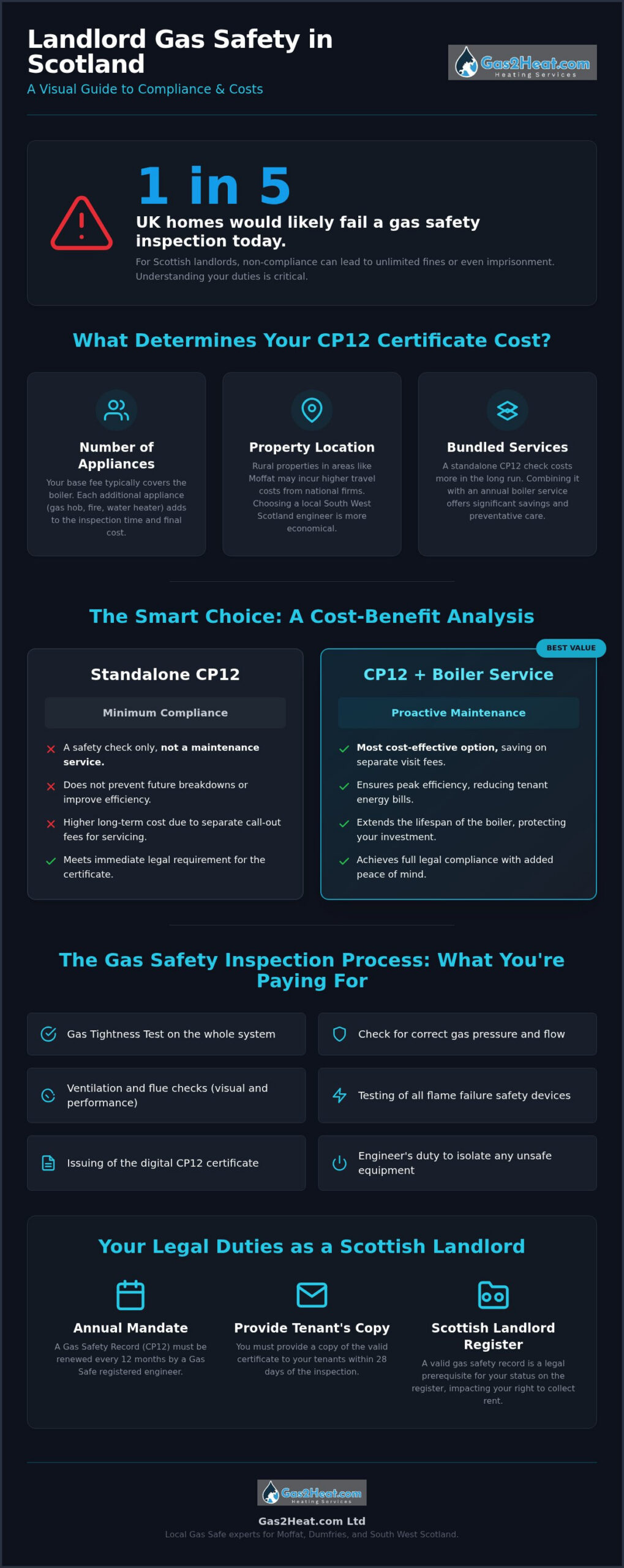
Every landlord in Scotland must hold a valid Landlord Gas Safety Record, commonly known as a CP12. This isn’t a suggestion; it’s a strict annual mandate. These inspections ensure your property meets UK gas safety regulations, protecting your tenants from carbon monoxide poisoning and gas leaks. When you’re budgeting for your annual maintenance, understanding the landlord gas safety certificate cost scotland helps you avoid unexpected surprises. While every property is unique, several standard variables dictate the final price on your invoice.
The Number of Appliances and Your Total Fee
The most significant factor in your quote is the total number of gas appliances in the rental property. Engineers usually charge a base fee that covers the primary appliance, which is almost always the boiler. However, your legal responsibility extends to every gas connection point. This includes:
- Gas hobs and ovens
- Gas fireplaces or space heaters
- Gas-fired water heaters
Each additional appliance requires a separate set of safety tests, including flame failure device checks and gas tightness testing. Before you call for a quote, count every gas-burning item. Missing a gas fire in your initial description can lead to an adjusted fee on the day of the inspection. It’s better to be transparent upfront so your engineer can allocate enough time for a thorough check.
Regional Variations: Rural vs. Urban Pricing
Geography plays a massive role in pricing, especially in South West Scotland. National providers often bake high travel costs into their rates when visiting rural areas like Moffat or the outskirts of Dumfries. Local engineers operate differently. By choosing a specialist based in your region, you’re not paying for an engineer to spend two hours on the M74. You’re paying for their expertise and their proximity.
Demand also fluctuates based on the local market. In central belt cities like Glasgow, high competition might lower base rates, but you often lose the personal service found with a local family-owned business. In rural Dumfries and Galloway, seasonal demand can affect availability. Booking your check during the “shoulder months” before the winter rush can help you secure a preferred slot and avoid the premium rates sometimes associated with emergency winter call-outs.
Finally, consider the administrative side of the service. By 2026, digital certificate delivery is the industry standard. Most reputable firms include the secure storage and instant email delivery of your CP12 in the base price. This ensures you can provide a copy to your tenants within the 28-day legal window without chasing paper records or paying extra for postage.
Standalone CP12 vs. Combined Maintenance: A Cost Comparison
Many property owners treat the annual gas safety check as a simple tick-box exercise. However, focusing solely on the lowest landlord gas safety certificate cost scotland can be a false economy. A standalone CP12 is a safety inspection, not a maintenance service. It confirms that your appliances are currently safe to operate, but it does nothing to prevent them from breaking down next month. By booking a safety check on its own, you’re paying for an engineer’s travel and time for a visual inspection and basic testing without addressing the actual health of the system.
The smartest financial move is to bundle your CP12 with an annual boiler service. When an engineer is already at your property in Moffat or Dumfries, the incremental cost of performing a full service is significantly lower than booking two separate visits. This “per-task” efficiency saves you money immediately and reduces the administrative hassle of coordinating multiple appointments with your tenants.
The Benefits of a Combined Boiler Service
A full boiler service involves deep cleaning internal components, checking seals for wear, and optimising the combustion process. While a CP12 confirms the boiler isn’t leaking gas, the service ensures it runs at peak efficiency. This reduces energy bills for your tenants and extends the overall lifespan of the appliance. If you want to understand the technical steps involved in a professional tune-up, our expert boiler servicing guide provides a detailed breakdown of what a local Gas Safe engineer looks for during the process.
Long-Term Savings Through Preventative Care
Proactive maintenance is your best defence against the “emergency” rates associated with winter breakdowns. A well-maintained system is less likely to fail when the temperature drops in the Scottish Borders, saving you from expensive out-of-hours repair bills. Beyond the immediate costs, the Scottish Government’s Repairing Standard statutory guidance requires landlords to keep the property in a reasonable state of repair. A documented history of annual servicing proves you are meeting these obligations, which is vital for tenant retention and legal protection.
To further enhance efficiency, many landlords now pair their annual checks with the installation of smart thermostats. These devices allow for better control over the heating system, reducing strain on the boiler and providing another layer of modern convenience for your residents. Booking a combined maintenance visit allows you to handle these upgrades and legal checks in one streamlined session, ensuring your investment remains profitable and protected.
The Gas Safety Inspection Process: What are You Paying For?
When you invest in the landlord gas safety certificate cost scotland, you aren’t just buying a piece of paper. You’re paying for the technical expertise and legal accountability of a Gas Safe registered engineer. This registration is the only legal way to ensure your property remains compliant. If an uncertified individual performs the check, the certificate is invalid, leaving you exposed to severe legal penalties. Every penny of the fee covers a methodical series of tests designed to prevent carbon monoxide poisoning and gas explosions.
During the inspection, the engineer acts as a safety auditor for your entire gas infrastructure. If they identify an appliance that is “Immediately Dangerous,” they have a mandatory legal duty to cap it off. This means the appliance is disconnected from the gas supply until it is repaired. While this can be a temporary inconvenience, it’s a vital safety net that protects your tenants’ lives and your reputation as a responsible property owner.
Step-by-Step Appliance Safety Checks
The inspection follows a rigorous protocol to ensure no stone is left unturned. Key technical steps include:
- Tightness Testing: The engineer performs a pressure test at the gas meter. This confirms the entire pipework system is sealed and leak-free.
- Burner Pressure and Gas Rate: Every appliance is tested to ensure it’s burning gas at the correct rate as specified by the manufacturer.
- Flue Flow Testing: Engineers check the chimney or flue to confirm that combustion products are being evacuated safely to the outside air.
The CP12 Documentation and Record Keeping
The Landlord Gas Safety Record, or CP12, is the formal output of this process. It must contain the engineer’s name, signature, and unique Gas Safe ID number, alongside the property address and the date of the inspection. It also lists the location and description of every appliance tested, along with any safety defects identified.
According to the Scottish Government statutory guidance for landlords, you have a strict legal duty to provide a copy of this certificate to your existing tenants within 28 days of the inspection. For new tenancies, the tenant must receive a valid copy before they move into the property.
Modern, tech-enabled services from local experts like Gas2Heat simplify this administrative burden. Digital certificates are issued via email immediately after the check, ensuring you have an instant, searchable record. This digital approach makes it easy to prove compliance during audits or when renewing your status on the Scottish Landlord Register. You must keep these records for at least two years to remain fully compliant with national safety laws.
Scottish Landlord Obligations: Unique Legal Requirements
While general safety laws apply across the UK, Scotland operates under a distinct regulatory framework that places extra responsibility on property owners. Understanding the landlord gas safety certificate cost scotland involves more than just the engineer’s fee; it’s about safeguarding your legal right to operate as a landlord. In Scotland, gas safety compliance is inextricably linked to your professional standing and your ability to legally collect rent from your tenants. Failure to respect these regional nuances can lead to complications that far outweigh the cost of a standard inspection.
Local authorities in areas like Dumfries & Galloway and the Scottish Borders are increasingly proactive in monitoring safety records. They have the power to issue Rent Liability Orders if a property doesn’t meet the Repairing Standard. This effectively allows tenants to stop paying rent until the landlord provides proof of a valid gas safety check. Beyond rent risks, criminal prosecution in Scottish courts can result in unlimited fines or imprisonment for serious negligence. Staying compliant isn’t just about safety; it’s about business survival.
Scottish Landlord Registration and Gas Safety
In Scotland, every private landlord must be on the Scottish Landlord Register. To remain “fit and proper,” you must demonstrate that you meet all safety obligations, including annual gas checks. If your CP12 expires and isn’t renewed, the local council can revoke your registration. This makes it a criminal offence to continue let your property. Regional specialists understand these stakes and ensure your documentation is filed correctly to satisfy council audits. For a deeper dive into these specific regional rules, consult our comprehensive landlord guide.
Carbon Monoxide Alarm Legislation in Scotland
As of 2026, Scottish standards for Carbon Monoxide (CO) alarms are significantly more stringent than those in many other parts of the UK. You’re legally required to have a CO alarm in every room where there’s a fixed combustion appliance, such as a boiler, gas fire, or water heater. These units must be either:
- Mains-powered with a battery backup and interconnected with other smoke/heat alarms.
- Powered by a sealed, tamper-proof “long-life” lithium battery.
During a safety check, your engineer will verify the placement and functionality of these alarms. If your system doesn’t meet the current interconnectedness requirements, the engineer cannot mark the property as fully compliant. This highlights why local knowledge is vital; an engineer unfamiliar with Scottish-specific legislation might miss these details, leaving you legally exposed. Ensure your property meets every regional standard by booking your local gas safety inspection with a team that understands the Dumfries and Galloway property market.
Choosing a Local Gas Safe Engineer in South West Scotland
National maintenance firms often treat rural logistics as an afterthought. For landlords in Moffat, Lockerbie, or Annan, this often results in missed appointments or inflated travel surcharges that drive up your expenses. Choosing a Moffat-based specialist provides a level of accountability that national call centres simply can’t match. When you evaluate the landlord gas safety certificate cost scotland, factor in the value of regional reliability. A local engineer isn’t just a contractor; they’re a neighbour who understands the specific challenges of managing property in Dumfries and Galloway.
Gas2Heat provides a comprehensive “one-stop-shop” for property compliance. Beyond issuing your CP12, we handle everything from minor repairs to full boiler installation. This integrated approach means you don’t have to manage three different contractors to keep a single property running. If an inspection reveals a fault, we have the local parts network and technical expertise to resolve the issue quickly, minimising disruption for your tenants.
The Advantage of Regional Expertise
The housing stock in South West Scotland is diverse, ranging from modern developments in Dumfries to historic stone-built cottages in the Borders. These older properties often feature complex pipework or legacy heating systems that require a nuanced touch. Local engineers are familiar with these regional quirks. We know which systems are prone to specific faults and how to maintain them effectively. This regional knowledge prevents the “misdiagnosis” of issues that often happens when engineers from outside the area encounter unfamiliar setups. Building a long-term relationship with a local firm ensures your property history is documented, making future audits and maintenance sessions much smoother.
Booking Your 2026 Compliance Check
Timing is everything when it comes to gas safety. You should aim to book your inspection between 10 and 12 months after your last check. This allows you to maintain your “anniversary date,” giving you the flexibility of an early check without shortening the lifespan of your current certificate. When requesting a quote, be transparent about the number of appliances. A clear, upfront description of your boiler, gas fires, and hobs ensures your quote is accurate and prevents “on-the-day” price adjustments.
Ready to secure your property for the year ahead? Don’t leave your compliance to chance or wait for a winter breakdown to find a reliable contact. Contact Gas2Heat for professional gas safety certification in South West Scotland and experience a streamlined, transparent service that puts your peace of mind first.
Secure Your Rental Property for 2026
Managing a rental property in South West Scotland requires balancing tenant safety with operational efficiency. You now have the tools to navigate the landlord gas safety certificate cost scotland by bundling your annual inspection with a full boiler service. This proactive strategy satisfies the strict requirements of the Scottish Landlord Register and prevents the high costs of emergency winter repairs. By choosing a local expert, you ensure that regional standards, such as interconnected carbon monoxide alarms, are fully met without the hidden surcharges often found with national firms.
Gas2Heat has served Moffat, Dumfries, and the Borders since 2017. Our Gas Safe Registered engineers provide transparent local pricing and digital certificates for your records, ensuring you stay compliant without the stress. Don’t leave your legal obligations to the last minute. Book Your Landlord Gas Safety Certificate with Gas2Heat Today to protect your investment and your tenants. We make safety simple so you can focus on managing your property with total peace of mind.
Frequently Asked Questions
Beyond gas safety, maintaining your property’s electrical health is another vital component of the Repairing Standard. For landlords who need to upgrade their electrical systems, Foster Electrical provides expert services such as full property rewires to ensure your investment is safe and compliant for years to come.
How much does a landlord gas safety certificate cost in Scotland?
The landlord gas safety certificate cost scotland depends on the total number of gas appliances in your property and your specific location. Most providers charge a base fee for the first appliance, with incremental charges for additional items like gas fires or hobs. Choosing a local Moffat specialist helps you avoid the travel surcharges often added by national firms. Always request a transparent quote that accounts for every gas connection to prevent hidden fees.
Is a gas safety certificate a legal requirement for landlords in Scotland?
Yes, holding a valid gas safety certificate is a strict legal requirement for all landlords in Scotland. This mandate is governed by the Gas Safety (Installation and Use) Regulations 1998 and the Scottish Government’s Repairing Standard. You must provide a copy of the record to new tenants before they move in and to existing tenants within 28 days of the inspection. Failure to comply can lead to criminal prosecution and unlimited fines.
How often do I need to renew my landlord gas safety certificate?
You must renew your gas safety certificate every 12 months. To make scheduling easier, you can arrange an inspection up to two months before your current certificate expires without losing your original anniversary date. This flexibility ensures you remain compliant year-round. It’s best to book early to avoid the winter rush, especially if you manage multiple properties in Dumfries and Galloway that require coordinated access during the busy season.
Can I do my own gas safety check if I am a landlord?
No, you cannot perform your own gas safety check unless you are a qualified engineer on the Gas Safe Register. The law is very specific: only an engineer with the correct professional certifications can legally inspect appliances and issue a CP12. Attempting a DIY check or using an unregistered contractor is illegal. It puts your tenants at risk and leaves you fully liable for any safety incidents, insurance failures, or legal penalties.
What happens if my gas safety certificate expires?
If your certificate expires, you are in immediate breach of your legal duties as a landlord. This can result in your removal from the Scottish Landlord Register, preventing you from legally letting property. Additionally, local councils may issue Rent Liability Orders, which allow tenants to stop paying rent. Your landlord insurance will also likely be voided, leaving you financially exposed if an accident occurs. Prompt renewal is essential for your business continuity.
Does a gas safety certificate include a boiler service?
No, a standard gas safety certificate is a compliance check, not a maintenance service. While the engineer verifies that the boiler is safe to operate, they don’t perform the deep cleaning or component optimisations included in a boiler service. Most landlords choose to bundle these tasks together. This approach is more cost-effective and ensures your heating system stays both legally compliant and mechanically efficient throughout the year, reducing the risk of breakdowns.
How long does a gas safety inspection usually take?
A typical gas safety inspection takes between 30 and 60 minutes to complete. The exact duration depends on the number of gas appliances and how easily the engineer can access the gas meter and pipework. If you have multiple gas fires or a complex boiler setup, the process might take slightly longer. Ensuring your tenants are home and that the area around the appliances is clear helps the engineer work quickly and efficiently.
What appliances are covered in a landlord gas safety check?
The inspection covers all gas appliances and flues provided by the landlord for the tenant’s use. This includes the central heating boiler, gas water heaters, gas hobs, and any gas fireplaces. The engineer also tests the gas pipework and the meter for leaks. Any gas appliances owned by the tenant are not part of your legal check, though the engineer will still inspect the safety of the connection point used by those appliances.
