
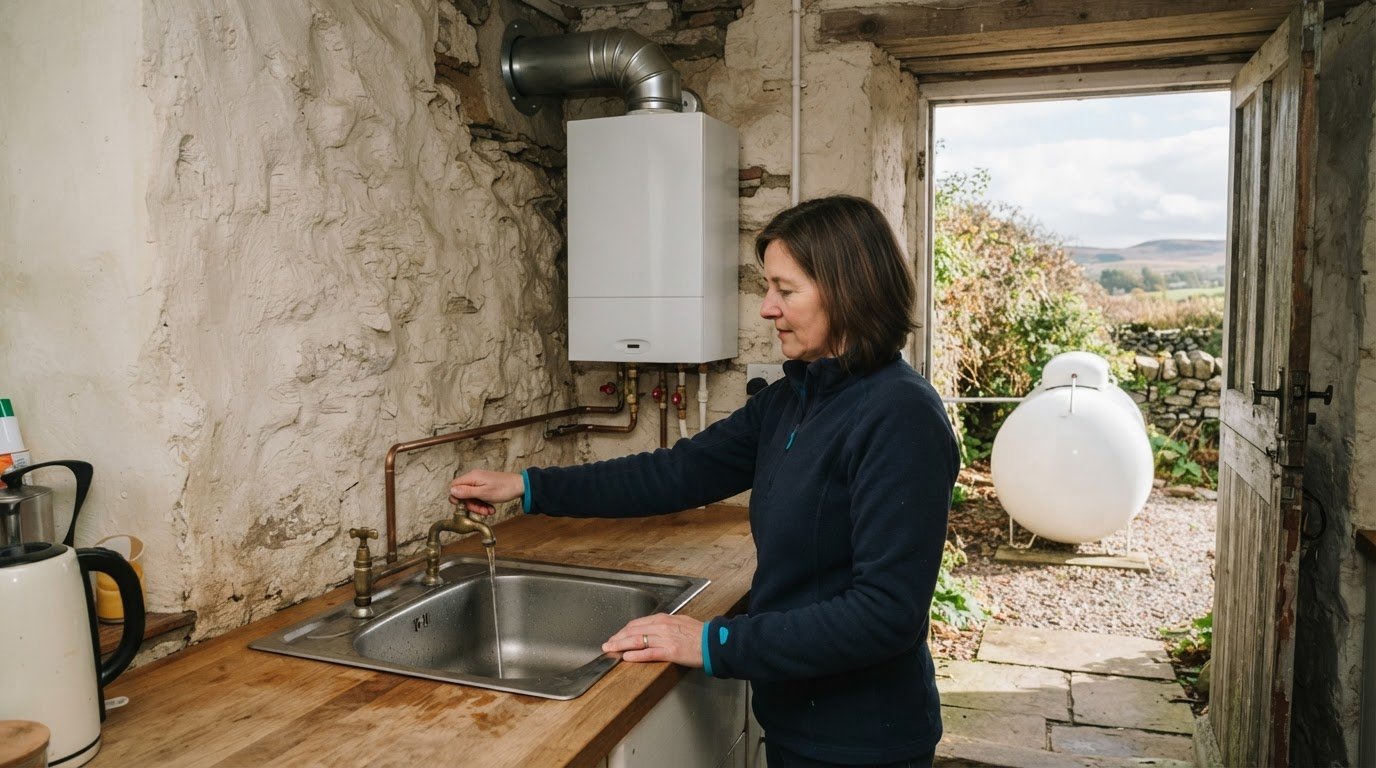
Oil to combi boiler conversion in Scotland: costs and grants
An oil-to-combi boiler conversion in Scotland is not covered by the main home-heating grants discussed here, which focus on replacing fossil-fuel heating with a heat pump. An optional interest-free loan may help with the remaining installation cost.
It makes sense to look for financial support before committing to a heating change. Conversion costs depend on the work involved, including pipework alterations, the boiler’s location and any work needed on the oil tank. A combi provides hot water on demand without a separate cylinder, but may not meet every household’s demand.
This guide explains what affects the cost of an oil-to-combi conversion, which Scottish grants or loans may apply, and how household size and hot-water use inform boiler output. It also covers the practical advantages and drawbacks of keeping oil heating, helping you compare the options.
Key Takeaways
- Conversion costs depend on more than the boiler: pipework changes, the tank and installation requirements can all affect the work involved.
- Scottish support is aimed at low-carbon heating options, so understand which grants or loans may apply before choosing a replacement system.
- Match boiler output to your home’s size, radiator count and hot-water demand to avoid choosing a system that doesn’t suit your household.
- In rural areas, the availability of a mains gas connection can shape whether a gas combi is a practical alternative to oil heating.
Factors affecting installation costs, including conversion to another boiler type
The installation work, fuel choice and household demand all affect the likely costs. A combi provides hot water on demand, but the right option depends on the home’s existing system.
Installation Costs and Conversion Work
Converting an oil system involves more than replacing the boiler. A combi installation may require changes to heating and hot-water pipework and removal of the separate cylinder. The property, pipework, boiler location and oil-tank requirements all affect the scope and price, which is provided after a quote request. A new oil combi installation or conversion with a new tank typically takes two to three days. The key risk is choosing a combi that cannot meet the household’s simultaneous hot-water demand.
Alternatives to Mains Gas
Scottish homes without mains gas can retain oil heating or consider a heat pump. These figures are examples, not household-specific forecasts. A separate Scottish comparison checked heating oil at 121.89p per litre on 14 November 2026. Fuel use, prices and system efficiency all affect bills.
Scottish Standards and Installer Certification
Oil-fired work is subject to building regulations, and Approved Document J requires a carbon monoxide alarm with a new appliance. Oil boiler installation should be carried out by an OFTEC-registered engineer or checked by an OFTEC technician. For a gas combi, use an installer with Gas Safe registration; OFTEC credentials relate to oil work. Matching the engineer’s expertise to the fuel is essential.
Rural Gas Combi Boiler Replacements
An oil boiler can be replaced with a gas combi in rural Scotland if the property has access to mains gas. Without a connection, oil or a heat pump may be alternatives. Combi boilers often suit smaller homes with one or two bathrooms, while simultaneous hot-water demand can make them less suitable for larger households. Match the engineer’s registration to the fuel, and allow two to three days where the conversion includes a new oil tank.
Home Energy Scotland grants and loans
Home Energy Scotland support is aimed at energy-efficiency improvements and low-carbon heating, not a direct oil boiler replacement with another oil boiler or combi. Eligible rural and island households may receive up to £9,000 for a heat pump. An optional interest-free loan may help cover the remaining installation cost.
This distinction matters when considering an oil-to-combi conversion. A combi still burns oil, so a heat-pump grant should not be treated as funding for a like-for-like fuel change. Instead, consider whether changing the heating source could suit the property, its radiators and hot-water needs. A heat pump also supplies heat differently, so the grant amount alone cannot determine whether the project will work for your home.
The Boiler Upgrade Scheme offers grants towards replacing fossil-fuel heating systems with a heat pump or biomass boiler, according to the UK Government. However, the scheme is open to people in England and Wales, so it is not the Scottish route for funding an oil-to-combi conversion. Check the nation-specific scope before building a project budget around a scheme.
For Scottish homeowners, compare the options by separating the installation support from future running costs. A heat pump grant reduces eligible upfront costs, while an optional interest-free loan can help spread the remaining balance. A cheaper initial replacement may not be the lowest-cost choice over time, because fuel prices, system efficiency and household demand affect running bills. Carbon reduction is another reason to consider a heat pump rather than replacing an oil boiler with a combi that continues using oil.
First decide whether you want to retain oil or change the heating source. Then assess grant eligibility alongside the home’s heating requirements. This helps avoid assuming that support for a low-carbon upgrade also covers an oil boiler replacement.
Household size and boiler output requirements
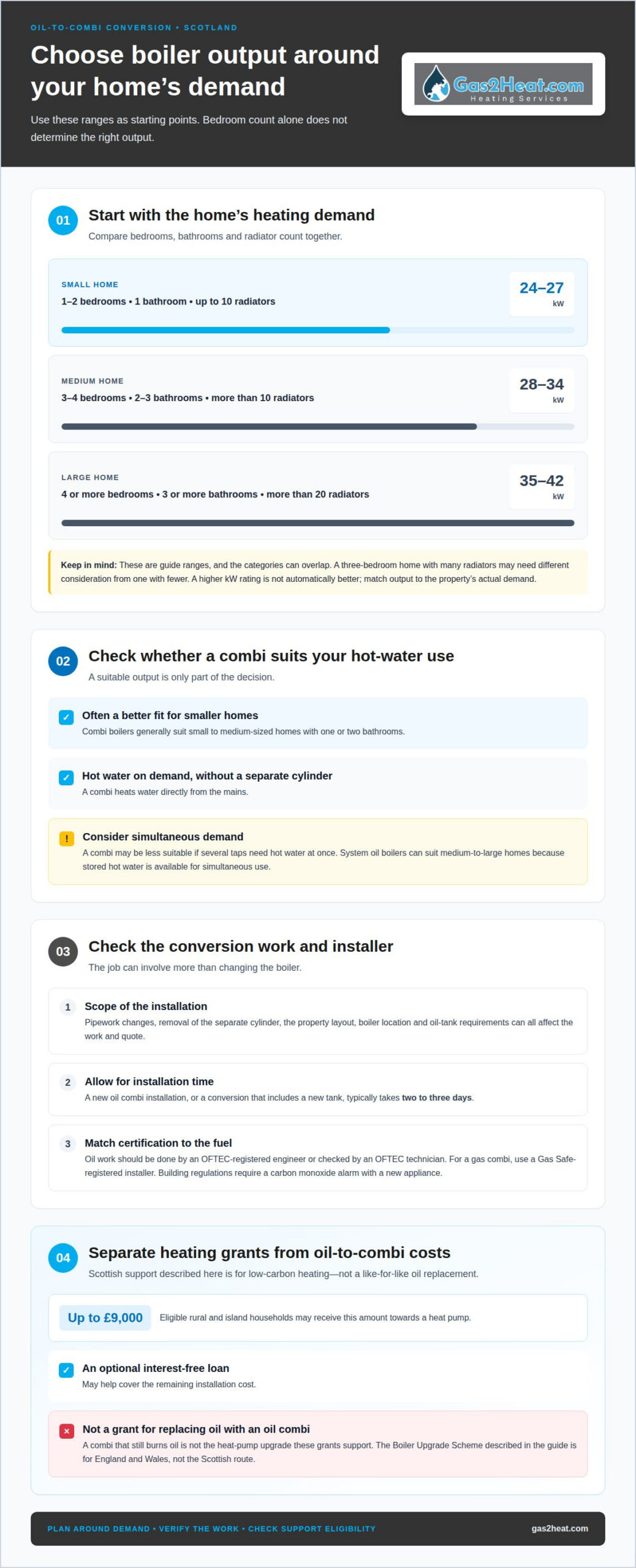
Boiler output should reflect the home’s heating demand and hot-water use, not bedroom count alone. For oil combi models, the guide ranges are 24-27 kW for a small home with 1-2 bedrooms and one bathroom, 28-34 kW for a medium home with 3-4 bedrooms and 2-3 bathrooms, and 35-42 kW for a large home with 4 or more bedrooms and 3 or more bathrooms. These are starting points for comparing typical requirements.
Radiator count offers another useful indication of the heating system’s demand. A small home with 0-10 radiators is matched with 24-27 kW; a medium home with more than 10 radiators, 28-34 kW; and a large home with more than 20 radiators, 35-42 kW. The categories overlap, so a three-bedroom home with many radiators may need different consideration from one with fewer.
- Small home: 24-27 kW, 1-2 bedrooms, one bathroom or up to 10 radiators.
- Medium home: 28-34 kW, 3-4 bedrooms, 2-3 bathrooms or more than 10 radiators.
- Large home: 35-42 kW, 4 or more bedrooms, 3 or more bathrooms or more than 20 radiators.
Combi boilers generally suit small to medium-sized homes with one or two bathrooms. They heat water directly from the mains, so no separate hot-water tank is needed. However, they may be less suitable when several taps need hot water at once. System oil boilers can suit medium-to-large homes because stored hot water is available for simultaneous use.
Before replacing a boiler, have the home’s layout, radiator demand and hot-water use assessed to help select the right output. A higher kW rating is not automatically better: the boiler needs to meet the property’s actual demand. Keep any finance or credit decision separate from technical sizing. Boiler output is chosen for the heating system, not the household’s borrowing capacity.
Can an oil boiler be replaced with a gas combi boiler in rural Scotland?
Yes. An oil boiler can be replaced with a gas combi if the rural property can connect to mains gas. A gas combi generally depends on a mains gas supply to provide heating. The UK has four million homes off the gas grid, so this constraint affects properties beyond towns. Households without mains gas can retain oil heating or consider another source, such as a heat pump.
A mains gas connection is only the first consideration. A gas combi heats water on demand and removes the need for a separate hot-water cylinder, but it must meet the home’s heating and hot-water demand. A smaller home with one or two bathrooms may suit a combi better than a larger property with several bathrooms and simultaneous hot-water use. Boiler output, radiator demand and layout all inform the choice.
Switching from oil to gas also changes the fuel supply and installation work. The installer assesses the route for gas pipework, the boiler position and connections to the existing heating system. The research identifies that many older boilers run on a 15 mm gas pipe, while most modern combi boilers need a 22 mm pipe to function efficiently. That difference makes pipework assessment important before selecting a boiler model. Converting to a combi can also require changes to heating and hot-water pipework.
Rural access can affect the available options and project planning. Where mains gas is unavailable, a gas combi is not a workable replacement; keeping oil or switching to another heating source are alternatives. Where a connection exists, installation can proceed if the pipework, output and hot-water requirements suit the property. Replacing an oil boiler with a gas combi also means moving away from stored heating oil and relying on a mains fuel supply.
For a gas-combi replacement, arrange a professional assessment of the property’s gas connection, pipework and heating demand. Discuss a boiler installation.
Gas2Heat.com
Gas2Heat.com Ltd can help you turn the options into a practical boiler replacement plan. Its boiler installation service supports homeowners considering a change, while servicing and repairs help address the needs of an existing system. The right next step depends on your home’s fuel supply, pipework, hot-water demand and preferred heating system. Bringing those details together helps clarify whether a combi suits your property or another option deserves consideration. For landlords, Gas2Heat.com Ltd also provides Landlord Gas Safety Certificates. If you’re weighing up an oil to combi boiler conversion Scotland or planning a boiler replacement, contact Gas2Heat.com Ltd to discuss your heating needs.
Choose a heating plan that fits your home
Base your next step on what you need from your heating system, not simply on which boiler will replace the old one. For an oil-to-combi boiler conversion in Scotland, consider how your household uses hot water, whether mains gas is available, and whether retaining oil or changing to another heat source better suits the property. A clear assessment helps turn those priorities into a practical plan.
Gas2Heat.com provides boiler installation, servicing and repairs, helping with both replacement planning and ongoing boiler care. If you’re ready to discuss the options for your home, contact Gas2Heat.com to discuss your heating plans. Take the next step with a clearer sense of what you want your system to do.
Frequently Asked Questions
Are there oil-fired boiler replacement grants available?
Scottish support is generally aimed at lower-carbon heating, rather than replacing oil with another oil-fired boiler or a gas combi. Home Energy Scotland support may contribute towards a heat pump, and an optional interest-free loan may help with the remaining balance. Keep these options separate: do not include a heat-pump grant in the budget for an oil-to-combi conversion.
Do You Need to Upgrade Radiators When Replacing a Boiler?
No. Replacing a boiler does not automatically mean replacing the radiators. Their condition and ability to meet the home’s heating demand matter more than age alone. For example, rooms that struggle to reach a comfortable temperature may affect the system assessment. The replacement design should account for the existing radiators rather than assume they all need upgrading.
Does where you live change the cost?
Yes. A rural location can affect labour and callout costs in parts of Scotland where OFTEC engineers are less readily available. Travel distance and the work required at the property also influence the job. For example, an installation involving an oil tank or altered pipework may have a different scope from a straightforward boiler replacement, even within the same region.
Is my home suitable for a combi boiler?
A combi generally suits smaller or medium-sized homes with modest simultaneous hot-water demand. For an oil-to-combi boiler conversion, Scotland households should consider their daily routines: a home using several bathrooms at once may find stored hot water more practical. Think about morning and evening use, not just bedroom numbers, when deciding whether on-demand hot water suits your household.
What changes the price?
The conversion scope is a major cost factor. For an oil-to-combi boiler conversion, Scotland homeowners may need to account for pipework alterations, boiler positioning, cylinder removal and oil-tank requirements. The property’s heating and hot-water needs also determine the boiler selected. For example, keeping suitable existing pipework involves different work from reconfiguring connections for a new combi system.
What’s included in the price?
There is no universal list of work included in every conversion. The price depends on the property and is provided after a quote request. The scope should specify which boiler, fitting work and system changes are covered, including pipework alterations, cylinder removal or tank work. That way, you can understand what the quote includes before deciding how to proceed.

Leave a Reply
You must be logged in to post a comment.