
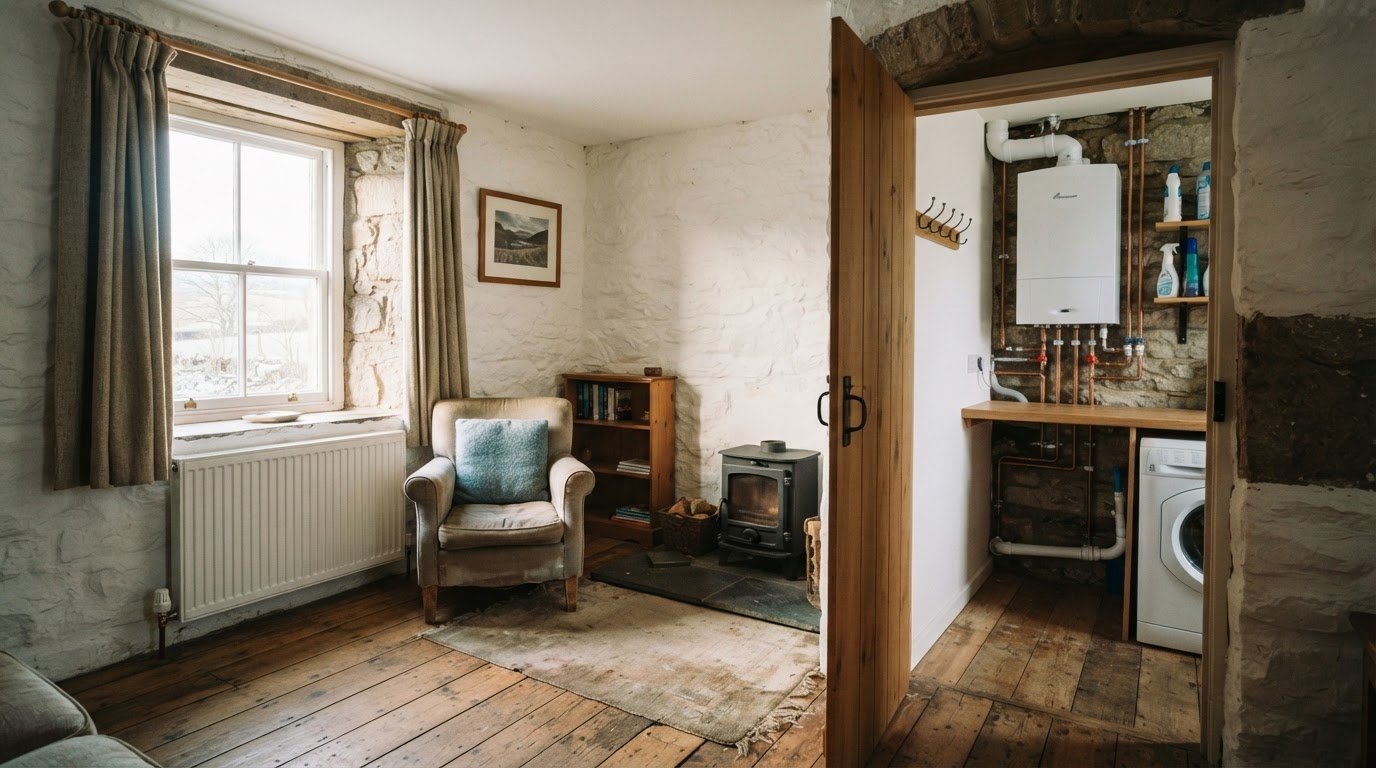
Holiday home heating solutions in Scotland: compare systems
The best heating system for a Scottish holiday home does not always need to heat every room at once. Holiday home heating solutions in Scotland include gas central heating, heat pumps and controls that let you manage warmth remotely or room by room. Zoned heating can help warm only the bedrooms guests will use.
It is understandable to want a system that keeps the property comfortable without wasting energy when it is empty. The right option depends on the home, its existing heating and how you plan to use it. Each system has different considerations, from how it supplies heat to the control it offers while you are away.
This guide compares central heating options, clean heating systems and gas heating in Scotland. You’ll learn what each can offer and which factors matter when choosing a warmer, more practical setup for your holiday home.
Key Takeaways
- Remote controls and room-by-room zoning can help match heating to arrival times and guest use.
- Compare heat pumps as a clean heating option, but note that the described Scottish grant excludes second homes and holiday homes.
- Gas remains a common heating choice in Scotland; the right system depends on the property and how it’s used.
- Heating costs vary with occupancy, insulation and system choice. Explore how underfloor heating installation could suit your property.
Central heating options
Central heating can deliver warmth through radiators, underfloor heating or electric systems. For holiday home heating solutions in Scotland, the right choice depends on the property, its existing setup and how guests use each room. Controls also affect comfort and energy efficiency, especially when the home is empty between stays.
Smart Thermostats and Remote Controls
A smart thermostat lets owners adjust heating through an internet-connected control or mobile app. Before installation, a heating professional assesses the existing controls, system compatibility and internet connection. Remote access lets owners switch the heating on before arriving, while zoned controls manage rooms separately. For example, you can heat guest bedrooms without warming every room equally.
For an unoccupied cottage, a professional can assess exposed pipework, cold spots and existing control settings, then recommend suitable frost protection, such as background heat and insulation for vulnerable pipes. These measures help reduce the risk of frozen pipes and frost damage during cold spells, particularly when the property is vacant and no one can respond quickly to a temperature drop.
Sizing Heating for Older Cottages
A professional sizes a heating system by assessing the cottage’s rooms, construction and heat loss. They consider ceiling height, window condition, wall and roof insulation, draughts and exposure to wind. A stone cottage with older windows loses heat differently from a renovated home, so floor area alone cannot determine the system design. This assessment helps establish each room’s heating needs.
Insulation improvements can reduce heat loss before or alongside a heating upgrade. Depending on the building, a professional may recommend loft or suitable wall insulation, or draught-proofing around doors and windows. For holiday home heating solutions in Scotland, recommendations should account for the property’s construction and ventilation needs. Addressing gaps and improving insulation can help rooms stay warmer while reducing the energy needed to maintain comfort.
Clean heating systems in Scotland
Heat pumps can reduce reliance on fossil fuels, but the best fit depends on the property and its energy needs. For a holiday home, access to mains gas, occupancy and insulation all shape the choice.
Heating Options Without Mains Gas
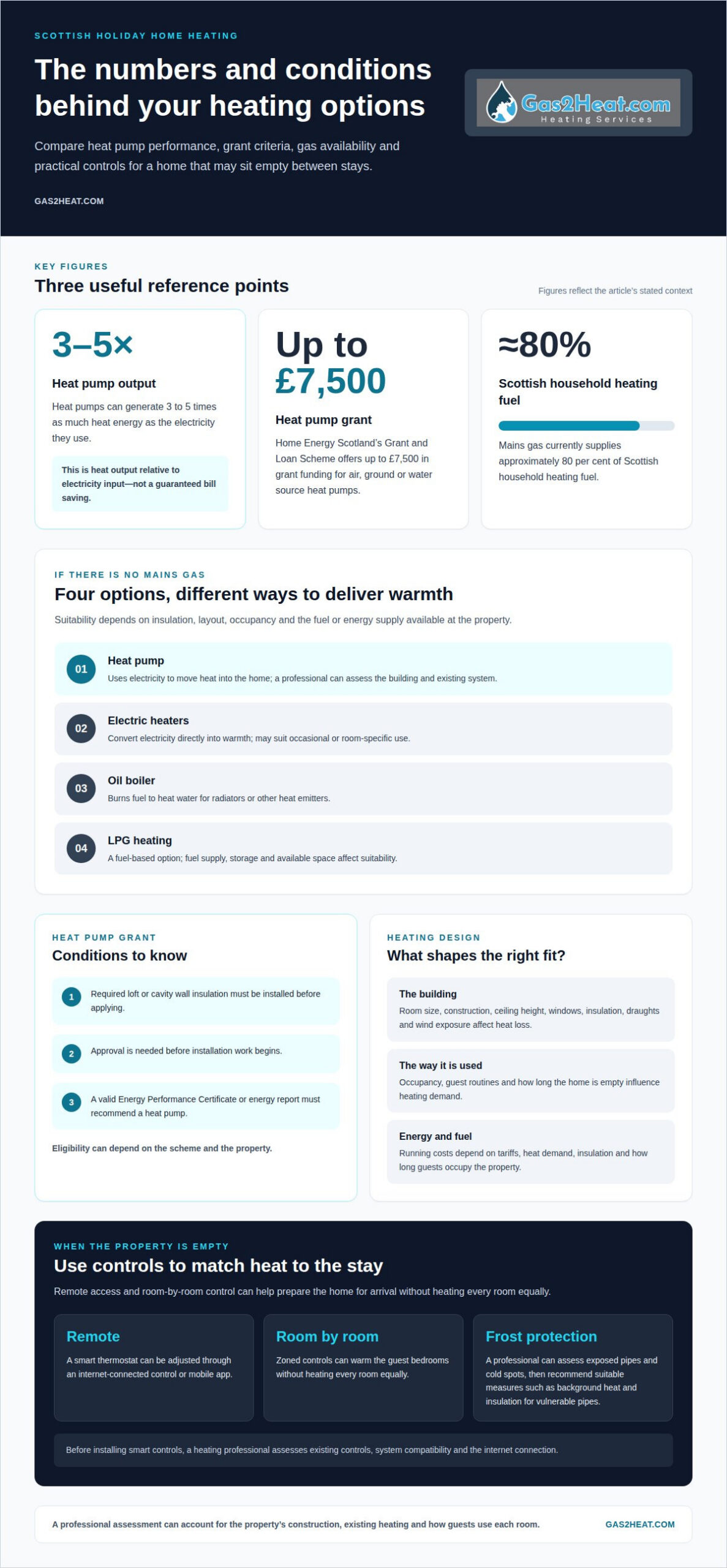
Remote homes without mains gas can use heat pumps, electric heaters, oil boilers or LPG heating. Heat pumps use electricity to move heat into the home, while electric heaters convert electricity directly into warmth. Oil and LPG boilers burn fuel to heat water for radiators or other emitters. The property’s insulation, layout and how often guests stay affect which system is practical.
For eligible homes, heat pumps can be worth considering as a renewable option. They can generate 3 to 5 times as much heat energy as the electricity they use. That figure describes heat output relative to electricity input, not a guaranteed bill saving. A professional can assess the building and existing system before recommending an installation.
Heating and System Running Costs
Running costs for heat pumps, electric heaters, oil boilers and LPG heating depend on energy tariffs, heat demand, insulation and how long guests occupy the property. Compare the energy each system uses to deliver warmth, not just the equipment type. For example, a poorly insulated cottage may need more heat than a well-insulated home with similar occupancy.
Heat pump performance and cost depend on the property and its heating design. Electric heaters may suit occasional or room-specific use, while fuel-based boilers need an appropriate fuel supply. These factors influence the overall cost of heating, so one figure cannot represent every holiday home.
Home Energy Scotland’s Grant and Loan Scheme offers up to £7,500 in grant funding for air, ground or water source heat pumps. Required loft or cavity wall insulation must be installed before applying, and approval is needed before installation work begins. Eligibility for heat pump grant support can depend on the scheme and property.
For this Scottish grant, a valid Energy Performance Certificate or energy report must recommend a heat pump. This is a grant criterion, not an EPC rating threshold for holiday lets. If an existing boiler needs replacing instead, boiler installation may be a relevant option for the property.
Gas heating in Scotland
Mains gas currently supplies approximately 80 per cent of Scottish household heating fuel. Where a holiday home has a mains connection, a gas boiler can heat water for radiators and provide central heating. System performance depends on the boiler, controls, property heat loss and how guests use the rooms. A heat pump is another option, but it works differently and needs a suitable system design.
Oil and LPG are alternatives where a property lacks mains gas. No single option suits every remote cottage: fuel storage, available space, the existing heating system and the building’s layout all affect suitability. A heating professional can assess these factors when planning an installation. For a property with an existing gas boiler, servicing helps assess its condition and keep its operation under review.
Funding depends on the home and the programme, not simply on choosing gas or a heat pump. Warmer Homes Scotland supports eligible homeowners and private-sector tenants, but applicants must live in the property as their main residence. That means a holiday home used only for visits does not meet this requirement. The programme assesses whether the home meets the tolerable living standard in the Housing (Scotland) Act 2006.
Its criteria include a floor area of 230 m2 or less and a council tax band between A and G. A household may qualify through a person aged 75 or over with no working heating. Insulation measures can also form part of home improvements, supporting energy efficiency and potential energy saving. To find out about support for a main home, Home Energy Scotland provides impartial advice about Scottish funding and programmes.
How much does it cost to heat a holiday home in Scotland?
There is no reliable single figure for heating costs across Scottish holiday homes. Bills depend on insulation, the heating system, energy tariffs, guest numbers and the time spent warming empty rooms. A draughty stone cottage occupied through winter has different demands from a well-insulated home used occasionally. These details matter more than comparing system names alone.
Heat pumps can generate 3 to 5 times as much heat energy as the electricity they use. That’s a measure of heat output compared with electricity input, not a direct estimate of a bill. Actual spending still depends on the home’s heat demand, electricity tariff, system design and controls. Electric heaters use electricity directly, while oil and LPG systems depend on their fuel prices and delivery arrangements.
To understand likely running costs, start with the property’s energy use and occupancy pattern. A professional can assess insulation, heating controls, room layout and existing equipment. They can also consider whether guests need the whole property warmed or only occupied areas. Heating schedules and room controls may reduce unnecessary operation between bookings, while poor insulation can increase the energy needed to maintain comfort.
The installed-system price depends on the property, chosen equipment, installation requirements and any work needed to improve insulation or controls. A quote provides a price based on those factors. Running costs are separate and reflect energy use and the applicable electricity or fuel tariff. Keeping the two costs distinct helps owners compare an initial upgrade with ongoing heating expenditure.
For a property-specific assessment of heating demand and system suitability, discuss heating options before deciding on an upgrade.
Heat pumps have a 20+ year lifespan. Grants and loans can cover up to 100% of installation costs; required loft or cavity wall insulation must be installed before applying.
Gas2Heat.com Ltd: Underfloor Heating Installation
Gas2Heat.com Ltd can help make a holiday home more comfortable with underfloor heating installation. It may suit owners planning a heating upgrade, particularly where they want warmth delivered across a room without relying solely on radiators. The right setup depends on the property and its existing heating system.
For a boiler-heated home, boiler installation, servicing and repairs address different needs: replacing an existing unit, maintaining it or resolving a fault. A professional assessment can help identify the right option for the property and the work required. Share details about the home, its current heating and how guests use it to support a practical discussion.
For heating support in your holiday home, contact Gas2Heat.com Ltd to discuss your requirements.
Plan a warmer stay for your next guests
A well-planned approach to holiday home heating solutions in Scotland starts with how the property will be used, not simply which system is newest. Consider guest arrival patterns, rooms that need consistent warmth and whether the current setup suits the home’s future needs. These priorities give a heating professional a clearer basis for discussing options.
Gas2Heat.com Ltd can support different stages of that decision, from boiler installation for a replacement system to boiler servicing and boiler repairs for an existing one. Matching the work to the property helps keep the next step practical, whether you’re planning an upgrade or addressing a heating problem.
Note what guests experience, such as rooms that take too long to warm or controls that are difficult to manage between stays. Use those details to shape a focused conversation about the home’s heating needs.
Contact Gas2Heat.com Ltd about heating options and take the next step towards a more comfortable holiday home.
Frequently Asked Questions
Need help to make your home warmer?
Yes. Gas2Heat.com Ltd can help with heating needs in Moffat, Dumfries, Lockerbie, Annan, Lochmaben, Thornhill, Gretna and Castle Douglas. Services include boiler installation, servicing and repairs, alongside smart thermostat and underfloor heating installation. Its engineers are Gas Safe registered and hold up-to-date certifications. If guests report cold rooms or an unreliable boiler, describe the issue and property to help focus the discussion.
What heating systems are suitable for holiday homes in Scotland?
Gas central heating, heat pumps, electric heaters, oil boilers and LPG systems can all suit different holiday homes. The right choice depends on fuel access, existing equipment and how guests use the rooms. A home with an existing boiler may benefit from maintaining or replacing that system, while a property without mains gas needs another heat source. Controls can also help tailor heating to each stay.
What smart thermostats and remote heating controls work best for holiday homes?
A smart thermostat with internet or mobile-app control lets you switch the heating on before arrival. Zoned controls can heat only the rooms guests will use. A professional should check system compatibility and the internet connection.

Leave a Reply
You must be logged in to post a comment.