
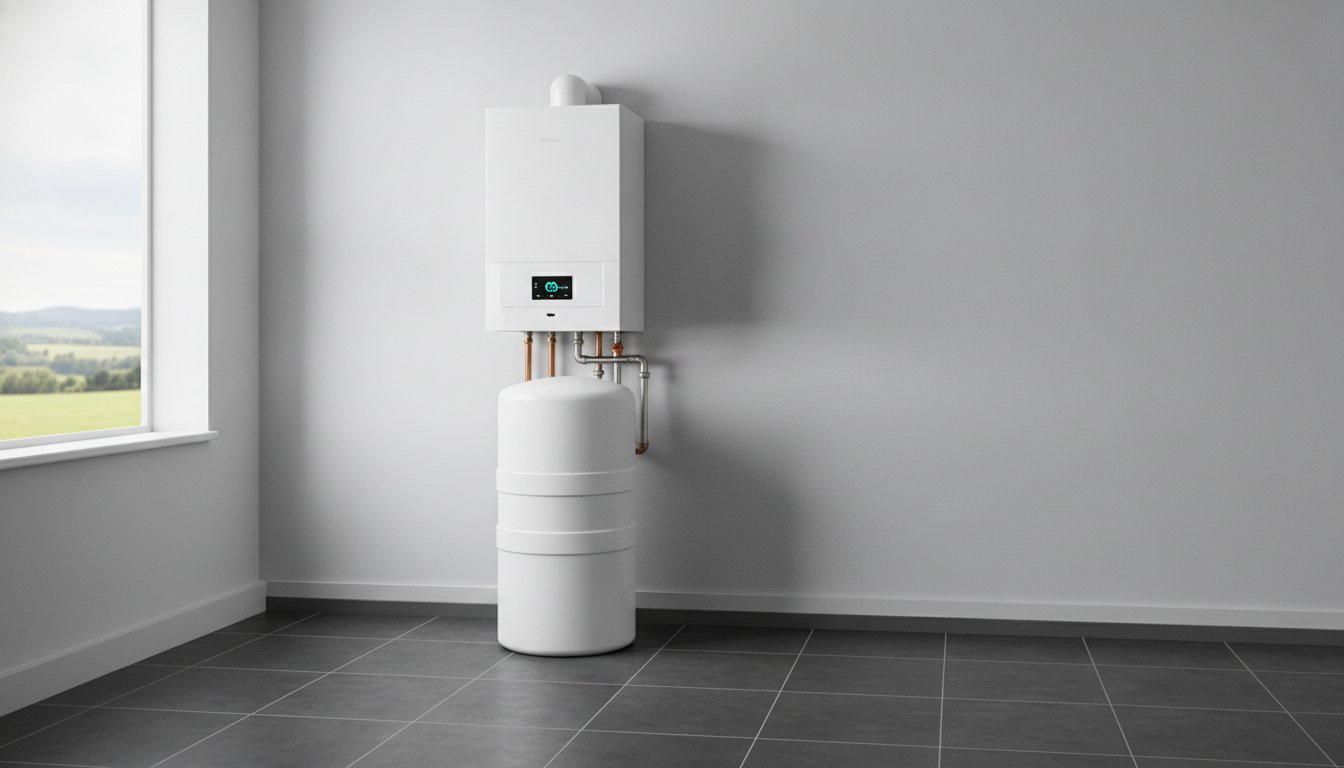
System Boiler with Unvented Cylinder: The Ultimate Guide for 2026
You are standing in the shower when someone downstairs turns on the kitchen tap, and your high-pressure stream instantly turns into a freezing trickle. It’s a common frustration that makes mornings feel like a battle for resources rather than a relaxing start to the day. If you’re tired of low pressure in upstairs bathrooms and sudden water temperature drops, a system boiler with unvented cylinder is the definitive solution for your home. This setup represents the gold standard for modern living, ensuring that your plumbing finally keeps up with your family’s demands.
In this guide, you’ll discover how these two components work in harmony to deliver powerful, mains-pressure hot water to every outlet simultaneously. We’ll explain the practical benefits of removing bulky, leak-prone tanks from your loft and how this system aligns with the 2026 Future Homes Standard. From understanding G3 safety regulations to future-proofing your heating for the next decade, we provide the clarity you need to make an informed decision. You’ll learn exactly why this combination is the most reliable way to achieve high-performance heating and hot water in a busy household.
Key Takeaways
- Understand why a system boiler with unvented cylinder is the superior choice for delivering high-pressure hot water to multiple bathrooms simultaneously.
- Learn how the indirect heating process works to prioritise your hot water supply, ensuring you have a massive reserve ready for peak morning demand.
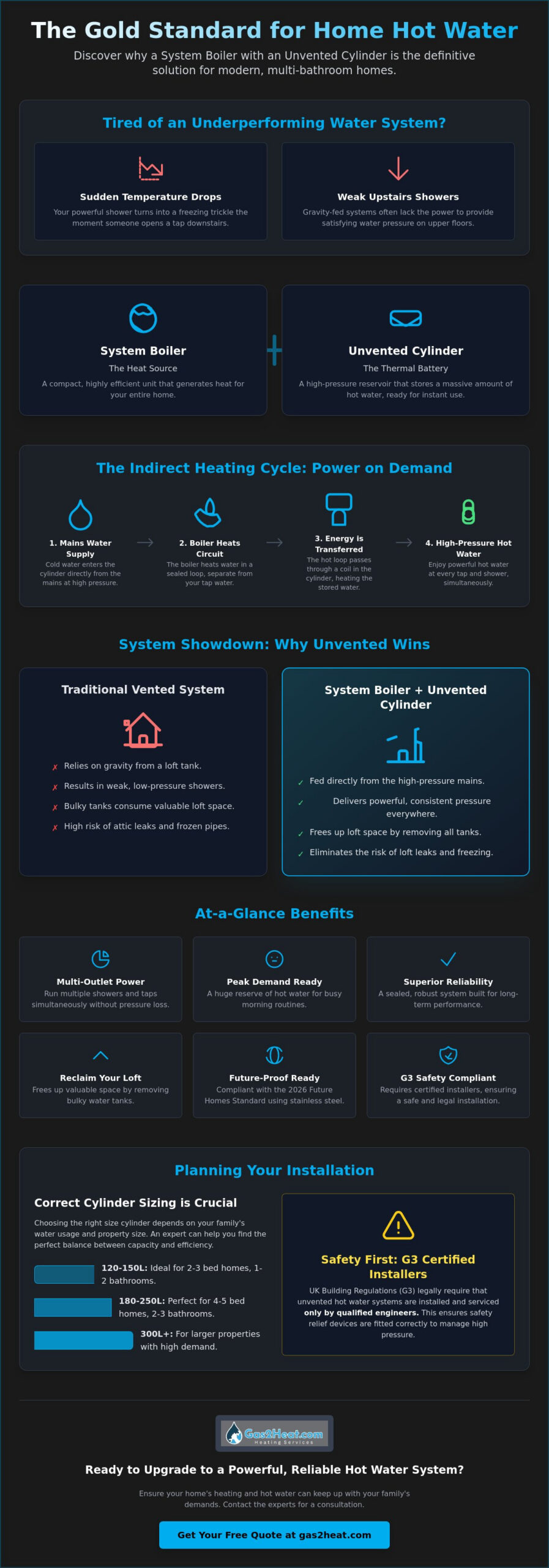
- Discover how to correctly size your new system, ranging from 120L to over 300L, based on your family’s specific water usage and property size.
- Identify the structural benefits of removing bulky cold water tanks from your loft to create more space and eliminate the risk of attic leaks.
- Gain clarity on G3 safety regulations and why using a certified installer is a legal requirement for any unvented hot water system.
What is a System Boiler with an Unvented Cylinder?
A system boiler with unvented cylinder is a high-performance heating duo designed to meet the heavy hot water demands of modern multi-bathroom homes. Unlike a combi boiler that heats water on demand, this setup uses two distinct parts to manage your home’s comfort. The system boiler acts as the heat source, while the unvented cylinder serves as a high-pressure storage reservoir. It’s a “sealed system,” meaning the water circulates in a closed loop without needing a connection to an external feed tank. This design is highly efficient and provides a level of reliability that older, traditional systems simply can’t match.
The system boiler itself is a compact unit that houses most of its major components internally. To understand the technology better, you can explore the technical foundations in this guide on What is a Boiler?. By keeping the pump and expansion vessel inside the boiler casing, the installation is tidier and takes up less room. The unvented cylinder is the second half of the team. It takes cold water directly from the mains and stores it under pressure. When they work together, the boiler provides the energy to heat a coil inside the tank, which then transfers that heat to your domestic water supply. It’s a simple, robust process that ensures you’re never left waiting for a tank to refill.
The Core Components of the Setup
- The boiler unit: This modern appliance contains the circulating pump and expansion vessel. It’s designed for rapid heat transfer and quiet operation.
- The stainless steel cylinder: High-grade stainless steel is the industry standard for 2026. It resists corrosion and handles high mains pressure without the risk of splitting or degrading over time.
- The primary heat exchanger: This is where the magic happens. Energy from the gas burner moves into the water that circulates through your radiators and the cylinder coil.
Unvented vs. Vented: The Crucial Difference
The primary reason homeowners choose a system boiler with unvented cylinder is the dramatic boost in performance. Traditional “vented” systems rely on gravity. They need a large cold-water tank in the loft to create pressure, which often results in weak showers on the upper floors. An unvented system eliminates this requirement entirely. Because it’s fed directly from the water mains, the pressure at your shower head is the same as the pressure entering your property. It’s a night-and-day difference for anyone used to a sluggish trickle.
Removing the “header tank” from your attic does more than just improve pressure. It frees up valuable storage space and removes the risk of pipes freezing or tanks leaking in your loft. However, because these cylinders operate under high pressure, safety is paramount. They include specialized relief valves and expansion zones to manage the water as it heats up. This is why UK Building Regulations mandate that only G3 qualified engineers can install or service these systems. It isn’t just about performance; it’s about ensuring your home remains safe and compliant with current standards.
How a System Boiler and Unvented Cylinder Work Together
The synergy between a system boiler with unvented cylinder is what makes it a powerhouse for larger properties. It works on a simple yet highly effective principle: the boiler generates the heat, and the cylinder acts as a thermal battery. Unlike older systems that might struggle to keep up, this combination ensures that energy is delivered precisely where it’s needed most. It’s a synchronized performance that balances your home’s heating and hot water requirements without one compromising the other.
The entire process is governed by a sophisticated control system. When you turn on your heating or request hot water, the boiler fires up and begins circulating heated water through the primary circuit. This circuit is completely separate from the water that comes out of your taps, which prevents any contamination and allows for the use of chemical inhibitors to protect the internal components of your boiler. It’s a clean, efficient way to manage home comfort.
The Indirect Heating Cycle
At the heart of this setup is an indirect heating process. The boiler circulates hot water through a sealed, closed-loop circuit that includes a stainless steel coil inside the cylinder. As this hot water passes through the coil, it transfers its thermal energy to the surrounding water in the tank. This method is far more efficient than traditional immersion heaters, which rely on electric elements that can be expensive to run. For the best results, integrating a smart thermostat installation allows you to schedule heating cycles with pinpoint accuracy, reducing waste and lowering bills.
Most modern systems use a “priority” valve to manage demand. When the cylinder’s thermostat detects a drop in temperature, the system directs all available heat to the tank first. Once the water is back up to your desired temperature, the system seamlessly switches the heat back to your radiators. This ensures you always have a full tank of hot water ready for the morning rush.
Maintaining Constant Pressure
The standout feature of this setup is how it handles water pressure. Because the cylinder is fed directly from the cold water mains, it doesn’t need to wait for a gravity-fed tank to refill. It uses that incoming mains pressure to push hot water through your pipes at a high velocity. This is why a system boiler with unvented cylinder allows you to run two or three showers at once without anyone experiencing a sudden drop in flow.
Managing this pressure is vital for the safety of your plumbing. Every installation includes a pressure-reducing valve to ensure the incoming water doesn’t exceed safe limits. Additionally, an expansion vessel is fitted to the system. Since water expands as it heats up, this vessel provides a buffer zone for the extra volume, preventing stress on your pipes. If you’re considering an upgrade, securing a professional boiler installation can help ensure these safety components are configured perfectly for your home’s specific requirements.
The Benefits: Why This Duo Beats a Combi for Larger Homes
Choosing the right setup is the most critical decision you’ll make during a home renovation or heating upgrade. While combi boilers are popular for their space-saving design, they often fall short in larger properties. A system boiler with unvented cylinder is widely considered the gold standard for homes with high demand. It offers a level of performance that a standalone combi simply cannot match, especially when it comes to simultaneous use. If you have a growing family or multiple bathrooms, the benefits of this pairing become clear very quickly.
Flow rate superiority is the primary reason homeowners make the switch. A combi boiler must heat water instantaneously as it passes through the unit, which limits how much hot water it can produce at any given second. If one person is showering and another turns on a kitchen tap, the pressure or temperature will drop. Because an unvented cylinder stores 200+ litres of water already at the correct temperature, it can deliver that water to every tap at full mains pressure. Everyone gets a powerful shower, regardless of what’s happening elsewhere in the house.
Reliability and backup are equally important. System boilers are built to handle heavy lifting. They often have fewer internal components that need to move or switch every time a tap is turned on, which can lead to a longer operational lifespan. Having a large tank of water also provides a safety net. If your boiler ever requires a temporary repair, most modern cylinders include an immersion heater. This allows you to switch to electric heating for your water, ensuring your family stays clean and comfortable while the boiler is being serviced.
Performance Comparison: Combi vs. System
Combi boilers are excellent for 1-2 bedroom flats where space is at a premium and demand is low. However, they are physically limited by their kilowatt rating. For properties with three or more bathrooms, a system boiler and cylinder are essential. You can find a deeper analysis of these differences in our Combi vs. System Boiler guide. In short, the cylinder acts as a buffer that removes the “bottleneck” effect common in smaller systems.
Efficiency and Long-Term Value
Modern cylinders are essentially giant Thermos flasks. They feature high-quality injection-moulded insulation that can keep water hot for 24+ hours with minimal heat loss. This efficiency reduces wear and tear on the boiler because it doesn’t have to fire up for every small demand. For homeowners in the Scottish Borders, installing a system boiler with unvented cylinder is also a smart financial move. It’s an attractive feature for future buyers who value high-end plumbing, potentially increasing your property’s market appeal. It also future-proofs your home, as many of these cylinders are designed to integrate with solar thermal panels or heat pumps in the coming years.
Planning Your Installation: Sizing, Space, and Regulations
Successful planning is the difference between a high-performance system and an expensive disappointment. Before you invest in a system boiler with unvented cylinder, you must verify that your home’s infrastructure can handle it. The most critical first step is a mains water pressure and flow rate test. Since this system relies entirely on the “oomph” of the water coming into your property, low mains pressure will result in poor performance. We recommend a minimum flow rate of 20 litres per minute and a pressure of at least 1.5 bar for the best experience.
You also need to consider where the equipment will live. While the boiler is usually wall-mounted in a kitchen or utility room, the cylinder requires a dedicated space, typically an airing cupboard. If space is tight, modern engineering provides solutions like slimline models or horizontal cylinders that can be tucked into eaves or loft spaces. However, the closer the cylinder is to your most-used outlets, the faster you’ll get hot water at the tap. This reduces “dead legs” in the pipework and saves water over time.
Choosing the Right Cylinder Size
Getting the size right is vital for both comfort and energy efficiency. A tank that’s too small leads to cold showers; one that’s too large wastes energy heating water you don’t need. A standard rule of thumb is to allow 35 to 45 litres of hot water per person per day. For a typical family of four, an 180L to 210L cylinder is usually ideal. If your home features high-flow rainfall showers or a large soaking tub, you may need to scale up to 300L or more to ensure you don’t run out during peak times.
The Installation Timeline
A full upgrade is a significant project that usually takes two to three days to complete. During a professional boiler installation and cylinder swap, your engineer will often need to upgrade your pipework. Moving from a gravity-fed system to an unvented one often requires 22mm or even 28mm copper pipes to handle the increased flow and pressure safely. This is not a job for a DIY enthusiast or an uncertified handyman.
Safety is the top priority. Under G3 Building Regulations, any unvented hot water storage system over 15 litres must be installed by a person with a G3-aligned qualification, such as the Hot Water Systems & Safety (HWSS) certificate. This ensures that all safety valves and discharge pipes are correctly configured to prevent over-pressurisation. Once finished, the installation must be reported to Local Authority Building Control. If you want to ensure your home meets these strict 2026 standards, book a technical survey with our G3 certified team to get a precise plan for your property.
Expert System Boiler Installation in Dumfries & South West Scotland
Finding a reliable contractor for a complex system boiler with unvented cylinder installation shouldn’t be a stressful experience. In South West Scotland, Gas2Heat.com Ltd has built a reputation for technical excellence and straightforward service. We understand that homeowners in Moffat, Dumfries, and the Borders need heating systems that can withstand the local climate and provide unwavering performance. By choosing a local specialist, you avoid the inflated call-out fees and impersonal service often associated with national conglomerates. We’re part of the community, and our reputation is built on the quality of every pipe we fit and every boiler we commission.
Our team at Gas2Heat.com Ltd consists of Gas Safe and G3 certified engineers. This isn’t just a badge of honour; it’s your guarantee that your high-pressure system is installed to the highest safety standards. We handle every aspect of the project, from the initial pressure test to the final commissioning and Local Authority notification. After the installation is complete, we remain your partner for the long term. We provide comprehensive annual boiler servicing and rapid repairs to keep your system running at peak efficiency year after year. Our goal is to remove the uncertainty from home maintenance through clear communication and professional results.
Tailored Solutions for Scottish Homes
Scottish homes often present unique challenges, particularly regarding varying mains water pressure in rural parts of Dumfries & Galloway. We have extensive experience diagnosing these issues and recommending the right cylinder size to ensure your showers never lose their punch. For our customers in more remote areas of the Borders, we also specialize in LPG system boiler setups, ensuring that off-grid living doesn’t mean compromising on luxury hot water. We are proud to serve as the go-to heating experts for families throughout Moffat and Annan, delivering warmth and reliability to every doorstep.
Get Your Quote Today
Every home is different, which is why we don’t believe in one-size-fits-all estimates. When you book a consultation, our local team visits your property to assess your existing pipework, water pressure, and family demand. This meticulous approach ensures you get a system boiler with unvented cylinder that is perfectly sized for your needs. As a family-owned business, we value honesty and transparency above all else. You receive a clear, fixed-price quote with no hidden surprises, delivered by experts who live and work in your community. Ready to upgrade your home’s comfort? Contact Gas2Heat.com Ltd for a professional system boiler consultation and take the first step toward high-pressure hot water today.
Upgrade Your Home to High-Pressure Performance
Investing in a system boiler with unvented cylinder is the definitive step toward a high-performance home. By integrating these components, you solve the persistent issues of fluctuating temperatures and weak flow rates that plague older gravity-fed systems. This upgrade isn’t just about comfort; it’s about building a heating infrastructure that is efficient, scalable, and ready for the demands of the next decade. You gain a system that works silently and powerfully in the background, allowing your family to enjoy the luxury of mains-pressure hot water from every tap.
At Gas2Heat.com Ltd, our Moffat-based team brings regional expertise and G3 Unvented Hot Water certification to every project. We understand the unique plumbing landscape of Dumfries & Galloway, ensuring your installation is safe, compliant, and perfectly optimized for your property. We are committed to removing the stress from heating upgrades through clear guarantees and expert execution. Request a Free System Boiler Quote from Gas2Heat.com Ltd today and experience the difference that professional, local service makes. Let’s make your home’s heating and hot water more reliable than ever before.
Frequently Asked Questions
Do I need a system boiler if I have an unvented cylinder?
You generally need a system boiler or a regular boiler to heat an unvented cylinder in a gas-connected property. A system boiler is the preferred choice because it contains the necessary pump and expansion vessel internally, making the installation cleaner and more compact. This setup ensures that your system boiler with unvented cylinder works as a cohesive unit to manage both your radiators and your domestic hot water storage efficiently.
How much space does an unvented cylinder actually take up?
Most unvented cylinders are roughly the size of a tall fridge-freezer, typically measuring between 1,200mm and 2,000mm in height. They are designed to fit inside a standard airing cupboard. If you are short on floor space, slimline models are available that offer a narrower profile. Horizontal units can also be installed in loft spaces where height is restricted, provided the floor can support the weight of the stored water.
Can an unvented cylinder explode if not maintained?
Modern unvented cylinders are incredibly safe and feature multiple redundant safety layers, including pressure relief valves and temperature-limit thermostats. While the high pressure leads to concerns, a dangerous failure is virtually impossible if the system is installed correctly. However, these safety features must be checked annually by a G3 certified engineer. Regular maintenance ensures that the expansion vessel and relief valves are functioning exactly as they should for your protection.
Is an unvented cylinder more expensive to run than a combi boiler?
Running costs are comparable, though a cylinder can be more efficient for large families with high hot water demand. Modern cylinders are encased in thick, high-performance insulation that keeps water hot for over 24 hours with minimal energy loss. While a combi boiler only heats water on demand, it can struggle with efficiency during peak use. A system boiler with unvented cylinder allows you to store a large volume of water heated during your boiler’s most efficient cycles.
How often should I service my system boiler and cylinder?
You should book a professional service for both your boiler and cylinder once every twelve months. An annual check is often a condition of your manufacturer’s warranty and is a legal requirement for landlord gas safety certificates. During the visit, an engineer will test the safety valves, check the expansion vessel pressure, and ensure the boiler is burning fuel cleanly. Regular servicing prevents minor issues from turning into expensive emergency repairs later.
What happens to my hot water if the mains water is turned off?
If your mains water supply is cut off, you will lose hot water pressure at your taps and showers immediately. Because unvented systems rely on the pressure of the incoming cold mains to push the hot water out of the tank, they cannot function without a live connection. You will still have a full tank of water sitting in the cylinder, but it won’t be able to reach your outlets until the mains supply is restored.
Can I use underfloor heating with a system boiler and unvented cylinder?
This combination is the ideal foundation for underfloor heating. A system boiler is designed to manage the high flow rates required for underfloor circuits, while the unvented cylinder handles your domestic hot water independently. This setup allows you to maintain a warm floor downstairs without affecting the water pressure in your upstairs showers. It is a versatile solution that provides consistent comfort across every room in a modern home.
To extend this sense of comfort and luxury to your outdoor living space, you can learn more about Simply Saunas and their range of premium garden wellness solutions.
Do I need to upgrade my water mains for an unvented system?
You only need to upgrade your water mains if your current flow rate is below 20 litres per minute or if your pressure is consistently under 1.5 bar. If your existing lead or narrow-gauge pipes are restricting flow, the unvented cylinder won’t perform at its full potential. A professional engineer will conduct a flow and pressure test before installation to determine if a new 25mm MDPE mains pipe is necessary; for projects involving external excavation or site preparation, GCS Contractors Ltd offers the civil engineering expertise required for such infrastructure improvements.
