
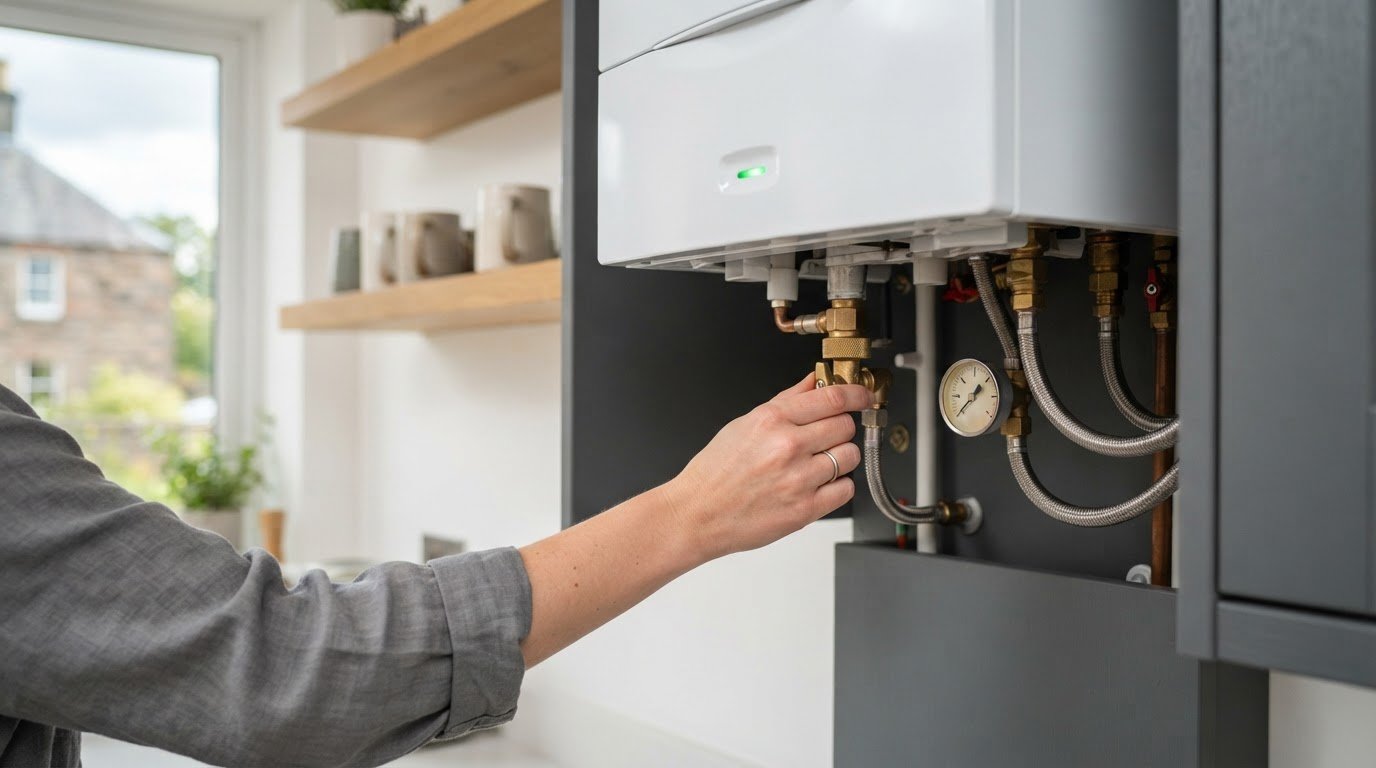
How to check and adjust your boiler pressure
Aim for 1 to 1.5 bar when your UK boiler is cold. As water heats and expands, the reading rises; around 2.0 bar can be normal while the heating is running, but it shouldn’t exceed 2.5 bar. If you’re unsure what pressure your boiler should be set to, these readings are a useful guide, though your boiler manual may give a different recommended range.
It’s easy to mistake a normal rise while heating for a fault, or to add too much pressure when topping up. This guide explains how to read the gauge, how the reading changes when the heating comes on, and how to raise or lower pressure safely. It also covers topping up combi, system and standard boilers, plus signs of a leak or a problem that needs an engineer.
Key Takeaways
- Check for a filling loop left open or signs of a system fault if the gauge keeps climbing.
- Use the boiler’s pressure gauge to compare readings with the heating off and running, and note how the reading changes.
- If pressure is too high, releasing water through a radiator may help; take care because the water can be hot.
- Follow the correct filling-loop steps for your boiler type, and get an engineer to investigate pressure that won’t stay within range.
What pressure should my boiler be set at?
A UK boiler gauge usually reads between 1 and 2 bars when the boiler is on. Below 1.0 bar may be too low; keep pressure below 2.75 bar and below 3 bar as water heats. Low pressure isn’t physically harmful, but it can affect heating. High pressure needs attention because released water can reach 70°C to 80°C.
- Read the gauge and note whether the boiler is running. A reading below 1.0 bar may indicate low pressure. A reading that keeps climbing can signal high pressure. The gauge shows pressure in bar, so compare its reading with the range marked for your boiler.
- Look for a cause if the pressure is high. An overfilled system can raise the reading. A faulty filling device may also let water through, even when its valve is closed. Check that the filling device is fully shut, but don’t force a stiff or damaged control.
- Watch for pressure that rises continuously, rather than settling as the boiler heats. A boiler over 10 years old can be a possible factor in high pressure. Safety controls compensate for pressure increases, but a persistent rise needs investigation, particularly if the gauge approaches 2.75 bar.
- Watch for signs of low pressure, such as insufficient hot water or heating that isn’t working properly. A leak in the heating system is a common cause. Damp spots or rusty patches on radiators may indicate a leak, so note where they appear and whether the gauge continues to fall.
- Call a Gas Safe engineer if pressure keeps rising, stays too high after radiators are bled, or remains low after a leak is fixed and the system is repressurised. Low pressure can affect how the system works. High pressure may cause hot water to be released, so don’t ignore a persistent abnormal reading.
Recommended boiler pressure with heating on and off
Compare the gauge reading with the heating off and running, as water expands when it warms. Pressure that keeps dropping may indicate a leak; a continuous rise may follow overfilling or a faulty filling device.
-
Pressure With the Heating Off
Check the gauge when the boiler and radiators have cooled. Aim for 1 to 1.5 bar with the heating off; consult your boiler manual if it gives a different recommendation for your model. Note the reading so you can compare it later. If it is below this range, look for a changing reading or signs of water escaping before topping up.
-
Pressure With the Heating On
Switch the heating on and watch how the gauge changes as the system warms. Pressure may rise to around 2.0 bar during operation, but it shouldn’t exceed 2.5 bar. A gradual rise from the cold reading is expected because heated water expands. Avoid treating that normal change as a fault; focus on whether pressure climbs beyond the recommended limit or continues rising.
-
Why Pressure Rises During Heating
Compare cold and warm readings to see whether pressure rises only as the system heats. Water expands when heated, increasing pressure in the central heating system. If the reading keeps climbing or doesn’t settle, the system may be overfilled or the filling device may be faulty. A device that isn’t fully closed, or lets water through a closed valve, can cause pressure to rise continuously.
Look for damp spots or rusty patches on radiators, and inspect visible pipework for escaping water. A leak is a common reason for pressure to drop. If the gauge keeps falling, or pressure rises again after radiators have been bled, arrange an inspection by a Gas Safe engineer. Note when the reading changes and whether the heating was on.
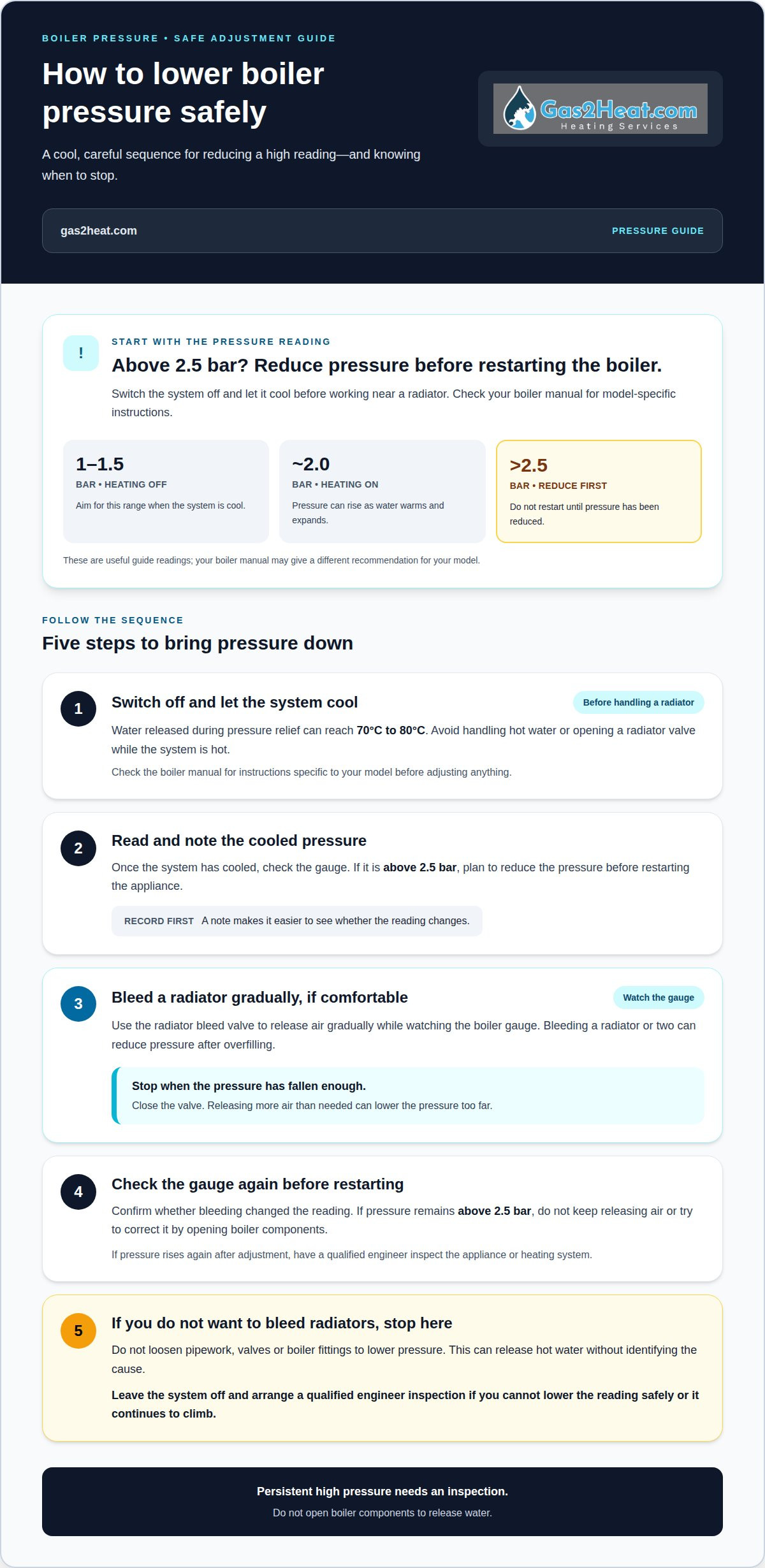
How to lower pressure without bleeding radiators?
If the gauge is above 2.5 bar, reduce pressure before operating the boiler. Bleeding a radiator releases air and can lower system pressure, but there’s no supported no-bleed adjustment step here. Don’t open boiler fittings to release water; use the steps below or have a qualified engineer inspect persistent high pressure.
- Switch the boiler off and let the system cool before working near a radiator. Water released during a pressure-release procedure can reach 70°C to 80°C, so avoid handling hot water or opening a radiator valve while the system is hot. Check the boiler manual for model-specific instructions before adjusting anything.
- Read the pressure gauge after the system has cooled. If the reading is above 2.5 bar, plan to reduce it before restarting the appliance. Note the reading first, so you can tell whether releasing air has changed the pressure rather than relying on memory.
- If you’re comfortable bleeding radiators, use the bleed valve to release air gradually while watching the boiler gauge. Bleeding a radiator or two can reduce pressure after overfilling. Stop and close the valve once the pressure has fallen enough. Don’t release more air than needed, as this can lower the pressure too far.
- Check the gauge again before switching the boiler back on. If the pressure remains above 2.5 bar after bleeding, don’t keep releasing air or try to correct it by opening boiler components. A qualified engineer should inspect the appliance or heating system, especially if pressure rises again after adjustment.
- If you’d rather not bleed radiators, don’t try to lower the pressure by loosening pipework, valves or boiler fittings. This can release hot water without identifying the cause. Leave the system off and arrange an inspection by a qualified engineer if you can’t lower the reading safely or it continues to climb.
Topping up pressure on combi, system and standard boilers
Use the filling loop to restore pressure only after dealing with any leak. The steps vary by boiler type, so follow your model’s manual and stop when the gauge reaches its target.
- Switch off the boiler and let it cool before adjusting the pressure. Read the gauge while the system is cool, then check the manual to identify the filling loop and its controls. The loop is usually a flexible metal hose attached to the boiler, but its layout varies between models.
- For a combi boiler, open the filling-loop valves slowly while watching the pressure gauge. Stop when it reaches 1 to 1.5 bar, then close the filling loop fully. Don’t leave the valves open: water passing through an open or faulty filling device can make pressure rise continuously.
- For a system or standard boiler, use the system filling loop and watch the gauge as you top up. Stop between 1.0 and 1.5 bar, then close the loop. If your boiler manual gives a different model-specific recommendation, follow that guidance rather than continuing to add water.
- Check that the filling loop is closed, then recheck the gauge after topping up. Pressure may rise as the system heats because water expands, so compare the cold reading with the reading while it’s running. If pressure climbs continuously or drops again, don’t keep topping up without investigating the cause.
- Top up only when needed. Pressure may need increasing once or twice a year, but repeated drops can indicate a leak. Fix the leak before repressurising; if pressure remains too low afterwards, close the filling loop and call a qualified engineer. For ongoing pressure problems, arrange boiler repair support.
Gas2Heat.com: Boiler Installation
Gas2Heat.com Ltd can help when boiler pressure problems keep returning or your boiler needs attention beyond a simple top-up. Its Boiler Repairs service addresses faults, while Boiler Servicing provides routine care for your heating system. If an older or faulty boiler needs replacing, Boiler Installation may be the next step. The right option depends on the problem: recurring pressure loss calls for attention to the underlying cause, while a boiler that continues to behave unexpectedly needs an engineer’s inspection. Landlords can also arrange Landlord Gas Safety Certificates. Contact Gas2Heat.com Ltd for help with a boiler issue or installation.
Take the next step with confidence
A pressure reading is useful beyond a single adjustment: changes over time can show whether your boiler needs further attention. If you’re still asking what pressure your boiler should be, use the gauge alongside the manual and note recurring changes. Don’t repeatedly top up a system that keeps losing pressure. Finding the underlying issue is the more useful next step.
Gas2Heat.com Ltd offers Boiler Repairs for faults, Boiler Servicing for routine care, and Boiler Installation when a replacement is needed. Choose support that matches the problem, rather than continuing to adjust a boiler that isn’t behaving as expected. Contact Gas2Heat.com Ltd for boiler help and take the next step towards a heating system you can manage with confidence.
Frequently Asked Questions
What pressure should a domestic boiler be when cold in the UK?
A cold domestic boiler should generally read between 1 and 1.5 bar. Check it after the system has cooled, not immediately after heating has been on, because warm water affects the reading. Your model’s manual is the best guide if it gives a different range. If pressure sits below the recommended range repeatedly, note when it falls and check for visible damp patches.
What is the normal boiler pressure when the heating is on?
Pressure may rise to around 2.0 bar while the heating is running, but it shouldn’t exceed 2.5 bar. Compare the reading with the boiler’s cold pressure rather than treating every increase as a fault. For example, a gradual rise during a heating cycle differs from a gauge that continues climbing after the system is warm. Record what you see and when.
How do I check my boiler pressure gauge?
Find the pressure gauge on the boiler and read the value shown in bar. Check whether the needle or display is within the marked range, then note the reading and whether the heating is on or off. For a digital gauge, use the boiler’s controls or manual to locate the pressure display. Comparing readings at different times can reveal a persistent change.
How do I repressurise a combi boiler safely?
Turn the boiler off, let it cool, then use the manual to identify the filling loop and its valves. Open the valves slowly while watching the gauge, and close them when it reaches 1 to 1.5 bar. Check that the loop is shut afterwards. If you can’t identify the correct controls, don’t guess; the layout can differ between combi boiler models.
How do I reduce boiler pressure if it is too high?
If the gauge is above 2.5 bar, reduce pressure before operating the appliance. Bleeding a radiator can release air and lower system pressure, but water from the system can be very hot. Make small adjustments and check the gauge as you go. If pressure remains high or rises again afterwards, stop adjusting it and arrange an engineer’s inspection.
Do recommended boiler pressure levels vary by boiler make or model?
Yes. Manufacturers may recommend different pressure levels for different boiler models, so check the manual for your appliance. Follow its instructions to identify the correct gauge reading and filling-loop controls. If the manual differs from general guidance, follow the model-specific instructions. Keep the manual accessible for future checks, especially if the boiler has digital controls or an unfamiliar gauge.

Leave a Reply
You must be logged in to post a comment.