
How to Protect Floors During Boiler Replacement
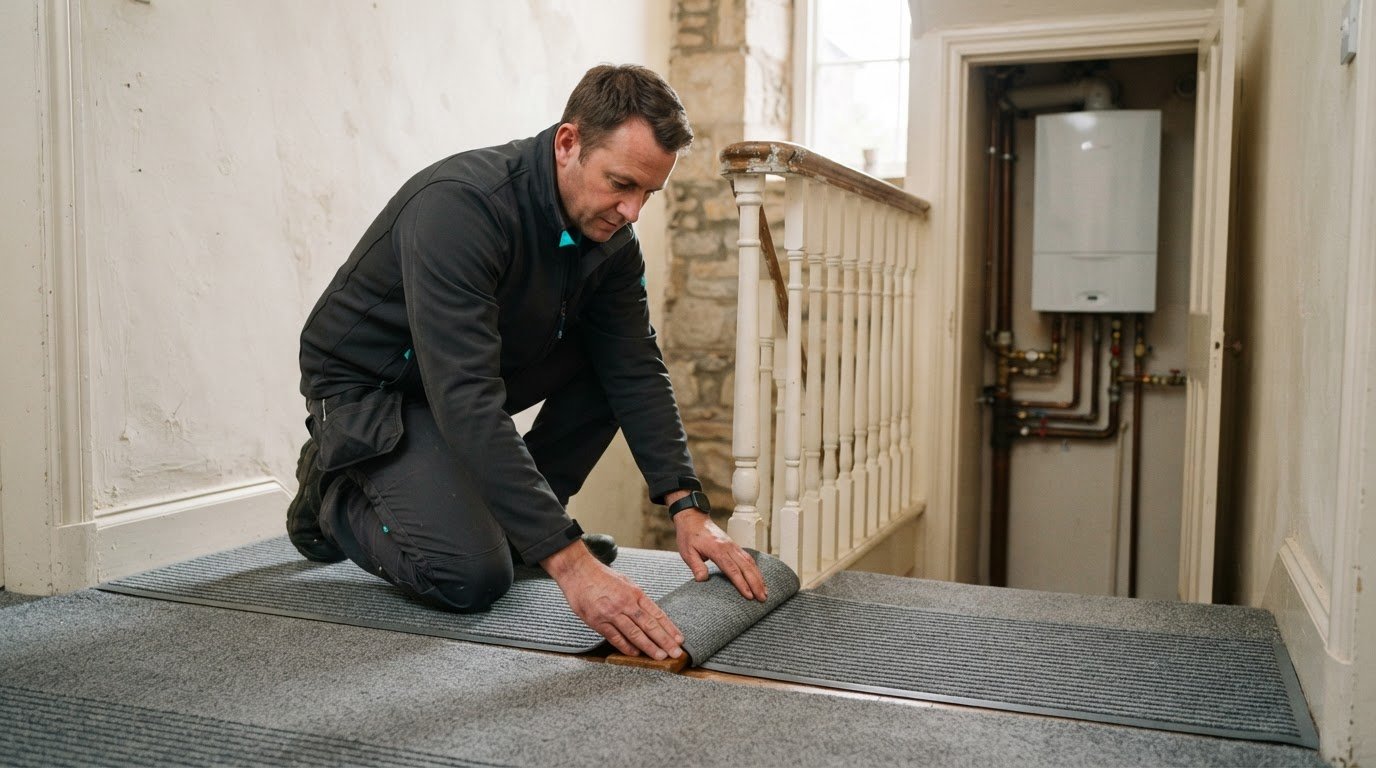
Protect the route to the boiler as carefully as the work area. For protecting floors during boiler replacement, lay dust sheets or old towels where work will take place, and move or cover nearby rugs. Protect the full route, especially if the boiler is upstairs or in a cupboard off a living space.
It’s understandable to worry about carpets, tiles or wooden floors when equipment and tools are being brought through your home. A little preparation helps keep surfaces clear of dust and reduces the risk of scuffs or spills. It also shows you what to move before work begins.
This guide explains how to clear access, prepare for temporary interruptions to water and heating, and protect different floor types. It also covers rugs and furniture, and how to keep the route to the boiler clear. A practical plan helps the installation run smoothly and focuses preparation on the areas that need it.
Key Takeaways
- Clear a route to the boiler, move nearby belongings and keep pets away from the work area before installation day.
- Plan for temporary interruptions to heating and hot water by preparing drinking water and arranging an alternative way to keep warm.
- Use suitable coverings on the work area and the route to it, taking extra care around rugs, carpets, tiles and wooden floors.
- Understand that floor-protection costs depend on the work involved, the areas that need covering and whether flooring must be lifted or moved.
Clearing access to the boiler and pipework
Before work starts, clear a route from the entrance to the boiler and move anything that could obstruct equipment. Prepare the work area, nearby radiators and any access points the engineer will need.
-
Clear access around the boiler
Move stored items, cleaning products and fragile belongings away from the boiler and its cupboard. Clear nearby shelves and worktops, and move curtains or cushions from areas where dust could settle. Keep the boiler front and surrounding pipework accessible rather than stacking belongings beside the unit. If the boiler is in a loft, provide adequate lighting and a sturdy loft ladder.
-
Plan access and parking
Clear a path from the front door to the work area, including stairs and hallways. Move shoes, bags and furniture that could narrow the route, and keep pets away during installation. Arrange parking close to the property where possible, and have any gate codes or keys ready. Tell the installer in advance about restricted parking, fitted furniture or unusual access.
- Clear access to radiators and pipework before installation day. Move furniture away from each radiator so the engineer can inspect it and identify possible system upgrades. Mention limited cupboard space, decorating or fitted units that could affect access. Some replacements involve new pipework runs and lifting floorboards; the route from the gas meter and the hot-water cylinder’s location can affect this work.
- If the boiler is in a confined cupboard, clear the surrounding space so the engineer can assess airflow. If you rent out the property, give tenants clear notice about access and the areas they should keep unobstructed. Does boiler installation insurance cover accidental floor damage? Not automatically. Cover depends on the policy’s accidental-damage wording, exclusions and circumstances.
Preparing for water and heating interruptions
Plan for a temporary loss of heating and hot water during boiler replacement. Many UK boiler replacements are completed within a day, although larger heating upgrades can take longer.
- Fill drinking-water bottles before installation begins. Household water or heating may be unavailable while work is underway, so set aside enough water for drinking and essential tasks. Keep it somewhere easy to reach, away from the work area and the engineers’ route.
- Arrange another way to keep warm, such as electric heaters. Choose a suitable room where household members can stay comfortable while the heating is off. Keep heaters clear of curtains, furniture and the work area, and follow the instructions supplied with each appliance.
- Run the dishwasher or do laundry beforehand if those tasks are part of your routine. They may be inconvenient if the water is temporarily turned off. Complete essential washing before the engineer arrives, then leave sinks and appliances accessible for the installation.
- Locate your heating controls and isolation points before installation day. Knowing where they are can help you follow the engineer’s instructions during the work. Don’t operate a control, valve or isolation point if you’re unsure what it does. Leave system changes and boiler connections to the installation professional.
- Plan your household schedule around the likely interruption, especially if anyone relies on hot water or a warm room during the day. A standard boiler replacement often takes up to a day, while heating upgrades and boiler changes may take 2–3 days. The difference depends on the scope of work, including whether the wider heating system is being upgraded.
- Keep the work area available throughout the installation, and avoid planning water-dependent chores until the system is back in use. Ask the engineer for a clear update on when the heating and hot water can be used again. Before relying on the new system, follow their instructions for its controls and operation.
Protecting carpets, tiles and wooden floors
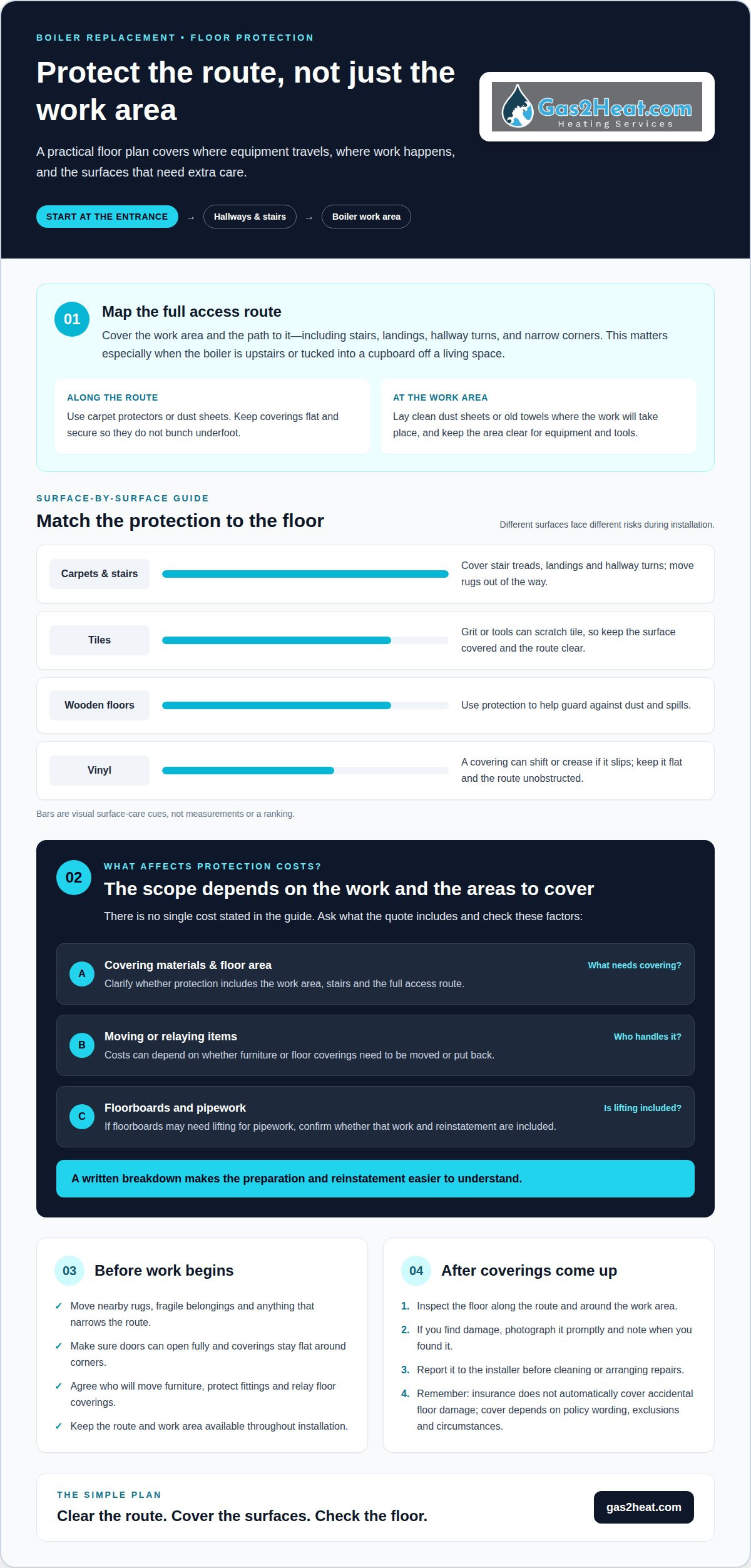
Protect the route to the boiler as well as the immediate work area. A practical plan for protecting floors during boiler replacement takes account of the flooring and the equipment being moved.
-
Protect stairs and hallways during boiler carrying
Lay carpet protectors or dust sheets along the route, including stair treads, landings and hallway turns. Ask the installers to keep coverings flat and secure, so they don’t bunch underfoot. Move rugs and fragile items out of the way. Check that doors can open fully and the route remains clear, especially around narrow corners where bulky equipment may need careful handling.
-
Consider floor protection costs
Ask what the quoted protection includes, such as coverings for the work area, stairs and access route. Costs depend on the materials, the floor area, and whether furniture or floor coverings need moving or relaying. If floorboards may need lifting for pipework, clarify whether that work is included. A written breakdown makes it easier to understand what preparation and reinstatement are covered.
- Choose protection to suit each surface. Use clean dust sheets or old towels in the immediate work area, and remove valuable rugs nearby. Tiles can be scratched by grit or tools; wooden floors need protection from dust and spills. Vinyl can shift or crease if a covering slips, so keep the route clear and coverings flat. Protect flooring in areas where installation work may disturb it.
- Agree who will move furniture, protect fittings and relay floor coverings. Responsibility for damage depends on the circumstances and what was agreed. If you find damage, photograph it promptly, note when you found it and report it to the installer before cleaning or arranging repairs. Check surfaces after coverings are removed as part of protecting floors during boiler replacement.
Before lifting the sheets, inspect the floor along the route and around the work area. Look for marks, trapped grit or debris, including beneath moved rugs. Ask for dust sheets and carpet protectors to be removed, and confirm the work area has been cleaned.
How much does floor protection cost for a boiler replacement in the UK?
There is no single floor-protection price for every boiler replacement. The work involved depends on the surfaces, access route and requirements at the property.
- Ask for floor protection to be itemised in the quote. Any floor-protection charge depends on the case and is given after a quote request; relevant factors include the materials, areas covered and any work to move or relay floor coverings. A clear breakdown helps you understand what the price covers, rather than assuming protection is included automatically.
- Describe the route and surfaces that need protection. A ground-floor boiler beside the entrance may need less coverage than an upstairs boiler reached via carpeted stairs and a tiled hallway. Include landings, doorways and the space around radiators. The area to protect affects the amount of covering and preparation required.
- Explain any extra work that could disturb the floor. Replacing radiator valves can expose flooring to heating-system sludge, while new pipework may require floorboards to be lifted. Moving or relaying existing coverings can also affect the work involved. Share these details before installation so the quote reflects the access and protection required.
- Compare the quoted scope, not just the final amount. Check whether it includes dust sheets or carpet protectors, the route to the boiler, moving furniture and removing coverings afterwards. Ask how vulnerable flooring will be protected, and whether lifting floorboards or relaying coverings is included. These details help you compare like with like.
- Prepare a concise description before requesting a quote: note the boiler location, floor types and route from the entrance. Mention stairs, fitted furniture and any floorboards that may need lifting. For a replacement assessment, discuss your boiler installation plans and explain the areas you want protected.
Gas2Heat.com: Boiler Installation
Gas2Heat.com provides Boiler Installation for homeowners planning to replace an existing boiler. Once you’ve mapped the access route and identified vulnerable flooring, those details can help shape a clear conversation about the installation and the work involved.
Discuss the boiler’s location, nearby pipework and any floorboards that may need lifting. Point out carpets, tiles or wooden floors along the route, plus areas where furniture or fitted units restrict access. This gives you a practical starting point for discussing the installation and preparing your home. Boiler Servicing and Boiler Repairs are also available for other heating needs.
For a boiler replacement, contact Gas2Heat.com to discuss Boiler Installation.
Make your next heating project easier
Make floor care part of your home-maintenance routine, not just installation-day preparation. Keep a clean, reusable covering with your household supplies so it’s ready for future work near flooring. A short note about delicate surfaces or awkward access can also help you prepare before an engineer visits.
Thoughtful preparation is key to protecting floors during boiler replacement, but a good plan also considers how your home will be used after the work. Keep the boiler area accessible, and avoid storing items where they could obstruct future maintenance. These small steps help keep the space organised without making preparation a major task.
If you’re planning boiler work, take the next step at a pace that suits you. Contact Gas2Heat.com for boiler help to discuss your needs. With a clear plan, you can approach the work with greater confidence and keep your home ready for what comes next.
Frequently Asked Questions
How should floors be protected during a boiler replacement?
Cover the work area and the equipment route with clean, secure protection. Overlap dust sheets so gaps don’t expose the floor, and check that edges won’t curl or create a trip hazard. For example, protect the landing as well as the room if the boiler is upstairs. Keep coverings in place until tools and installation waste have been removed.
What floor protection materials do UK heating engineers use during boiler installation?
Dust sheets and carpet protectors are practical options for covering work areas and access routes. Engineers may also wear shoe covers on carpets. Old towels can protect a small area, but they may shift underfoot, so keep them flat. Make sure coverings protect the surface without blocking doors, stairs or access to the boiler.
What should homeowners do to prepare floors before boiler replacement?
Move rugs, shoes and small furniture before installation, then check the route from the entrance to the boiler. Photograph existing marks or worn patches, particularly around doorways and stair edges, to record the floor’s condition beforehand. Tell the installer about delicate or loose flooring, and leave enough room to secure protection properly.
How can carpets, wooden floors, tiles and vinyl be protected differently?
Use carpet protectors over carpet, laid flat across thresholds and stair treads. On wooden floors, cover the route and work area to guard against dust, tools and spills. For tiles, keep grit beneath coverings so it doesn’t scrape across the surface. Secure protection on vinyl so it won’t slide or crease underfoot, and avoid dragging equipment across it.
What risks can damage floors during boiler removal and installation?
Heavy equipment and tools can scuff or dent floors if carried along an uncovered route or set down carelessly. Grit can scratch tiles and vinyl, while water or sludge from radiator-valve work can mark nearby surfaces. Lifting floorboards for new pipework can also disturb adjacent flooring. Continuous, secure protection helps reduce these risks during the work.

Leave a Reply
You must be logged in to post a comment.