
How to find a trustworthy gas engineer in Scotland
For gas work in your home, choose a Gas Safe registered engineer. Finding a trustworthy gas engineer in Scotland starts with checking their ID card and confirming that their qualifications cover the job you need.
A reassuring name or quick appointment is not enough. Check that the engineer is qualified for the specific work and serves your area, whether you live in Moffat, Dumfries, Lockerbie, Annan, Lochmaben, Thornhill, Gretna or Castle Douglas.
This guide explains how to check an engineer’s Gas Safe ID card and licence number, what to look for on the card, and when a gas safety check is needed. It also covers how to assess local service coverage, so you can make an informed decision before arranging work.
Key Takeaways
- Ask to see the engineer’s Gas Safe ID card before work starts, then check the licence number and the specific gas work they’re qualified to do.
- Gas Safe ID cards are issued annually, so compare the card details with the engineer carrying it rather than relying on an old copy.
- For a rental property in Scotland, understand what the landlord’s annual gas safety check covers and what certificate the tenant should receive.
- Check whether the service area includes your part of South West Scotland, such as Moffat, Dumfries or nearby communities, and match the work you need to the appropriate service.
Need a gas safety registered engineer?
Before work begins, check registration, job-specific qualifications and safety records. The steps below also explain what to do if a quote, certificate or completed job raises concerns.
-
Check Gas Safe registration
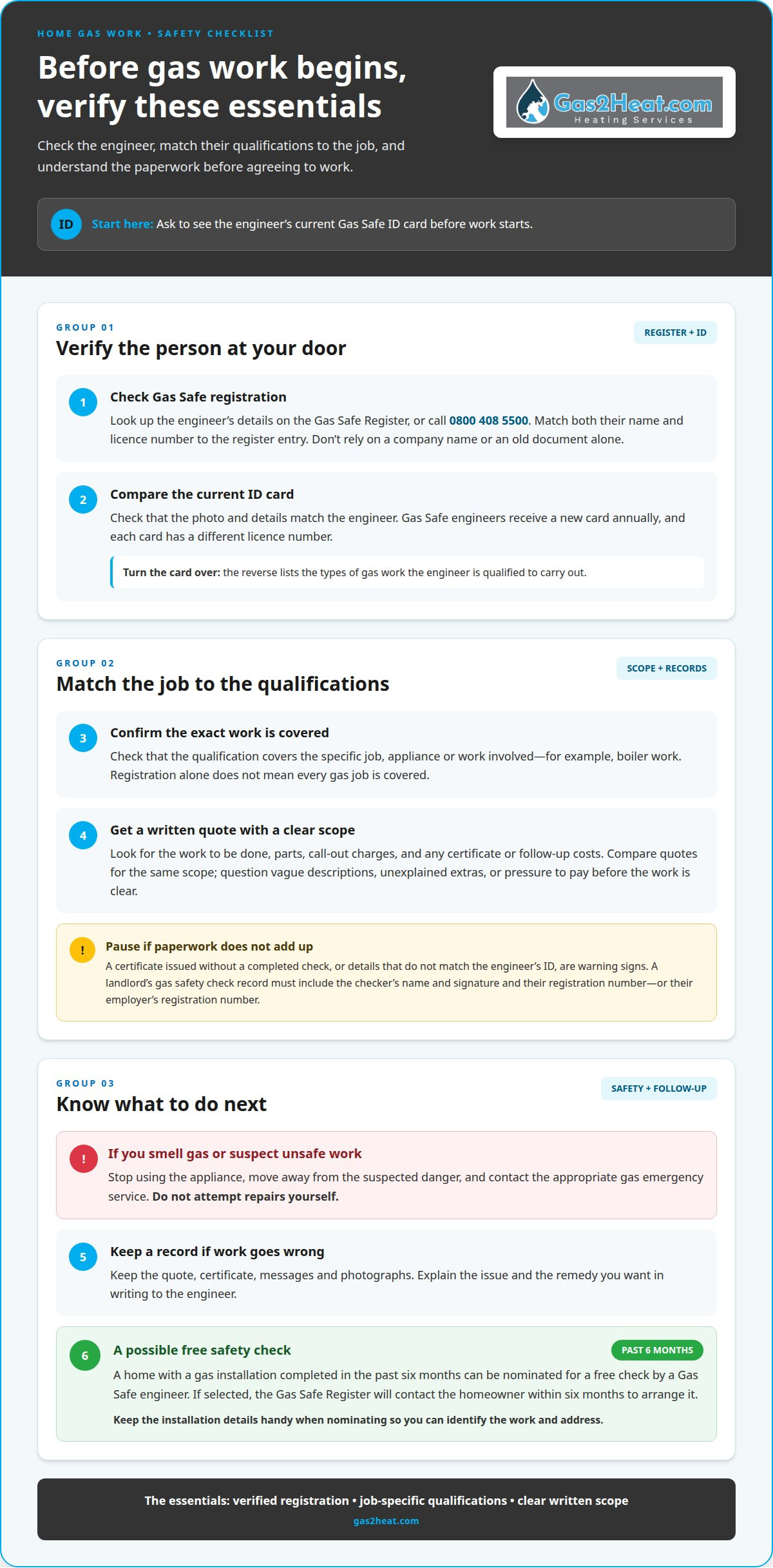
Check the engineer’s details on the Gas Safe Register before agreeing to gas work. You can also call the Register on 0800 408 5500. Match the engineer’s name and licence number with the register entry; don’t rely on a company name or an old document alone. Gas Safe engineers receive a new ID card annually, and each card has a different licence number.
-
Inspect the engineer’s ID card
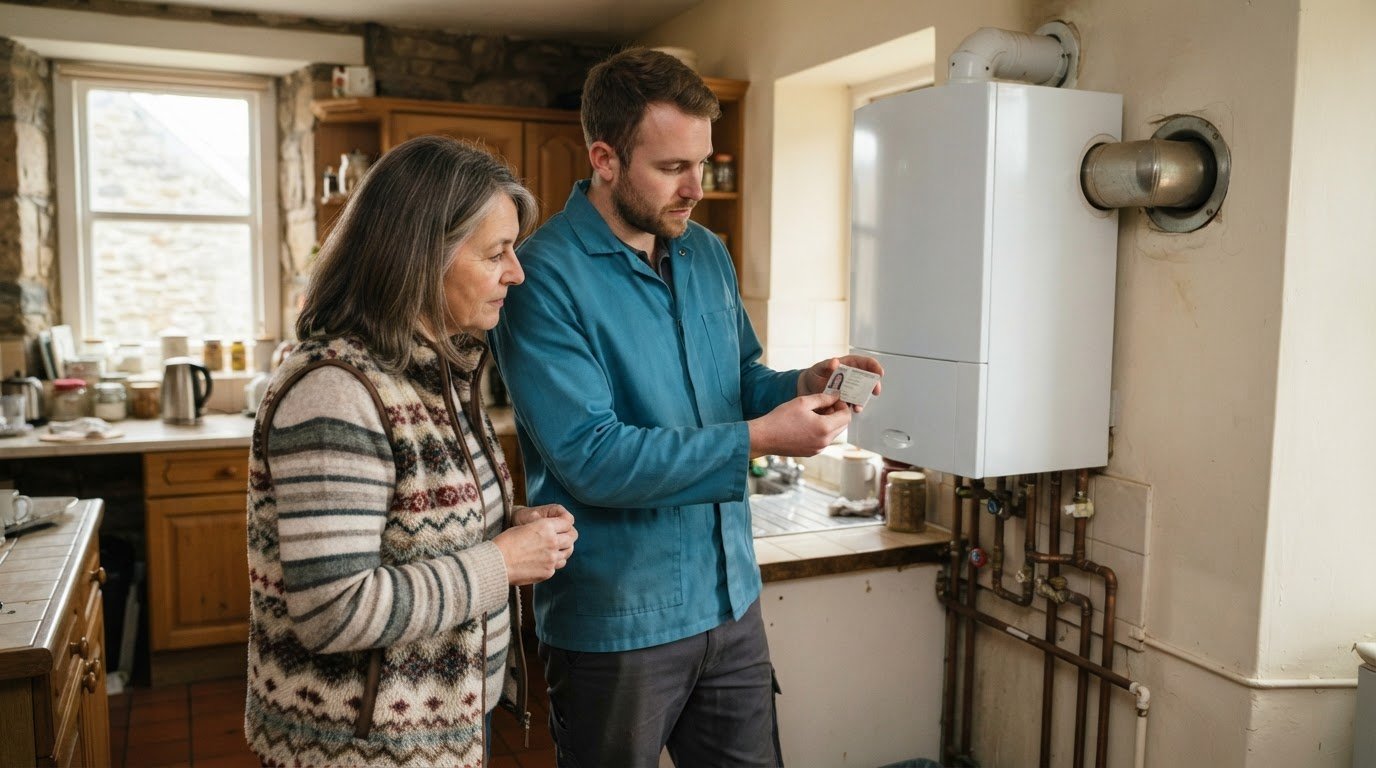
Ask to see the engineer’s current Gas Safe ID card before work starts. Check that the photograph and details match the person at your door. Turn the card over to see which types of gas work they are qualified to carry out. Match those qualifications to the task, such as boiler work, rather than assuming registration covers every gas job.
- Check that the qualification covers the exact job, appliance or work involved. A landlord’s gas safety check record must include the checker’s name and signature and their registration number, or their employer’s registration number, according to UK Government legislation at legislation.gov.uk.
- Ask for a written quote that sets out the work, parts, call-out charges and any certificate or follow-up costs. Compare quotes for the same scope, and look for vague descriptions, unexplained extras or pressure to pay before the work is clear. A certificate issued without a completed check, or details that do not match the engineer’s ID, are warning signs.
- If you smell gas or suspect unsafe work, stop using the appliance, move away from the suspected danger and contact the appropriate gas emergency service. Do not attempt repairs yourself. If poor work or damage occurs, keep the quote, certificate, messages and photographs, then explain the issue and the remedy you want in writing to the engineer.
- A home with a gas installation completed in the past six months can be nominated for a free safety check by a Gas Safe engineer. If selected, the Gas Safe Register will contact the homeowner within six months to arrange it. Keep the installation details handy when nominating the property so you can identify the work and address.
Service coverage across Moffat and surrounding areas
Check whether the engineer serves your exact address, rather than relying on a broad regional label. Clear location details help you plan the visit around your property and the work required.
- Start with your full postcode. Give the engineer your postcode and town, such as Moffat, Dumfries or Lockerbie. A full address distinguishes nearby communities and is more useful than saying only “South West Scotland”. Include the property name or access details if they will help with directions.
- Describe the job as well as the location. Say whether you need an installation, repair, service or landlord gas safety check. The work type clarifies what the visit involves. For example, explain whether you need a boiler installed or an existing boiler inspected, rather than simply asking for a gas engineer.
- Use named towns to assess local relevance. Moffat, Dumfries, Lockerbie, Annan, Lochmaben, Thornhill, Gretna and Castle Douglas are useful reference points when considering coverage in this part of Scotland. If you live elsewhere in the region, provide your postcode and full address for a clear location check.
- Prepare practical visit details. Share access arrangements, parking restrictions and directions to rural properties before the appointment. For a flat in Dumfries, explain how to enter the building. For a rural home near Thornhill, provide clear directions and useful details about the entrance.
- Keep booking information together. Save the written details of the address, requested work and appointment arrangements. This gives you a clear reference if plans change. For information about heating services in the area, visit heating services across South West Scotland.
Choosing a Gas Safe registered engineer
Use these steps to compare local options and assess how clearly each engineer explains the work. Registration, relevant competence and detailed reviews all matter.
-
Find local engineers and review feedback
Search for gas engineers serving your Scottish town or ask neighbours for recommendations. Then read reviews for specific details, such as clear explanations, punctual visits or completed boiler work. Look for consistent feedback across different customers, not just a single glowing comment. Recent reviews can show how the business currently communicates, while detailed critical reviews may reveal recurring issues.
-
Prepare questions before hiring
Ask what work the engineer will do, whether their qualifications cover that exact job, and what the written quote includes. Clarify whether parts, follow-up work or a certificate are included. For example, ask how a boiler service differs from investigating a fault. Clear answers make it easier to compare proposals and understand what happens after the visit.
- Confirm registration and competence before choosing. UK law requires gas engineers to be Gas Safe registered. Engineers on the Gas Safe Register must be qualified and demonstrate competence to work safely with gas products. Check that the person doing the work has suitable qualifications for your specific job, rather than relying on a business’s general description.
- Take pressure tactics seriously. Be cautious if someone avoids questions about registration, gives unclear explanations, or asks you to accept work without a written scope. Around 1.1 million gas jobs in the UK are carried out each year by illegal fitters who are not properly qualified. Registration and job-specific competence are essential checks.
- Compare communication as well as the proposed work. A useful quote identifies the task and explains any recommended follow-up. Keep the written proposal and messages together so you can refer to the agreed details if the work changes. Choose an engineer who explains the scope clearly and answers your questions.
How do I verify a Gas Safe engineer’s ID card and qualifications for specific gas work?
Before work starts, follow these steps to match the engineer, registration details and job-specific qualifications.
- Ask to see the engineer’s Gas Safe ID card and read it carefully. Check that the photograph matches the person who will carry out the work. Check that the engineer’s ID card is current and matches the person carrying out the work. Do not rely on an older card or a photograph of one as your only check.
- Find the licence number on the card and check the engineer’s details against the Gas Safe Register. The licence number has 7 digits and can be used to check whether the engineer is qualified for the work. If you need help checking, call the Gas Safe Register on 0800 408 5500.
- Turn the card over and read the qualifications on the back. They show which jobs the engineer is qualified to complete. Compare them with your specific task. For gas appliance work, for example, confirm that the card covers that type of work rather than assuming registration alone is enough.
- Describe the job clearly before the visit, then compare it with the qualifications on the card. A boiler installation, appliance repair and gas safety check are different tasks. Check that the relevant qualification covers the planned work, and confirm that the person attending is the engineer whose details you checked.
- If the card details, register entry and person don’t match, pause before allowing gas work to begin. Ask for the discrepancy to be explained and verify the licence details directly with the Register. Keep the job description and relevant registration information together. Use these checks before arranging gas work for your home.
Gas2Heat.com: Boiler Installation
Gas2Heat.com Ltd can help when you need a boiler installation and want the work handled by a heating specialist. Its services also include boiler servicing and repairs, useful when you need routine maintenance or help with a boiler fault.
Landlords can turn to Gas2Heat.com Ltd for landlord gas safety certificates. Choose the service that matches your property’s needs, and keep the job description clear when arranging work. The checks in this guide can help you understand what to verify before any gas work begins.
Visit gas2heat.com to discuss your boiler or landlord gas safety needs.
Make your next decision with confidence
Before arranging work, write down the problem, the result you need and any property details that could affect the job. A concise brief keeps conversations focused and helps you understand what happens next. Keep your notes and paperwork together as a useful record for future maintenance.
Taking this practical approach makes finding a trustworthy gas engineer in Scotland feel more manageable. You don’t need to resolve every heating issue at once; start with the work your home needs now and choose the next step with care.
For help with your heating needs, Contact Gas2Heat.com today. A clear first conversation can help you move forward with greater confidence.
Frequently Asked Questions
You’ve found a gas safe engineer, but are they qualified for your job?
No. Registration alone does not show that an engineer is qualified for every gas task. Match the planned work to the qualifications recorded for that engineer, and confirm that the person attending is the one whose details you checked. If the job changes from inspecting an appliance to additional gas work, pause and check that the new task is covered.
How can I check whether a gas engineer is Gas Safe registered in Scotland?
Use the Gas Safe Register to look up the engineer’s registration details, then compare them with the person and job you have arranged. If someone else arrives, check their details too rather than assuming the original booking covers them. This applies whether you arranged the work directly or through a business that sends an engineer to your home.
What are the legal requirements for gas engineers working in Scottish homes?
UK law requires gas engineers to be Gas Safe registered, and registered engineers must be qualified and demonstrate competence to work safely with gas products. Separately, in Scotland, landlords must arrange an annual gas safety check, maintain gas appliances and provide tenants with a copy of the completed check certificate. These are distinct responsibilities: the engineer’s registration does not replace a landlord’s duties.

Leave a Reply
You must be logged in to post a comment.