
Boiler Lockout Reset: A Homeowner’s Guide to Restoring Heat in 2026
A boiler lockout is actually a safety dialogue between your heating system and your home, not just a frustrating mechanical failure. When your unit shuts down and displays a cryptic error code, it’s prioritizing your family’s safety over basic comfort. It’s completely normal to feel anxious about repair costs or a freezing living room when your heat suddenly vanishes. This guide simplifies the boiler lockout reset process so you can understand exactly why your system stopped and how to fix it without the stress of the unknown.
You deserve a warm home and the peace of mind that comes with a functional heating system. We’ll teach you how to identify common fault codes and perform a safe reset to restore heat immediately. You’ll also learn the specific warning signs that mean it’s time to call a professional engineer, helping you avoid unnecessary fees while keeping your household secure. From checking your system pressure to understanding ignition failures, here’s everything you need to get your boiler back online today.
Key Takeaways
- Understand that a boiler lockout is a critical safety feature designed to protect your home from gas leaks and overheating.
- Identify common triggers like low system pressure and ignition failure to determine if a simple fix is possible.
- Learn the correct procedure for a safe boiler lockout reset and why checking your pressure gauge must always come first.
- Apply the “Three Strike” rule to avoid damaging internal components such as the fan or PCB through repeated reset attempts.
- Prevent future breakdowns by prioritizing annual servicing and installing magnetic filters to catch debris before it causes a shutdown.
What is a Boiler Lockout and Why Does it Happen?
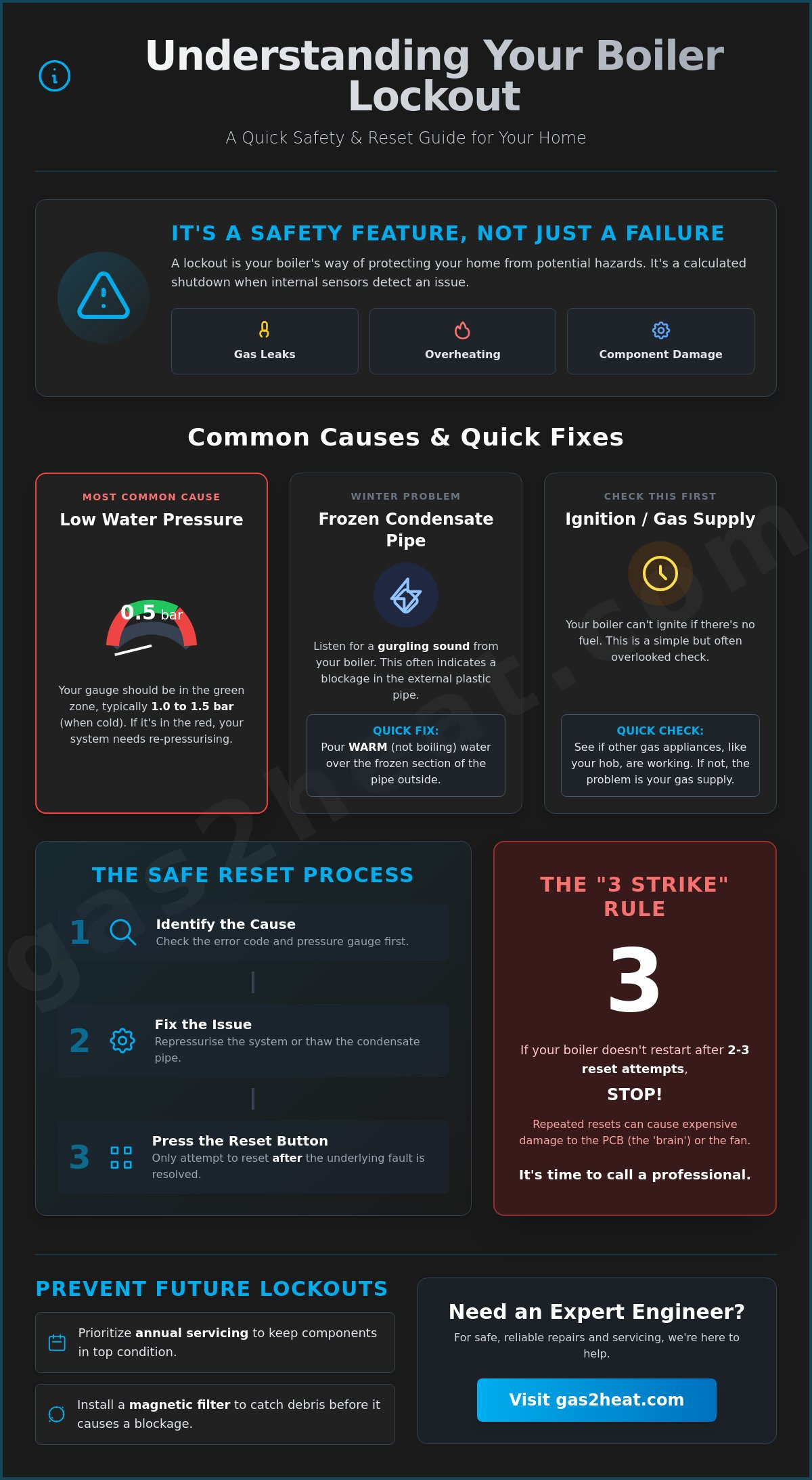
A boiler lockout is a mandatory safety shutdown triggered by the unit’s internal control system. If you walk over to your appliance and see a flashing red light or a static error code, your system has entered a protective state. This isn’t just a random glitch. It’s a calculated response to protect your home from potential gas leaks, overheating, or severe internal component damage. Simply put, a lockout is the boiler’s way of preventing a hazardous situation. Before you attempt a boiler lockout reset, you need to understand that this mechanism is actually your first line of defense. To understand the basics of the system, you might ask, What is a boiler? and how does it manage these risks? At its core, it’s a pressurized vessel that requires precise conditions to operate safely.
You can usually spot a lockout through several clear visual signals on your unit’s fascia:
- A flashing red or amber light on the main control panel.
- A specific error code, such as E119 or F1, displayed on the digital screen.
- An “L” status indicator on certain modern units like those from Ideal.
- A complete lack of response when you turn up your thermostat.
How Your Boiler Communicates Faults
Your system uses specific signals to tell you what’s wrong. You might see an “L” followed by a number on an Ideal boiler, or an “E” code on a Baxi. For example, an F1 code often points to a low pressure problem, while an E119 code on a Baxi usually indicates the same issue. Don’t confuse this with “standby” mode. In standby, the boiler is ready but waiting for a signal from the thermostat. In a lockout, it refuses to fire until the fault is cleared. Keep your user manual nearby to decode these alphanumeric sequences quickly. Understanding these codes is the first step before performing a boiler lockout reset.
The Role of the Printed Circuit Board (PCB)
The Printed Circuit Board (PCB) acts as the brain of your heating system. It constantly monitors a network of sensors checking for pressure drops or ignition failures. If a sensor reports a reading outside of safe parameters, the PCB cuts the power to the gas valve instantly. This happens in milliseconds to prevent unburned gas buildup. While it’s frustrating, remember that a lockout means your safety systems are working correctly. It prevents minor mechanical failures from turning into dangerous events. Once you identify the cause, a reset can often restore your comfort safely.
Common Culprits: Why Your Boiler is Locking Out
Understanding why your system failed is the first step toward a successful boiler lockout reset. While many issues are internal, external factors like the hard water found in parts of the Borders often play a role. Limescale can accumulate on the heat exchanger, causing it to overheat and lock out. In more rural areas like Moffat or Annan, LPG users might experience supply drops that prevent the boiler from firing. Most lockouts stem from a few predictable issues:
- Low system water pressure.
- Ignition failure or gas supply interruptions.
- A blocked or frozen condensate pipe.
- General wear and tear, such as a seized pump or a failing diverter valve.
Low Water Pressure and Leaks
Check your pressure gauge immediately. It should sit between 1.0 and 1.5 bar when the system is cold. If the needle has dropped into the red zone, the safety sensors will prevent operation. Pressure loss often happens after you’ve bled your radiators or if there’s a slow leak in the circuit. If you notice the pressure dropping repeatedly, professional plumbing and heating services can help locate the source of the problem before it causes permanent damage. Keeping your pressure stable is the easiest way to avoid frequent shutdowns.
Frozen Condensate Pipes in Scottish Winters
Dumfries and Galloway winters are notorious for freezing external pipes. If you hear a gurgling sound before the lockout, your condensate pipe is likely blocked with ice. This plastic pipe carries acidic water away from the boiler. When it freezes, the water backs up into the unit and triggers a shutdown. You can often resolve this yourself by pouring warm, not boiling, water over the frozen section of the external pipe. This simple fix might save you from needing a full engineer visit, though you’ll still need to perform a boiler lockout reset once the ice has cleared.
Ignition and Gas Supply Issues
If your boiler won’t fire, check your other gas appliances. Turn on a gas hob to see if the flame is steady. If other appliances aren’t working, the issue lies with your gas supply rather than the boiler itself. Sometimes, carbon debris builds up on the spark electrode, preventing a clean ignition. While you can find a Step-by-Step: How to Reset Your Boiler guide online, remember that any gas supply or internal component issues must be handled by a Gas Safe registered professional. If you suspect a gas fault, it’s best to book a boiler repair immediately to ensure your home remains safe and warm.
Step-by-Step: How to Reset Your Boiler Correctly
Before you attempt a boiler lockout reset, you must check your pressure gauge. As established in the previous section, if your system pressure is below 1.0 bar, the boiler will simply lock out again immediately after a reset. Attempting to force a start without sufficient water can cause the pump to run dry and fail. Referencing a professional boiler start-up safety guide is always a smart move to ensure you’re following industry-standard protocols. Once you’ve confirmed the pressure is correct and any external issues like frozen pipes are resolved, you can proceed with the reset sequence.
The actual reset process is straightforward but requires patience. Follow these steps for a safe restart:
- Locate the reset control on the front fascia of your boiler.
- Press and hold the reset button for five seconds then release.
- Wait for the digital display to stop flashing or for the red light to turn off.
- Listen for the internal fan starting up, which clears the combustion chamber.
- Wait for the audible “click” of the ignition spark followed by the sound of the burner firing.
Locating the Reset Control
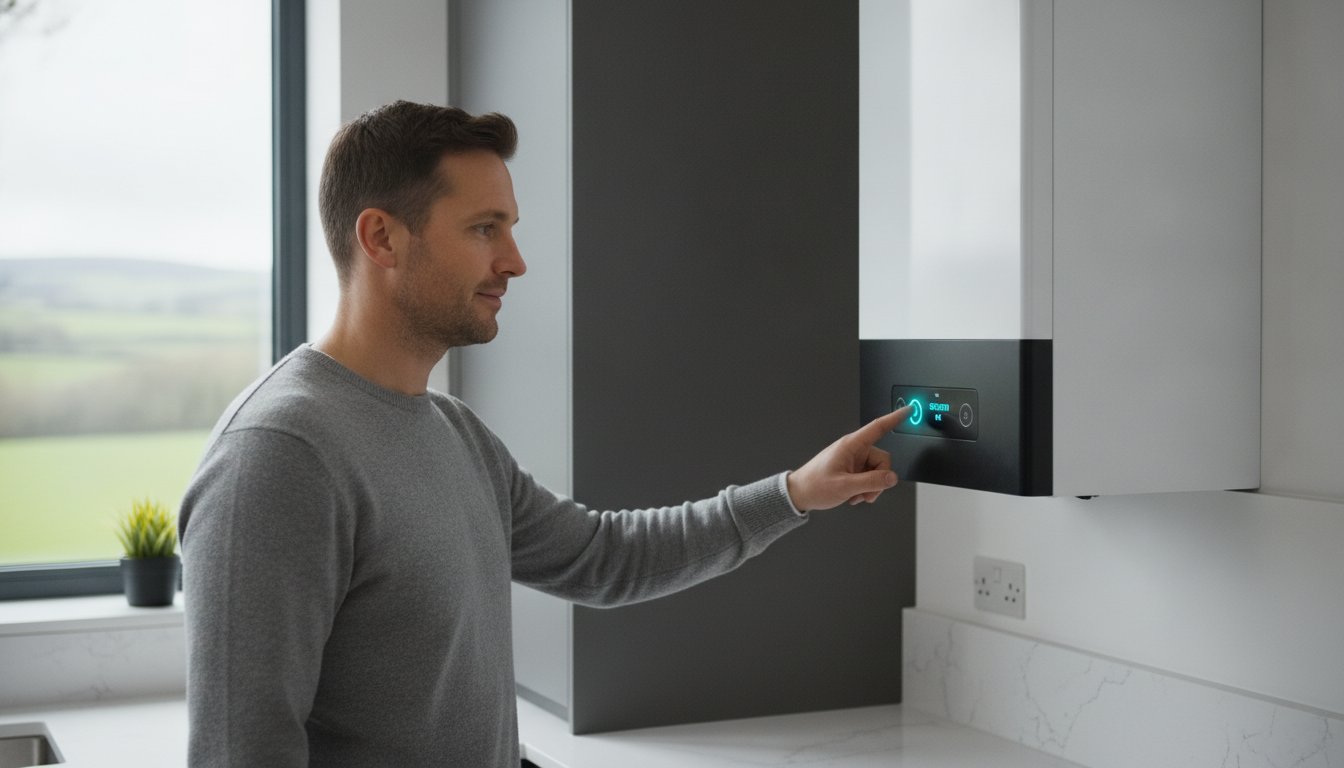
Modern boilers usually feature a prominent button clearly labelled ‘Reset’ or marked with a flame symbol with a cross through it. On some models, this button is hidden behind a small plastic flap or door on the bottom of the unit. It’s vital to differentiate between the reset button and the main power button. The power button simply cuts electricity to the unit, while the reset button clears the fault memory in the PCB. If your boiler is an older model without a visible button, you may need to turn the main temperature dial to a ‘Reset’ position for a few seconds. If all else fails, you can perform a “hard reset” by switching the power off at the fused spur on the wall for sixty seconds before turning it back on.
Post-Reset Observation
Once you’ve performed the boiler lockout reset, stay with the unit for a few minutes. You should see the temperature on the display begin to rise steadily. It often takes several minutes for the heat to transfer through the heat exchanger and reach your taps or radiators. While you wait, check the display for any new error codes that might appear. If the boiler fires but then cuts out again, it indicates a persistent fault that requires professional attention. Finally, take a quick look at the flue terminal outside. You should see a steady plume of vapour, which confirms that the combustion gases are being exhausted safely and the system is operating as intended.
The “Three Strike” Rule: When to Stop Resetting
Don’t treat your reset button as a “fix-all” solution. If your unit shuts down three times within a single 24-hour window, you’ve reached the limit of safe homeowner intervention. This “Three Strike” rule exists to protect your appliance and your family. Repeatedly forcing a boiler lockout reset without addressing the underlying cause places immense strain on the fan, the gas valve, and the PCB. These components are designed for steady operation, not the high-stress cycles of constant failed ignitions and hard restarts.
Bypassing a lockout repeatedly can mask severe internal failures. For instance, a boiler might lock out due to a cracked heat exchanger or a failing flue fan. If you force it to run, you risk the leakage of combustion gases into your living space. Carbon monoxide is a silent, odorless threat that occurs when fuel doesn’t burn correctly. A lockout is your boiler’s way of saying it can no longer guarantee a safe burn. If you reach the third strike, it’s time to accept that a professional diagnostic is the only safe path forward.
Dangerous Red Flags
Certain symptoms require an immediate stop. If you smell gas, do not attempt another boiler lockout reset. Turn off your gas supply at the meter immediately and call the National Gas Emergency service on 0800 111999. Look for visual warnings like soot or dark scorching marks on the boiler’s white casing. These indicate that heat or exhaust gases are escaping where they shouldn’t. Similarly, if your boiler makes loud banging, vibrating, or “kettling” noises, it suggests a significant internal blockage or pump failure that a reset will never fix.
The Cost of Ignoring Persistent Faults
Ignoring a persistent fault is a gamble with your finances. A small issue, such as a faulty thermistor or a dirty electrode, is a quick and affordable fix for a qualified engineer. If you let the system struggle, that minor fault can lead to a total system failure. You could end up needing a full boiler installation rather than a simple part replacement. A reset is a diagnostic signal, not a repair. To protect your investment and your home, you should book a professional boiler repair at the first sign of a recurring lockout.
Long-Term Reliability: Preventing Lockouts in Moffat & Beyond
While a boiler lockout reset can save the day in an emergency, it shouldn’t become a weekly ritual for your household. Constant resets suggest your system is struggling with a persistent issue that will eventually lead to a total breakdown. The most effective way to ensure your home stays warm throughout a harsh South West Scotland winter is through proactive care. Annual boiler servicing is the primary prevention method recommended by manufacturers and safety experts alike. It transitions your heating from a source of anxiety to a reliable utility you don’t have to worry about.
Beyond regular check-ups, you can protect your system’s internal health by installing a magnetic system filter. These devices catch metallic sludge and debris before they reach the heat exchanger or pump, which are common lockout triggers. If your radiators have cold spots or your boiler is making unusual noises, consider improving heating efficiency through a professional power flush. This process deep-cleans the entire circuit, removing the buildup that forces your boiler to work harder and lock out more frequently. Gas2Heat.com Ltd serves as your local Gas Safe experts, providing the technical authority needed to keep systems in Moffat and Annan running at peak performance.
The Value of a Professional Service
A professional service is much more than a quick visual check. During a visit, a qualified engineer will test the gas operating pressure and clean the burner to ensure efficient combustion. We also inspect the safety devices and the flue terminal to confirm that harmful gases are being exhausted correctly. Regular maintenance ensures you rarely have to think about a boiler lockout reset during the coldest months. It’s a transparent, straightforward way to extend the life of your appliance and keep your energy bills as low as possible.
Upgrading for Peace of Mind
There comes a point where a boiler becomes “beyond economical repair”. If your unit is between 10 and 15 years old and requires frequent parts, the cost of repairs can quickly exceed the value of the machine. Modern boilers offer significantly higher efficiency and often come with 10-year warranties, effectively eliminating the stress of unexpected failures. If you’re tired of dealing with cryptic error codes and cold mornings, it might be time to consider a modern replacement. You can contact Gas2Heat.com Ltd to request a clear, no-obligation quote for a reliable system upgrade tailored to your home’s specific needs.
Secure Your Home’s Warmth Today
Managing a heating failure doesn’t have to be a stressful experience. By understanding that a lockout is a vital safety response rather than a random error, you can take controlled steps to restore your comfort. Always prioritize checking your system pressure and inspecting external pipes before attempting a boiler lockout reset. Remember the “Three Strike” rule to protect your appliance from unnecessary damage and ensure your household remains safe from potential hazards.
If your system continues to struggle, choosing a local expert removes the uncertainty from trade services. We are a Moffat-based family business providing transparent pricing with no hidden complications. Our Gas Safe Registered Engineers are ready to provide reliable solutions that keep your home efficient and warm throughout the year. Don’t let a faulty boiler disrupt your peace of mind. Book a Professional Boiler Repair in SW Scotland today and enjoy the confidence of a perfectly functioning heating system.
Frequently Asked Questions
Why does my boiler keep locking out every day?
Daily lockouts indicate a recurring mechanical fault rather than a one-off glitch. This often points to a failing component like a pump, a blocked heat exchanger, or a slow leak causing pressure drops. Since the system is safety-critical, a daily boiler lockout reset isn’t a solution. You need a professional inspection to identify which sensor is triggering the shutdown before a total failure occurs.
Is it safe to reset my boiler if I smell gas?
No, you must never attempt a reset if you detect the smell of gas. A gas odor suggests a leak or a serious combustion failure within the unit. Turn off the gas supply at the meter, open your windows for ventilation, and contact the National Gas Emergency service immediately. Resetting the boiler in this state could create a spark and lead to a dangerous ignition event.
What does an “F1” or “L1” fault code mean on my boiler?
These specific codes usually indicate low water pressure or a lack of water flow within the system. On Ideal boilers, an L1 code often means the system has detected that the water temperature is too high or the pressure is too low. Always check your pressure gauge first. If the needle is below 1.0 bar, you’ll need to top up the system before the code will clear.
How many times can I try to reset my boiler before calling an engineer?
Follow the “Three Strike” rule and stop after three failed attempts within a 24-hour window. Attempting a boiler lockout reset more than three times can cause significant wear on internal parts like the gas valve or ignition leads. If the boiler doesn’t stay lit after the third try, a component clearly requires professional repair or replacement to operate safely and efficiently.
Can low water pressure cause a boiler lockout?
Yes, low water pressure is one of the most common reasons for a safety lockout. Most modern boilers require a minimum pressure, typically around 1.0 bar, to ensure water circulates correctly and prevents the heat exchanger from overheating. If the pressure drops too low, the internal sensors will immediately shut down the system to prevent permanent damage to the internal components.
Do I need a Gas Safe registered engineer to reset my boiler?
You can safely perform a reset yourself using the external controls as long as you don’t open the boiler casing. However, if the reset doesn’t resolve the issue or the lockout recurs, any further investigation must be handled by a Gas Safe registered engineer. It’s a legal requirement for anyone working on the internal gas components or flue of your boiler to be properly certified.
What should I do if the reset button doesn’t work?
If the physical reset button is unresponsive, try a “hard reset” by turning off the power at the fused spur switch for 60 seconds. This completely cuts electricity to the PCB and can sometimes clear a software glitch. If the display remains frozen or the button still doesn’t trigger the restart sequence, the control board itself may have failed and will need a professional diagnostic.
Will a power cut cause my boiler to go into lockout mode?
A power cut can occasionally trigger a lockout if the sudden loss of electricity occurs while the boiler is mid-cycle. When the power returns, the PCB may detect an “interrupted cycle” and enter a safety state to protect the system. In most cases, a single reset will clear this and allow the boiler to resume normal operation. If this happens frequently, you should have your electrical connections checked.
