
Frozen Condensate Pipe Fix: How to Thaw Your Boiler Safely in 2026
Imagine waking up to a freezing house in the middle of a sub-zero winter, only to find your boiler has locked out with a cryptic error code. It’s a stressful moment that often leads to the fear of a £150 emergency call-out fee just to get the radiators warm again. You shouldn’t have to choose between a cold home and a massive repair bill. Finding a permanent frozen condensate pipe fix is often simpler than you think, and it doesn’t always require a professional at your door immediately.
We know that navigating boiler errors is the last thing you want to do when the temperature is dropping. While UK regulations are shifting toward low-carbon heating, your existing gas boiler remains your lifeline for warmth. This guide will show you exactly how to safely thaw your pipe and reset your system today. You will learn how to identify the blockage, the best methods to restore flow, and the long-term insulation upgrades needed to prevent this issue from returning during the next cold snap.
Key Takeaways
- Identify signs of a frozen pipe, like gurgling sounds or boiler lockouts, to catch the issue before your home loses all heat.
- Master a safe frozen condensate pipe fix using warm water to get your boiler back online without an expensive emergency call-out.
- Learn when it is safe to handle the problem yourself and when you need to book professional boiler repairs for internal leaks.
- Stop future freezes by upgrading to 32mm external pipework and high-quality waterproof insulation.
Identifying a Frozen Condensate Pipe: Signs and Error Codes
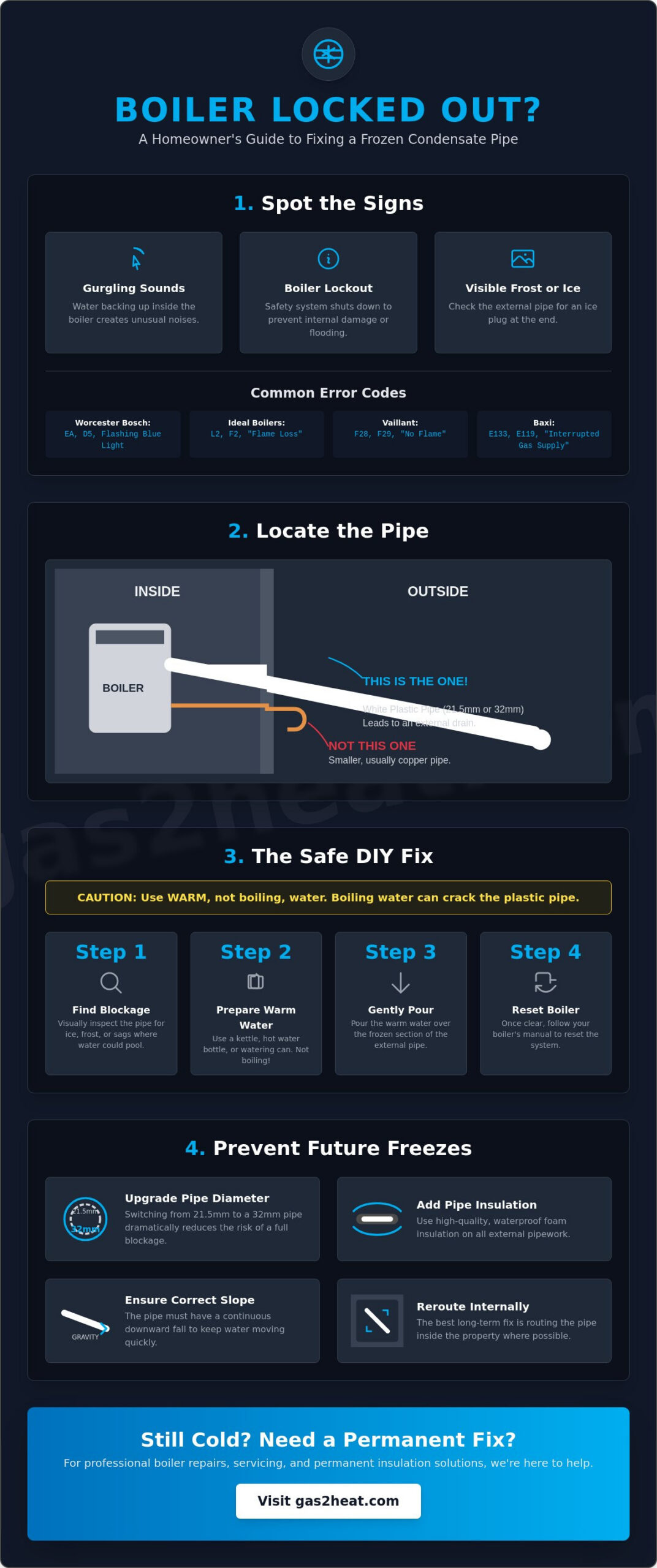
The first sign of trouble is usually a strange gurgling sound coming from your boiler. This noise happens because water is backing up inside the unit. Since the waste water cannot escape through the external pipe, it pools and disrupts the system’s internal pressure. Most modern boilers are designed with a safety lockout mechanism. This feature shuts the system down immediately to prevent internal flooding or damage to the heat exchanger. If your heating stops working during a cold snap, a frozen condensate pipe fix is usually the first thing you need to investigate.
Understanding how condensing boilers work helps clarify why this happens. These high-efficiency systems extract heat from exhaust gases, which creates acidic water known as condensate. This water must drain away constantly. During a Scottish winter, even a few hours of sub-zero temperatures can turn these slow drips into solid ice. If you suspect a blockage, step outside and look for the white plastic pipe exiting your wall. You might see visible frost or a plug of ice at the end of the pipe where it meets a drain or hopper.
Common Error Codes by Brand
Different manufacturers use specific codes to alert you to a drainage issue. Identifying these early is key to a fast frozen condensate pipe fix. Check your boiler’s display panel for the following signals:
- Worcester Bosch: Look for codes EA or D5. You might also see a flashing blue light on the front panel.
- Ideal Boilers: These often display L2 or F2. You may also see a “Flame Loss” message on the screen.
- Vaillant: Common codes include F28 or F29, often accompanied by a “No Flame” warning.
- Baxi: Watch for E133, E119, or messages indicating an “Interrupted Gas Supply.”
Locating Your Condensate Pipe
You need to find the right pipe before you can start thawing it. It’s almost always a white plastic pipe, usually 21.5mm or 32mm in diameter, that leads from your boiler through an external wall. Don’t confuse this with the copper overflow pipe, which is much smaller and usually has a curved end. Your condensate pipe will lead toward a drain, a soakaway, or a hopper head. Check the entire length of the pipe for “belly” points where the pipe might sag. These are prime locations for water to collect and freeze solid during a freeze.
Why Your Condensate Pipe Freezes (and the Science Behind It)
High-efficiency boilers work by capturing latent heat from exhaust gases that would otherwise go to waste. This process turns gas back into a liquid state. An efficient condensing boiler can produce as much as 2 litres of condensate per hour. This waste water doesn’t leave the boiler in a steady, warm stream. Instead, it’s a series of slow, cold drips. In freezing weather, these drips layer on top of each other like wax on a candle. They create a “stalactite” effect inside the pipe. Eventually, the narrow passage closes entirely, causing the system to fail.
Pipe diameter is the biggest predictor of whether you’ll need a frozen condensate pipe fix. Many older installations use 21mm plastic piping. This narrow bore leaves almost no room for error. A small amount of ice can block the entire diameter in minutes. Upgrading to a 32mm pipe significantly reduces this risk. The larger internal surface area allows water to flow around minor ice crystals rather than getting trapped. If your system is prone to failing every winter, a permanent solution often involves replacing these narrow sections during regular boiler repairs.
The Role of Pipe Installation Geometry
Geometry is just as important as diameter. Gravity must be your primary tool for moving water. Every external run needs a significant fall to keep water moving quickly. If the pipe is too flat or has “belly” points where it sags, water pools in the middle. Sharp 90-degree elbows are also common failure points. They slow the water down and provide a ledge for ice to grip. Shorter external runs are always safer. The longer the pipe stays outside, the more heat the water loses before it reaches the drain. Internal routing is the gold standard, but it isn’t always possible in older homes.
Environmental Factors in South West Scotland
Local geography plays a massive role in how your plumbing behaves. In towns like Moffat and Dumfries, wind chill can drop the temperature of external plastic pipes far below the actual air temperature. North-facing walls are particularly vulnerable. They never see the sun, meaning they stay frozen even when the rest of the garden starts to thaw. This creates a dangerous freeze-thaw cycle. The outer layer of ice stays solid while more water drips in, making the blockage denser and harder to clear. If your boiler keeps locking out, professional boiler servicing can help identify if your external pipework is positioned correctly for the local climate.
The Step-by-Step Guide to Thawing Your Pipe Safely
You’ve confirmed the blockage. Now it’s time to act. A frozen condensate pipe fix is a straightforward task, but it requires a methodical approach to avoid damaging your plumbing. First, ensure you have clear and safe access to the external pipework. If the exit point is high up, use a secure ladder and ask someone to assist you. Never take risks on icy ground or in high winds. Collect your supplies before you head out so you can work quickly and efficiently.
Step 1: The Warm Water Pour
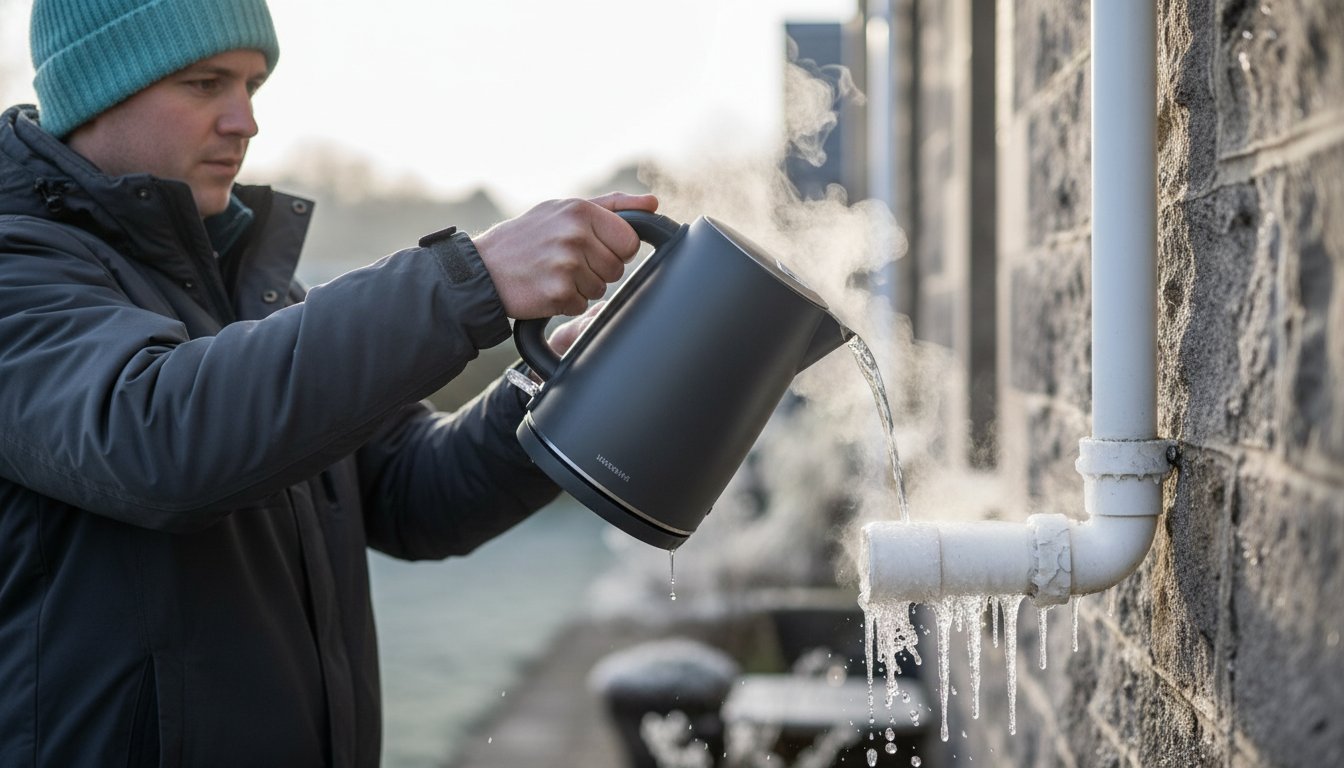
Most homeowners reach for the kettle immediately. This is a mistake. While you need heat, boiling water can cause the PVC pipe to crack or become brittle due to thermal shock. Instead, fill a jug or watering can with warm water. Aim for the temperature of a comfortable bath. Start pouring at the lowest point of the pipe, usually where it enters the drain or hopper. Work your way slowly upward toward the wall. This allows the melted ice to escape immediately. You’ll know it’s working when you hear the ice “clunk” or see water flowing freely from the end. Continue pouring for a few minutes after the flow starts to ensure the entire ice bridge is gone.
Step 2: The Hot Water Bottle/Heat Pack Alternative
Sometimes a direct pour isn’t practical or safe. If the pipe is near a window, delicate brickwork, or is difficult to reach with a jug, use a hot water bottle or a microwaveable heat pack. Fasten the bottle to the frozen section using zip ties or heavy string. Leave it in place for 15 to 20 minutes. This method provides a gentle, sustained heat that penetrates the ice core without creating an ice patch on the ground below. It’s an excellent choice for north-facing walls in South West Scotland where the air is particularly biting and water spills would freeze instantly.
Step 3: Resetting Your Boiler
Clearing the ice is only half the job. Your boiler won’t know the path is clear until you manually override the safety lockout. Go back inside and locate the reset button on your boiler’s control panel. Usually, you’ll need to hold this button for five seconds. If your model uses a dial, turn it to the ‘reset’ position and wait for the display to change. Listen for the internal pump and the ignition sequence. It should start within a minute. If the error code persists, try the reset process one more time. Once the flame symbol appears, your radiators will begin to warm up and the house will start to recover its temperature.
DIY Fix vs. Calling a Heating Engineer: When is it Serious?
While a frozen condensate pipe fix is often a successful DIY task, safety must remain your top priority. Many online forums suggest using hair dryers or heat guns to speed up the thawing process. We strongly advise against this. Mixing mains-powered electrical appliances with wet, icy conditions creates a high risk of electric shock. Similarly, don’t be a hero if your pipe exits the wall at height. Attempting to balance on a ladder on frozen, slippery ground is never worth the risk of a fall. If the blockage isn’t accessible from ground level, stop and seek professional help immediately.
When DIY isn’t Enough
Thawing the external pipe doesn’t always solve the problem. If your boiler fails to reset after several attempts, the blockage might be deeper than the external wall. Listen closely to your boiler unit for a distinct hissing or gurgling sound coming from inside the casing. This is a major red flag. It usually means water has backed up into the heat exchanger or primary burner. At this stage, continuing to pour water on the outside pipe won’t help. You may also have a failed condensate pump. These pumps are common in basement installations or where the boiler is far from an external wall. If the pump’s motor has burnt out due to the pressure of the blockage, no amount of thawing will get the system running again.
The Benefits of a Professional Inspection
Booking an expert ensures your system is safe for long-term use. A Gas Safe engineer will check that the hard lockout hasn’t caused secondary issues with gas pressures or internal seals. They can also verify your boiler servicing history to see if the pipe installation meets current standards. Often, a recurring freeze is a sign that the pipe diameter is too small or the slope is insufficient. A professional can provide a permanent solution rather than a temporary fix. If your heating is still down after following the basic steps, secure your peace of mind by scheduling professional boiler repairs today. This ensures your home stays warm throughout the rest of the winter without further interruptions.
Preventing Future Freezes: Long-Term Solutions for Scottish Winters
A quick frozen condensate pipe fix is a great emergency measure, but you shouldn’t have to go outside with a jug of water every time the temperature drops. To stop this problem for good, you need to address the physical vulnerabilities of your external pipework. The most effective upgrade is increasing the pipe diameter to 32mm. This wider bore is the industry gold standard because it makes it much harder for ice to bridge the gap and cause a total blockage. Narrower 21mm pipes are almost guaranteed to fail in prolonged sub-zero conditions.
Standard foam lagging often fails because it isn’t designed for external use. It absorbs moisture from the air and eventually freezes into a solid block of ice itself. Instead, choose high-quality, UV-resistant, and waterproof insulation. This material stays dry and maintains its insulating properties even in the harshest Scottish weather. For the ultimate “fit and forget” solution, consider trace heating. This involves an electric cable that runs along the pipe and triggers a small amount of heat when the temperature drops, ensuring the condensate never reaches freezing point. If your property layout allows, rerouting the pipe internally to a kitchen or bathroom waste pipe is the most reliable way to avoid the cold entirely.
Professional Upgrades by Gas2Heat
Our team focuses on long-term reliability rather than temporary patches. We ensure all external pipework meets BS 6701 standards for weather-proofing. This includes verifying the “fall” of your pipe. If the angle isn’t steep enough, water will naturally pool and freeze. We correct the geometry to ensure gravity does the heavy lifting. In some cases, we also install a “Condensafe” soakaway treatment. This neutralises the acidic waste water and allows it to drain safely into a purpose-built soakaway, bypassing traditional drain systems that are prone to freezing.
Winter-Proofing Your Home in Dumfries & Galloway
Preparation is the best way to avoid a cold house. Booking an annual boiler service before November allows us to inspect your external plumbing before the first frost hits. We look for sagging pipes, degraded insulation, or narrow bores that might cause trouble later. Modern smart thermostats also offer “frost protection” features. These settings keep the water in your system moving slightly when external temperatures plummet, which can prevent the slow drips that lead to ice build-up.
If you’re tired of dealing with boiler error codes every winter, it’s time for a permanent change. You can contact Gas2Heat for a permanent fix in Moffat, Lockerbie, and across the region. We specialise in modernising old installations to ensure they can handle everything a Scottish winter throws at them. Don’t wait for the next freeze to secure your home’s comfort and avoid the stress of a sudden heating failure.
Restore Your Warmth and Prevent Future Failures
You now have the tools to handle a boiler lockout with total confidence. By recognizing brand-specific error codes and using safe, warm-water thawing techniques, you can often restore your heating without waiting for help. However, remember that a temporary frozen condensate pipe fix is only the first step toward a winter-proof home. True peace of mind comes from correcting installation geometry and upgrading to industry-standard 32mm external piping to ensure waste water always flows freely.
If your boiler fails to reset or you want a permanent solution before the next cold snap, our team is ready to assist. Our Gas Safe Registered Engineers are local Moffat-based experts who prioritize your convenience and safety. We provide straightforward, transparent pricing with no hidden fees, so you always know exactly what to expect. Book a Professional Boiler Repair in Dumfries Today to secure your home’s warmth. You don’t have to face the freeze alone when expert help is just a click away. Stay warm and keep your system running efficiently all season long.
Frequently Asked Questions
Can I use a hair dryer to thaw my frozen condensate pipe?
No, you should never use a hair dryer or any mains-powered electrical appliance outdoors to thaw a pipe. Mixing electricity with wet, icy conditions poses a significant risk of electric shock. Stick to safe methods like pouring warm water or using hot water bottles. These options are highly effective and don’t put your safety at risk during a freeze.
Will my boiler reset automatically after the pipe thaws?
No, your boiler will not usually reset on its own. Most modern units enter a safety lockout mode that requires a manual override once the blockage is cleared. After you have completed the frozen condensate pipe fix, go to your boiler’s control panel. Hold the reset button for five seconds to restart the ignition sequence and restore your heating.
What happens if I don’t fix a frozen condensate pipe?
If you ignore a frozen pipe, your boiler will remain in lockout mode, leaving your home without heating or hot water. In some cases, the backed-up condensate can cause internal components to fail or lead to leaks inside the boiler casing. Addressing the issue immediately prevents these secondary problems and avoids the need for more complex boiler repairs later.
How much does it cost for a plumber to thaw a pipe in Dumfries?
While prices vary, a heating engineer’s average hourly rate in the UK for 2026 is approximately £43. In regions like Dumfries, you can expect rates between £30 and £75 depending on the specific provider. Most thawing jobs are completed within an hour. However, emergency call-outs during extreme weather may incur additional fees, which often start around £75.
Why does my boiler make a gurgling sound when it’s cold outside?
Gurgling sounds occur when waste water cannot escape through the external pipe due to ice. The water pools inside the boiler unit, creating air bubbles and noise as the system struggles to drain. This is a clear warning sign that ice has formed in the condensate line. If you hear this, you should act quickly before the system shuts down completely.
Can I leave my heating on low to prevent the pipe from freezing?
Yes, leaving your heating on a constant low setting can help prevent freezing. Intermittent heating causes the boiler to produce small, slow-moving drips that freeze easily in the pipe. A steady, low heat keeps the condensate flowing more consistently. This makes it harder for ice crystals to take hold and block the narrow 21mm pipes found in older installations.
Is a frozen condensate pipe covered by my boiler warranty?
Most boiler warranties do not cover frozen condensate pipes. Manufacturers typically view this as an external environmental issue or an installation fault rather than a mechanical failure of the boiler itself. It is always best to check your specific policy documents. Regular boiler servicing can help identify if your pipework needs better insulation to meet modern standards.
What is the best insulation for an external condensate pipe?
The best insulation is UV-resistant, waterproof lagging specifically designed for external use. Standard foam lagging often absorbs moisture and freezes solid, which actually makes the problem worse. High-quality waterproof material costs approximately £1.60 per metre in 2026. This small investment provides the most reliable protection against harsh Scottish winters when combined with a wider pipe.
