
Radiators Cold at the Bottom but Hot at the Top? 2026 Troubleshooting Guide
Reaching for the radiator key to bleed your system might actually be the wrong move. While most homeowners assume a cold patch means there is trapped air, finding your radiators cold at bottom but hot at top is a clear sign of internal corrosion. This heavy, metallic sludge settles at the base of your heater, acting as a silent efficiency killer that forces your boiler to work harder for less warmth. You are likely noticing your energy bills climbing while your living room stays chilly, and it is natural to worry that a total system failure is just around the corner.
We understand that heating issues are stressful, especially with the 2026 Future Homes Standard shifting the industry toward stricter efficiency requirements. You deserve a home that heats evenly without the fear of hidden costs. In this guide, you will discover why these cold spots occur and how to restore your system to peak performance. We will compare effective solutions like power flushing and chemical cleaning, giving you the confidence to protect your boiler and lower your monthly consumption. Let’s get your heating back on track with clear, professional advice.
Key Takeaways
- Identify the critical difference between air locks and sludge blockages to save time on ineffective DIY fixes.
- Learn why finding your radiators cold at bottom but hot at top indicates a buildup of magnetite that requires professional cleaning rather than simple bleeding.
- Understand the financial impact of poor circulation, which can force your boiler to work significantly harder and inflate your monthly energy bills.
- Compare professional power flushing with temporary repairs to ensure your heating system remains reliable and efficient throughout the winter.
- Discover how optimizing your radiators helps you stay ahead of the 2026 Future Homes Standard while reducing your home’s overall carbon footprint.
Why is your radiator cold at the bottom but hot at the top?
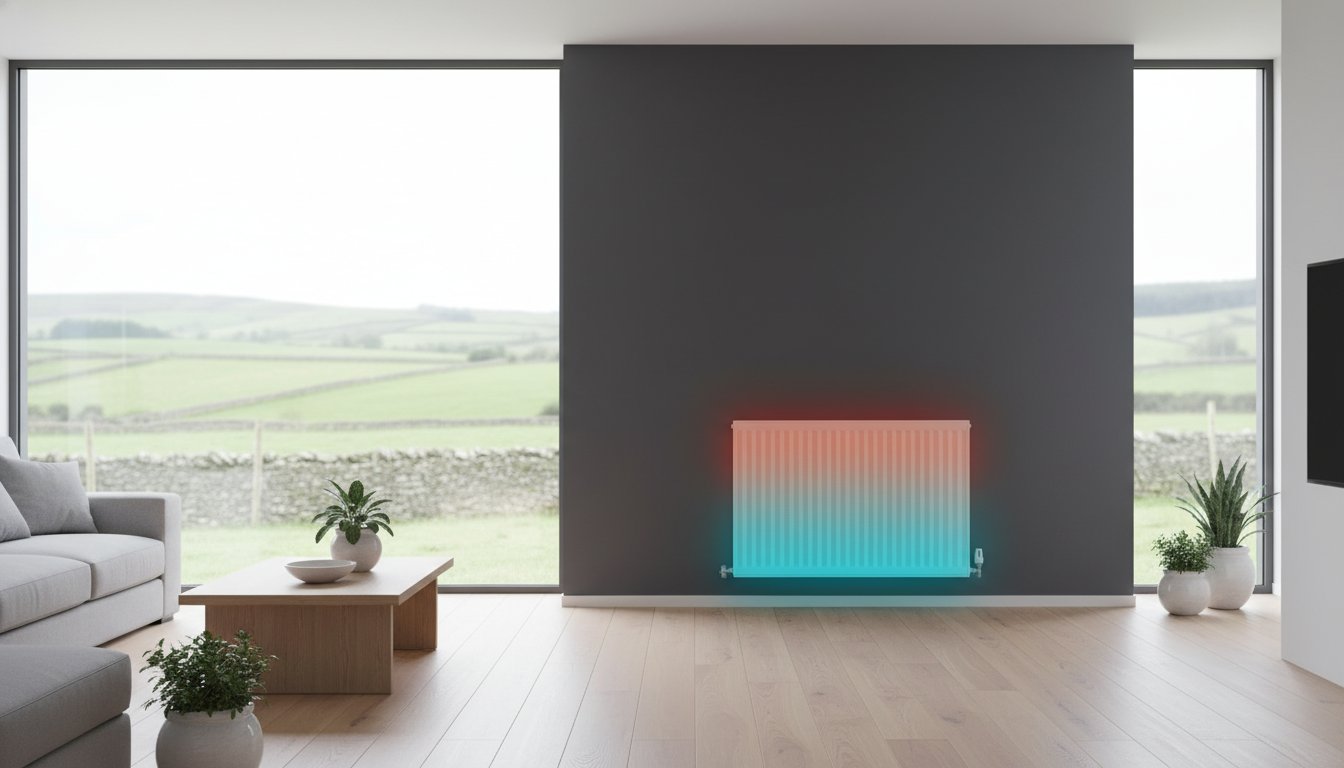
You expect your home to stay warm when the heating clicks on. Finding your radiators cold at bottom but hot at top is frustrating because the room never reaches the right temperature. This isn’t a random glitch. It’s a physical obstruction within your central heating system. When your boiler pumps hot water into a radiator, it should circulate through every internal channel. However, heat naturally rises. If the bottom of the unit is filled with a dense, muddy substance, the hot water cannot penetrate that layer. Instead, it gets forced to flow across the very top of the radiator before exiting. This creates a thermal barrier. You feel heat at the top, but the bottom remains stone cold because the water simply bypasses the blockage.
The primary culprit is magnetite, often called central heating sludge. This is a black, iron-oxide byproduct of internal corrosion. It forms when water, oxygen, and metal react over time. Because it’s heavier than water, it sinks and collects at the base of your radiators. Left untreated, this sludge doesn’t just stay in the radiator; it circulates through your pipework, potentially damaging your boiler pump and reducing the lifespan of your entire installation. It acts like a thick mud that prevents your system from breathing and heating effectively.
The “Cold Bottom” vs. “Cold Top” Diagnostic
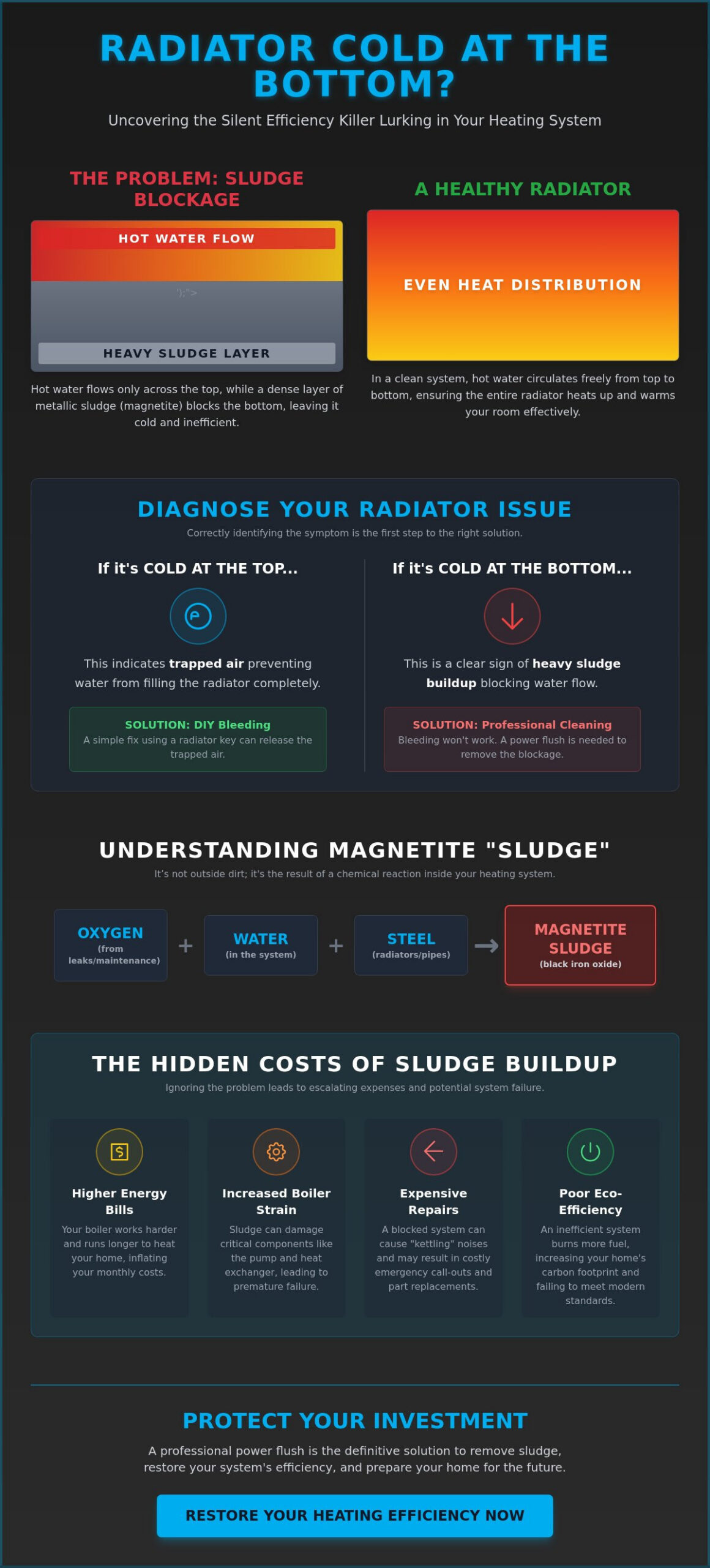
Identifying the problem correctly saves you from wasting time on the wrong fix. If the top of the radiator is cold, you likely have trapped air. This prevents water from filling the unit entirely, and a simple turn of a bleed key usually solves it. If you find your radiators cold at bottom but hot at top, bleeding the system won’t help. The air is already gone, but the heavy sludge is physically blocking the water’s path. You cannot vent sludge out of a bleed valve; it requires a more robust cleaning approach to clear the debris.
Is it just one radiator or the whole house?
Start by checking every radiator in your home. If only one unit has a cold bottom, the sludge is localized. You should also check the lockshield valve, which is the capped valve on the opposite side of the temperature control. Sometimes, a simple flow restriction here mimics a blockage. If multiple radiators are struggling, the magnetite has likely spread throughout the pipes. This suggests a systemic issue that could eventually reach your boiler pump, leading to much more expensive repairs. As we move into 2026, maintaining system efficiency is vital for meeting modern energy standards and keeping your running costs manageable.
Understanding Magnetite: How “Heating Sludge” Cripples Your System
Magnetite is the scientific name for the black, metallic sludge that creates those stubborn cold patches. It isn’t just dirt that entered from the outside. It is a byproduct of internal chemical reactions. When water, oxygen, and steel components interact, they produce black iron oxide. Because these particles are heavy and magnetic, they naturally settle in areas of low flow. This is why you find your radiators cold at bottom but hot at top; the sludge creates a thick, immovable foundation that blocks heat from reaching the lower half of the unit.
Beyond the physical blockage, magnetite acts as a thermal insulator. Instead of allowing heat to radiate into your room, the sludge traps it within the unit. This forces your boiler to run for longer periods, significantly increasing wear on the primary heat exchanger. When this buildup reaches the boiler, it can cause “kettling”, which is a series of loud banging or whistling noises caused by localized boiling. You can prevent these damaging effects by properly maintaining and upgrading your equipment to ensure the water remains clean and clear.
The Lifecycle of Central Heating Sludge
Corrosion is a progressive process that follows a predictable path if left unaddressed. Understanding these stages helps you intervene before a total system failure occurs. It usually begins with oxygen entering the system through microscopic leaks or during routine maintenance, reacting with steel to create metal flakes. These flakes eventually combine with water to form a dense mud that sinks to the bottom of your radiators. In the final stage, the circulation pump pulls this sludge into the boiler, where it sticks to magnetic components like the pump motor and diverter valve.
Why Modern Boilers are More Sensitive to Sludge
Older boilers often had wide, cast-iron heat exchangers that could tolerate a certain amount of debris. Modern condensing boilers are built for maximum efficiency, featuring incredibly narrow waterways. Even a small amount of magnetite can cause a total blockage, leading to a system lockout. This sensitivity makes preventative care essential for any 2026 home setup. To protect your investment, consider booking a professional Boiler Servicing with Gas2Heat.com Ltd to evaluate your system’s water quality before the sludge causes permanent mechanical damage.
Bleeding vs. Power Flushing: Which Fix Does Your Radiator Need?
Choosing the correct solution depends entirely on where the cold spot is located. If the top of the unit is chilly, you are likely dealing with trapped air that can be released in minutes. However, if you find your radiators cold at bottom but hot at top, the issue is a physical blockage that no amount of venting will resolve. Understanding the technical difference between these two maintenance tasks ensures you don’t waste time on a DIY fix that was never designed to move heavy metallic sludge.
Bleeding a radiator is a straightforward process for managing air locks. With the heating turned off and the system cooled, you simply use a bleed key to open the valve at the top corner. You will hear a distinct hissing as the air escapes, followed by a trickle of water which signals that the unit is full. While this restores the water level, it has no impact on the dense magnetite settled at the base. If the bottom remains cold after bleeding, the system requires a mechanical intervention to scour the internal surfaces.
Some homeowners attempt to “hose out” individual radiators by taking them into the garden. This is a messy, incomplete tactic that fails to address the wider system health. While you might clear some debris from one unit, the sludge remaining in your pipework and boiler will quickly migrate back into the clean radiator once it is reinstalled. A professional Power Flush uses a specialized pumping station to circulate high-velocity water and chemical cleaners through the entire loop, ensuring that every component is stripped of corrosion byproducts and protected with a chemical inhibitor.
When to Call a Gas Safe Registered Engineer
Certain situations require the technical authority of a professional to prevent property damage. Heavy sludge often masks “pinhole leaks” where internal corrosion has nearly eaten through the metal. When a powerful flush clears this debris, these tiny holes can open up, requiring immediate repair or replacement. A comprehensive water quality check from Gas2Heat.com Ltd during expert boiler servicing in Moffat, Dumfries and SW Scotland will identify these risks early. We use professional-grade testing to determine if your system needs a simple chemical refresh or a full deep clean to protect your boiler’s warranty.
The Power Flushing Process Explained
We connect a high-performance flushing station to your system, creating a closed loop that bypasses the boiler’s sensitive internal pump. By using specialized chemicals to break down compacted magnetite, we can force the debris out of the radiators and into a magnetic filtration unit. This process is far more effective than a standard drain-down because it uses velocity rather than just pressure to scour the pipes. Once the water runs clear, we verify the results using thermal imaging to confirm that the heat is now distributing evenly across the entire surface of every radiator.
The Hidden Costs of Poor Circulation in Your Home
Ignoring radiators cold at bottom but hot at top is a choice that drains your bank account every month. It isn’t just a minor comfort issue. When your central heating is clogged with magnetite, your boiler works 20-30% harder to achieve the target temperature. This unnecessary strain leads to higher gas bills and accelerates the wear on your system’s most expensive parts. You might think you’re saving money by delaying a repair, but the hidden costs of inefficiency are already appearing on your energy statement.
Improving your heating efficiency is also a vital step in reducing your home’s carbon footprint. A sludged system is an environmental liability because it burns significantly more fuel to produce less heat. This inefficiency is often the primary reason behind rising energy costs that seem impossible to lower through thermostat adjustments alone. By clearing the blockage, you ensure that every unit of gas you pay for is actually converted into warmth for your family.
The financial risk extends beyond your monthly bill. A new boiler installation can easily cost over £2,000, while preventative maintenance is a fraction of that price. Perhaps most importantly, many manufacturers now include clauses that void warranties if a breakdown is caused by poor water quality. If sludge damages your heat exchanger, you could be left footing the entire bill for a repair that should’ve been covered. Keeping your system water clean is a mandatory requirement for modern boiler protection.
Impact on Monthly Energy Bills
When your radiators are restricted, your boiler enters a cycle of longer firing times. Your thermostat senses the room is still cold and continues to call for heat, even though the radiators are physically unable to provide it. Research shows that a 1mm layer of scale or sludge can reduce efficiency by up to 7%. This means you’re paying for energy that never actually reaches your living space. Over a full heating season, these small losses accumulate into a substantial financial burden that is easily avoided with the right care.
Protecting Your Boiler Investment
Annual maintenance is the most effective way to catch circulation issues before they become catastrophic. A clean, well-maintained system extends the life of your pump and heat exchanger by reducing the friction and heat stress caused by debris. South West Scotland homeowners should prioritize system health before the winter peak to avoid emergency call-out fees. If your heating feels sluggish, book a professional Boiler Servicing with Gas2Heat.com Ltd today to ensure your system is running at peak performance.
Professional Power Flushing and Repairs in Moffat & Dumfries
Gas2Heat provides specialized plumbing and heating services across South West Scotland. If you are dealing with radiators cold at bottom but hot at top, you need a team that understands the specific heating configurations found in Dumfries and Galloway. We don’t just treat the symptoms; we address the root cause through comprehensive Power Flushing and expert Boiler Repairs. Our Gas Safe registered engineers bring technical authority to every job, ensuring your home is safe and efficient for the 2026 heating season.
We have built our reputation on transparency and reliability. There are no hidden fees or complex jargon when you work with us. Whether you are in Moffat, Dumfries, or Lockerbie, you get a straightforward assessment of your system’s health. We serve the wider Borders region, bringing modern, tech-enabled scheduling to a traditional trade. This means you aren’t left waiting. We value your time and prioritize rapid results to get your heating back on track before the cold weather sets in.
Why Choose a Local Moffat Specialist?
Gas2Heat is a family-owned business established in 2017. Being local means we offer a rapid response that national corporations simply cannot match. We have a deep knowledge of the local housing stock in Dumfries & Galloway, from historic stone properties with old pipework to modern homes with high-efficiency boilers. This regional expertise allows us to identify common failure points quickly. We understand how local water conditions interact with different radiator materials, which is crucial for preventing the magnetite buildup that cripples system circulation.
Get a Quote for Your Radiator Repair Today
Restoring your home’s comfort starts with a simple system health check. When you book a visit, our engineer will perform a thorough diagnostic of your radiators and boiler. We check for sludge levels, test water quality, and identify any flow restrictions in your valves. If a Power Flush is required, we explain the process clearly and provide a transparent quote before any work begins. Most professional cleaning can be completed in a single day, causing minimal disruption to your routine. Take the first step toward a warmer, more efficient home by securing your appointment today.
Restore Your Home’s Warmth Today
Identifying that cold spots at the base of your heater are a sludge issue, rather than a simple air lock, is the first step toward a more efficient home. We’ve explored how magnetite buildup forces your boiler to work harder, driving up monthly energy costs and potentially risking your manufacturer’s warranty. Addressing these circulation problems now protects your long-term investment and ensures your system is ready for the 2026 heating season. If you are tired of finding your radiators cold at bottom but hot at top, it’s time to secure your home’s comfort with a professional solution.
Take control of your heating efficiency and lower your bills by choosing a team you can trust. Book a Professional Power Flush or System Health Check with Gas2Heat. Our Gas Safe Registered Engineers have been serving Moffat and SW Scotland since 2017. As specialists in Power Flushing and boiler efficiency, we provide the transparent, expert service you need to clear your system safely. You don’t have to settle for a chilly house or high bills this winter. Let’s get your heating back to its best.
Frequently Asked Questions
Can I fix a radiator cold at the bottom by bleeding it?
No, bleeding a radiator won’t fix a cold bottom. Bleeding is only effective for releasing trapped air from the top of the unit. If you find your radiators cold at bottom but hot at top, you are dealing with heavy sludge that has settled at the base. This material is too dense to be removed through a bleed valve and requires a professional flush to clear effectively.
How much does a professional power flush cost in Scotland?
The cost of a professional power flush in Scotland depends on several factors. These include the number of radiators in your home, the age of your central heating system, and the severity of the magnetite buildup. Because every property is unique, we recommend getting a tailored quote. This ensures you pay for the specific level of cleaning your system requires without any hidden surprises.
Is radiator sludge dangerous to my boiler?
Yes, radiator sludge is a serious threat to your boiler’s health. Magnetite is abrasive and magnetic; it can clog the narrow waterways of a modern heat exchanger and cause the pump to seize. If left unaddressed, this debris forces the boiler to overheat, which often leads to a total system lockout and expensive mechanical repairs that might not be covered by your warranty.
How often should I have my central heating system flushed?
Most heating professionals recommend a system flush every five to ten years. However, this frequency can change based on the quality of your system’s water and whether you have a magnetic filter installed. If you notice your radiators cold at bottom but hot at top, you should book a health check immediately. Regular maintenance prevents sludge from reaching a critical level that damages your boiler.
What happens if I ignore a radiator that is only hot at the top?
Ignoring a radiator with a cold bottom leads to significantly higher energy bills and potential system failure. Your boiler will work harder to compensate for the lost heat, burning more gas for less warmth. Over time, the circulating sludge will migrate into the boiler’s internal components. This increases the risk of a mid-winter breakdown and could result in the need for a premature boiler replacement.
Will a magnetic filter stop my radiators from getting cold at the bottom?
A magnetic filter is an excellent preventative tool, but it cannot fix existing blockages. It works by catching metallic particles as they circulate through your pipes before they can settle. While it stops new sludge from forming, it won’t remove the heavy debris already sitting at the bottom of your radiators. You should always have your system professionally flushed before installing a new filter for the best results.
How long does a professional power flush take to complete?
A professional power flush usually takes between six and ten hours to complete. The exact time depends on the size of your house and how much sludge has accumulated in the pipework. A standard three-bedroom home typically takes a full working day. Our engineers work systematically through each radiator to ensure the entire circuit is clear and your heating efficiency is fully restored before we leave.
Can sludge in my radiators cause my boiler to make banging noises?
Yes, sludge is the primary cause of kettling or banging noises in your boiler. When magnetite coats the internal heat exchanger, it prevents water from flowing smoothly and causes it to overheat rapidly. This creates steam bubbles that pop and bang as they move through the system. Clearing the sludge stops these noises and prevents the heat exchanger from cracking due to thermal stress.
