
Why Your Boiler Pilot Light Keeps Going Out: Causes and 2026 Fixes
Imagine waking up on a cold morning only to find your radiators are ice cold and there is no hot water for your shower. You check the cupboard and realize your boiler pilot light keeps going out, leaving you stuck in a freezing house. It’s a stressful moment that triggers immediate concerns about safety, gas leaks, and the potential cost of a brand new system. We understand that you want your home back to normal quickly and without unnecessary complications.
You deserve a reliable heating system that works when you need it most. We’ll help you find the source of the problem. You will discover the common reasons your boiler pilot light fails and learn how to safely restore your heating and hot water. We’ll provide a clear overview of technical issues like faulty thermocouples and debris in the pilot tube. This guide ensures you understand the fault and know the safe relighting instructions to get your home warm again.
Key Takeaways
- Identify why your boiler pilot light keeps going out by pinpointing common mechanical failures like a faulty thermocouple or restricted gas flow.
- Follow a step-by-step guide to safely relight your boiler while maintaining proper ventilation and checking for gas leaks.
- Distinguish between standing pilot lights and modern electronic ignitions to understand how your specific heating system functions.
- Discover how regular professional servicing prevents unexpected breakdowns and ensures landlords meet their legal gas safety obligations.
- Connect with local Gas Safe registered experts in Moffat for rapid, transparent repairs that restore your home’s warmth quickly.
Understanding Why Your Boiler Pilot Light Matters
The pilot light serves as the ignition source for your entire heating system. To understand what a pilot light is, think of it as a small, dedicated flame that stands ready to ignite the main burners whenever your thermostat calls for heat. When your boiler pilot light keeps going out, the system loses its ability to generate warmth and hot water. This isn’t just a technical glitch; it’s a critical safety response. Modern boilers are designed to shut down gas flow immediately if they detect that the flame is missing or unstable. Identifying whether your unit uses a traditional permanent flame or a modern alternative is the first step toward a reliable fix.
Standing Pilot vs. Electronic Ignition
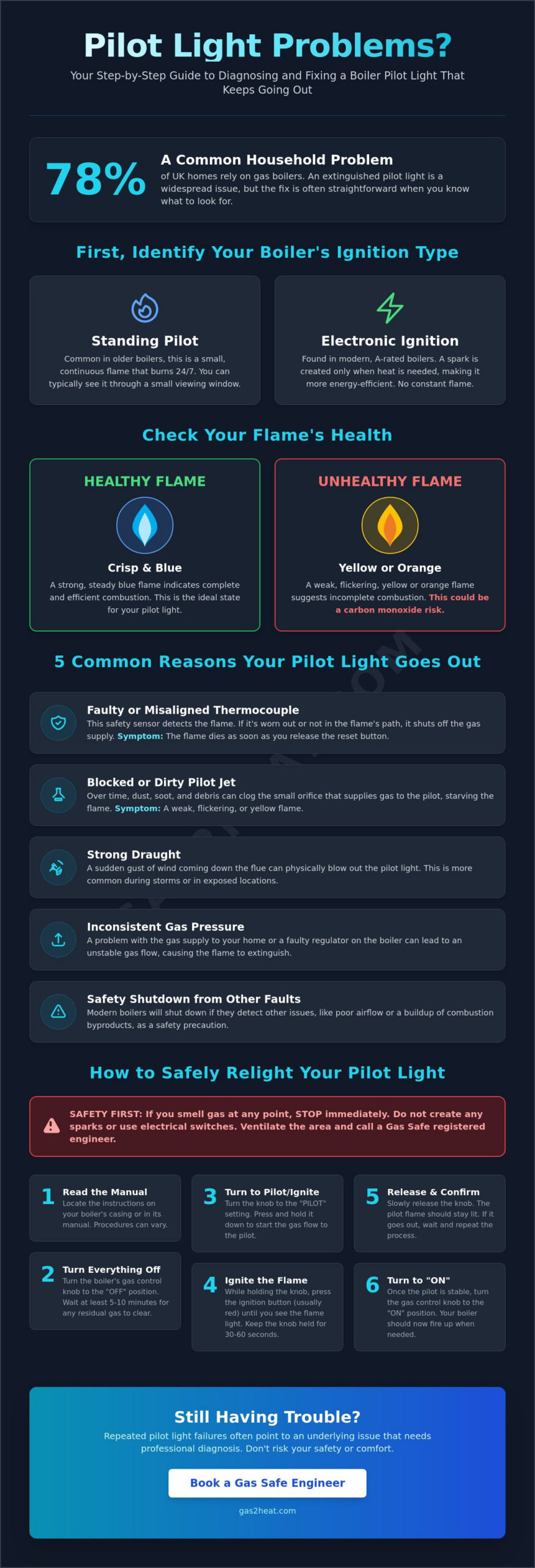
Before you can troubleshoot, you must determine how your boiler ignites. Older conventional boilers typically feature a “standing pilot,” which is a small flame that burns 24 hours a day. You can usually see this through a small glass viewing port on the front of the unit. In contrast, modern A-rated boilers utilize electronic ignition. These systems are more energy-efficient because they only produce a spark when heat is required. You won’t see a constant flame in these newer models during standby mode. Instead, the Printed Circuit Board (PCB) manages the entire sequence. It sends a signal to the ignition electrode to create a spark only when needed. If the PCB doesn’t receive confirmation that the flame has successfully lit, it will lock the boiler out for safety.
The Safety Role of the Pilot Flame
The pilot flame is more than just a match for the main burner; it’s a vital safety component. In older systems, the flame heats a sensor called a thermocouple. This heat generates a small electrical current that keeps the gas valve open. If the flame disappears, the thermocouple cools down, the current stops, and the gas valve snaps shut. This prevents a dangerous buildup of unburnt gas in your home. Newer units use a more advanced process called flame rectification. This involves the flame completing an electrical circuit to prove its presence to the control board. Always pay close attention to the appearance of the flame. A healthy pilot light should be a crisp, steady blue. If you notice a flickering yellow or orange flame, this indicates incomplete combustion and a potential carbon monoxide risk. If your boiler pilot light keeps going out or changes color, it’s time to investigate the underlying components.
5 Common Reasons the Pilot Light Keeps Going Out
With approximately 78% of UK homes relying on gas boilers for heating, a sudden failure is a widespread frustration. If your boiler pilot light keeps going out, it’s usually a sign of a mechanical or environmental factor interfering with the safety sequence. Identifying the root cause is essential for maintaining a warm home and ensuring your system operates safely. While there are several potential issues, five specific culprits account for the majority of call-outs.
Thermocouple Failure and Misalignment
The thermocouple is the primary safety sensor for the flame. It consists of two metal wires that, when heated by the pilot light, create a small electrical current. This current provides the energy needed to hold the gas valve in the open position. If the thermocouple becomes worn out or has physically shifted away from the flame’s path, it won’t produce enough voltage. The gas valve then snaps shut as a fail-safe, which is why your boiler pilot light keeps going out. You might notice the flame stays lit while you hold the reset button but dies the moment you let go. This is a classic sign of a failing thermocouple.
Blocked Pilot Jets and Dirty Burners
Dust, lint, and carbon deposits naturally accumulate in the pilot orifice over time. These deposits restrict the flow of gas or disrupt the precise gas-to-air mixture required for a stable flame. You can often diagnose this visually. A healthy flame is a strong, steady blue. If you see a weak, flickering, or orange flame, the jet is likely blocked. Regular boiler servicing is the most effective way to clear these blockages and maintain boiler safety and efficiency.
In exposed locations across South West Scotland, external draughts are a frequent nuisance. High winds in Moffat or Dumfries can travel down the flue and physically blow out the pilot flame. If this happens during a storm, it’s likely an environmental fluke rather than a part failure. However, inconsistent gas pressure is a more technical concern. A faulty regulator or a restricted supply line can starve the burner of fuel. Finally, incomplete combustion can lead to a safety shutdown. If the boiler detects poor air flow or a buildup of combustion byproducts, it will kill the flame to prevent carbon monoxide risks.
Dealing with an unreliable heating system is stressful, but most issues are easily resolved by an expert. Scheduling a professional inspection through Gas2Heat.com Ltd ensures your boiler is checked by local specialists who understand the unique demands of Scottish weather on home heating systems.
How to Safely Relight Your Boiler Pilot Light
Safety is your first priority when your heating fails. Before you touch any controls, perform a thorough “smell test” around the unit. If you detect even a faint scent of gas, do not attempt to light the boiler. Open all windows to ensure the area is well-ventilated. If your boiler pilot light keeps going out, it’s tempting to try again immediately, but patience prevents accidents. Always consult your manufacturer manual first. Ignition sequences vary significantly between older manual models and newer units with automatic reset buttons. Following the wrong steps can lead to a lockout or, in rare cases, a safety hazard.
Standard Relighting Procedure
Most traditional boilers follow a specific sequence to establish a stable flame. Follow these steps carefully to restore your heating and hot water:
- Step 1: Turn your wall thermostat to its lowest setting and rotate the gas control knob on the boiler to the “Off” position.
- Step 2: Wait at least 10 to 15 minutes. This is a critical safety step that allows any residual gas in the combustion chamber to dissipate completely.
- Step 3: Rotate the knob to the “Pilot” setting. Depress the knob and simultaneously press the igniter button. You should hear a clicking sound and see a small spark through the viewing window.
- Step 4: Once the flame appears, continue holding the knob down for at least 30 seconds. This gives the thermocouple enough time to heat up and signal the gas valve to stay open.
When to Call a Gas Safe Registered Engineer
Knowing when to stop is just as important as knowing how to start. If the flame goes out the moment you release the control knob, there is a likely fault with the thermocouple, gas valve, or lead. Do not keep trying. Repeatedly attempting to light a faulty unit can lead to a dangerous accumulation of gas. If your boiler pilot light keeps going out despite following the correct sequence, the component has likely failed and requires a professional replacement.
You should also look for physical warning signs. Scorching or soot on the boiler casing indicates a serious combustion issue that needs immediate attention. While we focus on your comfort, we also prioritize heat-related safety standards when advising on appliance maintenance. Professional intervention is a legal requirement for gas work in the UK. This ensures your home remains a safe environment for your family. If you’re unsure at any point, it’s always safer to wait for an expert to arrive rather than risking a DIY repair on a gas appliance.
Long-Term Solutions and Prevention Strategies
A proactive approach to boiler care is the most effective way to ensure your home remains warm throughout the winter. While knowing how to relight the flame is useful, addressing the root cause prevents the stress of a sudden breakdown. Regular maintenance is significantly cheaper than emergency repairs in the long run. A typical boiler service costs around £100, whereas a major repair can quickly exceed £300. By investing in preventative care, you reduce the mechanical strain on your ignition components and extend the life of your system.
The Importance of Annual Servicing
During a professional service, a Gas Safe registered engineer performs several critical tasks that a homeowner cannot do safely. They will clean the pilot assembly and orifice to remove the carbon deposits mentioned earlier. They also verify that gas pressures are set correctly to prevent the burner from being starved of fuel. Checking the integrity of the flue is another vital step. A damaged or poorly sealed flue can allow wind to enter the combustion chamber, which is a common reason why a boiler pilot light keeps going out in exposed areas. This comprehensive check is also a great opportunity for improving heating efficiency, ensuring you aren’t wasting money on high energy bills.
Landlord Gas Safety Considerations
For landlords in Moffat and Dumfries, a failing pilot light is more than just a nuisance; it is a legal liability. Under the Gas Safety (Installation and Use) Regulations 1998, you must ensure all gas appliances are safe for tenant use. If your boiler pilot light keeps going out, an engineer may classify the unit as “At Risk” or “Immediately Dangerous” during an inspection. This could prevent you from securing a valid Gas Safety Certificate (CP12). To meet 2026 legal standards, you must also ensure carbon monoxide detectors are installed and functional in every room containing a gas appliance. Compliance is essential, especially since the Renters’ Rights Act 2025 has strengthened tenant protections regarding property safety.
If your boiler is over 10 to 12 years old, it may only be operating at 60% to 70% efficiency. This means 30p to 40p of every £1 you spend on gas is wasted. In these cases, a repair might only be a temporary fix. You might consider upgrading to a modern, A-rated system. Under the Boiler Upgrade Scheme, grants of £7,500 are currently available to help homeowners transition to low-carbon heating like air source heat pumps. Whether you need a simple fix or a full system review, we can help. Book your professional Boiler Servicing today to secure your home’s comfort and safety.
Professional Boiler Repairs in Moffat and South West Scotland
When your boiler pilot light keeps going out, you need more than just a temporary fix. You need a permanent solution from an expert who understands the technical nuances of your specific heating system. Gas2Heat.com Ltd provides rapid response repairs for homes in Moffat, Dumfries, and Lockerbie. Our local engineers are Gas Safe registered. They carry the experience required to handle all major boiler brands and models. We focus on removing the uncertainty of trade services through transparent pricing and straightforward communication. You’ll receive a clear explanation of the fault and a reliable plan to restore your home’s warmth.
Local Expertise Across Dumfries and Galloway
We serve communities throughout the region, including Annan, Gretna, and Castle Douglas. Choosing a local Moffat-based specialist ensures faster arrival times when you’re facing a heating emergency. We understand the specific challenges of the South West Scotland climate. As discussed, high winds and damp conditions often contribute to the draughts that cause pilot light failures in this part of the country. Our commitment to high-quality workmanship means we don’t just relight the flame; we diagnose the underlying cause to provide lasting peace of mind. By focusing on regional expertise, we ensure your boiler is optimized for local conditions.
Booking Your Repair with Gas2Heat.com Ltd
Scheduling your visit is a streamlined process designed for your convenience. Whether you need an emergency repair because your boiler pilot light keeps going out or you want a routine maintenance check, our tech-enabled scheduling ensures a brisk response. We value your time and prioritize rapid results to minimize disruption to your daily routine. During our diagnostic visit, our engineer will conduct a thorough safety assessment of your entire unit. We’ll identify the fault, explain the necessary fix, and provide a clear path to restoring your hot water and heating. Our approach is modern and clean, avoiding the complications often associated with traditional trade services.
Don’t let a faulty pilot light leave you in the cold. Secure your home’s reliability with a professional service that puts your comfort and safety first. Our engineers are ready to provide the technical authority and approachable service you deserve. Book your boiler repair in Dumfries and Moffat today and experience a modern, customer-focused approach to home maintenance.
Restore Your Home’s Warmth and Security
Dealing with a cold home is stressful, but identifying why your boiler pilot light keeps going out is the first step toward a permanent fix. Whether the issue is a worn thermocouple, a blocked jet, or simply a draughty flue, understanding these causes removes the uncertainty of a breakdown. Remember that your pilot light is a critical safety feature designed to protect your household. While relighting the flame is a helpful temporary measure, professional maintenance ensures your system remains efficient and compliant with 2026 safety standards.
Gas2Heat has provided reliable service across SW Scotland and the Borders since 2017. Our Gas Safe Registered engineers deliver transparent, expert repairs that prioritize your convenience and peace of mind. We focus on rapid results so you don’t have to worry about long wait times or hidden costs. Don’t let a minor fault become an expensive emergency. Take control of your home’s comfort by choosing a local expert who values honesty and efficiency.
Get Your Boiler Fixed by Local Moffat Experts and enjoy a warm, worry-free home once again.
Frequently Asked Questions
Is it dangerous if my boiler pilot light goes out?
It’s not immediately dangerous because modern boilers include a fail-safe mechanism that cuts the gas supply. If your boiler pilot light keeps going out, the safety valve prevents unburnt gas from leaking into your home. However, a failing flame can indicate poor combustion or a faulty component. You should investigate the cause promptly to ensure your system isn’t producing carbon monoxide.
Can I relight the pilot light myself?
Yes, you can usually relight the flame yourself by following the specific instructions in your manufacturer’s manual. Always ensure the area is well-ventilated and confirm there is no smell of gas before you begin. If the flame won’t stay lit after a few attempts, stop immediately. Repeatedly trying to light a faulty unit can lead to a dangerous buildup of gas.
Why does my pilot light go out when it is windy outside?
High winds can create a downdraught in your flue that physically blows the flame out. This is a common issue in exposed areas across South West Scotland during stormy weather. If this happens frequently, it may indicate that your flue terminal is damaged or poorly positioned. A professional can check the terminal integrity to prevent future draught-related blowouts.
What does a yellow pilot light flame mean?
A yellow or orange flame is a sign of incomplete combustion and is a serious safety risk. A healthy pilot light should always be a crisp, steady blue. A yellow flame means the gas isn’t burning properly, which can lead to the production of carbon monoxide. Turn off your boiler and seek professional help immediately if you notice a change in flame color.
How much does it cost to replace a boiler thermocouple in 2026?
The total cost for a thermocouple replacement depends on your specific boiler brand and the complexity of the repair. While the component itself is a standard part, the final price will include the labor of a Gas Safe registered engineer. We recommend requesting a transparent quote to ensure you understand the costs before the work begins.
Why does the pilot light go out as soon as I let go of the button?
This issue typically points to a faulty or misaligned thermocouple. The thermocouple must stay hot to generate the electrical current that keeps the gas valve open. If it is worn out or has moved away from the flame, it won’t detect the heat. The system then shuts off the gas supply as soon as you release the manual override button.
Do modern combi boilers have pilot lights?
Most modern combi boilers do not use a permanent standing pilot light. Instead, they utilize electronic ignition or spark electrodes that only fire when the thermostat calls for heat. This design is significantly more energy-efficient and removes the risk of a constant flame being blown out by external draughts.
How often should I have my boiler serviced to prevent pilot light issues?
You should book a professional boiler service every year to maintain your system’s reliability. During a service, an engineer cleans the pilot assembly and checks for debris that could cause blockages. This annual check-up is the most effective way to ensure your boiler pilot light keeps going out less frequently and your warranty remains valid.
