

Winter Heating Saving Tips 2026: The Ultimate Guide for South West Scotland Homeowners
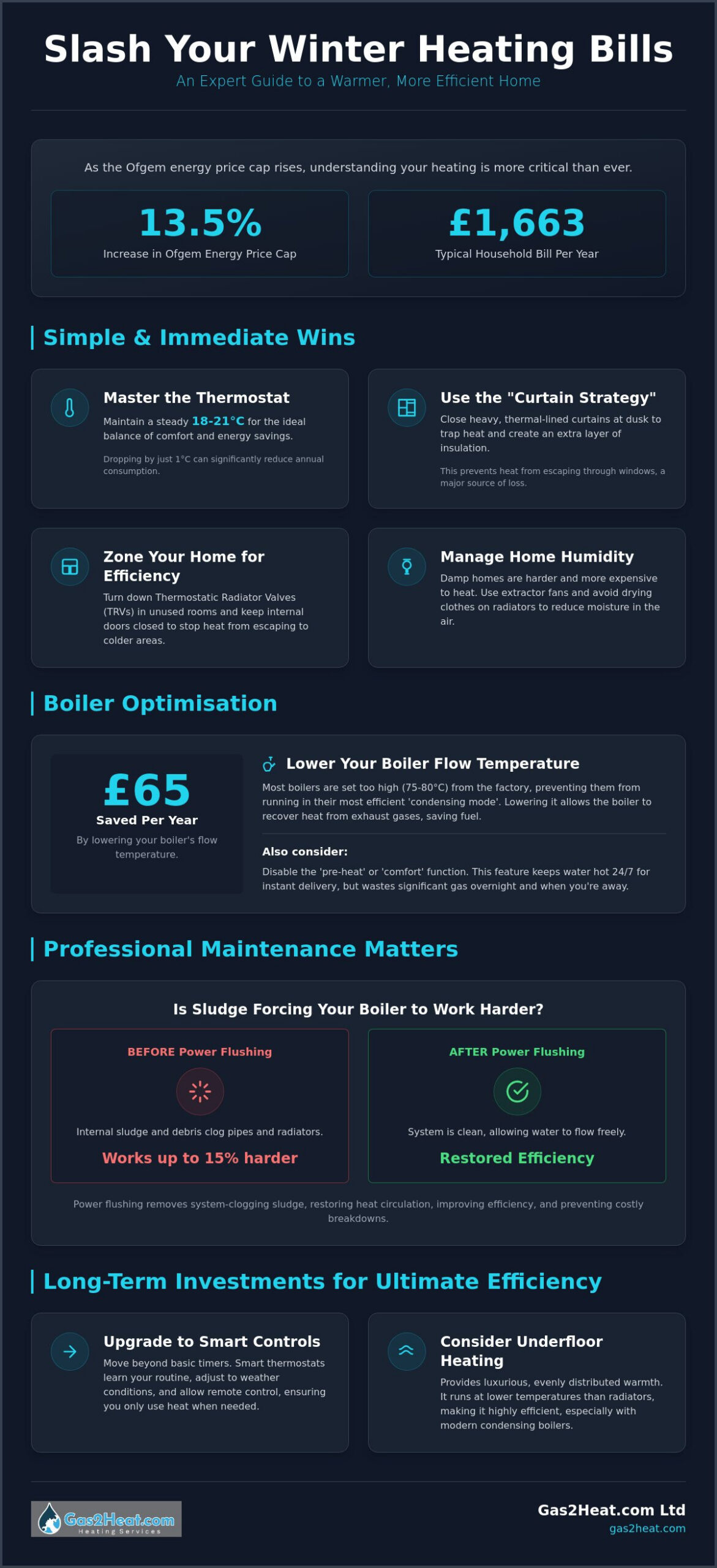
Did you know that as of July 1, 2026, the Ofgem energy price cap rose by 13.5%, pushing typical household bills to £1,663 per year? For homeowners across South West Scotland, this spike makes finding effective winter heating saving tips more critical than ever. It’s frustrating to watch your monthly outgoings climb while you struggle with drafty rooms in the Scottish Borders or fight with confusing boiler settings that never seem to deliver the right temperature.
We understand that you want a warm, comfortable home without the fear of an emergency breakdown during a January freeze. You deserve a heating system that operates with maximum efficiency and total reliability. This guide promises to show you how to slash your energy costs by adopting a system-first approach to your home’s warmth. We’ll preview how simple home hacks combined with professional optimisations, such as power flushing and smart thermostat upgrades, can lower your bills. You’ll learn to move beyond basic advice to secure a more evenly heated home and long-term peace of mind.
Key Takeaways
- Master the “Thermostat Challenge” by maintaining a steady 18-21°C to achieve the ideal balance between personal health and reduced energy costs.
- Lower your boiler’s flow temperature to reclaim up to £65 a year in wasted energy while maintaining a perfectly warm home.
- Don’t let internal sludge force your boiler to work 15% harder; use professional winter heating saving tips like power flushing to restore efficiency.
- Upgrade to smart controls or underfloor heating to move beyond basic programmers and enjoy more efficient, evenly distributed warmth in every room.
- Leverage local Moffat-based expertise to ensure your boiler is optimised for the unique climate and housing stock of South West Scotland.
The Foundation: Simple Daily Habits to Lower Winter Bills
Managing your home’s temperature doesn’t require a degree in engineering. It starts with the “Thermostat Challenge.” Health experts and energy specialists agree that keeping your living spaces between 18°C and 21°C provides the ideal balance between personal well-being and financial savings. Dropping your thermostat by just one degree can significantly reduce your annual consumption without a noticeable loss in comfort. Finding the right winter heating saving tips for a stone cottage is different than for a modern flat, but the thermostat remains your most powerful tool.
Windows are often the weakest link in your home’s thermal envelope, especially in Moffat’s historic properties. Use the “Curtain Strategy” by installing heavy, thermal-lined curtains. Close them as soon as dusk falls to create an extra layer of insulation. This simple habit traps a pocket of air between the glass and the fabric, preventing heat from escaping into the night. Don’t forget to check for hidden leaks in floorboards and loft hatches. Small gaps around pipes or under skirting boards act like open windows, pulling cold air in and pushing expensive warm air out.
Humidity management is another overlooked factor in heating efficiency. A damp home is much harder and more expensive to heat than a dry one because your boiler has to warm the water molecules in the air before the room temperature rises. Use extractor fans in kitchens and bathrooms, and avoid drying clothes on radiators. While many homeowners are eventually looking toward heat pump technology for long-term decarbonisation, keeping your current home dry and draft-free provides immediate relief for your wallet.
Zoning Your Home for Efficiency
Stop paying to heat empty space. If you have spare bedrooms or storage areas that aren’t in constant use, turn the Thermostatic Radiator Valves (TRVs) down to a lower setting. This directs the boiler’s energy to the rooms where you actually spend your time. Keep internal doors closed to prevent heat migration. This simple action stops warm air from drifting into cold hallways or stairwells, ensuring your living room stays cozy for longer.
Tackling Heat Loss in Traditional Scottish Homes
Optimising Your Boiler Settings for Maximum Efficiency
Your boiler is likely the most expensive appliance in your home. Most homeowners treat it as a “set and forget” device, but its default settings often prioritise speed over efficiency. Modern condensing boilers only reach their advertised efficiency levels when they operate in “condensing mode.” This happens when the water returning to the boiler is cool enough to allow the unit to recover heat from its own exhaust gases. If your settings are too high, this process fails, and you literally watch money disappear up the flue. Implementing specific winter heating saving tips regarding your boiler’s internal logic can reduce your gas consumption without changing how you use your home.
One of the most effective adjustments is disabling the “pre-heat” function. Many combi boilers have a “comfort” or “pre-heat” mode that fires the burner periodically throughout the day and night to keep a small amount of water hot inside the unit. This ensures “instant” hot water at the tap, but it wastes a significant amount of gas when no one is home or while you are sleeping. Switching to “Eco” mode stops this unnecessary firing. Additionally, if your system uses weather compensation, ensure the external sensor is clear of obstructions. This technology monitors the outdoor temperature in places like Moffat and automatically lowers the boiler’s output on milder days, preventing the “cycling” that wears out components and wastes fuel.
How to Adjust Your Boiler Flow Temperature
The flow temperature is the heat of the water as it leaves the boiler to travel to your radiators. Most boilers are factory-set to 75°C or 80°C, which is far too high for a condensing boiler to run efficiently. To save up to £65 per year, try the following steps:
- Locate the heating control dial or digital menu on your boiler, often marked with a radiator icon.
- Reduce the flow temperature to 60°C or even 55°C.
- Monitor your home’s comfort for 24 hours. If the rooms feel chilly or take too long to warm up, increase the temperature by 5 degrees at a time until you find your home’s unique sweet spot.
If you find these menus confusing or your boiler is showing signs of age, a professional boiler servicing can include a full efficiency audit to ensure your settings are perfectly calibrated for the South West Scotland climate.
The Truth About Leaving the Heating on All Day
A persistent myth suggests that leaving your heating on a low setting all day is cheaper than turning it on and off. This is rarely true. Your home loses heat constantly; the higher the internal temperature compared to the outside air, the faster that heat escapes. It is nearly always more cost-effective to only heat your home when you need it. Use a 24-hour timer to schedule warmth for when you wake up and return from work. To protect your property, set a “setback” temperature of 15°C. This prevents the house from becoming dangerously cold or damp during the night while still keeping your energy bills under control.
Professional Maintenance: Why Servicing and Power Flushing Save Money
Many homeowners focus heavily on external insulation, but the health of the water circulating inside your pipes is just as vital for your wallet. Over time, the chemical reaction between water and metal components creates black iron oxide, commonly known as sludge. This heavy debris settles in your radiators and heat exchanger, creating what engineers call an “Efficiency Gap.” A dirty system forces your boiler to work 15% harder to achieve the same room temperature. This internal resistance is a silent thief of your energy budget. Professional maintenance is one of the most effective winter heating saving tips because it addresses the root cause of wasted fuel rather than just the symptoms.
System health is especially critical for rural properties in South West Scotland that rely on LPG systems. These setups require specific technical attention to ensure the burner remains calibrated for the fuel type and storage pressure. Neglecting the internal health of your heating circuit doesn’t just raise your bills; it places unnecessary strain on expensive components like the pump and the primary heat exchanger. By maintaining a clean system, you ensure every penny spent on gas or LPG actually reaches your living spaces instead of being lost to internal friction.
Is Your Central Heating Sluggish?
Check your radiators for cold spots at the bottom while the top feels warm. This is a classic sign of sludge accumulation restricting the flow. A professional power flushing service acts as a deep clean for your entire circuit, using high-velocity water to force out the debris. Once the system is clear, installing a magnetic filter provides a permanent solution by catching new particles before they can settle. You can find more improving heating efficiency strategies in our dedicated guide for Dumfries and Moffat residents.
The ROI of a Gas Safe Service
An annual service is far more than a simple safety check; it’s a precision performance tune-up. Our Gas Safe registered engineers clean the burner and heat exchanger, ensuring the combustion process is as clean as possible. Even a thin layer of soot can significantly increase gas consumption. Think of this as an investment in reliability and efficiency. The cost of a scheduled service is a fraction of what you would pay for an emergency call-out or a major component replacement during a January freeze. Booking our expert boiler servicing ensures your system is ready for the specific demands of a Scottish winter.
Long-Term Investments: Smart Controls and Underfloor Heating
Daily habits and annual maintenance provide immediate relief, but long-term infrastructure upgrades offer the most substantial protection against rising energy costs. Moving beyond basic programmers to advanced technology ensures your home manages energy automatically. These investments transform how your property retains and distributes warmth. Integrating these solutions is one of the most effective winter heating saving tips for those looking to future-proof their homes against the 13.5% price cap increase seen in July 2026. Smart technology and modern distribution methods work together to ensure no heat is wasted.
While local upgrades are essential, looking at international industry standards can provide valuable inspiration; to see how specialists implement advanced thermal efficiency, visit MESCH Isolierung & Brandschutz GmbH.
Eventually, every homeowner faces the “repair vs replace” tipping point. If your boiler is over 12 years old or requires frequent repairs, a new high-efficiency model could pay for itself through reduced gas consumption. Modern units are designed to work seamlessly with smart controls and underfloor systems. They provide a level of reliability that older boilers simply cannot match. Investing in your system now prevents the stress of an emergency breakdown during the peak of a Scottish winter.
Smart Thermostat Installation: Is It Worth It?
Smart thermostats like Tado, Nest, and Hive are the easiest tech upgrades for 2026. Unlike standard timers, these devices use “learning” schedules to adapt to your actual lifestyle. Geofencing is a standout feature for local residents. It uses your phone’s location to detect when you’ve left Moffat or Dumfries, automatically lowering the temperature to save fuel while you’re away. When you head back, the system pre-warms the house so it’s comfortable the moment you walk in. Detailed energy reports also help you track daily usage, identifying exactly where you can shave more off your monthly bill. If you’re ready to take control, our team provides professional smart thermostat installation to get you connected quickly.
The Efficiency of Underfloor Heating
Underfloor heating (UFH) is often more efficient than traditional radiators for large, open-plan rooms. It operates at much lower temperatures, typically around 35°C to 45°C, compared to the 60°C to 75°C required by radiators. This lower flow temperature allows your condensing boiler to stay in its most efficient mode for longer periods. UFH creates a consistent “heat envelope” from the floor up, eliminating the cold spots often found in older stone-built Scottish homes. There are excellent retrofitting options available for Dumfries renovations that don’t require digging up your existing foundation. You can read more about our underfloor heating installation services to see if it’s the right fit for your property.
Winter-Proofing Your South West Scotland Home with Gas2Heat.com Ltd
Local expertise is the final piece of the efficiency puzzle. South West Scotland has a unique mix of architecture, from exposed stone cottages in the Borders to modern developments in Dumfries. A national call centre doesn’t understand the biting wind off the Solway Firth or the specific challenges of maintaining a rural LPG system. Our engineers at Gas2Heat.com Ltd live and work in your community, providing a level of insight that only a local specialist can offer. We’ve built our reputation on transparent pricing and a rapid response because we know that a heating failure in mid-winter isn’t just an inconvenience; it’s an emergency.
The Gas2Heat.com Ltd approach focuses on removing the stress and uncertainty of home maintenance. We provide clear, straightforward advice and fixed pricing so you aren’t left guessing about the cost of your repairs. Implementing professional winter heating saving tips shouldn’t be a complicated process. By securing a winter health check before the peak season begins, you protect your family from the 13.5% energy price spike seen in July 2026 and ensure your system is running at its absolute peak performance.
Use this checklist to prepare for the first frost in Dumfries & Galloway:
- Check boiler pressure: Ensure your gauge is sitting between 1.0 and 1.5 bar.
- Insulate condensate pipes: Use foam lagging on any external pipes to prevent them from freezing and shutting down your boiler.
- Test alarms: Verify that your carbon monoxide and smoke alarms are fully functional.
- Bleed radiators: Remove trapped air to ensure the entire surface of the radiator gets hot.
Emergency Support Across the Borders
We provide comprehensive coverage across the region, from Gretna to Castle Douglas. If your boiler fails during a cold snap, don’t panic. Check your fuel supply and try the reset button once. If the system remains unresponsive, our team is ready to help. We specialise in both natural gas and LPG systems, ensuring you have access to reliable plumbing and heating services when you need them most. Our tech-enabled scheduling means we can get an engineer to your door quickly, restoring your peace of mind and your home’s warmth.
Start Your Efficiency Journey Today
Don’t wait for the temperature to drop before you think about your heating. Whether you need a simple performance tune-up or a full boiler installation in Dumfries, we’re here to help. Contact our Moffat office today for expert local advice tailored to your property. Optimise your system now to enjoy a more comfortable home and lower monthly outgoings all winter long.
Secure Your Home’s Warmth and Efficiency
Taking control of your energy costs requires a combination of smart habits and professional expertise. From refining your boiler flow settings to investing in the latest smart thermostat technology, the strategies we’ve discussed provide a clear roadmap for the season ahead. Implementing these winter heating saving tips doesn’t just lower your monthly outgoings; it creates a more reliable and comfortable environment for your family. By moving beyond basic fixes, you secure long-term efficiency for your property.
Reliability is at the heart of everything we do at Gas2Heat.com Ltd. As a family-owned Moffat business serving Dumfries & Galloway since 2017, our Gas Safe Registered Engineers focus on removing the uncertainty from trade services. We provide the technical authority needed to ensure your system performs perfectly, even during the harshest Borders freeze. We value your time and prioritize results that offer lasting peace of mind through transparent, expert service.
Book your 2026 Winter Boiler Service with Gas2Heat.com Ltd today to ensure your home is fully optimised before the peak season hits. Let our local experts handle the technical details so you can enjoy a warm, efficient winter without the worry of unexpected breakdowns. Your journey to a more cost-effective home starts with a single, simple step.
Frequently Asked Questions
What is the most efficient temperature to set my boiler flow to?
Setting your boiler flow temperature to 55-60°C is the most efficient choice for modern condensing boilers. This range allows the unit to enter “condensing mode,” where it recovers heat from its own exhaust gases. If you set the temperature higher, the boiler loses this efficiency benefit. If you go lower, your radiators might struggle to warm your home sufficiently during a South West Scotland cold snap.
Is it cheaper to leave the heating on low all day in Scotland?
No, it is nearly always more cost-effective to use a timer rather than leaving your heating on all day. Your home loses heat constantly, and the rate of loss increases when the temperature difference between inside and outside is greater. Only heating your home when you need it is one of the most effective winter heating saving tips to keep your monthly energy outgoings manageable.
How much can a smart thermostat really save on my winter bills?
A smart thermostat can lead to a significant reduction in your energy consumption by automating your heating schedule based on your actual habits. Features like geofencing ensure you aren’t heating an empty house while you are out in Dumfries. By only using energy when you are actually home, you avoid the waste associated with traditional manual programmers and standard thermostats that fire the boiler unnecessarily.
Does power flushing actually make my house warmer?
Yes, power flushing makes your house warmer by removing the black iron oxide sludge that settles in your radiators over time. This debris creates cold spots and prevents hot water from circulating properly. Once your system is deep-cleaned, your radiators will heat up much faster and distribute warmth more evenly across every room in your property, reducing the strain on your boiler.
Why is my boiler losing pressure more often in the winter?
Boilers often lose pressure in winter because the system is working harder, which can highlight small leaks or issues with the expansion vessel. The constant cycle of heating and cooling causes pipes to expand and contract, which can loosen joints in older systems. If you find yourself topping up the pressure more than once a month, it is time to secure a professional health check to prevent a total breakdown.
How often should I bleed my radiators to save energy?
You should bleed your radiators whenever you notice the top is colder than the bottom or if you hear gurgling noises. For most homes, checking them once at the start of the winter season is sufficient. Removing trapped air allows hot water to fill the entire radiator surface. This ensures your heating system operates at its maximum potential without wasting energy on air-filled pockets.
Is an LPG boiler more expensive to run than natural gas?
Yes, LPG is typically more expensive to run than natural gas due to the delivery and storage costs involved for rural properties. However, for many homes across the Scottish Borders, it remains a reliable and powerful heating solution. High-efficiency boiler settings and regular professional servicing are even more critical for LPG users to ensure every drop of fuel is used as effectively as possible.
What are the first signs that my boiler might fail this winter?
Look out for unusual banging or whistling noises, a pilot light that frequently goes out, or a yellow instead of blue flame. If your radiators are taking longer than usual to warm up or your boiler is making strange sounds, these are clear warning signs. Addressing these issues early prevents a total failure during the coldest months when you need your heating the most.
