
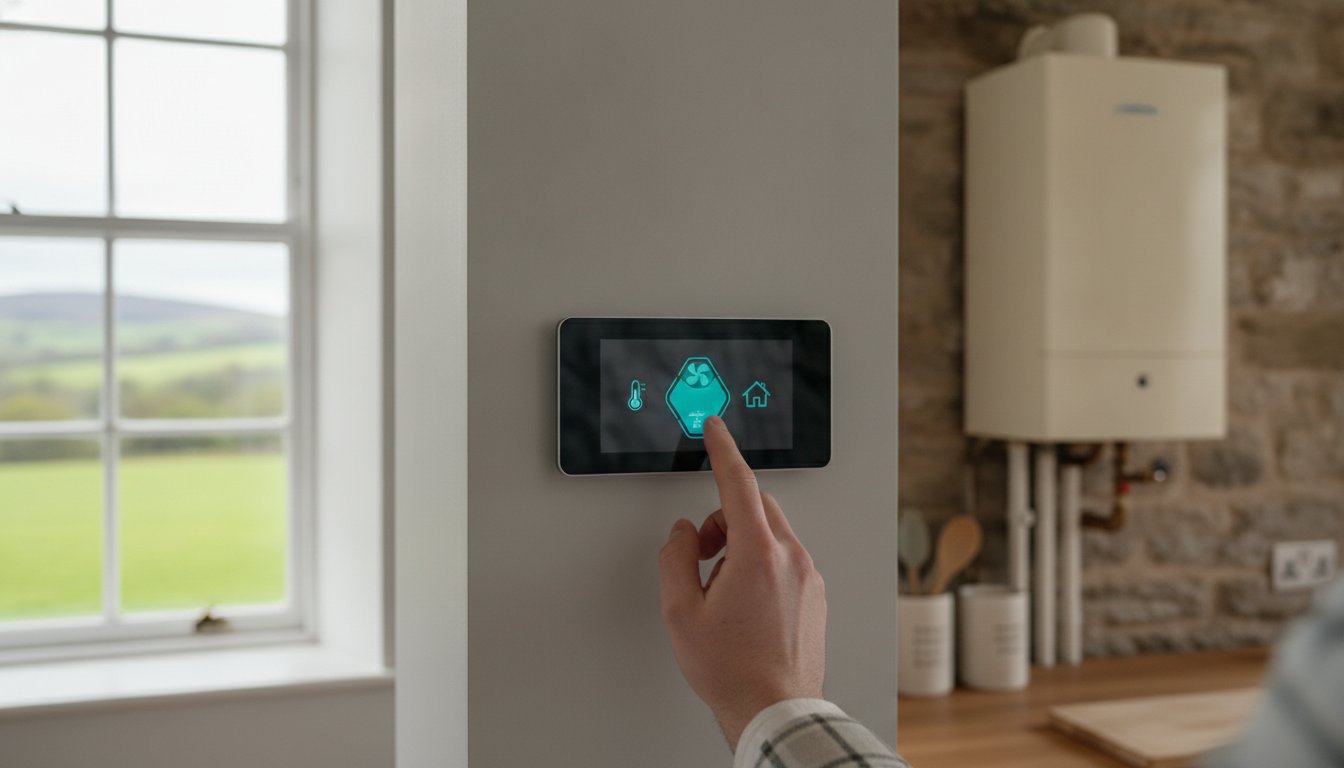
Smart Controls for Older Boilers: 2026 Efficiency Guide
What if your old boiler isn’t actually broken, but just lacks the “brain” it needs to run efficiently? If you live in an older home in Dumfries or the Scottish Borders, you’ve likely felt the sting of rising energy bills and the frustration of stubborn cold spots. It is common to feel pressured by upcoming regulations like the 2026 Heat in Buildings Bill, often fearing you’ll be forced into an expensive full replacement before you’re ready.
We understand that uncertainty. Many homeowners don’t realize that installing smart controls for older boilers is one of the most effective ways to bridge the gap between an aging system and modern efficiency standards. You can gain precise control over every room and lower your monthly costs without the heavy price tag of a brand-new unit. This guide explores how to modernise your existing setup, navigate Scotland’s specific grants, and ensure your system is ready for the 2026 efficiency shifts. We’ll show you how a professional installation from a Gas Safe engineer turns your current boiler into a high-performing, tech-enabled asset that respects your budget and your time.
Key Takeaways
- Learn why almost any heating system with a standard timer is compatible with smart controls for older boilers, allowing you to modernise without a full replacement.
- Understand how smart technology communicates with legacy systems using relay switching to provide precise, remote temperature management.
- Compare the benefits of popular thermostats like Nest and Hive to determine which interface best suits your Scottish home.
- Follow our pre-installation checklist to ensure your WiFi signal and radiator valves are ready for a seamless tech upgrade.
- Discover how professional Gas Safe installation in Dumfries and Galloway guarantees your system is safe and compliant with 2026 efficiency standards.
Can You Install Smart Controls for Older Boilers?
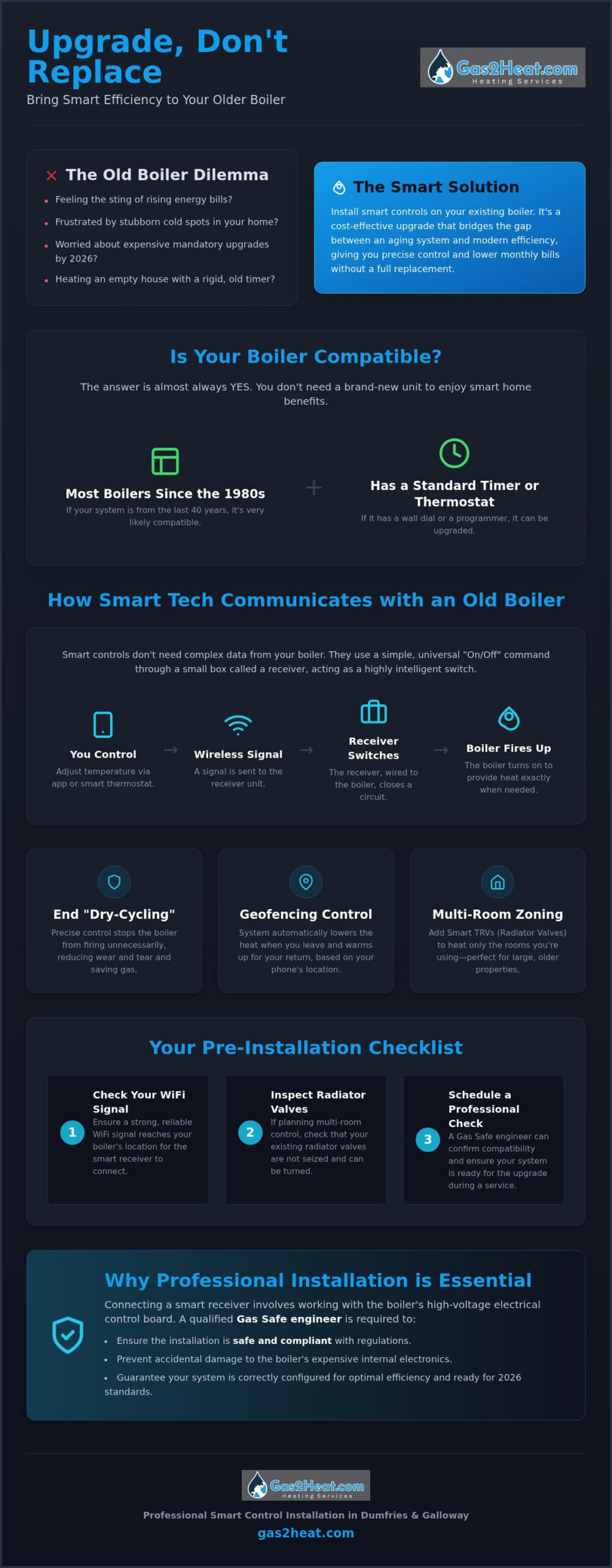
The short answer is yes. Many homeowners across Dumfries and Galloway believe their aging heating system is too “dumb” for modern technology. In reality, almost any boiler manufactured since the 1980s that uses a standard thermostat or timer can be upgraded. Installing smart controls for older boilers is a straightforward process that moves your home from rigid, analogue scheduling to flexible digital precision. You don’t need a brand-new unit to enjoy the benefits of a connected home.
These WiFi-enabled devices go beyond basic Programmable Thermostat Technology by learning your daily habits and adjusting accordingly. The primary technical goal is to stop “dry-cycling.” This occurs when an older boiler turns on and off frequently because it lacks a precise communication link with the thermostat. By providing a more accurate data stream, smart tech ensures the boiler only fires when truly necessary. This reduces wear and tear on internal components while cutting down on wasted gas.
The Difference Between Smart and Standard Controls
Traditional mechanical timers are “set and forget” tools. They often lead to heating an empty house because they can’t react to your schedule changes. Smart controls introduce features like Geofencing. If you leave Moffat for the day and forget to turn the heating off, the system uses your phone’s location to lower the temperature automatically. You can also integrate Smart TRVs (Thermostatic Radiator Valves) to gain multi-room control. This allows you to heat only the rooms you’re using, which is a massive advantage in larger, older Scottish properties with high ceilings.
Identifying Your Existing Heating Setup
Before you buy any hardware, you need to understand your current configuration. Look for a “Room Stat” on your wall or a programmer built into the boiler fascia. Most older systems use either a “Volt-Free” or 230V connection to trigger the heating. While this sounds technical, it simply dictates how the smart receiver communicates with the boiler. It’s a critical detail that determines which smart models are compatible with your home’s wiring.
We find that a professional boiler servicing is the ideal time to check this compatibility. A Gas Safe engineer can safely open the casing, inspect the wiring, and confirm which smart controls for older boilers will work best for your specific model. This prevents the frustration of purchasing a device that doesn’t match your electrical setup. It also ensures that the installation is handled by a professional who understands the nuances of legacy systems.
How Smart Tech Communicates with Legacy Boilers
Connecting a modern app to a 20-year-old machine might seem like magic, but it relies on a very simple physical connection. Most older boilers aren’t “smart” enough to understand complex data, but they all understand the “On/Off” command. When you install smart controls for older boilers, you’re essentially providing a sophisticated digital brain to a mechanical system. This communication happens through a hardware bridge known as the receiver.
The receiver is wired directly into the boiler’s internal terminal strip. This is the same location where your old mechanical timer or wall-mounted dial once lived. In legacy systems, this is usually a 230V or “Volt-Free” circuit. The smart receiver acts as an automated switch; when the thermostat senses the room is too cold, it sends a wireless signal to the receiver, which then closes the electrical circuit to fire the boiler. It’s a robust, reliable method that works for almost any model found in Dumfries and Galloway homes.
A frequent question involves the “OpenTherm” protocol. OpenTherm allows a boiler to modulate its flame height, running at a lower, more efficient level rather than just clicking on and off. While most boilers built after 2016 support this, many older units do not. Don’t let that discourage you. Even using standard relay switching, the precision of a smart thermostat significantly reduces gas waste by preventing the boiler from running longer than necessary.
Relay Control: The “Simple Switch” Method
Relay control is the universal language of the heating industry. It mimics the old-fashioned dial thermostats by closing a physical circuit to start the flow of heat. Because this installation involves high-voltage electrical work at the boiler’s control board, it’s essential to have a Gas Safe engineer manage the wiring. This ensures the safety of your home and prevents accidental damage to the boiler’s expensive internal electronics.
The Impact of Weather Compensation
Weather compensation is a digital tool that adjusts boiler output based on outdoor temperature forecasts. By using local SW Scotland weather data, your smart system can predict how much heat your home will lose before it actually happens. If a cold snap is forecast for Moffat, the system can start a gentle warming cycle rather than waiting for the house to freeze. This prevents the “over-shoot” common in older, heavy-duty radiators that often get far hotter than needed. If you’re ready to upgrade, a professional smart thermostat installation is the most effective way to bring this level of control to your legacy system.
Top Smart Thermostats for Older Systems: A Comparison
Selecting the right hardware is the next logical step once you’ve confirmed your boiler is compatible. Not all smart controls for older boilers are created equal. Some excel at automation, while others focus on modular expansion for larger homes. In the 2026 market, four main contenders stand out for their reliability and their ability to interface with legacy heating systems using the relay switching we discussed earlier.
- Nest Learning Thermostat: This is the ideal choice if you want the technology to “do the work.” It monitors your movements and temperature preferences to build a schedule automatically. The 4th generation models offer sleek aesthetics that complement traditional Borders cottages without looking out of place.
- Hive Active Heating: As a UK favourite, Hive is prized for its straightforward interface. Its heritage means local support is widely available in Moffat and Dumfries; it’s a dependable option for those who value long-term reliability and a simple mobile app.
- Tado°: If your older home has a complex “S-Plan” or “Y-Plan” wiring setup with separate hot water controls, Tado° is a specialist. It offers exceptional radiator-level control through smart valves, allowing you to shut off heat in unused rooms completely.
- Drayton Wiser: This UK-designed system is built for easy retrofitting. It uses a standard backplate that often allows for a quick swap with your existing programmer, which significantly reduces installation complexity.
Which Control Suits Your Scottish Home?
Your property’s layout often dictates the best choice. Hive’s signal strength is particularly reliable in the spread-out communities of the Scottish Borders. Conversely, Nest’s advanced algorithms are perfect for older stone cottages where heat retention varies wildly. If you have a larger property near Lockerbie, Tado’s ability to create multiple heating zones ensures you aren’t wasting energy heating empty guest rooms or hallways.
Installation Considerations for Older Properties
Older Scottish homes present unique challenges, specifically thick stone walls that act as a barrier to WiFi signals. You must carefully plan the location of your central hub to ensure it can reach both the boiler receiver and the thermostat. Placing the hub in a central hallway or near a wooden internal door often solves connectivity issues that would otherwise plague a DIY setup. Thick walls shouldn’t stop you from modernising; they just require a bit more strategic planning.
This technical nuance is why a professional smart thermostat installation is so valuable. A Gas Safe engineer doesn’t just wire the device. They map your home’s signal strength and configure the app to match your specific boiler’s firing cycle. This saves you the frustration of “device offline” errors and ensures your smart controls for older boilers actually deliver the efficiency gains you expect.
Checklist: Preparing Your Boiler for Smart Controls
Installing new technology on an aging system requires a solid foundation. You shouldn’t simply plug in a device and hope for the best. To get the most out of smart controls for older boilers, follow this preparation checklist to ensure your home is ready for the upgrade.
- Step 1: Verify WiFi Strength. In SW Scotland, thick stone walls and damp conditions can severely degrade wireless signals. Test the connection at both the boiler location and where you intend to mount the thermostat.
- Step 2: Inspect Radiator Valves. Check if your radiators have Thermostatic Radiator Valves (TRVs). These allow the smart system to manage individual room temperatures effectively.
- Step 3: Review Service History. Your boiler should have been serviced by a Gas Safe engineer within the last 12 months. An unserviced boiler may have underlying faults that smart tech cannot fix.
- Step 4: Check Water Quality. Look for signs of “sludge” or black magnetite in your system. Dirty water reduces heat transfer and can damage the sensitive sensors in new smart equipment.
- Step 5: Conduct a Wiring Audit. Consult a local expert to confirm your boiler’s internal terminal strip can support a modern receiver.
System Health and Smart Tech
Smart controls are brilliant at managing schedules, but they cannot fix a physically inefficient system. If your radiators have cold spots or your boiler makes “kettling” noises, you likely have a build-up of debris. There is a powerful synergy between modern stats and power flushing. By clearing the sludge before installing your controls, you ensure the heat actually reaches your rooms. Always check for minor leaks before increasing system pressure to accommodate new digital sensors. If you’re unsure about your system’s health, book a local efficiency survey to identify any bottlenecks.
The Legal Requirement for Gas Safe Installation
Safety is non-negotiable. While the thermostat itself might look like a simple consumer gadget, the receiver connects directly to the boiler’s high-voltage Printed Circuit Board (PCB). Attempting a DIY installation on these components can void your home insurance and risks permanent damage to the boiler’s electronics. Any modification to boiler wiring must be certified by a Gas Safe registered engineer to ensure home safety. Our team handles the complex electrical mapping, allowing you to enjoy the benefits of smart controls for older boilers with total peace of mind.
Professional Smart Control Installation in SW Scotland
Choosing a local specialist ensures your heating system is handled by someone who understands the specific architectural quirks of Dumfries and Galloway properties. Our team at Gas2Heat.com Ltd has been a dependable fixture in Moffat since 2017. We focus on removing the stress from home maintenance through transparent pricing and straightforward promises. Installing smart controls for older boilers is a precision task that we’ve refined over hundreds of local projects, ensuring you get modern results without the big city call-out fees.
Our installation process is designed for your convenience. It begins with a local survey to verify your system’s compatibility and signal strength. Once the hardware is safely wired by our Gas Safe registered engineers, we don’t just leave you with a manual. We provide full app setup and hands-on training. This ensures you’re comfortable managing your heating from your smartphone before we consider the job finished. We prioritize rapid results so you can start saving on your energy bills immediately.
Serving Our Local Communities
We provide dedicated support to homeowners in Annan, Gretna, and Castle Douglas. Rural Scottish homes often face unique challenges with water pressure and flow rates that national contractors might overlook. Our local engineers are intimately familiar with the common boiler models found across the Borders. We know how to optimize these systems for peak performance in our specific climate. This regional expertise allows us to provide a more reliable service than a traditional independent contractor.
Book Your Efficiency Audit Today
Start your journey to a warmer home by requesting a local survey in Dumfries. During a Gas2Heat.com Ltd visit, we’ll assess your current setup and provide a clear, fixed-price quote for your upgrade. We maintain a professional, tech-enabled approach to scheduling that respects your time and eliminates uncertainty. If our audit reveals that your current unit is no longer safe or cost-effective to run, we can integrate your new tech with a modern, high-efficiency boiler installation. Secure your home’s comfort and gain total control over your energy usage by choosing a modern expert. Contact your local heating experts at Gas2Heat.com Ltd to schedule your efficiency audit today.
Secure Your Home’s Future Efficiency Today
Modernising your heating system doesn’t require a total overhaul. Most homeowners in Dumfries and Galloway can achieve immediate results by integrating smart controls for older boilers into their current setup. This upgrade bridges the gap between legacy hardware and digital precision. You’ll reduce wasted energy and gain total command over your home’s comfort. It is a cost-effective way to prepare your property for 2026 efficiency standards.
Our team at Gas2Heat is a family-owned Moffat business. We provide reliable service across the Scottish Borders. Our Gas Safe Registered engineers bring deep expertise in SW Scotland heating systems. We ensure your installation is safe, compliant, and optimized for our local climate. Don’t let thick stone walls or complex wiring hold you back from lower bills. We remove the uncertainty from trade services with clear promises and expert execution.
Take the first step toward a more efficient property today. Get a Professional Smart Control Quote from Gas2Heat and start controlling your heating with confidence. You’ll enjoy the peace of mind that comes from working with local experts who value your home and your time.
Frequently Asked Questions
Can I install a smart thermostat on a 20-year-old boiler?
Yes, you can install a smart thermostat on most 20-year-old boilers. These older units typically use a standard relay connection that modern receivers can easily trigger. Our engineers in Moffat and Dumfries regularly perform these upgrades on legacy systems. While the boiler won’t gain advanced modulation features, you’ll still benefit from precise app control and automated scheduling. This is a reliable way to modernise your heating without a full replacement.
Do I need a new boiler to use a smart thermostat?
No, you don’t need a new boiler to enjoy smart technology. Modern thermostats are built to be universal and can be retrofitted to almost any existing gas system. It’s a common misconception that smart tech is only for new builds. In fact, smart controls for older boilers are often the most cost-effective first step in improving your home’s energy efficiency. We can assess your current setup during a routine service in Dumfries to confirm the best hardware.
How much can smart controls really save on my heating bills?
Savings depend on your property type and how you use the system. The Energy Saving Trust estimates that a typical UK home could save around £110 per year by using a programmer, room thermostat, and thermostatic radiator valves. By eliminating “dry-cycling” and preventing the heating of empty rooms, you ensure every pound spent on gas is used effectively. For larger stone properties in the Scottish Borders, these savings are often more noticeable during winter.
Does Hive or Nest work with older combi boilers?
Yes, both Hive and Nest are highly compatible with older combi boilers. They interface with the boiler’s internal control board to manage both heating and hot water cycles. We frequently install these brands in homes across Lockerbie, Annan, and Thornhill because they offer robust reliability for legacy combi models. The main requirement is a stable WiFi connection and a suitable mounting location for the thermostat. A professional audit will confirm which brand best fits your wiring.
Will my smart thermostat work if the WiFi goes down?
Yes, your heating will continue to work even if your WiFi goes down. The thermostat will still function as a manual control, allowing you to adjust the temperature using the physical dial or buttons on the wall unit. While you’ll lose the ability to change settings via your smartphone app until the connection is restored, your pre-set schedules are typically stored locally on the device. This ensures your home stays warm regardless of internet stability.
Do I need a Gas Safe engineer to install a smart thermostat?
Yes, you must use a Gas Safe registered engineer for the installation. The receiver unit connects directly to the boiler’s high-voltage terminal strip, which is a task that requires professional certification for safety. Attempting a DIY install on boiler components can void your manufacturer warranty and home insurance. Our team at Gas2Heat.com Ltd ensures all electrical work is safe, compliant, and correctly integrated with your boiler’s specific Printed Circuit Board.
Can smart controls help with damp and condensation in old houses?
Yes, smart controls for older boilers can help manage dampness in traditional Scottish homes. By maintaining a more consistent base temperature rather than allowing the house to go completely cold, you reduce the risk of condensation forming on cold stone walls. Many smart systems also include humidity sensors that alert you when moisture levels are too high. This proactive approach helps protect the fabric of older properties in damp climates like Gretna and Castle Douglas.
Is there a monthly fee for using smart heating controls?
Most smart thermostats don’t require a monthly fee for their core features. You can use the app, set schedules, and control your heating remotely for free after the initial installation. Some brands offer optional subscription services for advanced data analytics or automated home-away features, but these aren’t mandatory. We focus on transparent solutions that provide long-term value to our customers in Moffat and Lochmaben through Gas2Heat.com Ltd without any hidden ongoing costs.

Leave a Reply
You must be logged in to post a comment.