
Getting a Second Opinion on a Boiler Quote: A Homeowner’s Guide
The cheapest boiler quote may be the one that leaves the most important work out. If the technical terms are hard to follow or the recommendations don’t match, getting a second opinion on boiler quote details can help you understand whether the proposed system and installation suit your home. The total alone can’t tell you what’s included or what may be missing.
It’s sensible to want reassurance before committing, especially when one quote covers work another doesn’t mention. A useful second opinion looks beyond the price to the boiler model, the installation scope and the safety details. That makes it easier to compare recommendations fairly and ask focused questions about anything unclear.
In this guide, you’ll learn what to look for, which details to clarify and how to compare quotes on a like-for-like basis. Gas2Heat’s local, Gas Safe registered engineers install domestic boilers and can explain how a proposed installation relates to your property and heating needs.
Key Takeaways
- A second opinion can bring clarity when a quote’s scope, specifications or recommendations are difficult to compare.
- Review the proposed boiler and installation work, including what the quote leaves out or describes vaguely.
- When getting a second opinion on boiler quote details, compare the work and equipment side by side, not just the totals.
- Use a checklist and notes about your home’s heating system to organise the information and identify gaps.
- Local boiler installation experience can help put a written recommendation in the context of your property and heating needs.
Getting a second opinion on a boiler quote: when it can help
Replacing a boiler is a significant decision, and a quote full of technical terms or unexplained work can make it hard to know what you’re agreeing to. Getting a second opinion on boiler quote details should give you clarity, not a predetermined verdict that the first recommendation is wrong. The aim is to understand why a particular option has been proposed and whether the described work makes sense for your home.
A useful review looks at the recommendation and installation scope, not just the total. It can explain unfamiliar wording, highlight unanswered questions and help you separate the proposed equipment from the work needed to install it. That’s different from simply searching for a lower figure. A cheaper quote may describe less work, while a higher one may include preparation or system changes that another quote doesn’t mention.
What a second opinion on a boiler quote should clarify
Start with the points that affect suitability. Is the proposal for the same type of boiler as your current one, or does it recommend a different setup? Does it state the boiler’s output and explain how the recommendation relates to your property? Boiler types work in different ways; a general overview of Boiler (heating) can help make basic terminology more familiar, but the right choice depends on the home and its heating needs.
Your existing heating system and household use matter too. Hot-water demand, the current system layout and the work needed to connect new equipment can all shape a recommendation. Ask for the reasoning in plain English, including which details are included in the quote and which need clarification. An unclear point doesn’t automatically mean something is wrong, but you should understand it before comparing proposals.
When another assessment may be worthwhile
Consider another view if a quote is vague about removal, installation or changes to the existing system, or if the proposed boiler type differs from what you expected. The same applies when two recommendations appear far apart. A difference deserves an explanation, not an automatic assumption that one engineer has made a mistake. Ask what property conditions, system requirements or differences in scope account for the recommendations.
For example, one proposal might describe a replacement in broad terms, while another sets out additional work on the existing heating system. Until you understand what each includes, comparing the totals alone won’t tell you which is more suitable. Note the unclear terms and the specific parts of the recommendations you want explained.
For homeowners in Moffat and South West Scotland, a local, property-specific perspective can make a written proposal easier to interpret. Gas2Heat’s local Gas Safe registered engineers install domestic boilers and can explain relevant installation considerations. The boiler installation guide for Moffat and South West Scotland also outlines factors that can shape an installation. A second opinion may confirm the original approach, clarify its scope or help you understand an alternative. You can compare options once you know what each recommendation means.
What to check in a boiler quote before comparing it
Before comparing totals, check that each quote describes a suitable boiler and a clear plan for fitting it. A headline price has limited value if one proposal covers removal and system changes while another describes only the replacement unit and basic installation. Getting a second opinion on boiler quote details can help you identify those differences and understand what each recommendation means for your home.
Boiler specification and suitability
Look for the proposed boiler type, make and model, along with its stated output. These details help you establish whether two quotes recommend equivalent equipment. Output shouldn’t be judged in isolation: household demand, hot-water use, the size and layout of the property, and the existing heating system all inform what may be suitable. A property-specific assessment is needed to make that judgement, so don’t assume a larger output is automatically better.
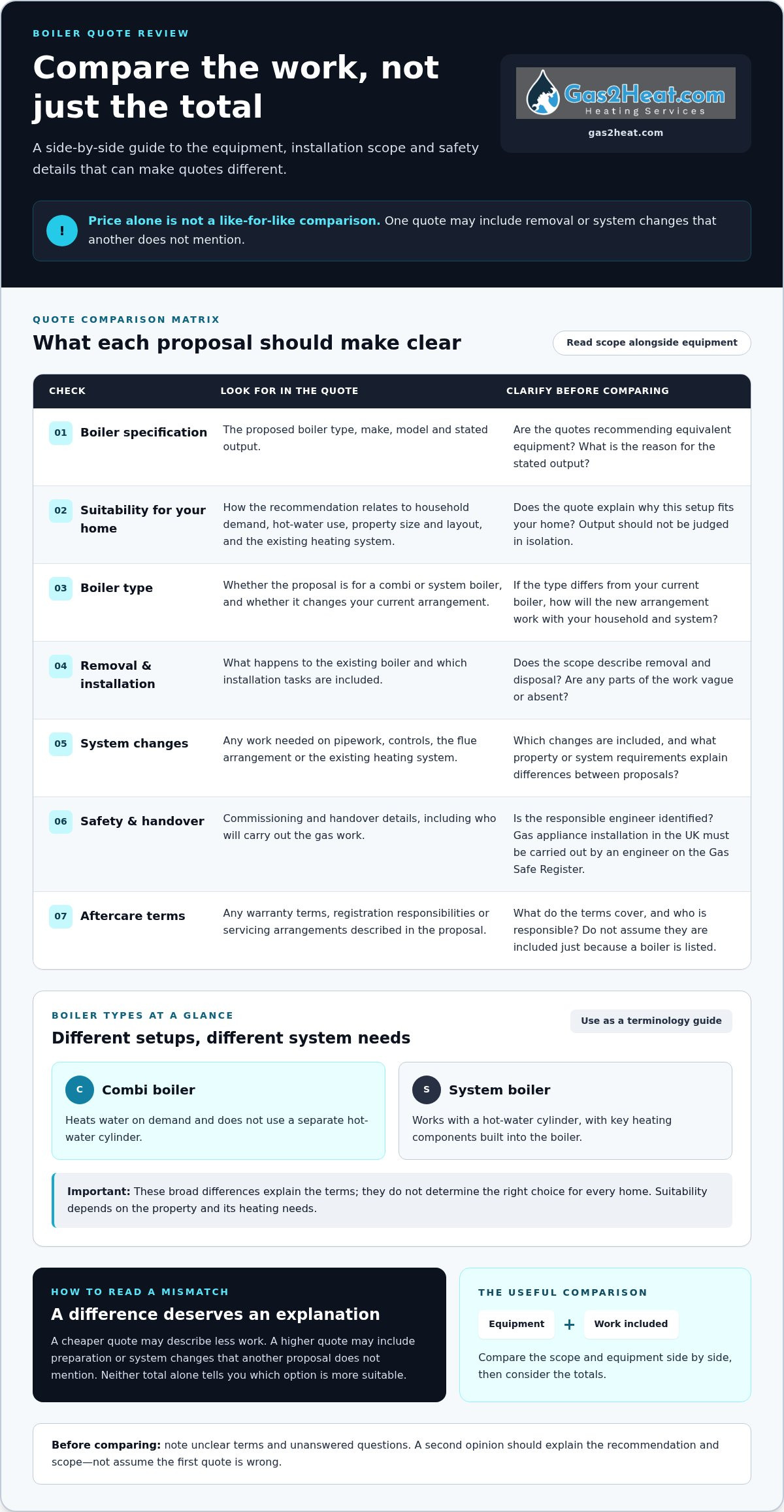
A combi boiler heats water on demand and doesn’t use a separate hot-water cylinder. A system boiler works with a hot-water cylinder, while key heating components are built into the boiler. Those broad differences can help you follow the recommendation, but they don’t determine the right choice for every home. If a quote proposes changing boiler type, look for an explanation of how the new arrangement fits your household and current system.
Installation scope, safety and aftercare
Read the work description as carefully as the equipment details. A clear quote should explain what happens to the existing boiler and what installation work is included. Depending on the property, it may also need to describe changes to pipework, controls or the flue arrangement. Just as plumbing and trade maintenance providers at synergytrades.com.au emphasize when evaluating household pipework, identifying underlying line conditions early prevents unexpected complications. Not every home needs the same work, so look for a scope tailored to the project rather than expecting identical inclusions in every quote.
Check whether commissioning and handover are described, and whether you’ll be shown how to use the boiler and controls. For gas appliance installation in the UK, the work must be carried out by an engineer on the Gas Safe Register. A quote should identify the responsible engineer or provide details that let you understand who will do the gas work. If warranty terms, registration responsibilities or servicing arrangements are part of the proposal, check what they cover and who is responsible. Don’t assume they’re included just because a quote mentions a boiler.
Use this quick check to mark what each quote says, what it excludes and what remains unclear:
- Boiler type, make, model and stated output
- Removal and disposal of the existing boiler
- Installation work, system changes and commissioning
- Flue and control arrangements, where applicable
- Exclusions, warranty information and aftercare details
A missing detail isn’t proof that the recommendation is unsuitable, but it is a reason to seek a plain-English explanation before comparing. For property-specific guidance on boiler installation, Gas2Heat’s boiler installation service can help put the proposed work into context.
How to compare boiler quotes without focusing only on the total
A useful comparison starts by checking whether the quotes describe the same job. One may include changes to the heating system, while another may cover a more limited replacement. In that case, the headline totals aren’t directly comparable. Compare like-for-like scope and suitability before weighing the prices.
Put the details side by side. A simple table can help you spot where a quote is specific, where it differs and where you need clarification. Use the same categories for each proposal:
- Boiler: type, make, model and stated output
- Included work: labour, materials, removal, installation and commissioning
- System changes: any proposed adjustments to pipework, controls or other parts of the heating system
- Exclusions: work or materials the quote says aren’t covered
- Aftercare: any stated warranty, registration or servicing arrangements
Mark each item as included, excluded or unclear. Keep boiler equipment separate from labour, materials and additional system work, even if one quote combines them into a single figure. This makes it easier to see whether a difference relates to the boiler itself, the work involved or the level of detail provided.
Build a like-for-like quote comparison
Start with what each proposal has in common, then note every difference. For example, if one quote describes removal and commissioning but the other doesn’t mention them, record the gap rather than assuming the work is included or omitted. An unexplained difference is a point to clarify, not proof of overcharging or poor practice.
Keep the property details in view as you compare. Existing system layout, the proposed boiler type and the work needed to connect it can affect both the recommendation and the scope. A quote that includes additional work may reflect a different assessment of the home, so review the written explanation before judging the totals.
Assess value, clarity and confidence
Value isn’t simply the lowest total. Consider whether the quote explains why the equipment and work are suitable, whether inclusions and exclusions are clear, and what aftercare it actually states. If one proposal is vague, its lower figure may not represent the same scope as a more detailed quote. Clarity helps you understand what you’re agreeing to.
Don’t rank options until you’ve lined up the property assumptions and written scopes. If the proposals still differ, note the exact points, such as a different boiler type or additional system work, and seek a clear explanation of the reasoning. Getting a second opinion on boiler quote details can make those differences easier to interpret, but it doesn’t mean you must reject either recommendation. The aim is an informed comparison based on suitability, scope and the information in front of you.
A practical checklist for reviewing a boiler quote
A little preparation can turn a confusing quote into a set of clear questions. Before getting a second opinion on boiler quote details, collect what you already know about your home and heating system. You don’t need to diagnose a fault or interpret technical readings. Share useful context and identify what the written proposal does and doesn’t explain.
Prepare the information needed for a useful review
Gather the full written quote, any boiler make, model or specification details, and information about the current system if you have it. Note what matters to your household, such as hot-water use, rooms that are difficult to heat, recurring concerns and planned changes to the property. These details can help explain why recommendations may differ.
Homes in Moffat and Dumfries don’t all have the same layout or heating setup, so avoid assuming that a recommendation for one property will suit another. A local assessment can consider the actual home rather than relying on broad assumptions.
Turn unclear details into a decision-ready comparison
Work through the documents in order. Keep the comparison focused on what’s written, rather than trying to diagnose the system yourself.
- Gather the documents. Put each quote and any related boiler information together so you can refer to the same details throughout.
- Identify the scope. Note what each proposal says about the boiler, removal, installation and any system work. Record exclusions separately.
- Check suitability. Compare the stated boiler type and output, then note whether each recommendation explains how it relates to your home, existing system and household needs.
- Group the gaps. Sort unanswered points under specification, included work, exclusions or aftercare. Mark wording you don’t understand rather than guessing what it means.
- Compare and clarify. Put the proposals side by side and seek a clear written explanation for differences that could affect the work or equipment.
Sometimes two quotes use different terms for the same task. For instance, one may describe a stage of the installation in more detail, while another uses a broader phrase. That may be a difference in wording, not a different scope. By contrast, if one proposal explicitly includes a piece of work and the other excludes it, that’s a substantive difference to understand. A clear explanation should set out what the task involves and whether it forms part of the proposed job.
Once you’ve organised your notes, you can compare the recommendations with less guesswork. Gas2Heat’s local boiler installation expertise can help relate the written scope to your property and heating needs. Explore boiler installation support for clear, property-specific guidance.
Getting a local boiler quote review and choosing your next step
Once you’ve gathered the quotes and noted what’s unclear, decide what kind of help would move you forward. You may only need a plain-English explanation of a specification. If the proposals describe different work, you may need their scopes set out clearly. If the recommendation doesn’t seem to reflect your home or heating needs, a fresh property assessment can provide useful context.
A local assessment connects the written proposal with the property itself: its existing heating system, layout and the way your household uses heating and hot water. That context matters because homes in and around Moffat and Dumfries can differ. A recommendation shouldn’t be judged by location alone or assumed to suit every home in the area.
What a clear next step looks like
The right next step should answer a practical question. Is the boiler type suitable for your system? What work does the written scope actually cover? Why do two recommendations differ? Getting a second opinion on boiler quote details can help you focus on those points without assuming you need to reject the original recommendation. You should come away with a clearer understanding of the proposed work and how it relates to your home.
Gas2Heat’s local Gas Safe registered engineers install domestic boilers and can explain installation considerations in straightforward terms. Bring your notes, the written recommendation and any relevant information about your existing heating. A discussion grounded in those details can help you understand what to clarify and which options may suit your property.
Discuss your boiler installation options with Gas2Heat
Gas2Heat serves Moffat and communities across South West Scotland, including Dumfries, Lockerbie, Annan, Lochmaben, Thornhill, Gretna and Castle Douglas. Its boiler installation experience offers a practical source of property-specific guidance from local Gas Safe registered engineers. Use your checklist to describe your home, your heating needs and the points in the quote you’d like to understand. That gives the discussion a clear focus on the work and options relevant to your circumstances.
If you’re ready to talk through the next step, discuss your boiler installation options with Gas2Heat. You can raise the questions that matter to you and work towards a clear, suitable decision at your own pace.
Make your next decision with confidence
A boiler decision doesn’t have to be made in one sitting. Keep the quote, your notes and any written explanations together so you can refer back to the reasoning later. If something still feels unclear, identify the specific point you need resolved before deciding. Getting a second opinion on boiler quote details is most useful when it helps you move from uncertainty to a choice you understand, whether that means proceeding, requesting clarification or considering another suitable option.
Gas2Heat is a family-owned heating specialist, and its engineers install boilers and can talk through installation options in relation to your home and heating needs. A straightforward conversation can help you understand what to consider next.
Discuss your boiler installation options with Gas2Heat and take the next step when you’re ready.
Frequently Asked Questions
Is it worth getting a second opinion on a boiler quote?
Yes, if you’re unsure whether the recommendation fits your circumstances or you can’t tell what the proposed work covers. Getting a second opinion on boiler quote details can help you understand the reasoning behind the proposal before you decide. It may confirm the original approach rather than change it. It’s particularly useful if you’re weighing a repair against replacement, or if the quote leaves you uncertain about what happens next.
Can I get a second opinion before accepting a boiler quote?
Yes, you can seek another assessment before deciding whether to accept a quote. Keep a copy of the proposal and note any deadline or terms it states, so you know what you’re considering. For homeowners in Moffat, Dumfries, Lockerbie, Annan, Lochmaben, Thornhill, Gretna and Castle Douglas, a local perspective can help relate the recommendation to the property. A second opinion itself doesn’t commit you to choosing that installer.
What should a boiler installation quote include?
A useful quote should identify the proposed boiler clearly and describe the installation work in enough detail for you to understand its scope. Look for stated inclusions and exclusions, any planned system changes, and what the quote says about commissioning and handover. If warranty terms or aftercare are mentioned, check what they cover and who is responsible for any registration. Treat unclear wording as something to resolve before comparing proposals.
How do I compare two boiler quotes fairly?
Compare the proposals against the same property information and the same categories of work. Check whether both refer to a similar boiler type, system arrangement and installation scope. Record differences in exclusions, optional work and aftercare, and note where one quote uses an allowance rather than a defined task. If the assumptions differ, the totals won’t provide a fair comparison until you understand what each proposal is based on.
Does getting a second boiler quote mean I have to choose that installer?
No. Requesting another quote or assessment doesn’t mean you must proceed with that installer. It gives you another recommendation to consider, and you can decide whether it answers your questions or changes your understanding of the work. Before accepting any proposal, read its terms and make sure you understand how acceptance works. You can take time to consider your options rather than treating a second quote as a commitment.
Should I replace my boiler if one quote recommends it?
Not solely because one quote recommends replacement. First understand the reason: the engineer may be responding to a particular fault, the boiler’s condition or the needs of the existing heating system. Ask whether repair has been considered and what supports the replacement recommendation; as heating professionals like HeyKey Appliance & HVAC Repair point out when assessing aging units, exploring repair options first can help determine if a full replacement is truly necessary. If you’re still unsure, a separate assessment can provide more context. Make your decision based on the information about your boiler and home, not pressure or a single unexplained conclusion.
Can a second opinion identify work missing from a boiler quote?
It can highlight work that isn’t described, or show that two proposals treat the scope differently. For example, one may mention removal of the old boiler while another doesn’t say what happens to it. That doesn’t automatically prove the work has been omitted; the written quote may simply be unclear. A property assessment and a clear explanation of the proposed tasks can help establish whether additional work is needed.
Do I need to choose a boiler before asking for another opinion?
No. You can ask for an assessment while you’re still deciding which type or setup may suit your home. Share any boiler details already in the quote, along with what you know about your current system and how your household uses heating and hot water. An engineer can then explain the options in context. You don’t need to select a make or model before you understand the recommendation and its implications.
