
Replacing a Back Boiler with a Combi Boiler: What Homeowners Need to Know
Can replacing a back boiler with a combi boiler be as simple as taking out the old unit and fitting a new one? Usually not. It is a whole-system conversion that can affect your fireplace, hot-water cylinder, loft tanks and heating pipework. The right solution depends on how your home is set up and how you use hot water.
A combi can free up space by heating water on demand, but it may not suit a home where several taps or bathrooms are used at once. Before deciding, consider your household’s hot-water habits, the available water supply and where the new boiler could go. These details help establish whether a combi fits your needs or another system arrangement is worth considering.
This guide explains the difference between a boiler replacement and a full conversion, what may happen to the fireplace, cylinder, tanks and pipework, and which household details affect combi suitability. Gas2Heat.com Ltd installs boilers and central-heating systems across Dumfries and Galloway. All engineers are fully qualified, Gas Safe registered and hold up-to-date certifications. For jobs of four hours or more, Gas2Heat provides a free written estimate with no obligation to proceed, setting out the proposed work before you decide.
Key Takeaways
- Replacing a back boiler with a combi boiler is a system conversion, not simply a boiler swap. The existing fireplace, cylinder, tanks and pipework can all affect the work.
- Compare your household’s hot-water use and property layout to understand whether a combi could be suitable.
- Gather details about your fireplace, tanks, cylinder, heating system and access to make the property discussion more useful.
- A property-specific estimate can clarify the proposed work. Gas2Heat provides free written estimates for jobs of four hours or more, with no obligation to proceed.
- Gas2Heat serves Dumfries and Galloway. All engineers are fully qualified, Gas Safe registered and hold up-to-date certifications.
What Replacing a Back Boiler with a Combi Boiler Actually Involves
The conversion is easier to understand when it is broken into stages: identify how the existing system is arranged, assess whether a combi suits the home, then plan the changes needed to connect and commission it. Replacing a back boiler with a combi boiler is usually a change to the heating system, not simply a swap of one appliance for another. The exact work depends on the property, so there is no single removal plan that applies to every home.
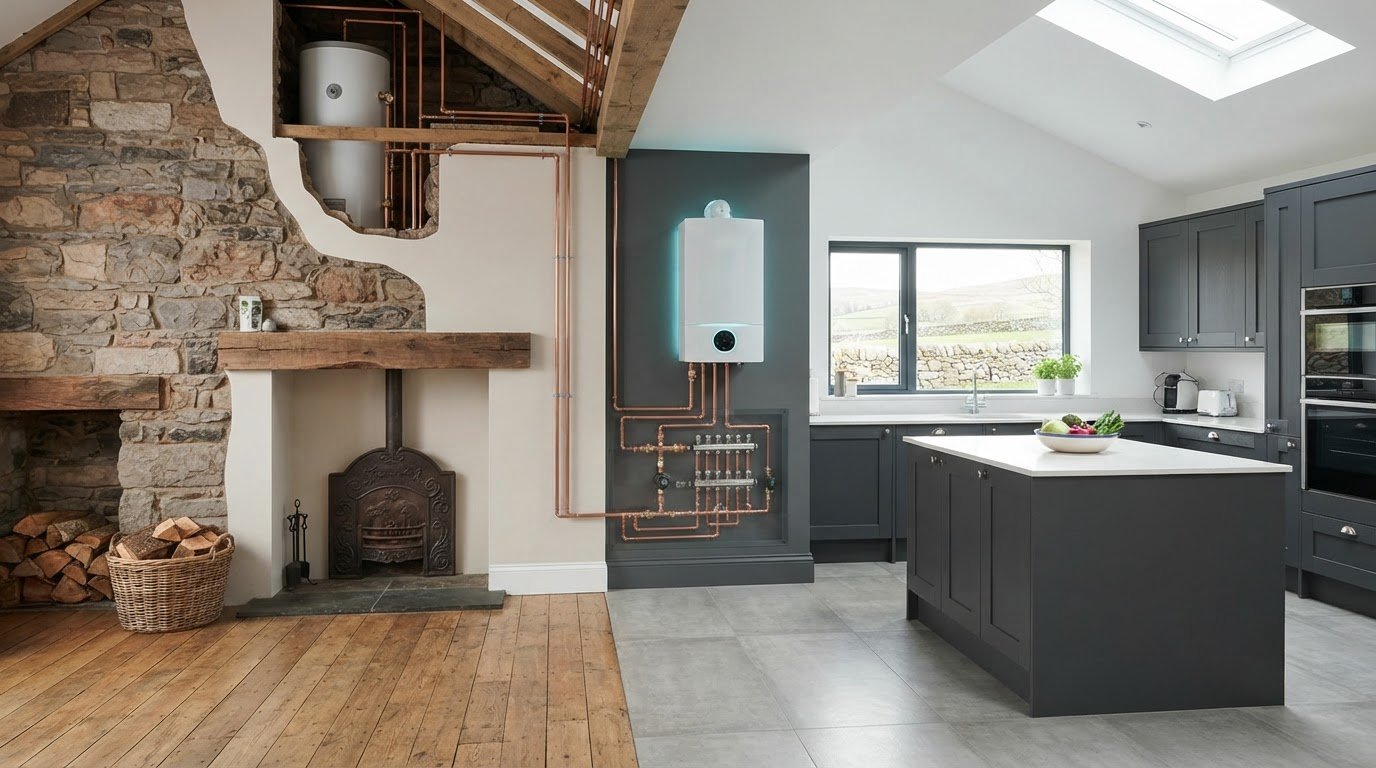
A back boiler is fitted behind a fireplace, often with a fire front in front of it. A combi is a single appliance that provides central heating and heats domestic hot water on demand. For a broader overview of the older appliance and how it works, see What is a back boiler?
Where the back boiler fits into an older heating system
A back boiler heats water for the radiators and household use, such as taps and showers. Depending on the system, hot water may be stored in a cylinder, often in an airing cupboard, while cold water may come from a storage tank, commonly in the loft. A fire front may sit in the fireplace in front of the boiler. These are common features, not a checklist for every home: some properties have different layouts and pipework.
The boiler is part of a connected system, so the existing appliance, fire front, cylinder, tanks and visible pipework need to be considered together. Their locations can affect access and the scope of work. The presence of a back boiler alone does not reveal exactly what will need to be altered or removed.
What a combi boiler changes in the home
A combi supplies heat to the central-heating circuit and warms domestic water as it is needed, rather than relying on a stored supply in a hot-water cylinder. A typical combi arrangement therefore does not need the same separate cylinder and storage tanks used by some older systems. However, that does not mean every conversion removes every tank or existing component automatically. The system layout and the property’s requirements determine what remains, changes or is taken out of use.
Connecting the new boiler may require changes to heating and hot-water pipework. The replacement appliance’s position, the route for its flue and the condition and arrangement of the existing system all help shape the plan. Fireplace work may also be part of the project, depending on how the back boiler and fire front are installed. Gas2Heat’s boiler and central-heating installation work can be planned around the individual property, with the proposed scope set out before work begins.
How a Back-Boiler-to-Combi Conversion Changes the Heating System
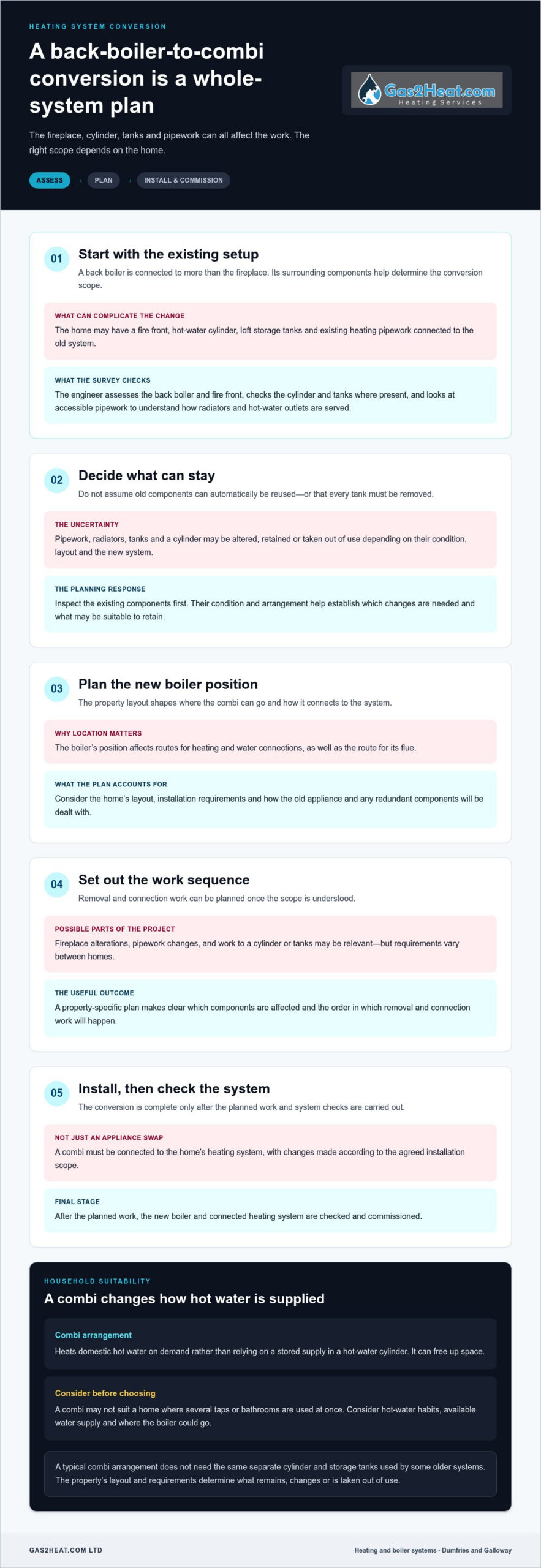
A clear conversion plan starts with the whole heating system, not just the appliance behind the fireplace. Replacing a back boiler with a combi boiler needs a whole-system assessment because the existing cylinder, tanks, pipework and fireplace can all affect what must change. Some steps are common to these projects, but the final scope depends on the home.
Planning the work in sequence helps ensure decisions about removal and reuse are made after the existing arrangement has been assessed.
- Survey the existing setup. The engineer assesses the back boiler and fire front, and checks the cylinder, storage tanks and accessible heating pipework. This establishes how the system currently serves radiators and hot-water outlets.
- Identify what needs to change. The assessment helps determine which components may need alteration or removal and whether existing pipework or radiators are suitable to retain. Their condition and layout matter, so do not assume they can be reused before inspection.
- Plan the new boiler position. The proposed location depends on the property’s layout and the installation requirements. It affects how heating and water connections can be routed and how the old appliance and any redundant components can be dealt with.
- Set out the installation sequence. Once the scope is clear, removal and connection work can be planned in a sensible order. Fireplace alterations, pipework changes and work to tanks or a cylinder may be relevant, but the requirements vary between homes.
- Install and commission the system. After the planned work is complete, the new boiler and connected heating system are checked and commissioned. The tasks depend on the installation and the components included in its agreed scope.
Assessing the existing back boiler and connected components
Inspection should look beyond the boiler casing. The fire front, hot-water cylinder, loft tanks where present, and accessible pipework each help explain how the current system is arranged. For example, the visible fireplace may be only one part of the work if the cylinder and tanks also connect to the old system. The assessment identifies possible changes. Whether components can stay or need to be removed depends on their condition and how the new system will operate.
Planning the combi location and installation sequence
A combi’s position can influence the route for new connections and the practical order of work. The plan needs to account for the home’s layout rather than assume the new boiler can occupy a particular spot or use all the old pipework. Setting out which components are affected gives you a clearer picture of the conversion before installation starts.
Gas2Heat installs boilers and central-heating systems for homeowners in Dumfries and Galloway. All engineers are fully qualified, Gas Safe registered and hold up-to-date certifications. For jobs of four hours or more, Gas2Heat provides a free written estimate with no obligation to proceed. Call 0800 009 6774, email info@gas2heat.co.uk, or contact Gas2Heat about boiler installation to discuss your project.
Is a Combi Boiler Right for Your Home? Suitability and Common Concerns
A combi can be a practical option, but it is not automatically the right answer for every back-boiler home. The useful question is not simply which boiler is newer. It is whether the system can meet your household’s hot-water habits and suit the property’s water supply, heating circuit and available installation space. As heating and climate specialists like Urban Climate Solutions point out, properly assessing property demands and layout is essential when tailoring modern heating systems.
Think about a typical busy morning. If someone is showering while another person runs a hot tap, or several bathrooms are regularly used at once, those patterns matter. A combi heats water on demand, so the number of outlets in use together can affect how well it matches your routine. A home with more simultaneous hot-water demand may be better served by a system that stores hot water, such as a system boiler with a cylinder. Neither arrangement suits every household.
Household hot-water demand and daily routines
Before discussing a conversion, note which taps and showers are commonly used at the same time, and whether that happens occasionally or most days. A household that tends to use one hot-water outlet at a time has different needs from one where several people shower or run taps together. This practical picture helps compare system options against your real routine, rather than making a decision based on the boiler label alone.
Use these factors as a starting point, not as a yes-or-no test:
- Hot-water use: Frequent simultaneous use may favour considering a stored hot-water arrangement; occasional overlap presents a different demand.
- Incoming water supply: The supply and pressure available at the property need assessment because they affect how a combi delivers hot water.
- Existing heating system: Radiators and pipework need checks for condition and compatibility before deciding whether they can remain or need changes.
- Space and layout: The proposed boiler position and space for any system components influence which arrangement is practical.
Property layout, water supply, and existing heating
The home itself can change the suitability discussion. An engineer can assess the incoming water supply, available installation space, and how the existing radiators and pipework are arranged. Their condition and compatibility should not be assumed from appearance alone. The fireplace and locations of existing tanks or a cylinder may also affect the conversion plan. Taken together, these details help establish whether a combi is a sensible fit or whether another system arrangement deserves consideration.
If you are considering replacing a back boiler with a combi boiler, a property-specific discussion can help turn these questions into a clear plan. Gas2Heat serves Dumfries and Galloway, including Moffat, Dumfries, Lockerbie, Annan, Lochmaben, Thornhill, Gretna and Castle Douglas. Call 0800 009 6774 or email info@gas2heat.co.uk.
How to Prepare for a Back Boiler Replacement in Dumfries and Galloway
A little preparation can make a conversion discussion more useful. You do not need technical knowledge or a complete record of the heating system. Note what you can see, gather any relevant documents you already have, and describe how your household uses heating and hot water. These details help focus the conversation on the questions that matter to you.
Information to have ready before the assessment
Before discussing the project, make a short note of the boiler’s location, what is visible around the fireplace, and whether you know of a hot-water cylinder or storage tanks. Mention access considerations, such as a loft hatch or a cupboard that houses heating equipment. Do not move or dismantle components to find information. A clear description is a useful starting point.
- Existing setup: Note the back boiler and fire-front arrangement, visible tanks or cylinder, and where the radiators are located.
- Household routine: Describe typical hot-water use, including whether showers, taps or other outlets are often used at the same time.
- Known concerns: List heating issues, leaks, unusual noises or rooms that do not seem to heat as expected.
- Available records: Gather any boiler paperwork, previous service details or information about changes already made to the heating system.
- Access and layout: Identify relevant cupboards, loft access and any practical restrictions around the fireplace or possible boiler location.
These notes do not replace an inspection. They help make sure the conversation reflects how the property works, rather than relying on assumptions about older heating systems. If you are unsure whether a component is a tank, cylinder or part of the fireplace, describe where it is and what you can see.
What the assessment and written estimate clarify
An assessment establishes the proposed work for your individual property. The engineer can consider the existing appliance and connected system, accessible pipework, potential boiler location and practical requirements of the conversion. This helps clarify which changes may be needed and gives you a more informed basis for deciding how to proceed.
Replacing a back boiler with a combi boiler is a substantial installation project, so do not treat an early assumption about the work as a final scope. Gas2Heat is based in Moffat and serves Dumfries and Galloway. For jobs of four hours or more, Gas2Heat provides a free written estimate with no obligation to proceed.
If you are preparing for an assessment, bring your notes and discuss your home’s layout and hot-water routine with Gas2Heat. Call 0800 009 6774 or email info@gas2heat.co.uk to discuss the project. You can also use this boiler installation enquiry to get the conversation started.
Plan Your Back-Boiler-to-Combi Conversion with Gas2Heat
Planning a major heating change is easier when you know who will assess the system and how the proposed work will be explained. Gas2Heat.com Ltd is based in Moffat and serves homeowners across Dumfries and Galloway with boiler and central-heating installations. Its engineers are fully qualified, Gas Safe registered and hold up-to-date certifications.
A conversion is specific to the property. During an initial discussion, describe the existing back boiler, fireplace, connected heating components and the changes you are considering. Details about your household’s hot-water use and any known system concerns can make the conversation more focused. A property assessment helps establish the installation scope for your home, rather than relying on assumptions about what every conversion involves.
What to expect when discussing the conversion
Bring any notes or paperwork you have about the current heating system. Gas2Heat can discuss the existing arrangement and proposed installation work, helping clarify what the project may involve. For jobs of four hours or more, Gas2Heat provides a free written estimate, with no obligation to proceed. The written estimate sets out the proposed work so you can review it before deciding how to move forward.
Clear arrangements matter throughout a project. Gas2Heat offers convenient one-hour appointment slots, giving you a defined time window for appointments. Its no-dust, no-mess policy means engineers clean up after themselves. These practical details can make it easier to plan around assessment and installation work, while the written estimate gives you a clearer basis for considering the scope.
Replacing a back boiler with a combi boiler can involve changes beyond the appliance itself. A discussion focused on the property helps identify the right questions early, including how the existing system is arranged and what the proposed work needs to address. The aim is to give you a clear picture before you decide whether to proceed.
Contact Gas2Heat in Dumfries and Galloway
If you are in Dumfries and Galloway, contact Gas2Heat to discuss your back-boiler-to-combi conversion or request an assessment. Call 0800 009 6774 or email info@gas2heat.co.uk. For a project of four hours or more, request a free written estimate with no obligation to use the service. Arrange a discussion about your conversion and take the next step with a clearer understanding of the work being considered.
Take the Next Step with a Clear Plan
Before committing to replacing a back boiler with a combi boiler, turn what you have learned about your home into a practical next step. Note your main questions, the hot-water routines that matter most, and any concerns about the fireplace or existing heating setup. A conversation focused on your property can help clarify what needs assessing and give you a sensible basis for deciding how to proceed.
Gas2Heat serves Dumfries and Galloway, including Moffat, Dumfries, Lockerbie, Annan, Lochmaben, Thornhill, Gretna and Castle Douglas. To discuss your conversion, call 0800 009 6774 or email info@gas2heat.co.uk. For jobs of four hours or more, you can request a free written estimate with no obligation to proceed.
Discuss your back-boiler-to-combi conversion with Gas2Heat and take the next step with a clearer plan.
Frequently Asked Questions
Can I keep my existing radiators when replacing a back boiler with a combi?
Possibly, but the radiators’ condition and the assessed system design determine whether they are suitable to keep. Replacing a back boiler with a combi does not automatically mean every radiator must be changed, but age alone cannot establish whether each one is appropriate. An assessment can consider how the radiators perform and connect to the proposed system. Gas2Heat can include the existing heating system in a discussion of the planned work.
Does replacing a back boiler always mean removing the fireplace?
No. The boiler and fire front are connected parts of the existing arrangement, but that does not decide what must happen to the fireplace. The property’s layout and planned installation affect the work required around it. Include the fireplace’s condition and whether you hope to use it in future in the conversion discussion, so the proposed scope can account for it rather than treating removal or retention as automatic.
How long does replacing a back boiler with a combi boiler take?
There is no standard duration that applies to every home. The time depends on the property layout, existing heating system and work identified during the assessment. Gas2Heat’s one-hour appointment slots apply to visits, not the total installation, so they are not a completion estimate. Once the property and proposed scope have been assessed, the project can be discussed based on its own requirements.
What happens to the hot-water cylinder when a back boiler is replaced with a combi?
A combi heats domestic hot water on demand, so the existing cylinder may no longer be needed for that purpose. Whether it can be removed depends on how it fits into the home’s current system and what other changes are planned. An assessment should establish what the cylinder serves and how its connections relate to the rest of the heating setup. The proposed work can then be clarified before installation begins.
Can I keep using my existing gas fire after the back boiler is removed?
Do not assume the fire can stay in use just because the boiler is being replaced. The fire front’s condition, connection and relationship to the planned fireplace work all need consideration. Include your intention to keep using it in the conversion discussion so it can be considered as part of the property’s scope. Gas2Heat serves homeowners across Dumfries and Galloway, including Moffat, Lockerbie and Annan.
Is a back-boiler-to-combi conversion the same as a straightforward boiler replacement?
No. It is better understood as a system conversion because the new combi works differently from a back boiler and its connected setup. The work may involve considering the fire front, hot-water cylinder, tanks, pipework and proposed boiler position. Which parts need alteration or removal depends on the home. Treating the job as a simple appliance swap could leave important questions about the existing system unanswered before work is planned.
