
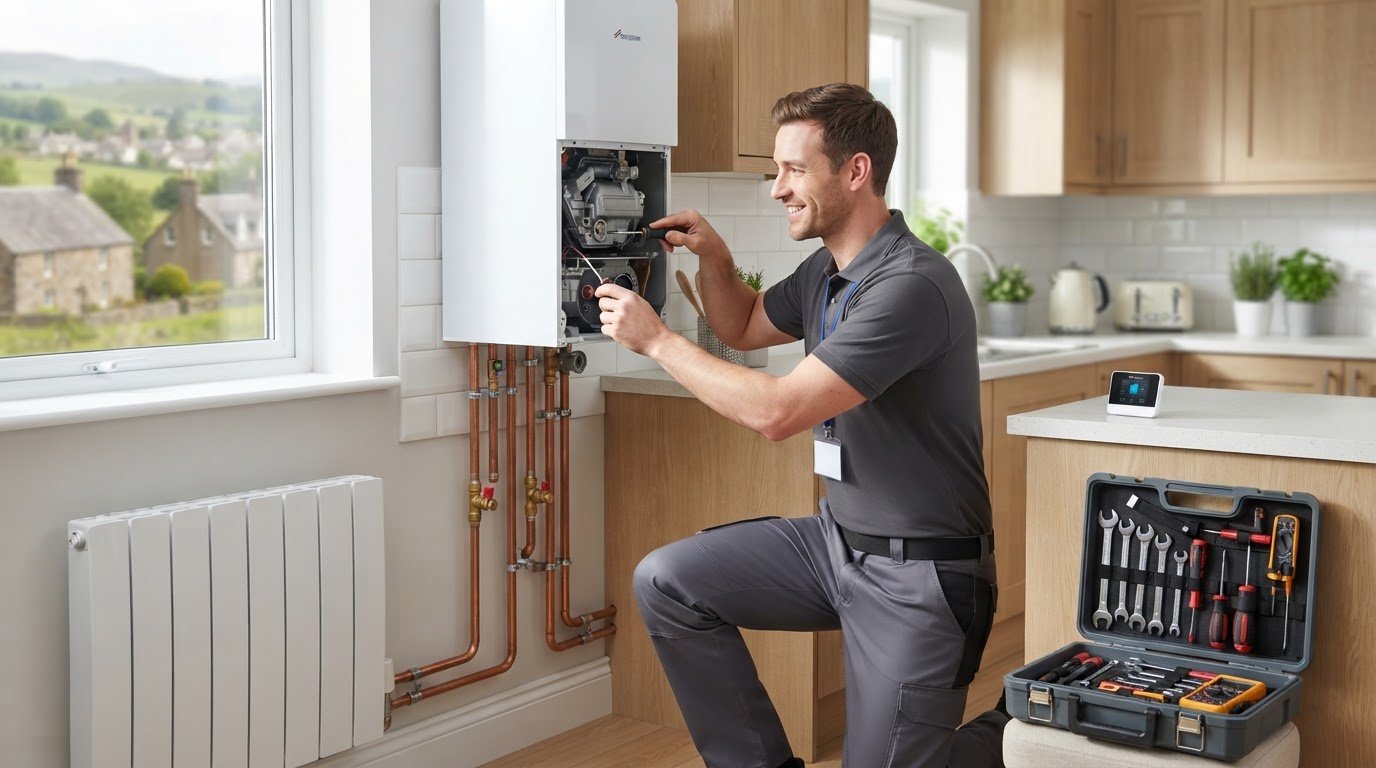
Heating engineer in Castle Douglas for boilers and heating
A boiler fault can disrupt more than hot water: it can leave your home without the heating you rely on. A heating engineer in Castle Douglas can help with boiler repairs, annual servicing and installation, as well as central heating upgrades and power flushing. The right work depends on the issue, whether it’s a sudden fault, routine maintenance or a boiler that needs replacing.
It’s reasonable to want clear answers before arranging work: what the engineer will assess, which service fits the symptoms and what can affect the cost. This guide explains the main boiler and heating services, how an engineer approaches common problems, and what to consider when choosing a professional. You’ll also learn how domestic heating connects with the wider plumbing and heating needs of a Castle Douglas home, so you can take the next step with a clearer picture.
Key Takeaways
- Boilers in the 12-15-year age range may have parts that are harder to find, so consider age, condition and repair history when weighing repair against replacement.
- Boiler-cover plans differ: check whether an annual service is included and how the excess applies before relying on cover.
- Power flushing can remove sludge and contaminants from a central heating system; learn when it may be relevant to your home.
- Gas boiler work must be carried out by a Gas Safe registered engineer qualified for that appliance type. Oil boilers are normally signed off by an OFTEC registered technician.
- Use the symptoms, system type and property needs to identify the right next step, from a boiler repair or service to wider heating work.
Boiler age, servicing and replacement terms
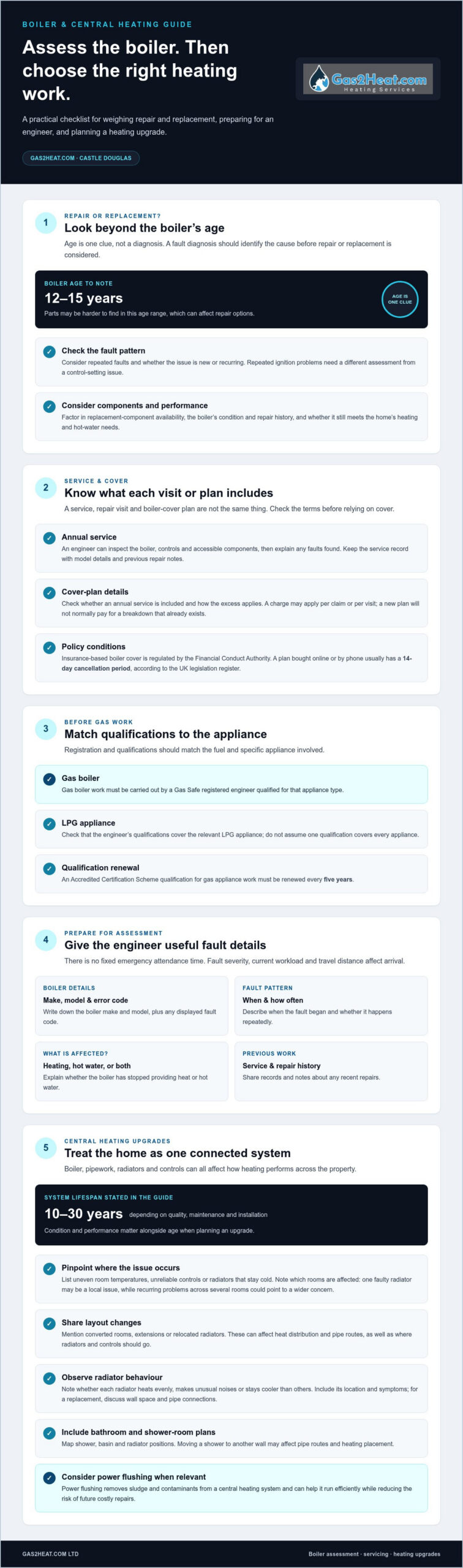
A boiler’s age is one clue, not a diagnosis. Boilers in the 12-15-year age range may have parts that are getting hard to find, which can affect repair options. Also consider repeated faults, the availability of replacement components and whether the system still meets the home’s heating and hot-water needs. A fault diagnosis should identify the cause before repair or replacement is considered.
During an annual service, an engineer can inspect the boiler, its controls and accessible components, then explain any faults found. Keep the service record with the boiler’s model details and previous repair notes. This helps show whether a fault is new or recurring. Repeated ignition problems, for example, need a different assessment from an issue caused by a control setting.
Boiler cover is separate from servicing or a repair visit. Some plans include an annual service, while others don’t, so compare the policy terms and check whether servicing is included before choosing a plan. A new cover plan will not normally pay for a breakdown that already exists.
Read the excess terms carefully: a charge may apply per claim or per visit. Insurance-based boiler cover is regulated by the Financial Conduct Authority. A plan bought online or by phone usually has a 14-day cancellation period, according to the UK legislation register. These details matter when comparing the policy’s annual cost with the service and repair conditions.
For gas boiler work, the engineer must be Gas Safe registered and qualified for that appliance type. LPG boilers also require an engineer whose qualifications cover the relevant appliance. An Accredited Certification Scheme qualification for gas appliance work must be renewed every five years. Check that the work matches the boiler’s fuel and model, rather than assuming one qualification covers every appliance.
How quickly can a heating engineer attend an emergency in Castle Douglas? There is no fixed attendance time: fault severity, current workload and travel distance affect arrival. When reporting a breakdown, describe the symptoms, any displayed fault code and whether the boiler has stopped providing heat or hot water.
To help the engineer assess the fault, note these details before booking:
- Write down the boiler make, model and any displayed error code.
- Describe when the fault began and whether it happens repeatedly.
- Explain whether heating, hot water or both are affected.
- Share the service history and any recent repairs.
Clear details help the engineer understand the likely issue and prepare for the job. If the diagnosis points to replacement, compare the boiler’s condition and repair history with the needs of a new installation.
Central heating installation and upgrades
A central heating upgrade should address a specific problem, such as uneven room temperatures, unreliable controls or a radiator that stays cold. List the symptoms and identify the rooms affected. A heating engineer in Castle Douglas can assess the boiler, pipework, radiators and controls as a connected system, rather than treating each issue in isolation.
A home heating system can last 10-30 years, depending on its quality, maintenance and installation. Condition and performance matter alongside age when planning an upgrade. For example, replacing one faulty radiator may address a local issue, while recurring problems across several rooms could point to a wider system concern. Repairs and new installations should suit the cause.
Before central heating work begins, note which rooms you want heated and any planned layout changes. A converted room, extension or relocated radiator can affect heat distribution and pipe routes. Share these details during the assessment so the engineer can consider radiator and control positions and whether the existing boiler suits the home’s needs.
Start radiator maintenance by observing how each one performs. Note whether it heats evenly, makes unusual noises or stays cooler than others, then tell the engineer its location and symptoms. This helps distinguish a radiator-specific issue from a wider heating fault. For a replacement, discuss the room, available wall space and pipe connections before choosing a position.
Bathroom and shower-room installations involve practical decisions beyond heating. Map the proposed shower, basin and radiator positions, then consider how pipework can reach each fixture. Moving a shower to another wall, for example, may affect pipe routes and heating placement. A heating engineer in Castle Douglas can assess how planned heating changes fit the property’s layout.
What qualifications and insurance should a heating engineer have? Gas boiler work must be done by a Gas Safe registered engineer qualified for that appliance type. Look for relevant training for the planned work and public liability insurance covering the job.
How can you check a heating engineer’s Gas Safe registration in the UK? Confirm that the engineer is registered and qualified for the specific appliance type before gas work starts. Match the qualification to the boiler or other gas appliance involved.
Before arranging an installation or repair, prepare details of the affected rooms, the symptoms and any planned changes. For a heating upgrade, explain whether you’re considering a smart thermostat or underfloor heating. This gives the assessment a practical starting point and helps shape the work around your home.
Gas2Heat.com Ltd professionals advise that powerflushing removes sludge and contaminants from a central heating system to help it run efficiently and reduce the risk of future costly repairs.
Central heating installation, servicing and replacement
Plan central heating work around the whole system, not just one appliance. For an installation, identify the rooms to heat, existing pipe routes and any access constraints. For servicing, note changes in performance and describe them during the appointment. If you’re considering replacement, explain the home’s heating needs and any planned alterations. These details help define the work before the engineer assesses the system.
Separate the work by purpose. Boiler servicing focuses on the appliance, while a wider heating assessment can also consider controls, radiators and pipework. If several rooms heat unevenly, describe the pattern rather than reporting only one cold radiator. For a replacement, share the property layout and plans for extensions or conversions. This helps shape a suitable scope of work.
Castle Douglas is in Dumfries and Galloway. Nearby places in the target area include Dumfries, Moffat, Lockerbie, Annan, Lochmaben, Thornhill and Gretna. When arranging work, provide the full property location and explain the job clearly. A precise address helps distinguish a Castle Douglas appointment from work elsewhere in the region and gives the engineer useful context for planning the visit.
Heating and plumbing can overlap in one project, but they involve different systems. A radiator leaking at a valve concerns the heating circuit; a blocked sink is a domestic plumbing problem. Describe where water appears, whether it comes from a heating component and which rooms are affected. These details help distinguish a central heating issue from plumbing or drainage work.
Drainage symptoms also need a clear description. Slow water leaving a shower, for example, points to a drainage concern, while a radiator that fails to warm points to the heating system. Note the fixture, symptom and when it occurs. This keeps the job description focused and helps distinguish unrelated faults.
Which heating engineers in Castle Douglas are Gas Safe registered? Gas boiler work must be carried out by an engineer registered and qualified for that appliance type. Registration and appliance-specific qualification are the key criteria for gas work.
Heating engineer reviews and ratings in Castle Douglas can help you assess communication and workmanship. Look for specific accounts of similar jobs, such as explaining a fault or completing a heating installation, rather than relying on a star score alone.
Prepare a concise job summary before arranging an appointment:
- Describe the planned installation or system issue.
- Name the affected rooms, fixtures or controls.
- Give the property location and any access details.
- Separate heating symptoms from plumbing or drainage problems.
These steps make it easier to explain what needs attention and distinguish a central heating job from other household work.
Gas and oil-fired heating systems
Start by identifying the fuel, appliance type and symptom. Gas, LPG and oil boilers require different expertise. Note whether heating, hot water or both have stopped working, along with any displayed fault code and when the problem occurs. These details help the engineer understand the system before inspecting it.
Gas boiler work must be carried out by an engineer who is Gas Safe registered and qualified for that appliance type. Before work begins, check that the engineer’s registration and qualification cover the appliance in your home. A qualification for one type of gas appliance doesn’t automatically cover every boiler.
LPG is a gas fuel, so make the fuel type clear when describing a boiler fault or planned work. If you’re unsure, check the appliance information or previous service records. For example, tell the engineer whether the home uses mains gas or LPG. Accurate details help identify the relevant appliance expertise.
Oil boilers follow a separate route and are normally signed off by an OFTEC registered technician. Share the boiler’s model information and describe the fault, such as no heating, no hot water or an intermittent shutdown. If the problem began after other work, explain what changed. A clear timeline helps connect the symptoms with the system’s recent history.
Keep records together for the gas or oil system. Include installation documents, service notes, repair details and appliance instructions. These records help an engineer understand the boiler’s history and identify recurring problems. If the same fault code appears in previous notes, mention that pattern when arranging an assessment.
For a new installation or replacement, prepare a short list of household needs. Include the number of bathrooms, typical hot-water use and rooms that need heating. Explain any planned changes, such as a converted room or altered layout. The engineer can use these details to assess the system requirements and discuss suitable options for the property.
During a fault assessment, describe what happens without attempting work on gas or oil components yourself. Record whether the display is blank, an error code appears or the boiler starts and then stops. Note the exact wording of any message. These observations help an engineer assess the fault without guessing at the cause.
Before the appointment, have these details ready:
- The appliance fuel, make and model, if available.
- Whether heating, hot water or both are affected.
- Any displayed fault code and when it first appeared.
- Previous service records or repair notes.
These steps give the engineer a useful starting point for gas or oil system work. A qualified specialist can then assess the appliance type, reported symptoms and relevant records before recommending the next step.
Domestic plumbing and heating in Castle Douglas
In Castle Douglas, domestic plumbing and central heating can share pipe routes, but they serve different functions. A dripping tap is a plumbing fault; a radiator that stays cold points towards the heating circuit. Describe the fixture, symptom and affected room before arranging work. That distinction helps identify the right task and keeps unrelated problems separate.
System age can help frame maintenance decisions. A home heating system can last 10-30 years, depending on its quality, maintenance and installation. Pipe materials have different expected lifespans: copper pipes can last 70-80 years, while brass, iron and steel water supply pipes typically last around 50-70 years. PVC pipes usually last around 50 years. These are guides, not a diagnosis of an individual pipe.
For a suspected leak, note where water appears and whether it happens continuously or only when a fixture runs. A damp patch near a radiator valve suggests a different source from water beneath a kitchen sink. Keep the area clear and record when the leak began. A clear description helps distinguish a heating-system leak from a domestic water-pipe problem.
Boiler pressure is another useful detail to report. A gauge reading below 1 bar is listed as a common boiler-cover problem in Castle Douglas. Record the displayed reading and any changes, rather than guessing at the cause. If the boiler has stopped working or shows an error code, include that information when describing the fault.
Safety and suitability matter for gas-related work. Gas boiler work must be carried out by a Gas Safe registered engineer qualified for that appliance type. Describe whether the appliance uses gas and whether heating, hot water or both are affected. For a system upgrade, explain which rooms feel uncomfortable and how the household uses hot water. These details help focus the assessment.
System performance also depends on how the heating serves the home. If some rooms warm quickly while others remain cold, list the rooms affected and note whether the pattern changes. A heating professional can assess the boiler, controls and radiators together. For a renovation, explain changes such as a new room layout or altered floor plan before work is planned.
Keep these details ready when reporting a household issue:
- The affected fixture or room, such as a radiator, sink or bathroom.
- The symptom, including leaks, low pressure or uneven heating.
- Any gauge reading, boiler message or change in system behaviour.
- Whether the issue involves heating, hot water or domestic plumbing.
For a planned heating upgrade, explore heating system options and explain the rooms and performance changes you need. A focused description helps distinguish a heating project from a separate plumbing repair.
Gas2Heat.com: Boiler Installation
Gas2Heat.com Ltd can help when a boiler needs installing, servicing or repairing. Choose Boiler Installation when an existing appliance needs replacing or a home requires a new boiler. For routine upkeep, Boiler Servicing can help assess the appliance’s condition. If the boiler has stopped working or developed a fault, Boiler Repairs address that need. Landlords can also arrange Landlord Gas Safety Certificates for rental properties.
Before making an enquiry, note the boiler’s make and model, the symptoms, and whether heating or hot water is affected. For an installation, describe the property and your heating needs. These details help explain the work you’re looking for and give the conversation a clear starting point.
Contact Gas2Heat.com Ltd to discuss boiler work for your home or rental property.
Take the next step towards dependable heating
Base your next decision on what you need your heating to do. A repair may suit a specific fault, while servicing or installation addresses different needs. Being clear about the outcome you want helps keep the conversation focused on your home and the work required.
If you’re looking for a heating engineer in Castle Douglas, Gas2Heat.com Ltd offers Boiler Repairs, Boiler Servicing and Boiler Installation. These services provide a practical next step when a boiler needs attention, routine maintenance or replacement. Share what you’re hoping to resolve and any changes you’re planning for your home.
For a useful first conversation, describe the main issue in plain terms and say whether you’re considering a repair, service or new boiler. You don’t need to diagnose the fault yourself. A clear starting point makes it easier to discuss the right work for your situation.
Contact Gas2Heat.com Ltd about heating and take the next step with confidence.
Frequently Asked Questions
Which heating engineers in Castle Douglas are Gas Safe registered?
Gas boiler work must be carried out by an engineer who is Gas Safe registered and qualified for the specific appliance type.
Heating engineer reviews and ratings in Castle Douglas
Reviews and ratings can help you assess an engineer’s communication and workmanship. Look for specific accounts of similar jobs.
How to check a heating engineer’s Gas Safe registration in the UK
Confirm that the engineer is Gas Safe registered and qualified for the specific appliance type before gas work starts. Match the qualification to the boiler or other gas appliance involved.
Heating engineers in Castle Douglas contact details and service areas
Nearby places in the local area include Dumfries, Moffat, Lockerbie, Annan, Lochmaben, Thornhill and Gretna. Provide the full property location and explain the job clearly when arranging work.
Boiler repair and emergency heating call-out prices in Castle Douglas
No boiler repair price for Castle Douglas is provided.
