
Troubleshooting Underfloor Heating Cold Spots and Slow Heating
A cold spot doesn’t always mean your underfloor heating has failed. Troubleshooting underfloor heating cold spots starts with allowing enough warm-up time: a screed floor can take 2-4 hours to reach temperature from cold, while trapped air or poor water flow can leave parts of a wet system cooler than others.
It’s frustrating when the heating is on but the floor feels uneven, especially when you’re unsure whether to wait or act. Possible causes include an airlock restricting water circulation, a flow or balancing issue, or, in an electric system, a damaged cable or poor connection.
This guide explains why underfloor heating can warm slowly and how to identify likely causes before considering a major repair. You’ll learn what to observe safely, when to seek professional help, and how air, flow problems and electrical faults can create cold spots.
Key Takeaways
- Use a towel over a heated zone for about half an hour to help tell whether the floor is producing heat.
- Learn how uneven loop flow and system balancing can affect warmth across different areas.
- Spot why trapped air can interrupt water circulation and leave parts of the floor cooler.
- Understand which cold-spot clues point to a circulation issue, a pipework problem or an electrical fault.
1. Why is my underfloor heating slow to heat up?
A screed underfloor heating floor can take 2-4 hours to reach temperature from cold. The slab must warm before it can transfer heat into the room. Electric underfloor heating can also take a couple of hours before the surface feels warm underfoot. A slow start alone doesn’t mean the system has failed.
To see whether an electric zone is producing heat, place a towel over one area for about half an hour, then compare it with nearby uncovered flooring. A noticeable difference suggests heat is reaching the floor, but this simple check won’t identify the exact cause of a fault. If the floor stays cold or only part of it warms, note the affected area and when you switched on the thermostat.
The thermostat setting and floor probe can also affect how the system responds. The probe measures floor temperature and sends information to the thermostat; a faulty reading or poor connection may prevent the system from heating as expected. Check that the thermostat is set to heating and has not reached its target temperature. If the display is inconsistent or the system does not respond, a professional can test the probe, wiring and connections before replacing parts.
Insulation and floor coverings affect how evenly warmth reaches a room. Poor insulation beneath the system can cause uneven heat loss and colder patches; fixing it usually means lifting the flooring. Thick rugs and other insulating coverings can trap heat close to the floor, while draughts and poorly insulated walls let warmth escape. This can feel like reduced output even when the heating is working. When troubleshooting underfloor heating cold spots, compare exposed areas and look for a pattern rather than judging a single patch.
A screed floor still warming within its usual 2-4-hour period may simply need more time. If cold areas remain after the system has run, or an electric zone fails the towel check, arrange a professional assessment.
2. Airlocks, flow rates and system balancing
In a wet underfloor heating system, trapped air can interrupt water flow through a circuit. The affected loop may receive less hot water, leaving its floor area cooler while other rooms warm normally. Airlocks can form after system work or when air enters the pipework, so uneven warmth in one zone can be a useful clue.
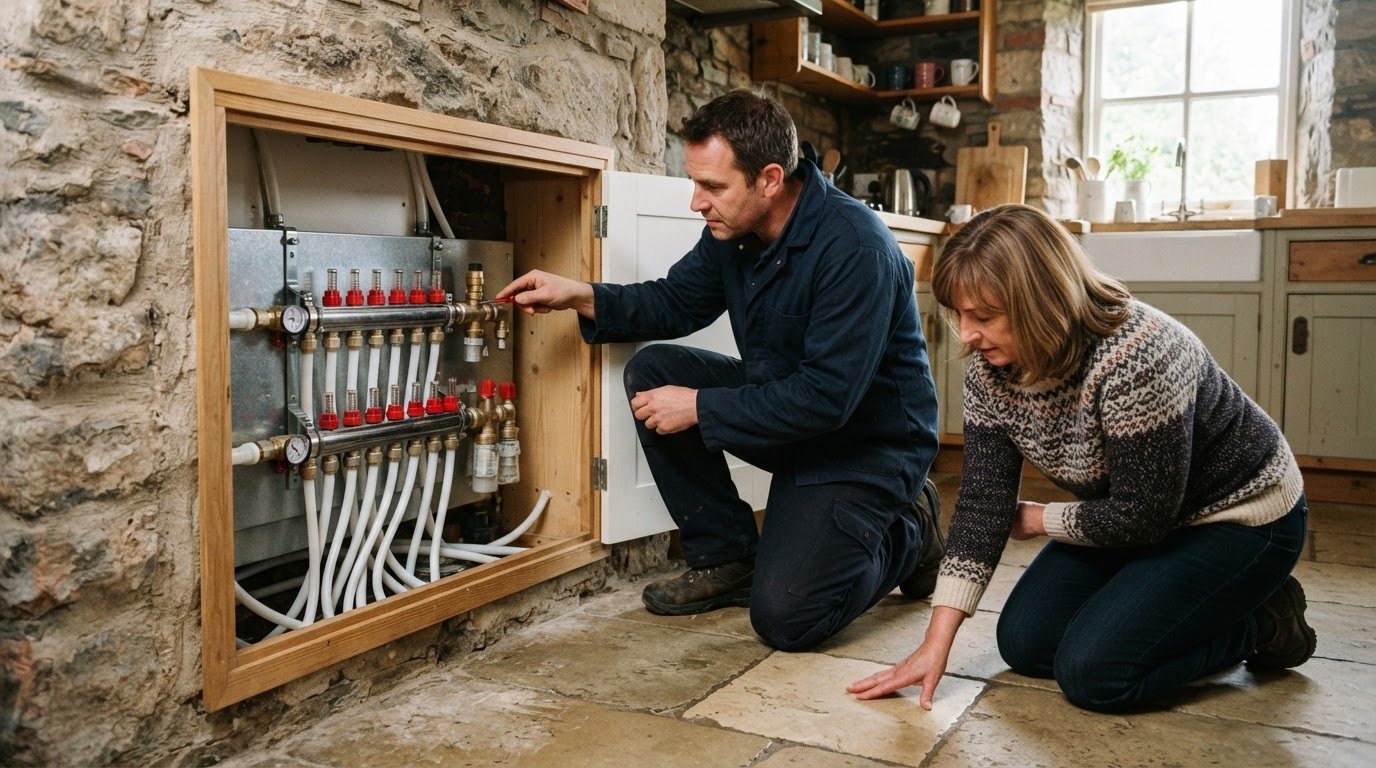
To investigate cold spots, compare the manifold’s flow indicators across loops and note which room each circuit serves. A loop with little or no flow beside warmer loops may indicate trapped air, a closed valve or a circulation problem. Nu-Heat advises checking that manifold isolation-valve levers are in line with the pipework when open. Bleeding can clear air, but it must be done correctly to avoid introducing more air.
Flow settings depend on the heating system and its design. Boiler systems commonly use 1.5-2 litres per minute per loop, while heat pump systems use around 1 litre per minute per loop. These are reference values, not universal settings: loop length, pipe layout and the system specification affect the right flow. A technical assessment should also consider the pump, actuator and sensor, since a stuck actuator or poor signal can restrict flow even without an airlock.
System balancing adjusts flow between circuits so heat reaches each area appropriately. If one loop receives too much flow, others may receive too little. Debris or limescale beneath the floor can also narrow water passages. If cleaning and balancing do not restore circulation, a professional flush may be needed. Power flushing removes sludge and deposits from the heating system.
Call a Gas Safe engineer for boiler or wet-system faults involving the boiler, pump or manifold. A qualified electrician should investigate persistent faults in electric heating, including suspected cable or connection damage. If restricted flow or deposits are suspected, power flushing may help restore circulation where a flush is appropriate.

4. Air trapped in underfloor heating pipes
Air trapped in a wet underfloor heating loop can interrupt water circulation beneath the floor. The pump may run, but an air pocket can restrict hot water reaching part of the circuit. One room or a defined floor area may then stay cooler while other zones heat normally. The boiler may still be working, so a cold patch does not automatically mean it has failed.
Look for a pattern before deciding what the fault might be. If one zone stays cold while neighbouring zones warm, air or restricted flow in that loop is possible. If several areas are affected, circulation or system controls may be involved. Note which rooms are affected, whether the problem began after work on the heating system, and whether the pump is running. These observations can help focus professional testing.
A wet circuit should be purged through the system’s designated manifold points, not by loosening pipe connections beneath the floor. The right method depends on the manifold and heating-system design. A heating professional can isolate and purge the affected circuit, then check flow and system pressure before returning it to normal operation. Avoid adjusting unfamiliar valves or opening components around boiler wiring.
Removing air is only one part of troubleshooting. If the cold area persists after purging, the circuit may have a blockage, restricted valve, pump issue or control fault. A technician can test whether the actuator opens, the sensor responds and water circulates through the loop. If an electrical control or wiring fault is suspected, testing should distinguish it from a hydraulic problem before any repair.
Keep a simple record of the affected zone and any recent work. For example, noting that a lounge loop remains cold after the system has been refilled gives a clearer starting point than saying the floor is not heating. If air returns after repeated purging, arrange an inspection rather than bleeding the same circuit again. Recurring air can point to an underlying issue that routine checks alone will not resolve.
4. What are the common causes of cold spots in underfloor heating?
A cold patch may indicate a fault affecting one zone rather than the whole heating system. In wet underfloor heating, a failed circulation pump may stop hot water reaching the floor pipes. A tight bend in the pipework can also restrict flow, leaving the area beyond it cooler. If several rooms lose warmth together, the pump or shared controls may need attention.
In electric systems, damaged heating cables or poor connections can interrupt the circuit. A circuit breaker that repeatedly trips is another warning sign of possible cable damage. Don’t keep resetting it; arrange an electrical assessment. Testing can identify whether the fault is in the cable, its connection or the thermostat, helping avoid unnecessary floor repairs.
Floor construction can create a different pattern. Poor insulation beneath the heating allows heat to escape unevenly, while insulating coverings can trap warmth in particular areas. Compare the cold patch with exposed flooring and note whether it follows a room boundary, furniture position or specific zone. The pattern can help distinguish heat loss from a system fault.
Controls can also leave a zone cold. A stuck actuator may prevent hot water entering its loop, while a thermostat or sensor fault can stop the system calling for heat. If one room remains cool while others respond, note its thermostat setting and whether the manifold actuator moves when that zone calls for heat. A technician can test the controls alongside circulation and wiring.
Record which rooms are affected, whether the system is wet or electric, and any breaker trips or recent changes. These details give a professional a clearer starting point for diagnosis. If the cold spots relate to the pipe layout or installation, explore underfloor heating installation to find out how a suitable system can be planned for your home.
Gas2Heat.com Ltd: Underfloor Heating Installation
Gas2Heat.com Ltd provides underfloor heating installation for homes where a new system is the right next step. Turn to this service when planning a system or renovation, rather than treating it as a repair for an existing cold spot.
If checks point to a boiler issue affecting your heating, Gas2Heat.com Ltd also offers boiler repairs and servicing. For an older boiler that needs replacing as part of a heating project, boiler installation may be relevant. Matching the work to the fault helps keep the next step focused.
Contact Gas2Heat.com Ltd to discuss your underfloor heating needs.
Choose a clear next step for lasting comfort
A practical way to troubleshoot underfloor heating cold spots is to use the symptoms to guide your next step, rather than repeatedly changing settings without a clear reason. If the fault persists, arrange a proper diagnosis before planning disruptive work. Identifying whether the issue involves controls, circulation or a component can help determine what to do next.
The aim is to restore reliable warmth without replacing parts or disturbing flooring unnecessarily. A qualified assessment can establish whether the system needs a targeted repair or a wider heating project. The right next step depends on what the tests reveal.
For help deciding how to proceed, contact Gas2Heat.com Ltd. A clear diagnosis is a practical first step towards a more comfortable home.
Frequently Asked Questions
Why is my underfloor heating slow to heat up?
A gradual warm-up can be normal, especially after the system has been off and the floor is cold. Screed stores heat, so the floor can take 2-4 hours to reach temperature; electric flooring may take a couple of hours to feel warm. Check that the thermostat is calling for heat and compare how different zones respond. A single persistently cold zone needs investigation.
How can I check underfloor heating flow rates, manifold valves and actuators?
Start by matching each manifold loop to its room label, then note the flow indicator while that zone calls for heat. Compare similar loops rather than turning balancing valves at random. Check whether the actuator responds to a thermostat demand. Record any loop with little flow or an actuator that does not move; a heating professional can test and adjust the system safely.
How can I test an underfloor heating thermostat and floor temperature sensor?
Set the thermostat to heating and raise its target above the displayed room temperature. Check whether it indicates a demand and whether the relevant zone responds. Compare the floor reading with how the surface feels, since a sensor reading that remains unchanged despite a clear temperature change may indicate a fault. Leave wiring and sensor resistance tests to a qualified professional.
Can floor coverings, insulation or furniture cause cold spots in underfloor heating?
Yes. Rugs, dog beds and other insulating objects can trap heat above electric heating cables, potentially contributing to overheating and cable breakdown. Move coverings away from a cold or unusually warm patch and see whether the area changes. Poor insulation beneath the floor can also cause uneven heat loss. Keep a record of underfloor pipe or cable routes before drilling.
How long should underfloor heating take to warm a cold room or floor?
A screed floor can take 2-4 hours to reach temperature from cold, while electric flooring may need a couple of hours before it feels warm underfoot. Warming the room can take longer than warming the floor surface. The result depends on the floor construction, heat loss and thermostat setting. If one zone remains cold after the system has run, arrange a fault assessment.

Leave a Reply
You must be logged in to post a comment.