

Best Flooring for Underfloor Heating: A 2026 Guide for SW Scotland Homeowners
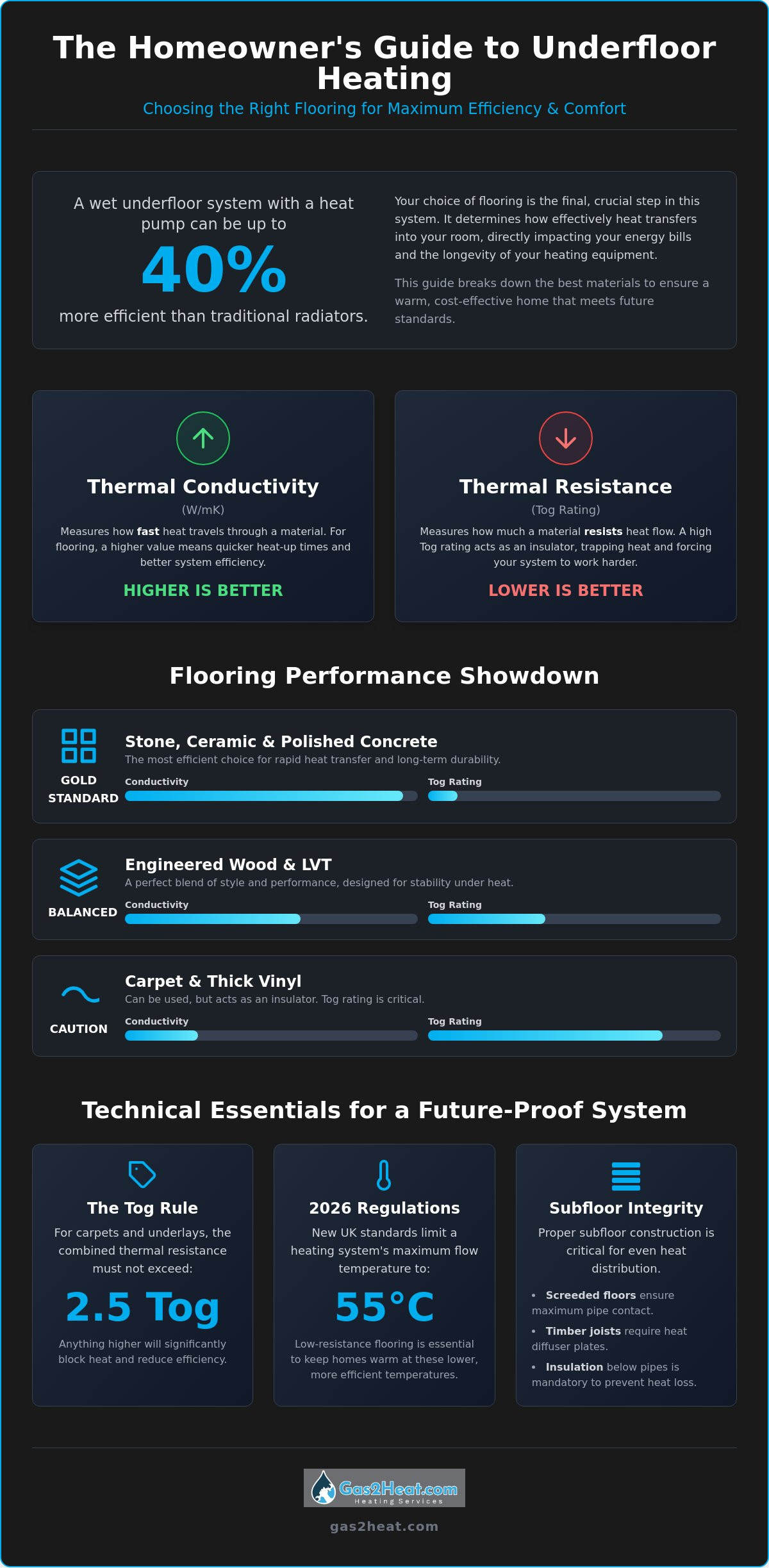
Did you know that a wet underfloor heating system can be up to 40% more efficient than traditional radiators when paired with a modern heat pump? This impressive saving depends entirely on the surface you choose to walk on. Selecting the best flooring for underfloor heating is a critical technical decision. It directly impacts how quickly your home warms up and how much you pay each month to keep it that way.
It’s natural to worry about wood flooring warping under heat or getting lost in complex Tog ratings. You want a beautiful finish that won’t crack or trap heat where it isn’t needed. This guide clarifies those technical hurdles. We will show you how to maximize your system’s output while protecting your investment. You’ll discover which materials offer the best thermal conductivity and how to navigate the 2026 standards for a warm, cost-effective home in SW Scotland.
Key Takeaways
- Learn how thermal conductivity (W/mK) impacts your home’s warm-up speed and overall energy efficiency.
- Discover why stone and ceramic tiles remain the gold standard for rapid heat transfer and long-term durability.
- Identify why engineered wood and LVT are the best flooring for underfloor heating when you need to balance style with structural stability.
- Understand the 2.5 Tog rule for carpets to prevent your floor coverings from acting as an expensive heat barrier.
- See why professional system integration and correct boiler sizing are critical for maximizing your heating performance in SW Scotland.
The Science of Heat Transfer: Why Your Flooring Choice Matters
Your floor is more than just a surface to walk on. It’s the final heat exchanger in your home’s climate control system. Choosing the best flooring for underfloor heating is a technical decision that determines how efficiently energy moves from your pipes into your living space. If a material is too insulating, your boiler or heat pump must work significantly harder to reach your thermostat’s target temperature. This resistance doesn’t just increase your energy bills; it places unnecessary strain on your heating equipment.
When heat cannot escape the floor quickly enough, your system may experience “short-cycling.” This happens when the water returning to your boiler is still too hot, causing the unit to turn off and on in rapid succession. This process is highly inefficient and can lead to premature mechanical failure. By selecting a floor with high thermal conductivity, you ensure a smooth, steady transfer of energy. Dense materials also provide better thermal mass. They act like a battery, storing heat and releasing it slowly even after the system cycles off, which keeps your home at a consistent, comfortable temperature.
Understanding Thermal Conductivity vs. Resistance
Thermal conductivity, measured in W/mK, indicates how fast heat travels through a material. In contrast, the Tog rating measures thermal resistance. For Underfloor heating systems, the goal is to keep the Tog rating as low as possible. A combined rating of 1.5 for your flooring and underlay is often considered the optimal balance for performance. While traditional gas boilers can sometimes overcome high resistance by running at hotter temperatures, modern systems are designed for efficiency. In 2026, UK regulations limit maximum flow temperatures to 55°C. This makes low-resistance flooring essential for homeowners who want to keep running costs low while maintaining a warm home.
The Role of the Subfloor in Heat Distribution
The foundation beneath your chosen finish dictates how evenly heat spreads across the room. In SW Scotland, most homes feature either solid screeded floors or timber joist systems. Screeded floors provide excellent contact with the heating pipes, which minimizes air gaps and maximizes conductivity. Timber systems require specialized heat-diffusing plates to prevent “hot spots” where the floor feels uncomfortably warm in specific patches. A professional underfloor heating installation must also include robust insulation beneath the pipes. Current 2026 standards require a minimum thermal resistance of 1.25 (m²·K)/W for this insulation layer. This ensures that heat is forced upward into your room rather than being wasted by heating the ground beneath your house.
The Gold Standard: Stone, Ceramic, and Polished Concrete
Porcelain vs. Natural Stone: Which is More Efficient?
Porcelain is often the superior choice for thermal efficiency. It is denser than many natural stones, which results in better thermal transfer performance. While natural stone like marble or limestone is effective, its porous nature can sometimes slow down the heating process. A tile thickness of 10mm is generally considered the “sweet spot.” It provides the durability needed for high-traffic kitchens without creating an excessive barrier for the heat. To protect your investment, always use flexible adhesive and grout. These materials accommodate the natural expansion and contraction of the tiles as they warm up. This prevents the grout from crumbling and stops tiles from cracking under thermal stress. If you are starting a new project, a professional underfloor heating installation ensures your pipe layout is optimized for these heavy materials.
Polished Concrete and Screed Finishes
Polished concrete is a favorite for modern Scottish home extensions. It offers exceptional thermal mass, acting like a giant storage heater for your property. Once the concrete reaches the set temperature, it retains that heat for hours. This is a massive benefit during the cold winters in Dumfries and Galloway. It keeps your home comfortable long after the heating has cycled off. This “flywheel effect” helps stabilize indoor temperatures and reduces the frequency of your boiler firing up. If you choose this finish, ensure the slab is fully cured before you activate the heating for the first time. Turning the system on too early can cause moisture to escape too fast, which leads to structural cracks. This material is also very easy to clean and maintain, providing a sleek, industrial aesthetic that remains popular in 2026. Always consult with an expert to ensure your screed depth is consistent across the entire floor area to avoid cold patches.
Wood, Laminate, and LVT: Balancing Style with Performance
Many homeowners in Dumfries and Galloway prefer the aesthetic warmth of timber, but traditional solid wood presents significant challenges for underfloor heating. Solid wood is a natural insulator that reacts poorly to temperature fluctuations. It often warps, cups, or gaps when exposed to direct heat. To avoid these issues, you must follow the 27°C rule. This is the maximum surface temperature limit set by most manufacturers for wood-based and synthetic floorings. Exceeding this limit can damage the floor’s structural integrity and void your warranty. Choosing the best flooring for underfloor heating in this category requires a balance between visual appeal and technical stability.
Modern manufacturing has solved many of these traditional problems. Engineered wood, high-quality laminates, and Luxury Vinyl Tile (LVT) are now designed specifically to handle the thermal stress of a heating system. These materials allow you to achieve a high-end look while maintaining the efficiency of your boiler or heat pump. Because these materials are thinner and denser than solid timber, they offer much lower thermal resistance, ensuring your rooms reach a comfortable temperature quickly and stay there.
Why Engineered Wood Wins Over Solid Timber
Engineered wood is the only real wood product we recommend for use with underfloor heating. Its strength comes from a cross-layered construction. Several layers of plywood or HDF are bonded together with a top veneer of solid wood, usually Oak. This structure prevents the timber from moving as it heats up and cools down. For homes in SW Scotland, Oak is particularly stable and handles the local humidity levels well. Before installation, you must acclimatise the wood to the room for at least 48 hours. This allows the moisture content to stabilise, preventing cracks or pops after the heating is turned on for the first time.
LVT and Laminate: The Modern Choice
Luxury Vinyl Tile (LVT) has become a top choice for 2026 renovations. It is incredibly thin and dense, making it nearly as conductive as stone or ceramic. Because it is so responsive, your system doesn’t have to run as long to heat the room. Laminate flooring has also evolved. Modern laminates are often more conductive than thick timber planks. For optimal performance, especially when paired with a heat pump, the combined Tog value of your laminate and underlay should not exceed 1.5. We recommend “clicked” floating systems over glued-down options. These allow the floor to expand and contract naturally across the entire surface area without putting stress on individual joints. This flexibility is essential for maintaining a durable, gap-free finish over many years of use.
Carpet and Vinyl: Navigating the Insulating Hurdle
While hard surfaces are frequently cited as the best flooring for underfloor heating, many homeowners in SW Scotland still prefer the comfort of carpet in bedrooms and lounges. Carpet is a natural insulator. It traps air within its fibres, which can block heat from reaching the room if the material is too dense. If you select a carpet that is too thick, your boiler will run for longer periods to overcome this thermal barrier. This leads to higher energy bills and slower response times when you turn the heating on during a cold Dumfries evening.
To ensure efficiency, you must follow the 2.5 Tog Rule. This industry standard dictates that the combined thermal resistance of your carpet and its underlay must not exceed 2.5 Tog. If you go beyond this limit, the heat cannot penetrate the floor surface effectively. We always recommend choosing a hessian-backed carpet. These have a more open weave than foam-backed versions, which allows heat to move through the material with much less resistance. This small technical detail can make a noticeable difference in your home’s daily comfort levels.
Choosing the Right Carpet and Underlay
The underlay is often the most overlooked part of the installation. A common mistake is using a standard, thick underlay designed for traditional radiators. For underfloor heating, you need a specialized low-Tog underlay. Look for products with a rating below 0.5 Tog. This ensures the underlay doesn’t become the primary insulating hurdle. Avoid heavy-pile or shag carpets. They act like a thermal blanket and significantly increase the warm-up time of your room. By keeping the pile short and the underlay thin, you allow the heat to radiate into the living space rather than staying trapped beneath the floorboards.
Vinyl and Linoleum Considerations
Vinyl is a practical, budget-friendly choice that responds very quickly to temperature changes because it is so thin. However, it is more sensitive to heat than stone or tile. Most vinyl manufacturers specify a maximum surface temperature of 26°C to prevent the material from softening or discolouring. Linoleum is a fantastic, sustainable alternative for 2026. It is made from natural materials and handles heat exceptionally well, making it ideal for utility rooms or bathrooms. To prevent “ghosting”—where subfloor imperfections show through the finish—ensure your subfloor is perfectly level before laying thin vinyl. If you’re unsure if your current setup can handle these materials, a professional underfloor heating installation ensures your system is calibrated correctly for these specific Tog ratings.
Professional Installation in SW Scotland: Getting the Foundations Right
Your choice of surface is only half the battle. Even the best flooring for underfloor heating will underperform if the technical foundation is flawed. In SW Scotland, our damp, cold winters demand a system that’s perfectly balanced. A professional underfloor heating installation ensures that heat is distributed evenly without wasting energy. It requires a deep understanding of hydraulic balancing and flow rates. This is especially true when adding new zones to an existing property in Moffat or Dumfries.
Your boiler must be sized correctly to handle the additional load. If it’s too small, it’ll struggle to heat both your radiators and your floor. Integrating smart thermostats allows you to set specific temperature limits for different materials. For example, you can cap a zone with LVT at 27°C while allowing a stone-tiled kitchen to run slightly higher. This precision protects your floor and keeps your energy bills predictable. Trusting Gas Safe registered engineers is the only way to ensure your system meets 2026 safety and efficiency standards.
Integration with Your Existing Boiler
Most modern condensing boilers support underfloor heating easily. However, a comprehensive boiler service is essential before you commission a new system. We often find that older systems contain sludge and debris. Power flushing is a critical step here. It clears out the narrow UFH pipes to prevent clogs that cause cold spots. This maintenance ensures your boiler operates at peak efficiency from day one. It also prevents the system from short-cycling, which we discussed earlier as a major cause of energy waste.
Local Expertise for SW Scotland Homes
Homeowners in Moffat, Dumfries, and Lockerbie often face unique challenges with older stone properties. These buildings have high thermal mass but can suffer from rising damp if insulation isn’t handled correctly during the UFH setup. Gas2Heat.com Ltd understands the local architecture and the specific demands of the Dumfries and Galloway climate. We focus on removing the uncertainty from trade services by providing clear, reliable solutions. If you’re ready to upgrade your home’s comfort, contact our Moffat-based team for a quote. We provide the regional expertise needed to make your project a success.
Secure Your Home’s Long-Term Comfort
Selecting the best flooring for underfloor heating is a decision that impacts your comfort and your energy bills for years. You now know how high-conductivity materials like stone offer the fastest response times, while the 2.5 Tog rule keeps carpets from blocking vital warmth. These technical choices ensure your system runs at peak efficiency while protecting your floor from thermal stress. It’s about finding the perfect balance between the aesthetic you want and the performance your home in SW Scotland requires.
A high-performance floor requires a perfectly calibrated system beneath it. The team at Gas2Heat.com Ltd specializes in integrating these systems into local homes. Our Gas Safe Registered Engineers bring deep expertise from Moffat and Dumfries along with a 5-star local reputation to every project. We don’t just install pipes; we ensure your entire heating setup works as one efficient unit. It’s time to remove the guesswork from your home improvement plans.
Book your underfloor heating consultation with Gas2Heat.com Ltd today and take the first step toward a warmer, more efficient home. We’re ready to help you create a space that stays cozy no matter how cold the Scottish winter gets.
Frequently Asked Questions
Can I put carpet over underfloor heating?
Yes, you can use carpet, but you must select a product that allows heat to pass through efficiently. The best flooring for underfloor heating in a bedroom is typically a short-pile carpet with a hessian backing. Avoid thick foam-backed carpets, as these act as a thermal blanket and prevent the room from reaching your desired temperature quickly.
What is the maximum Tog rating for flooring with underfloor heating?
The total combined Tog rating for your floor covering and underlay must not exceed 2.5. For homeowners using modern heat pumps, an even lower combined value of 1.5 is recommended for optimal performance. Staying within these limits ensures your boiler doesn’t have to work overtime, which keeps your monthly energy bills manageable.
Is engineered wood better than solid wood for underfloor heating?
Engineered wood is significantly better than solid timber for any heated floor system. Its cross-layered construction provides the structural stability needed to resist warping or cupping as the temperature fluctuates. Solid wood is a natural insulator and is far more likely to gap or crack when exposed to direct heat over time.
Will underfloor heating damage my laminate floors?
Underfloor heating will not damage laminate floors as long as you respect the manufacturer’s 27°C surface temperature limit. Modern laminates are designed to be highly stable and responsive to heat. To protect your investment, ensure your system is fitted with a floor sensor to prevent the boards from ever overheating.
How long does it take for different floor types to warm up?
Stone and ceramic tiles are the most responsive, typically reaching the set temperature within 30 to 60 minutes. Engineered wood and laminate are the next best flooring for underfloor heating, usually taking between one and two hours. Carpeted areas have the slowest response time because the fibres naturally resist the upward movement of heat.
Do I need special underlay for underfloor heating?
You must use a specialized low-Tog underlay designed specifically for underfloor heating. Standard carpet or laminate underlays are often too thick and act as an insulating barrier. Look for an underlay with a rating below 0.5 Tog to ensure that heat transfers into your living space rather than staying trapped beneath the floor.
Can I use underfloor heating with an existing combi boiler?
Most modern condensing combi boilers are perfectly capable of supporting underfloor heating zones. Your engineer will install a mixing valve to ensure the water temperature stays within the safe 55°C limit required by 2026 building regulations. This allows your new floor to integrate seamlessly with your current central heating system without requiring a boiler upgrade.
