

Boiler kettling noise fix: causes, flushing and repair
A noisy boiler doesn’t automatically need replacing. A boiler kettling noise fix often means restoring water flow by removing limescale or sludge, or repairing a faulty component. The right solution depends on the cause and whether the boiler can be repaired effectively.
Banging or rumbling can be worrying, particularly if you’re unsure whether to switch the boiler off or consider replacing it. Kettling is often linked to restricted water flow, so the noise alone doesn’t mean the boiler has reached the end of its life.
This guide explains why kettling happens, how flushing may help, and which signs can point towards repair rather than replacement. It also explains why a professional inspection matters, so you can understand the likely next step without guessing or attempting work for a qualified heating engineer.
Key Takeaways
- Kettling can point to limescale, sludge, low water pressure or a faulty thermostat. The cause determines whether the boiler needs cleaning, adjustment or repair.
- Power flushing can clear sludge and debris that restrict circulation, but it isn’t the right fix for every noisy boiler.
- Restricted flow can create localised overheating around the heat exchanger. A qualified heating engineer can investigate the cause before further wear develops.
- A noisy boiler doesn’t automatically need replacing. Inspection can help establish whether a repair is suitable or whether age, damage and repeated faults make replacement the better option.
Why is my boiler making a banging or kettling noise?
Kettling often starts when restricted water flow creates hot spots inside the boiler. Limescale, sludge, low water pressure or a faulty thermostat can all contribute.
Common causes of kettling
Kettling is a rumbling or banging sound that can occur when water overheats in a restricted part of the boiler. Limescale can narrow water passages, while low pressure can affect circulation. A faulty thermostat may read the temperature incorrectly or continue calling for heat, allowing the boiler to overheat. These causes need different fixes, so the noise alone cannot identify the fault.
Limescale and sludge restricting water flow
Limescale and sludge can collect in pipework and on the heat exchanger, slowing water as it moves through the boiler. Water around deposits may heat unevenly and form steam bubbles, creating the characteristic rumble. Magnetite, an iron-rich sludge produced by radiator wear, can also build up and restrict circulation. The blockage’s location and extent determine whether cleaning, flushing or component repair is needed.
Preventing limescale build-up
A magnetic filter fitted to the boiler’s return pipe can trap iron-based magnetite before it reaches the boiler. It targets sludge and debris, not dissolved minerals that cause limescale. In hard-water areas, a limescale inhibitor or suitable water-softening measure may help reduce mineral deposits. These measures support cleaner circulation but won’t remove an existing blockage on the heat exchanger.
How much does it cost to fix boiler kettling in the UK? The cost depends on the cause, any parts required and the work involved; it’s given after a quote request.
What checks can I safely do if my boiler is kettling? Note when the noise occurs, compare the pressure gauge reading with the boiler manual, and look for displayed fault codes. Don’t remove the casing or adjust internal components.
Will boiler insurance or a warranty cover a kettling noise repair? Cover depends on the policy or warranty terms, including exclusions and maintenance conditions. Read the wording to see whether it includes the cause and repair.
Power flushing a heating system
A power flush uses specialist equipment to circulate cleaning water through the heating system and remove accumulated debris. It may help restore circulation when sediment or deposits contribute to kettling.
Flushing boiler sediment
Flushing circulates water through the boiler and connected heating circuit to remove loose sediment. Clearing deposits can improve flow and may resolve kettling when sediment is the cause. An engineer assesses where debris has collected and whether the boiler and system are suitable for flushing. A flush won’t repair a faulty thermostat or damaged component, so identifying the cause is essential.
Sludge can settle in radiators and pipework as well as around the boiler. A professional power flush is designed to remove sludge, limescale and debris from the heating system, helping water circulate more freely. Removing this build-up may reduce strain on affected components, but the result depends on the system’s condition and the nature of the restriction.
Flushing and descaling
Flushing removes material carried through the system, while descaling targets mineral deposits that cling to internal surfaces. A chemical clean or power flush may tackle limescale, with the method chosen according to the location and severity of the build-up. Severe deposits may require more intensive cleaning or component replacement.
Flushing is not automatically the right repair for every noisy boiler. If a fault remains after deposits are removed, a separate repair may be needed; a boiler does not necessarily need replacement just because it kettles. A heating engineer can assess the cause and choose between cleaning, descaling and repair, reducing the risk of treating the wrong problem. If circulation issues persist, a boiler assessment can help identify the appropriate next step.
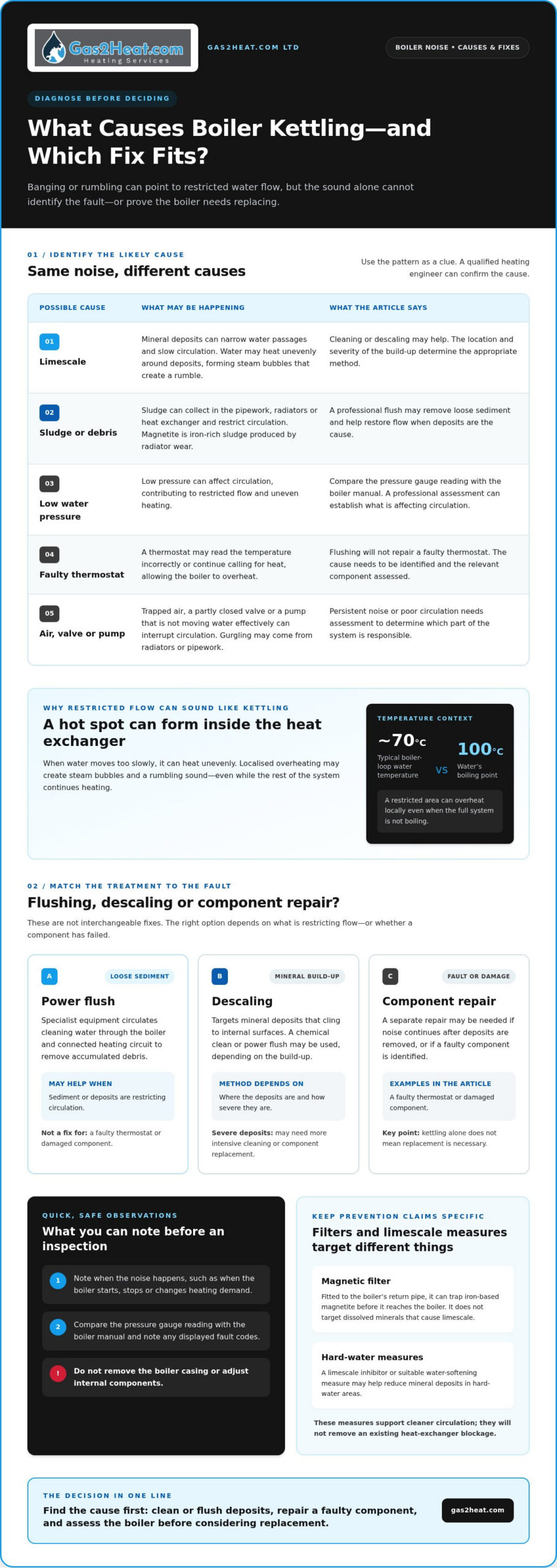
Restricted water flow and overheating in the heat exchanger
A boiler transfers heat through its heat exchanger, then circulates warmed water around the heating system. In a typical boiler loop, water reaches around 70 °C, below its 100 °C boiling point. If a blockage or weak pump slows circulation, water can heat unevenly inside the exchanger. Localised overheating can create steam bubbles and a kettling rumble, even while the rest of the system continues heating.
Trapped air can also interrupt circulation and cause gurgling in radiators or pipework. A partly closed valve or a circulator pump that isn’t moving water effectively can restrict flow, leaving hot water in one area for longer. Bleeding radiators is commonly suggested to release trapped air, but persistent noise or poor circulation needs assessment to find out whether air, a valve, the pump or another fault is responsible.
Banging doesn’t always mean kettling. Water hammer occurs when moving water changes direction, making pipes vibrate or clang. The sound may come from pipework rather than bubbles forming in the heat exchanger. Note whether it happens as the boiler starts, stops or changes heating demand, as this can help distinguish a circulation problem from pipe vibration.
Steam boilers work differently from typical domestic hot-water heating systems. In a steam system, condensed steam can collect in pipes and then be pushed along by new steam, causing water hammer. Incorrectly pitched pipes, low water levels or sediment at the boiler’s base can contribute. These causes need a different diagnosis from kettling in a domestic boiler, so identify the system type before interpreting the noise. If a boiler repeatedly overheats or shuts down, arrange a professional inspection rather than treating the sound as ordinary pipe noise.
Boiler efficiency, wear and breakdown risks
Is it safe to use a boiler that is making a kettling noise? Kettling isn’t usually an immediate safety hazard, but continued operation can reduce efficiency, increase wear and lead to breakdowns or system damage. Treat a boiler that shuts off, smells unusual or suddenly becomes much louder as an emergency, and arrange an inspection.
Watch for changes alongside the noise. New or worsening banging, unevenly heated radiators, higher gas bills or repeated short cycling can point to a developing fault. Note when the sound happens and which radiators feel cold; these details can help an engineer assess the boiler and heating system.
Persistent overheating places extra strain on internal components. A kettling boiler may eventually suffer heat exchanger damage, including a crack, or stop working altogether. Modern boilers have safeguards designed to detect overheating symptoms and shut the appliance down, but repeated noise or shutdowns still need investigation.
Regular servicing can help identify sediment or limescale before it causes banging. An annual boiler service can help spot developing circulation problems; homes with hard water or older pipework may need more frequent checks. Don’t wait for a complete breakdown if the noise is worsening or the heating performance has changed.
Replacement isn’t automatic. A boiler that is 15 years old or older, breaks down frequently, has a cracked heat exchanger or needs accumulating repairs may be a stronger replacement candidate. By contrast, a repair or cleaning may be appropriate when the appliance is in sound condition and the fault is isolated. Age matters, but so do the boiler’s condition, repair history and the cause of the noise.
For persistent banging, poor heating or repeated shutdowns, arrange a boiler repair inspection to assess the fault and limit further wear.
Gas2Heat.com: Boiler Installation
Gas2Heat.com Ltd can help you choose a practical next step when kettling points to a repair or replacement decision. If an inspection identifies a fault that can be addressed, boiler repairs may restore reliable operation; boiler servicing can help assess the system’s condition. If the boiler is old, damaged or repeatedly breaking down, boiler installation may be the more suitable route.
The right option depends on the boiler’s condition, the cause of the noise and its repair history. For landlords, Gas2Heat.com Ltd also provides Landlord Gas Safety Certificates.
Contact Gas2Heat.com Ltd to discuss your boiler’s noise and the next step.
Take the next step with confidence
A boiler kettling noise fix should address the underlying issue, not just silence the sound. Note when the noise occurs, whether heating performance has changed, and any fault messages on the display. These details can make it easier to explain the problem.
Gas2Heat.com Ltd offers boiler repairs and servicing, as well as boiler installation when replacement is the appropriate next step. The right boiler kettling noise fix depends on the appliance’s condition and the cause of the noise.
Contact Gas2Heat.com Ltd about boiler noise to discuss what your boiler is doing and the support you need.
Once the cause has been identified, you can take the right steps towards a quieter, more dependable heating system.
Frequently Asked Questions
Does my noisy boiler need to be repaired or replaced?
A noisy boiler doesn’t automatically need replacing; the decision rests on its condition and repair history. An isolated fault in an otherwise serviceable boiler may be repairable, while a cracked heat exchanger, frequent breakdowns or accumulating repairs can favour replacement. Age is also relevant: a boiler that is 15 years old or older is one reason to consider replacement, not a rule that it must be replaced.
What is kettling?
Kettling is a rumbling or banging noise that occurs as water heats unevenly inside a boiler. It can sound like a kettle because steam bubbles form where water becomes trapped or circulation is restricted. The noise usually comes from the boiler rather than a radiator. Note whether it starts during heating or continues after the boiler stops, as the timing provides useful diagnostic context.
What causes a boiler to make a kettling noise?
Restricted circulation is a common underlying issue. Limescale or sludge can narrow passages or collect on the heat exchanger; low water pressure and a faulty thermostat can also contribute to overheating. For example, a boiler that rumbles while heating and also provides less heat needs investigation for more than a loose external pipe. The noise alone cannot identify which component needs attention.
How can I tell if a boiler noise is kettling or a different fault?
Kettling is generally a rumble or repeated bang from inside the boiler during heating. Gurgling may point to trapped air, while vibrating or clanging pipes can indicate water hammer. A low hum may involve the circulator pump. Listen for where and when the sound occurs, but don’t remove the boiler casing to investigate internal parts.
How do you fix boiler kettling caused by limescale or sludge?
The fix starts with identifying whether mineral scale, sludge or another fault is restricting flow. A qualified heating engineer may use a chemical clean, descaling or a professional power flush, depending on where deposits have built up and how severe they are. Heavy scale may require intensive cleaning or heat-exchanger replacement. Flushing won’t correct a faulty thermostat or pump, so diagnosis comes first.
Can low water pressure, poor circulation or a faulty pump cause boiler kettling?
Yes. Low pressure can interfere with circulation, and a failing circulator pump may not move water through the heat exchanger quickly enough. A partly closed valve can also restrict flow. Compare the pressure display with the boiler manual, and note any uneven heating or repeated shutdowns. Internal pump, valve or pressure faults require professional diagnosis and repair, not adjustments inside the boiler.
