
Boiler Making Noise in Dumfries? Troubleshooting Guide & Local Fixes (2026)
Is that persistent clunking from your utility cupboard a minor annoyance or a warning sign that your heating system is about to fail? If you have a boiler making noise Dumfries homeowners often find that these sounds lead to sleepless nights and worries about carbon monoxide safety. It’s frustrating to deal with an inefficient system that drives up your energy bills while you struggle to find a trusted local expert in Moffat or the wider region.
We agree that a noisy boiler is a stress you can do without. You deserve a home that’s warm, quiet, and safe. This guide promises to help you identify exactly what those bangs, whistles, and gurgles mean so you can take action before a small issue becomes a costly emergency. We’ll simplify the technical jargon to give you total clarity on your system’s health and the steps needed to fix it.
We’ll preview the most common causes of boiler noise, from simple airlocks to limescale buildup, and explain the best local solutions available in 2026. You’ll discover how professional servicing and modern efficiency standards can restore your peace of mind and keep your household running smoothly without the fear of a sudden breakdown.
Key Takeaways
- Learn to distinguish between normal system operation and critical warning signs like banging or whistling that signal internal component failure.
- Understand why a boiler making noise Dumfries homeowners encounter is often caused by magnetite sludge, a common result of SW Scotland’s soft water.
- Identify high-risk sounds, such as screeching, which can indicate a seized pump and lead to a sudden loss of all heating and hot water.
- Discover why professional power flushing and annual servicing are the most effective ways to eliminate kettling and prevent expensive emergency repairs.
- Access rapid diagnostic support from local Gas Safe registered engineers who specialise in the specific heating challenges of Dumfries and Galloway.
Decoding Your Boiler’s Noises in Dumfries and Galloway
Hearing strange sounds from your utility cupboard? A boiler making noise Dumfries homeowners notice is often the first signal of a mechanical or hydraulic imbalance within the heating circuit. While it’s easy to ignore a small gurgle, these sounds act as early warning signs for your system’s health. Understanding how central heating systems work helps you recognise that these noises usually stem from water flow issues or failing internal components. Ignoring them can lead to higher bills or a total system lockout when you need warmth the most.
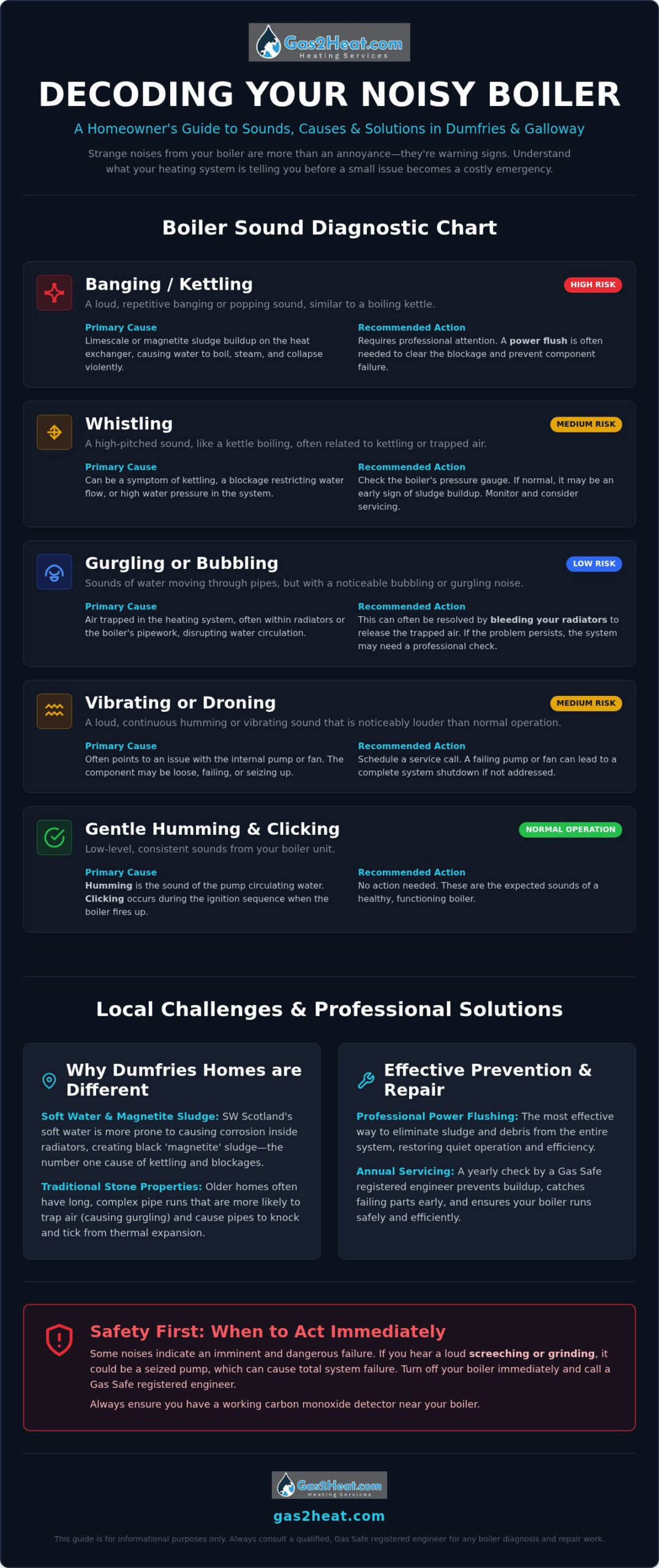
Kettling is the sound of water boiling inside the heat exchanger due to restricted flow. When the water can’t move through the system fast enough, it overheats rapidly, creating steam bubbles that pop and bang, mimicking the sound of a boiling kettle.
Normal vs. Abnormal Boiler Sounds
Not every sound requires an emergency call-out. Modern boilers are mechanical devices with moving parts, so some noise is expected. You should listen for specific patterns to determine if your system needs professional attention.
- Gentle humming: This is usually just the normal operation of the internal pump and the fan clearing flue gases.
- Light clicking: You’ll hear this during the ignition sequence as the boiler fires up to meet a thermostat demand.
- Loud vibrating or droning: This often points to a faulty fan or a pump that’s beginning to seize.
If the noise is loud enough to be heard through walls or disrupts your sleep, it has moved from normal operation to a component alert. These sounds shouldn’t be ignored, as a vibrating fan can eventually shake internal connections loose, leading to more expensive repairs.
Why Your Dumfries Home Layout Matters
Dumfries is famous for its beautiful, traditional stone-built properties, but these older homes present unique challenges for modern boilers. Thick walls and sprawling layouts often require long pipe runs to reach every radiator. These extended circuits are prone to trapping air pockets, which cause distinctive rattling or gurgling sounds as water struggles to circulate through the house.
You might also notice pipe knocking or ticking coming from under your floorboards. In older Dumfries houses, copper pipes are often fitted tightly through timber joists. As hot water flows, the metal expands and rubs against the wood. This thermal expansion is a common cause of noise in local heritage homes. It’s vital to identify if the sound is coming from the boiler unit itself or the wider radiator circuit. If the banging is isolated to the boiler, it’s likely an internal issue like sludge buildup rather than just expanding pipes.
Identifying the Culprit: Banging, Whistling, and Gurgling
If you have a boiler making noise Dumfries homes often echo with sounds that are more than just a nuisance; they are diagnostic tools. By listening closely, you can often pinpoint the exact component that is struggling before it fails entirely. Whether it’s a sudden bang or a low-level drone, these acoustic clues help you decide if you need a quick DIY fix or a professional intervention. This guide to boiler noises provides a clear roadmap for identifying the most common culprits behind a disruptive heating system.
Kettling: The Most Common “Banging” Cause
A loud banging or whistling sound is frequently referred to as “kettling” because it mimics the sound of a stove-top kettle reaching its boiling point. This happens when the water flow through the heat exchanger is restricted. Debris like limescale or magnetite sludge settles on the heat exchanger surface, creating hotspots. The water trapped against these spots boils instantly, creating steam bubbles that collapse and cause the characteristic banging noise.
This issue does more than just make noise. It significantly reduces your boiler’s energy efficiency, as the system has to work much harder to transfer heat into your home. If you notice these sounds, your heat exchanger is likely becoming blocked with debris. Over time, this stress can lead to a cracked component, which is a major repair. Keeping your system clean through regular boiler servicing is the best way to prevent this buildup from starting.
Air Trapped in the System
Gurgling is a distinct sound that typically indicates air is trapped within your radiators or the boiler’s internal pipework. Air pockets prevent hot water from circulating effectively, leading to cold spots at the top of your radiators. You might also hear a “sucking” sound, which suggests air is being drawn into the system through a tiny leak or a faulty air vent. Most gurgling issues can be resolved by simply bleeding your radiators, but persistent air usually points to a drop in system pressure that needs a professional look.
Droning and Vibrations
A constant droning or humming sound is often linked to the central heating pump. If the pump is beginning to fail, its internal bearings may vibrate against the boiler casing. In many SW Scotland properties, this noise is sometimes caused by incorrect pump speed settings. If a pump is set to its maximum speed on a smaller system, it creates excessive hydraulic noise and vibration. Adjusting this can often silence the system instantly, though a seized pump will require a full replacement to restore your heating and hot water.
Is a Noisy Boiler Dangerous? Safety Checks for Homeowners
When you have a boiler making noise Dumfries residents often worry about immediate safety risks. It’s a natural reaction to fear an explosion or a carbon monoxide leak when your heating system starts banging or screeching. Modern engineering has made these systems incredibly robust. Most boilers manufactured in the last 15 years include NTC thermistors. These safety sensors monitor internal temperatures and will automatically shut the unit down if it begins to overheat. While noise is rarely an explosion risk, it is a high risk for a total breakdown that leaves your home without heat during a cold Scottish winter.
A specific sound to listen for is a high-pitched screeching. This often indicates a seized pump. When the pump fails, water stops circulating, and the heat exchanger temperature spikes almost instantly. If your boiler is making noise Dumfries engineers will tell you that persistent banging also puts immense physical stress on internal rubber seals and hydraulic connections. Over time, this vibration can lead to internal leaks that damage the delicate circuit boards housed within the casing.
When to Turn Off Your Boiler Immediately
While most sounds are signs of maintenance needs, some symptoms require you to isolate the appliance for safety. Familiarising yourself with the Signs of common boiler problems is the first step in protecting your household. Switch off your system and seek professional help if you notice any of the following:
- Smell of gas or burning: If the noise is accompanied by a faint scent of gas or the “ozone” smell of burning electronics, turn off the gas supply and the power immediately.
- Visible water leaks: Water dripping from the bottom of the boiler casing can cause a short circuit or indicate a compromised pressure vessel.
- Rapid cycling: If the boiler turns on and off every few seconds while making loud mechanical sounds, it’s likely overheating and failing to clear heat safely.
The Risk of Ignoring “Minor” Noises
It’s tempting to put off a repair if the boiler is still providing hot water despite the noise. However, ignoring minor vibrations can lead to much larger bills later. Small imbalances in an internal fan can wear out the bearings over time, turning a simple cleaning job into a full fan replacement. In Dumfries and Galloway, the financial cost of running an inefficient, noisy boiler is significant. A system struggling with air pockets or sludge buildup has to run longer to reach the same temperature, which directly impacts your monthly energy spend. Gurgling sounds that go untreated also lead to internal corrosion. This rust settles as “black sludge,” which eventually destroys the pump and heat exchanger from the inside out.
Troubleshooting Sludge and Corrosion in SW Scotland
While many parts of the UK struggle with limescale from hard water, homeowners in SW Scotland face a different chemical challenge. Our local water supply is generally soft. This is excellent for preventing scale in your kettle, but soft water is naturally more “aggressive” toward the metals inside your heating system. Without the right chemical protection, this water causes internal radiator corrosion at a much faster rate. This process is a primary culprit for a boiler making noise Dumfries residents often report during the colder months.
Corrosion creates a heavy, metallic debris known as magnetite, or “black sludge.” This substance is magnetic and settles in the lowest points of your system or within the narrow channels of your boiler’s heat exchanger. Think of this debris like pouring sand into a car engine. It creates immense friction, forces the pump to work harder, and generates the grinding or banging sounds that disrupt your home’s peace. When this sludge coats the heat exchanger, it creates the hotspots that lead to the kettling noises we identified earlier.
Why Soft Water Leads to Noisy Boilers
The chemistry of a sealed central heating system relies on a delicate balance. When you top up your boiler pressure using the filling loop, you introduce “fresh” oxygenated water into the circuit. In SW Scotland’s soft water areas, this oxygen reacts quickly with the steel in your radiators if the protective chemical inhibitor has worn thin. This reaction accelerates sludge formation, leading to a noisy, struggling system. You can often spot this issue yourself. If your radiators are cold at the bottom but hot at the top, or if the water is jet black when you bleed them, your system is likely choked with magnetite.
The Benefits of a System Flush
The most effective way to restore silence and efficiency is through professional power flushing. This process uses high-velocity water and specialised chemicals to scour the internals of your radiators and pipework. By removing the sludge, you eliminate the cause of kettling and banging noises instantly. A clean system also allows heat to transfer into your rooms much faster, which can lead to a noticeable reduction in your monthly energy bills.
To prevent the noise from returning, we recommend installing a high-quality magnetic filter alongside any repair or flush. This device acts as a permanent guard, trapping metallic particles before they can enter your boiler and cause further damage. If your system is currently gurgling or banging, you can book a professional power flush to protect your boiler’s lifespan and regain a quiet home.
Professional Boiler Repairs and Maintenance in Dumfries
Gas2Heat provides a streamlined approach to resolving heating issues across SW Scotland. If you have a boiler making noise Dumfries residents can rely on our team for rapid diagnostic investigations and efficient boiler repairs in Dumfries. We understand that a disruptive heating system is more than just a sound; it is a source of anxiety. Our Moffat-based engineers are Gas Safe registered and bring years of experience in identifying the subtle acoustic differences between a failing pump and a simple airlock.
We believe in total financial transparency. Whether you are in Lockerbie, Annan, or Castle Douglas, we provide clear information without the hidden fees often associated with national franchises. Our goal is to remove the uncertainty from trade services by offering straightforward promises and reliable results. By focusing on regional expertise, we ensure that every customer feels both informed and taken care of throughout the repair process.
Why Choose a Local Moffat Engineer?
Choosing a local specialist offers distinct advantages over national call centres. We provide faster response times for emergency noise investigations because we are already operating within your community. Our engineers possess deep knowledge of the local housing stock. From traditional Moffat cottages with complex pipework to Dumfries tenements, we understand how regional property styles impact heating performance. You will speak directly with the expert handling your home, ensuring clear communication and a personalised service that values your time.
Restore Your Peace and Quiet Today
The most effective way to eliminate a boiler making noise Dumfries households encounter is through proactive maintenance. Booking an annual boiler service allows us to identify worn bearings, failing fans, or pump issues before they escalate into total system failures. This routine check ensures your system operates at peak mechanical reliability and maintains the digital integration required for modern energy efficiency.
Maintaining a silent, efficient heating system offers long-term value by lowering your energy bills and extending the lifespan of your appliance. Don’t wait for a minor gurgle to become a major repair. Contact Gas2Heat today for a professional boiler health check and secure the peace of mind that comes with a perfectly functioning home. Our team is ready to restore your comfort with the efficiency and honesty you deserve.
Secure Your Home’s Comfort and Quiet
Don’t let a noisy heating system disrupt your peace or lead to a preventable emergency. You now have the tools to identify whether that banging or gurgling is a simple air pocket or a sign of magnetite buildup. Remember that SW Scotland’s soft water chemistry makes your radiators particularly prone to internal corrosion; this is a leading cause of a boiler making noise Dumfries homeowners face every winter. Taking action now protects your system’s efficiency and keeps your energy bills under control.
Our Moffat-based family business is here to help you navigate these issues with total transparency. As Gas Safe Registered Engineers, we specialise in all major boiler brands and advanced power flushing techniques to restore your system to its best condition. We value your time and prioritise rapid, honest results for every household across the region. Book a Professional Boiler Noise Diagnostic in Dumfries with Gas2Heat today to secure your peace of mind. A silent, efficient home is just a professional health check away.
Frequently Asked Questions
Is it normal for my boiler to make a humming noise?
A gentle humming is completely normal for most modern systems as it indicates the internal pump and fan are operating correctly. However, if the sound becomes a loud vibrating or droning noise, it usually points to a mechanical imbalance or seized bearings. You should monitor the volume; if it disrupts your daily life or can be heard in other rooms, it is time to have a professional check the pump’s health.
Why does my boiler sound like an aeroplane taking off?
This high-pitched whining or “jet engine” sound is typically caused by a faulty fan or a blockage in the flue. When the fan bearings begin to fail or the fan becomes coated in debris, it struggles to maintain the correct speed and vibrates at a high frequency. Because the fan is responsible for clearing dangerous flue gases from your home, you should have this investigated by an engineer immediately to ensure your system remains safe.
Can I fix a noisy boiler myself?
You can safely bleed your radiators to remove air pockets, but all internal repairs must be handled by a Gas Safe registered engineer. If a boiler making noise Dumfries residents notice is caused by trapped air in the radiators, using a radiator key is a simple DIY solution. However, opening the boiler casing or attempting to adjust gas valves is illegal and dangerous for anyone without the proper professional certifications and tools.
How much does it cost to fix a kettling boiler in Dumfries?
The cost to resolve a kettling boiler depends entirely on whether the system requires a simple sensor replacement or a comprehensive power flush. If the noise is caused by a faulty NTC thermistor, the repair is relatively straightforward. If the banging is due to years of sludge buildup in the heat exchanger, a full system clean will be necessary. Local engineers provide transparent quotes after a physical diagnostic to ensure you only pay for what is required.
Will air in my radiators make the boiler noisy?
Yes, air trapped in your radiators often leads to a gurgling or rattling sound within the boiler unit itself. These air pockets prevent water from circulating smoothly, which causes the pump to work harder and creates hydraulic noise. If you notice cold spots at the top of your radiators alongside these sounds, bleeding the system is the first step. If the air returns quickly, it may indicate a tiny leak or a failing auto-vent.
Does a noisy boiler mean I need a new one?
A noisy boiler rarely means you need an immediate replacement, as most internal components like pumps, fans, and sensors are replaceable. Most sounds are early warning signs that a specific part is wearing out or that the water is dirty. However, if your boiler is over 12 years old and operating at a lower efficiency rate, a modern A-rated replacement might be more cost-effective than frequent, expensive repairs on an aging unit.
How often should a boiler be serviced to prevent noise?
You should have your boiler serviced once every twelve months to prevent noise issues from developing into major failures. During an annual service, an engineer cleans the internal components and checks the system’s water quality to prevent sludge buildup. This proactive approach identifies worn bearings or pump issues early, ensuring your heating system remains silent and efficient throughout the year. Regular maintenance is the most reliable way to avoid emergency repair costs.
Why does my boiler bang when the hot water is turned on?
Banging specifically when hot water is used often indicates a problem with the diverter valve or a buildup of limescale on the heat exchanger. When you turn on a tap, the diverter valve must move to send heat to the domestic hot water circuit. If this valve is sticking or if the heat exchanger is restricted, the water inside can overheat instantly. This creates steam bubbles that collapse and cause a loud banging sound, which requires a professional diagnostic to resolve.
