
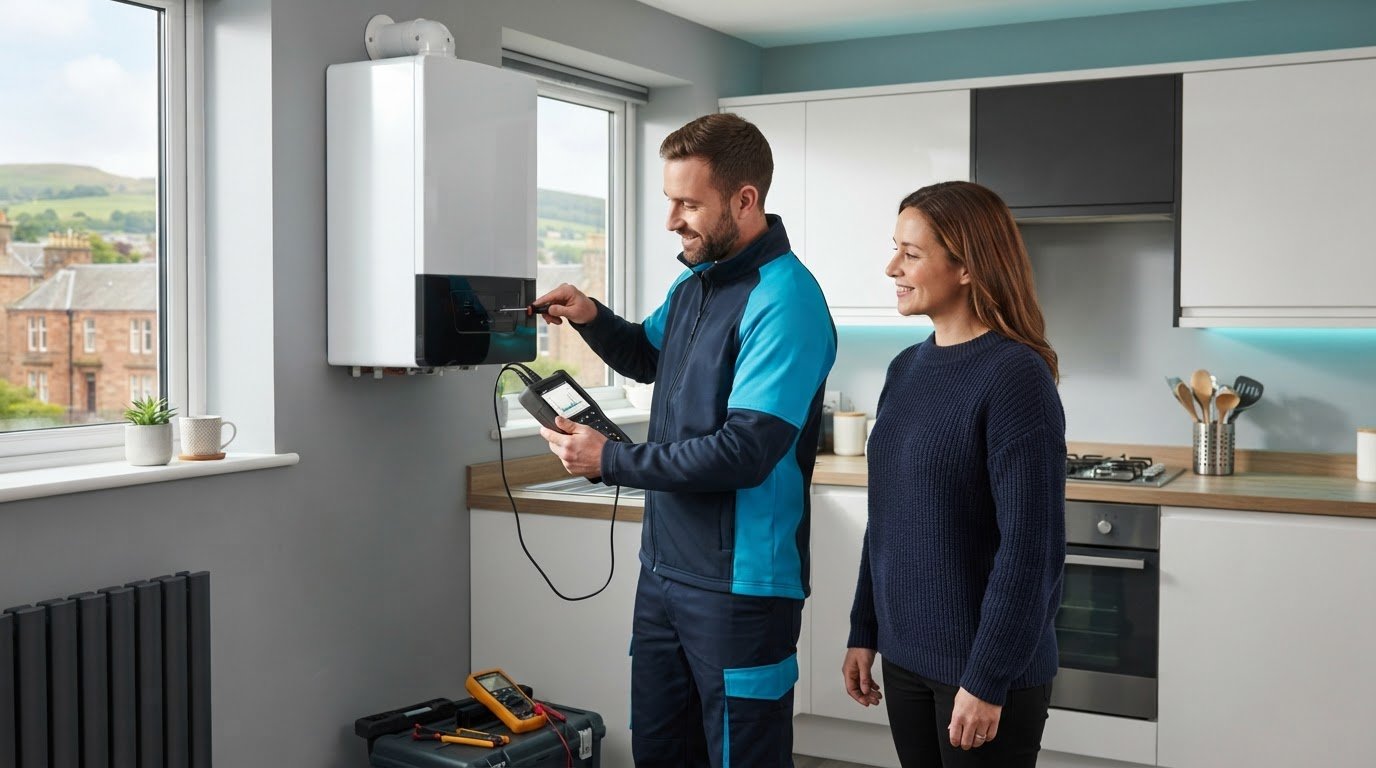
Boiler Repair in Dumfries: Clear Steps to Restore Your Heating
When your boiler stops working, the safest first step is to pause rather than start pressing buttons. Losing heating or hot water is frustrating, but guessing can make the fault harder to diagnose. For boiler repair Dumfries households can rely on, note any warning signs and arrange an assessment by a Gas Safe registered engineer.
Gas2Heat is a family-owned heating specialist based in Moffat, serving Dumfries and South West Scotland. The company provides domestic boiler repairs carried out by local Gas Safe registered engineers. This guide explains what to do when a boiler develops a fault, which warning signs need prompt attention, and what to expect from the repair process.
You’ll also learn how an engineer may diagnose a problem, explain repair options and discuss replacement if it becomes relevant. Knowing what to expect, from your first observations to the repair recommendation, can make a breakdown feel more manageable and help you decide how to restore heating or hot water.
Key Takeaways
- Record when the boiler fault began, what symptoms you notice and any message on the display to help explain the problem.
- A repair visit can move from discussing symptoms to inspecting the boiler, diagnosing the fault and agreeing next steps.
- An error code can offer a useful clue, but it may not reveal the underlying cause on its own.
- Compare repair and replacement based on the diagnosis, the boiler’s condition and what matters most to your household.
- Prepare for boiler repair Dumfries by clearing access and noting your boiler details. A photo of a display message can help you describe the issue.
Boiler Repair Dumfries: Heating or Hot Water Fixes
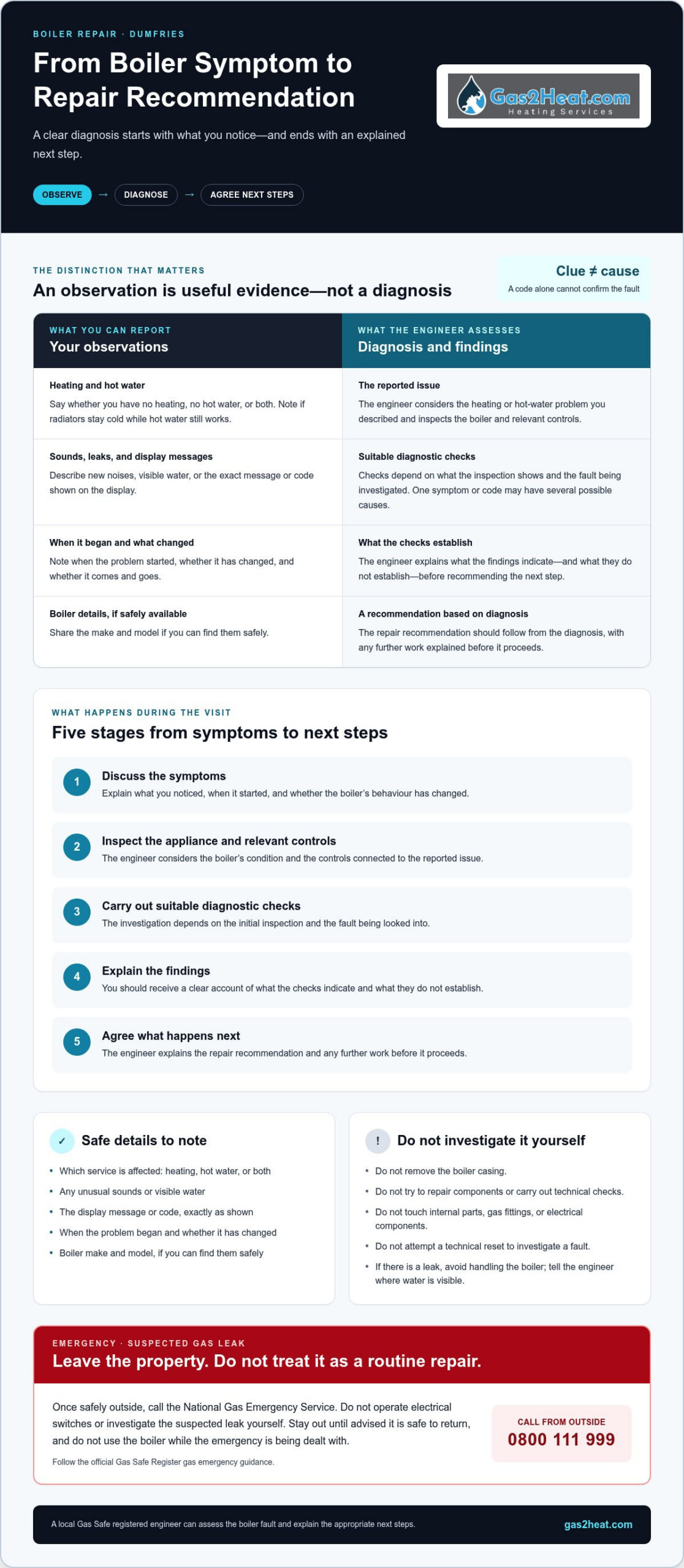
Losing heating or hot water is disruptive, and cold weather in Dumfries can make a boiler fault especially uncomfortable. Before arranging boiler repair Dumfries, focus on what you can safely observe. Don’t remove the boiler casing, try to repair components or carry out technical checks yourself. Those tasks need a qualified engineer.
Make a brief note of what has changed and when. If you’re unsure how the appliance works, the general What is a Boiler? overview offers background, but it isn’t a fault-finding guide. A display code or symptom can help describe the problem, but it can’t confirm the cause without a diagnosis.
Details to share when arranging a repair:
- Whether you have no heating, no hot water, or both
- Any unusual sounds or visible leaks
- The message or code shown on the display
- When the problem began and whether it has changed
- The boiler make and model, if you can find them safely
Which boiler symptoms should you report?
Describe what the boiler is doing rather than guessing what has failed. For example, say if the radiators stay cold while hot water still works, or if neither heating nor hot water is available. Report unusual banging, humming or other new noises, and mention any visible water around the appliance. Note the display code exactly as shown. Don’t attempt a technical reset or open the casing to investigate. One symptom can have several causes, so an engineer needs to inspect and diagnose the boiler before recommending a repair.
Keep simple observations separate from technical checks. You can look at the display and note whether heating or hot water is affected, but don’t touch internal parts, gas fittings or electrical components. If there’s a leak, avoid handling the boiler. Tell the engineer where you can see water and whether it appears to be spreading. A local Gas Safe registered engineer can assess faults involving a gas boiler and explain the appropriate next steps.
What should you do if you suspect a gas leak?
Treat a suspected gas leak as an emergency, not a routine repair. Leave the property and, once you’re safely outside, call the National Gas Emergency Service on 0800 111 999. Don’t operate electrical switches or investigate the suspected leak yourself. Follow the official Gas Safe Register gas emergency guidance and stay out until you’ve been advised it’s safe to return. Don’t use the boiler again while the emergency is being dealt with.
How a Dumfries boiler repair visit identifies the fault
A boiler repair visit should follow a clear process: discuss what’s happening, inspect the appliance, identify the likely fault, explain the findings and agree what happens next. This helps avoid guesswork. A reported symptom or display code can guide the investigation, but neither automatically proves which part or system has failed.
Boiler fault diagnosis means using your description of the symptoms, an inspection and suitable checks to work out what is causing the problem. The diagnosis, rather than an assumption based on one symptom, should guide the repair recommendation.
The engineer will ask when the issue began and what has changed. Your notes can help distinguish a fault affecting heating from one affecting hot water, or establish whether the problem is intermittent. An error code may point towards an area to investigate, but different underlying issues can produce similar signs. It’s useful evidence, not a complete answer.
- Discuss the symptoms. Explain what you’ve noticed, when it started and whether the boiler’s behaviour has changed.
- Inspect the appliance and relevant controls. The engineer considers the boiler’s condition and the controls connected to the reported issue.
- Carry out suitable diagnostic checks. The checks depend on what the initial inspection shows and the fault being investigated.
- Explain the findings. You should receive a clear account of what the checks indicate and what they don’t establish.
- Agree the next step. The repair recommendation should follow from the diagnosis, with any further work explained before it proceeds.
What does the engineer check during boiler diagnosis?
The engineer’s assessment is guided by your account of the fault. They may examine the boiler, its controls and the heating or hot-water issue you reported, then choose checks based on what they observe. There isn’t one identical checklist for every breakdown. The right investigation depends on the appliance and symptoms. This approach helps avoid treating a code or visible symptom as proof of a specific failure.
What happens after the fault is identified?
Once the likely cause is clearer, the engineer can explain the repair required and whether the work can be completed as planned. The next step may depend on the fault’s complexity, access to the affected area and whether a replacement part is needed. If the cause remains uncertain or further work is necessary, the engineer should explain what still needs investigating. You can then understand the options before deciding how to proceed.
For boiler repair Dumfries, Gas2Heat’s local Gas Safe registered engineers provide domestic boiler repairs across Dumfries and South West Scotland. Learn about the domestic boiler repair service and arrange a repair with the fault details to hand.
Boiler repair or replacement in Dumfries: how to understand the options
A breakdown doesn’t automatically mean you need a new boiler, and repair isn’t always practical. The right choice depends on the fault an engineer identifies, the overall condition of the appliance and your household’s heating needs. A clear diagnosis gives you a sound basis for comparing options, rather than making a decision from a display code or symptom alone.
Use this comparison as a starting point for a conversation, not as a substitute for an inspection:
| Factor | Repair may suit when… | Replacement may be discussed when… |
|---|---|---|
| Fault | The cause has been identified and a suitable repair can address it. | The diagnosis indicates repair isn’t suitable or won’t resolve the issue. |
| Boiler condition | The engineer’s assessment suggests the appliance can be repaired appropriately. | The boiler’s wider condition affects whether repair is a practical option. |
| Household priorities | You want to address the diagnosed fault and continue using the existing system. | You’re considering a different heating setup or weighing the current boiler’s condition against your longer-term needs. |
| Next steps | The repair work, any required parts and the expected scope can be explained. | Installation planning can take account of the property and your heating requirements. |
When may repairing an existing boiler be appropriate?
Repair may be a reasonable option when an inspection identifies a fault that can be addressed and the boiler’s condition supports the work. The decision should account for the specific fault, whether a suitable repair is available and how the system meets your household’s needs. Ask for the diagnosis and proposed work to be explained in plain language, so you understand what the repair is intended to resolve.
There’s no universal age threshold that decides the answer. A boiler’s age alone can’t tell you what has failed or whether a repair makes sense. In boiler repair Dumfries, as elsewhere, the engineer’s findings should guide the discussion, alongside your heating requirements and preferences.
When should replacement be discussed?
An engineer may raise replacement if the diagnosis shows that repair isn’t suitable. The recommendation should relate to the appliance’s condition and the fault found, while your final choice should reflect your circumstances, property and heating priorities. Ask what the diagnosis means, what a repair would involve and why replacement is being considered. A clear explanation helps you compare the options without pressure.
If replacement is part of your decision, Gas2Heat also provides boiler installation. The boiler installation guide for Dumfries and South West Scotland explains more about planning a new system. Repair and installation are separate services. A replacement discussion doesn’t mean you must proceed before you understand the recommendation.
Preparing for a boiler repair appointment in Dumfries
A little preparation can help make a boiler repair visit more straightforward. Note what’s happening, make the appliance accessible and gather details you can find without opening or adjusting the boiler. The work and appointment timing can depend on scheduling, access to the appliance and the fault found. Clear information helps the engineer understand the situation.
What information helps the engineer?
Share the boiler make and model if they’re readily available, along with when the symptoms began. Explain whether you’ve lost heating, hot water or both, and describe any changes since the fault started. If the boiler has needed repairs before, mention what was done and when. These details provide useful context, but the engineer will still need to inspect the appliance to assess the current problem.
- Symptoms: Note what is and isn’t working, and when you first noticed the issue.
- Boiler details: Have the make and model available if you can find them safely.
- Recent changes: Mention any relevant changes to the heating system or controls.
- Repair history: Share details of previous visits or work related to the current fault.
If a code or message appears on the display, write it down or take a photo. A clear image can help you describe what you saw, especially if the message disappears, but it doesn’t replace the engineer’s inspection or identify every possible cause. Don’t remove the casing or attempt a technical reset to gather more information.
How can you make the visit straightforward?
Before the engineer arrives, clear a safe route to the boiler and make sure the appliance and relevant heating controls can be reached. Keep children and pets away from the immediate work area while the engineer assesses the fault. You don’t need to diagnose the problem yourself. Instead, prepare questions about what the inspection found, what repair is recommended and whether follow-up work may be needed.
- Can you explain what the diagnosis indicates?
- What work is being recommended, and what is it intended to address?
- Is anything unresolved, or is further work required?
Keep the space around the boiler as clear as you reasonably can, and mention any access restrictions when arranging the appointment. If the appliance is in a cupboard or a tight area, explaining that in advance can help set expectations. The time required and next steps depend on the fault and access, so don’t assume every repair follows the same schedule.
A repair visit addresses a fault; routine servicing is separate maintenance. If you’re looking for ongoing maintenance rather than help with a breakdown, Gas2Heat provides boiler servicing in Moffat, Dumfries and South West Scotland.
For boiler repair Dumfries, have your notes ready and arrange a boiler repair with Gas2Heat.
Arrange boiler repair in Dumfries with Gas2Heat
A boiler fault is easier to assess when the engineer knows what’s happening before the repair visit. Gas2Heat provides domestic boiler repairs in Dumfries and the wider South West Scotland area. The family-owned heating specialist is based in Moffat, and local Gas Safe registered engineers carry out its boiler repair work.
To get started, share where the property is, describe the fault and provide any boiler details you can find. This information helps explain the issue and gives the engineer useful context. It doesn’t replace an inspection, and the appropriate repair depends on the fault identified.
What makes Gas2Heat a local option for Dumfries homeowners?
Gas2Heat is based in Moffat and serves Dumfries and South West Scotland. It is a family-owned and operated business established in 2017. Local Gas Safe registered engineers carry out its boiler repairs, bringing professional gas work to households in the area.
Gas Safe registration matters because gas work needs to be carried out by an appropriately registered engineer. You can check an engineer’s credentials through the Gas Safe Register. For a boiler fault, share what you’ve observed and let the engineer assess the appliance before deciding what repair is suitable.
What should you include when requesting boiler repair?
Give the property’s Dumfries address or area and a concise account of the problem. Say whether heating, hot water or both have stopped working. Include any display message or code, when the fault began and the boiler make and model if they’re readily available. If the problem comes and goes, explain when you tend to notice it. Clear details separate what you’ve observed from what still needs investigation.
- Location: The property address or area in Dumfries.
- Symptoms: What has stopped working, and when the issue began.
- Display information: The exact message or code, if one appears.
- Boiler details: Make and model, if easy to find safely.
You don’t need to diagnose the fault yourself. A short, accurate description is more useful than a guess about which component has failed. If you have a photo of a display message, use it to describe what appeared, while remembering that the engineer’s inspection is needed to assess the cause.
If your household needs professional help with a boiler fault, arrange boiler repair with Gas2Heat. Share the location and symptoms to get started.
Take the next step towards dependable heating
A boiler fault can leave you uncertain about what to do, but you don’t have to make the repair decision alone. Start with the information you’ve gathered, then let a proper assessment guide the next step. A clear explanation of the fault and the options can help you decide what makes sense for your home without relying on guesswork.
If you’re ready to arrange boiler repair Dumfries, share what’s happening and where the property is. Gas2Heat is a family-owned business with local Gas Safe registered engineers providing repairs across Dumfries and South West Scotland.
Arrange your boiler repair in Dumfries and take a practical step towards resolving the fault. With clear information and professional guidance, you can understand the repair options and work towards restoring comfort at home.
Frequently Asked Questions
How much does boiler repair in Dumfries cost?
There’s no fixed price for boiler repair in Dumfries. The cost depends on what the diagnosis finds, any parts needed and the work involved. This applies whether you’re in Dumfries, Moffat, Lockerbie, Annan, Lochmaben, Thornhill, Gretna or Castle Douglas. Share the boiler make and model and describe the symptoms when requesting help. That context is useful, but the repair scope can only be assessed once the fault is investigated.
Can a boiler be repaired on the same day?
Same-day repair can’t be promised. Timing depends on appointment scheduling, access to the boiler, what the diagnosis reveals and whether any required parts are available. A straightforward fault and one that needs further investigation are different jobs. When requesting help, mention access restrictions, such as a locked cupboard or limited access to the appliance. This helps set practical expectations, while the work needed becomes clearer after assessment.
How long does a boiler repair usually take?
There’s no reliable fixed duration for every boiler repair. The time depends on the fault and the work required to address it. An issue that can be identified and repaired during the visit may differ from one that needs further investigation or a part. Once the engineer has assessed the boiler, ask what the repair involves and whether anything could affect the expected time on site.
Is it safe to use a boiler that is making unusual noises?
Don’t keep using a boiler if you’re concerned it may be unsafe. Unusual noises can have different causes, and it isn’t possible to identify the fault safely from a description alone. Stop using the appliance if you’re in doubt and arrange assessment by a qualified engineer. If you suspect a gas leak, leave the property and follow official gas emergency guidance rather than investigating the boiler yourself.
Can a boiler still be repaired if a part is difficult to source?
Possibly, but the engineer needs to assess the diagnosed fault and whether a suitable repair option exists. A hard-to-source part may affect what can be done and the next steps, so don’t assume it will be available or that another part is an appropriate substitute. Ask the engineer to explain the options based on the boiler and fault. Avoid attempting to fit or adapt parts yourself.
Does a boiler repair include an annual boiler service?
No, a repair and routine servicing are separate work. A repair addresses a specific fault; servicing is a separate maintenance appointment and shouldn’t be assumed to have taken place during repair work. If you’re booking because the boiler has broken down, describe the fault first. For information about routine maintenance in the area, see Gas2Heat’s boiler servicing guide.
Do I need a gas safety certificate after a boiler repair?
A repair visit and a landlord’s annual gas safety check are separate. In Scotland, landlords must arrange an annual check of gas appliances and flues by a Gas Safe registered engineer. The tenant must receive a copy of the certificate, often called a CP12, within 28 days of the check. A repair shouldn’t be treated as completing that requirement unless the required safety check was also carried out.
