
Central Heating Inhibitor: What Does It Do and Why Is It Essential?
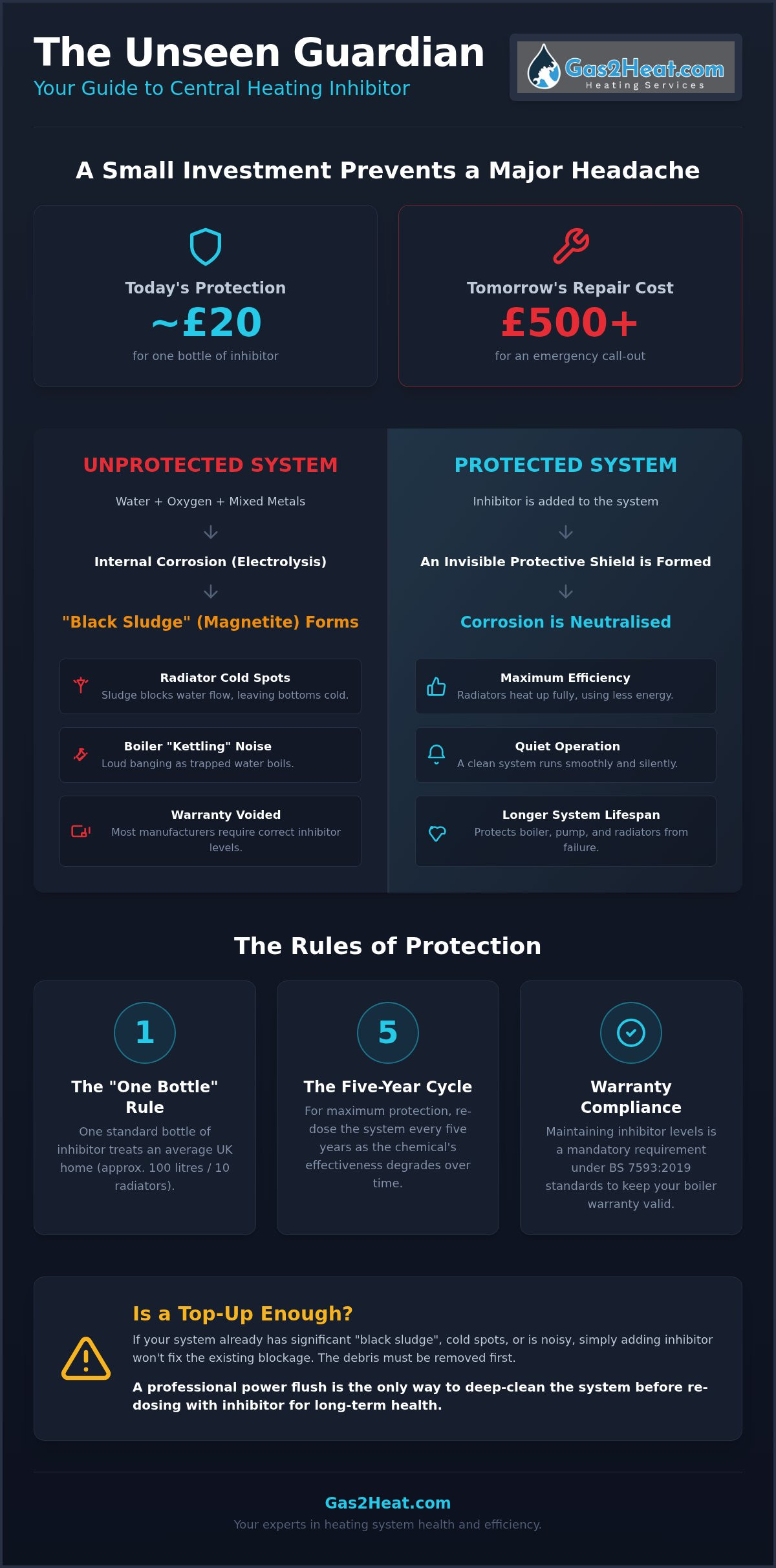
Spending £20 today could save you over £500 in emergency repair costs tomorrow. Most homeowners ignore their heating system until the radiators develop cold spots or the boiler starts making a worrying “kettling” noise. It is easy to overlook a clear liquid hidden inside your pipes, but understanding central heating inhibitor what does it do is the secret to a long-lasting, efficient home. This simple chemical is the single most cost-effective maintenance step you can take to protect your property.
We know how frustrating it is to deal with rising energy bills and a noisy system that feels like it is struggling to cope. You want a warm home without the constant fear of a breakdown. This article shows you how this vital chemical acts as an internal insurance policy for your metalwork. You will discover how it prevents thick black sludge from destroying your heat exchanger and why it is essential for keeping your manufacturer warranty valid. We will also explain the latest BS 7593:2019+A1:2024 standards so you can maintain a quiet, reliable, and cost-effective heating system with total peace of mind.
Key Takeaways
- Understand exactly central heating inhibitor what does it do by learning how it creates an invisible shield to stop internal corrosion.
- Discover how neglecting this chemical leads to “black sludge” and cold spots that force your boiler to work harder and increase your energy bills.
- Learn why maintaining correct inhibitor levels is a mandatory requirement for keeping your manufacturer warranty valid under current UK standards.
- Master the “one bottle” rule for standard homes and find out why you should re-dose your system every five years for maximum protection.
- Identify when a simple chemical top-up isn’t enough and why professional power flushing is the best way to clear existing debris.
Understanding Central Heating Inhibitor: The Invisible Shield for Your Pipes
Your heating system is a battleground where water and metal constantly fight. Without protection, this interaction causes internal damage that you cannot see until it is too late. Homeowners often ask us: central heating inhibitor what does it do? It is a chemical solution designed to stop internal corrosion and scale build-up. Think of it as a liquid “insurance policy” that flows through your radiators and boiler, keeping the internals as clean as the day they were installed.
The “Invisible Shield” analogy is the easiest way to understand its function. Once added to your system, the chemical coats every metal surface it touches. This microscopic barrier prevents the chemical reactions that happen when water meets steel, copper, and aluminium. In a modern, sealed heating circuit, this protection is vital because even a small amount of corrosion can block the narrow channels in your boiler’s heat exchanger.
How the Chemical Process Prevents Corrosion
To understand why this chemical is necessary, you have to look at electrolysis. This process happens when different metals, such as copper pipes and steel radiators, are connected by water. They act like a giant, weak battery. This creates a flow of electrons that slowly eats away at the metal, leading to pinhole leaks and “black sludge.”
A high-quality Corrosion inhibitor works by using a blend of anodic and cathodic protectors. Anodic protection stops the metal from losing electrons at the “anode” site, while cathodic protection creates a film that prevents oxygen from reacting with the metal. By neutralising these reactions, the inhibitor ensures your radiators don’t rot from the inside out. This is why central heating inhibitor what does it do is such a critical question for long-term boiler health.
Combi vs. Open-Vented Systems: Does It Matter?
The type of system you have in your home changes how corrosion develops. In older Moffat properties, we often find open-vented systems. These rely on a feed-and-expansion tank in the loft. Because these tanks are open to the atmosphere, they constantly pull fresh oxygen into the water. Oxygen is the fuel for rust, making inhibitor even more important in these traditional setups.
Modern combi boilers use a sealed, high-pressure system. While they don’t have a loft tank, they are not immune to trouble. Every time you top up your boiler’s pressure using the filling loop, you introduce fresh, “aggressive” tap water. This water contains minerals and oxygen that will react with your system unless the inhibitor concentration is correct. The engineers at Gas2Heat.com Ltd often find that the pump can also draw in air if the system isn’t balanced, accelerating the need for chemical protection.
What Happens if You Don’t Use Inhibitor? The Truth About Radiator Sludge
If you skip the chemical protection we discussed earlier, your system begins to rot from the inside. This decay creates “Black Sludge,” technically known as Magnetite. It is a thick, muddy substance made of rusted iron particles that have detached from the inside of your radiators. Because Magnetite is heavy, it sinks to the bottom of your radiators and gets stuck in the narrow pipework. This is the primary reason why people search for central heating inhibitor what does it do; they want to stop this sludge before it destroys their heating.
This sludge doesn’t just sit still. It travels through your system and hits the pump, which is the heart of your heating. The abrasive particles wear down the bearings, leading to a seized pump and a cold house. If the sludge reaches the boiler, it coats the heat exchanger. This causes “kettling,” a loud banging or whistling sound that happens when water trapped behind the sludge starts to boil. It sounds like a ghost in your pipes, but it is actually a sign of severe internal damage.
Addressing these issues early is vital; experts like Anton Plumbing Heating & Cooling specialize in diagnosing and resolving complex heating and plumbing problems before they lead to complete system failure.
Identifying the Signs of a Dirty System
You can diagnose a sludge problem without any special tools. Try the “Cold Bottom” test. Turn your heating on and wait ten minutes. Feel the radiators. If the top is hot but the bottom is stone cold, sludge is blocking the flow and stealing your heat. Another warning sign is having to bleed your radiators constantly. If the air that escapes smells like rotten eggs or the water is dark brown, your inhibitor levels have failed. While following Health and Safety Executive (HSE) guidance is vital for workplace safety, keeping your home system maintained to professional standards is just as important for your family’s comfort.
The Long-Term Impact on Your Boiler’s Lifespan
Neglect is expensive. Over time, corrosion causes “pinhole leaks” in your radiators, which can ruin carpets and floorboards. Inside the boiler, the heat exchanger becomes brittle. A lack of inhibitor can turn a boiler designed to last 15 years into one that fails after just 5. If your radiators are showing these symptoms, you might need a professional power flushing service to clear the blockage before it causes a total breakdown. Understanding central heating inhibitor what does it do helps you avoid the £500 plus bill for a new heat exchanger and keeps your energy bills under control.
Protecting Your Boiler Warranty and Energy Efficiency
Many homeowners view chemical treatment as an optional extra, but for modern boilers, it’s a non-negotiable requirement. When you ask central heating inhibitor what does it do, the most immediate answer is that it keeps your manufacturer warranty valid. Major brands like Worcester Bosch and Ideal are incredibly strict about water quality. If your boiler breaks down within its warranty period, the manufacturer will often send an engineer to inspect the unit. One of the first things they do is take a water sample from your system.
This sample test is a defining moment for your bank account. If the engineer finds that the water is dirty or lacks sufficient chemical protection, they can legally reject your claim. They view the failure as a result of poor water quality rather than a manufacturing defect. This means you could be left facing a repair bill of £500 or more for a blocked heat exchanger, even if your boiler is only a few years old. Maintaining the correct chemical balance is the only way to secure the long-term protection you paid for when the unit was installed.
Why Manufacturers Mandate Inhibitor for Warranty Claims
Every new boiler comes with a Benchmark checklist that the installer must complete. This document records that the system was flushed and treated according to BS 7593:2019+A1:2024 standards. Manufacturers use this as a baseline for their performance guarantees. At Gas2Heat.com Ltd, our approach to boiler installation always includes a full system cleanse and a high-grade chemical dose. We ensure your paperwork is flawless so that your warranty remains ironclad from day one. It removes the uncertainty that often surrounds trade services and gives you total peace of mind.
Lowering Energy Bills Through Better Heat Transfer
Beyond warranty protection, inhibitor is a powerful tool for fighting rising energy costs. Sludge and scale are terrible conductors of heat. When they coat the inside of your radiators, they act like a thick, unwanted layer of insulation. This prevents the heat from the water from reaching the surface of the radiator and warming your room. Industry data shows that just 1mm of lime scale build-up can reduce your heating efficiency by up to 7%.
This efficiency drop creates a “Work Harder” effect. Your boiler has to burn more gas and run for longer periods just to reach the temperature set on your thermostat. By spending roughly £20 on a bottle of inhibitor, you prevent this waste. A clean system allows for rapid heat transfer, meaning your rooms warm up faster and your boiler shuts off sooner. Over a single winter in South West Scotland, these savings can easily outweigh the cost of the chemical itself.
How Much Inhibitor Do I Need and How Often Should It Be Replaced?
Most standard three-bedroom homes in Dumfries or Lockerbie follow the “One Bottle” rule. A single 1-litre bottle is typically enough for a system with up to 10 radiators, which covers roughly 100 to 130 litres of water. If you live in a larger detached property with 12 or 15 radiators, you will likely need a second bottle to ensure the chemical reaches every corner of your pipework. Getting this dosage right is a vital part of central heating inhibitor what does it do; it ensures the entire internal surface area of your system is protected by a microscopic film.
Inhibitor doesn’t last forever. While industry standards suggest a full re-dose every five years, the concentration levels often drop much sooner. Small leaks, frequent bleeding of radiators, or minor repairs all dilute the chemical. Over a period of 12 to 24 months, the active ingredients can “wear out” or become too thin to provide total protection. If you have recently replaced a radiator or fixed a leak, you must top up the inhibitor immediately to prevent fresh, oxygen-rich water from starting the corrosion process again.
Testing Your System: The Inhibitor Checkup
You don’t have to guess if your home is protected. Homeowners can purchase simple “Turbidity” or chemical dip-test kits to check water quality. However, clear water is often a false friend. Water can look clean to the naked eye but still have a corrosive pH level that eats away at your boiler’s internals. A professional annual boiler service is the most reliable way to get a definitive answer. Our engineers use calibrated testing equipment to verify that your chemical levels meet manufacturer warranty requirements, giving you documented proof of maintenance.
Can You Use Too Much Inhibitor?
It is a common myth that adding extra bottles will provide “double protection” for your pipes. In reality, there is a specific “Goldilocks” zone for chemical concentration. While modern inhibitors are generally safe, an extreme over-concentration can occasionally affect the rubber seals and gaskets in older pumps or valves. You want enough to stop the rust, but not so much that you are wasting money on excess chemicals. If you aren’t sure about your current levels, you should book a professional system health check to ensure your heating is balanced and protected for the winter ahead.
Professional Inhibitor Management and Power Flushing with Gas2Heat.com Ltd in South West Scotland
Adding chemical treatment to a system already full of magnetite is like putting a plaster on a broken leg. It might look like you’re taking action, but it won’t fix the underlying damage. If your pipes are already clogged with the thick sludge we identified earlier, the chemical cannot reach the metal surfaces to create its protective shield. This is why understanding central heating inhibitor what does it do is only half the battle. You must first ensure your system is clean enough for the chemical to work effectively.
In South West Scotland, water characteristics vary significantly between the town centre of Dumfries and the more rural properties in Moffat or Annan. Whether you deal with hard water scale or soft water corrosion, your chemical needs change. The engineers at Gas2Heat.com Ltd assess your water quality before dosing to ensure the treatment matches your local conditions. Integrating this professional assessment into a wider heating efficiency plan is the smartest way to keep your home warm and your fuel consumption low.
When a Bottle Isn’t Enough: The Role of Power Flushing
A simple top-up is a maintenance step, not a cure for a neglected system. If your radiators are suffering from severe cold spots, you likely need to “reset” the system to factory-clean levels. Power flushing uses high-velocity water and specialized cleaning agents to strip away years of accumulated debris and rust. It is a deep clean for your entire heating circuit that prepares the metal for protection.
Once the flushing process is complete and the water runs clear, our engineers immediately add a high-quality inhibitor. This ensures that the freshly cleaned metal is protected from the very first second the boiler fires up. If you notice black water when bleeding your radiators or if your boiler is constantly kettling, a bottle from the hardware store won’t be enough. A professional flush is the only way to restore full circulation and protect your heat exchanger from permanent damage.
Gas2Heat.com Ltd: Ensuring Your System is Protected for the Long Term
We take your home’s reliability seriously. Our team exclusively uses industry-leading chemicals from brands like Fernox or Sentinel to provide the best possible protection for your boiler. We don’t just pour it in and leave; we test the concentration to ensure it meets the strict standards required by manufacturers for warranty claims. This professional approach removes the guesswork and gives you documented proof of maintenance.
For our local landlords, Gas2Heat.com Ltd includes inhibitor level checks as part of our comprehensive service. This documentation is a vital addition to your landlord gas safety records, proving that the system is being maintained to professional standards. Whether you are in Dumfries, Annan, or Lockerbie, our Gas Safe registered engineers are ready to help. Contact Gas2Heat.com Ltd today to secure a system health check and ensure your heating remains quiet, efficient, and fully protected for the years ahead.
Secure Your Home’s Comfort and Boiler Longevity
Protecting your heating system doesn’t have to be complicated or expensive. We have explored exactly central heating inhibitor what does it do, from creating a microscopic protective barrier to maintaining your manufacturer warranty. By preventing the buildup of black magnetite sludge, you ensure your radiators stay hot and your energy bills stay low. This simple chemical is the most effective way to avoid a £500 plus bill for a blocked heat exchanger and the stress of a mid-winter breakdown.
Our Gas Safe Registered Engineers have been serving as local Moffat-based experts since 2017. We pride ourselves on transparent pricing with no hidden complications, ensuring your heating system remains in peak condition year after year. Book your annual boiler service with Gas2Heat.com Ltd to ensure your system is fully protected and your warranty remains ironclad. Taking this small step today means you can enjoy a quiet, efficient home and total peace of mind all winter long.
Frequently Asked Questions
Is central heating inhibitor dangerous if it leaks?
Central heating inhibitor is generally classified as low-toxicity, but it can cause skin or eye irritation upon contact. If you discover a leak, you should clean the area immediately with plenty of water and wear protective gloves. It isn’t as hazardous as a gas leak, but you must keep the concentrated liquid away from children and pets. If a leak appears at a radiator valve, it often indicates that internal corrosion is already damaging your seals.
Can I mix different brands of inhibitor in my radiators?
You should avoid mixing different brands of inhibitor whenever possible. While most high-quality brands like Fernox and Sentinel are broadly compatible, mixing different chemical formulas can sometimes reduce the overall effectiveness of the protective film. If you don’t know what is currently in your system, it is often safer to drain the circuit and start fresh with a single, trusted brand. This ensures your boiler internals remain fully protected without any unexpected chemical reactions.
How do I add inhibitor to a combi boiler system?
Adding inhibitor to a combi boiler is typically done through a radiator or a magnetic system filter. You must first turn off the heating and depressurise the system to avoid a messy spray. Many homeowners use a concentrated cartridge that injects directly into a radiator bleed valve. However, getting the system pressure back to the correct level afterwards can be difficult. A professional service ensures the dosage is accurate without risking air locks or pressure drops.
Will inhibitor fix a radiator that is already cold at the bottom?
No, inhibitor is a preventative measure and cannot dissolve existing sludge once it has settled. If your radiator has cold spots at the bottom, the magnetite has already solidified into a thick mud that blocks the flow of water. Adding more chemical at this stage won’t solve the problem. You will need a professional power flush to physically remove the debris. Once the system is factory-clean, you can then use inhibitor to stop the problem from returning.
How much does it cost to have an engineer add inhibitor?
The cost of adding inhibitor is usually included as part of an annual boiler service or a repair visit. While a standard bottle of the chemical costs between £10 and £25, the real value of an engineer’s visit is the professional health check. They verify that the water is clean and the concentration meets BS 7593:2019+A1:2024 standards. This small investment protects you from the much higher costs of replacing a blocked heat exchanger or a seized pump later.
For homeowners requiring professional support with their system maintenance, AHB Group Limited offers specialist expertise in plumbing and heating to ensure long-term efficiency and reliability.
Do I need inhibitor if I have a magnetic system filter installed?
Yes, you still need inhibitor even if you have a magnetic filter. These two components perform different jobs. The filter acts as a physical trap for debris that is already circulating in your pipes. The inhibitor is what stops the chemical reaction that creates that debris in the first place. Understanding central heating inhibitor what does it do helps you see that it works alongside the filter to provide a complete defense for your boiler’s warranty.
What happens if I never add inhibitor to my heating system?
Neglecting your inhibitor levels leads to a rapid buildup of black sludge and internal rust. Within just a few years, your radiators will develop cold spots and your boiler will start making loud kettling noises as it struggles to transfer heat. Most importantly, you will likely void your manufacturer warranty. If your heat exchanger fails due to poor water quality, you will be responsible for the full repair bill, which often exceeds £500 in modern systems.
Can I add inhibitor to my underfloor heating system as well?
Yes, inhibitor is essential for underfloor heating systems. These setups often operate at lower temperatures, which can encourage the growth of bacterial slime alongside standard corrosion. This slime can block the narrow pipes in your floor and the delicate valves on your manifold. Using a specific underfloor heating inhibitor prevents these blockages and ensures your floor stays warm and your system remains efficient for the long term.
