
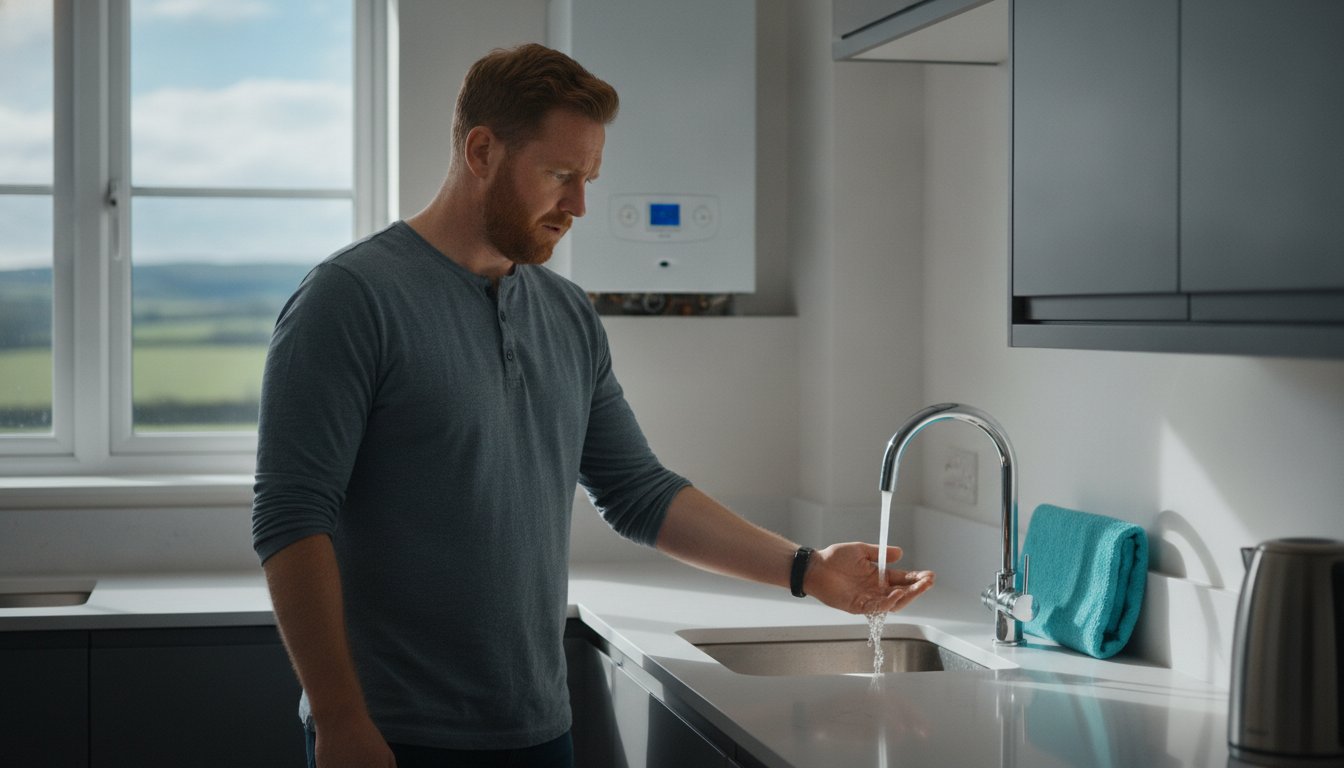
Combi Boiler No Hot Water but Heating is On: Scotland 2026 Troubleshooting Guide
Imagine stepping into the shower on a freezing morning in Dumfries and Galloway only to be met by a blast of icy water, even though your radiators are perfectly warm. It is a confusing and stressful situation that leaves many families shivering. If you are facing a combi boiler no hot water but heating is on in Scotland, you are likely worried about a massive repair bill or being stuck without a reliable engineer in a rural area.
We understand that a broken boiler feels like a household emergency, especially when energy debt is at a record high for 19% of Scottish homes. You deserve a clear, honest explanation that removes the mystery from your heating system. This expert guide will show you how to diagnose the problem, helping you determine if you can fix it yourself or if you need professional assistance to restore your hot water immediately.
We will examine the mechanical traffic warden of your system known as the diverter valve and provide a step-by-step troubleshooting checklist. By the end of this article, you will know exactly how to get your home back to normal while avoiding the unnecessary cost of a full boiler replacement.
Key Takeaways
- Understand the ‘priority’ system and why your radiators might stay hot while your taps remain icy cold.
- Discover how to diagnose a combi boiler no hot water but heating is on Scotland by performing simple pressure and thermostat checks.
- Identify the diverter valve as the primary mechanical culprit and learn the symptoms of a stuck component.
- Protect your system from the ‘Moffat Chill’ by learning how frozen condensate pipes impact hot water delivery in rural SW Scotland.
- Know exactly when it’s time to contact a local Gas Safe registered expert to avoid the high cost of a full boiler replacement.
Why Your Combi Boiler Has Heating but No Hot Water
It’s a common frustration for Scottish homeowners. Your radiators are piping hot, but your shower remains freezing. If you’re experiencing a combi boiler no hot water but heating is on Scotland scenario, you aren’t dealing with a total system failure. Instead, you’re likely facing a specific mechanical hurdle inside the unit. This fault is particularly common in older systems or those that haven’t been serviced recently in the Moffat and Dumfries area.
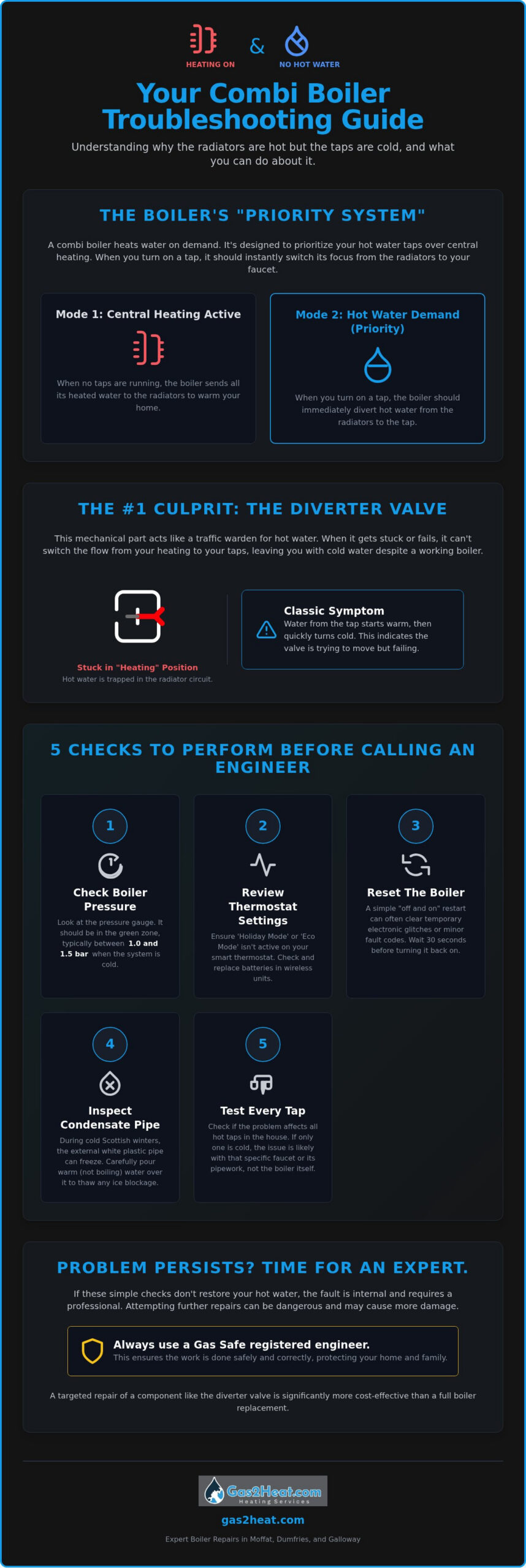
Combi boilers are designed to be space-saving and efficient. They don’t store hot water in a tank. Instead, they heat it on demand. To do this effectively, the boiler uses a “priority” logic system. This means the boiler treats your hot water taps as more important than your radiators. When you turn on a tap, the boiler should instantly stop sending heat to the house and redirect all its energy to the water flowing to your faucet. If this switch doesn’t happen, your radiators stay warm while your bath water stays cold.
The component responsible for this switch is the diverter valve. Think of it as an internal traffic warden. It opens and closes to direct hot water either toward your central heating circuit or your domestic hot water outlets. Because your heating is still working, we know the boiler’s burner and pump are likely functional. This usually points to a mechanical failure of the valve itself rather than a complex electrical breakdown or a total boiler lockout.
How a Combi Boiler Manages Two Jobs at Once
Modern 2026 boiler models rely on a compact internal heat exchanger to provide instant warmth. To understand how central heating works in a combi setup, you have to visualize the priority switch. The moment a sensor detects water flow from a tap, it signals the diverter valve to move. This mechanical movement physically blocks the heating port. If that valve is stuck in the “heating” position, the hot water intended for your shower stays trapped in the radiator loop, leaving you with lukewarm or cold taps.
Is it a Total Breakdown or a Partial Fault?
Start by checking your boiler’s digital display for specific error codes. These codes are your first line of defense in identifying the exact fault. If you notice fluctuating water temperatures, where the water gets warm then suddenly turns cold, this is another classic sign of a failing diverter valve. The good news is that if your heating still works, your boiler’s core components are healthy. You likely need a targeted repair rather than a full, expensive replacement. Diagnosing this early helps you avoid a total breakdown during the harsh Scottish winter.
5 Quick Troubleshooting Checks for Scottish Homeowners
Before you assume the worst, several minor issues can cause your hot water to fail while the heating continues to run. If you are dealing with a combi boiler no hot water but heating is on Scotland scenario, follow these five steps. They are designed to help you identify simple fixes that don’t require tools or technical expertise.
- Check the pressure: Look at the gauge on the front of your boiler. It should sit between 1.0 and 1.5 bar.
- Examine settings: Ensure your timer hasn’t been reset by a power cut or a smart home update.
- Reset the unit: A simple system restart can often clear temporary software errors.
- Inspect the condensate pipe: Look for the white plastic pipe leading outside. In freezing weather, ice blockages are common.
- Test every tap: If one tap is hot but another is cold, the problem is likely a faucet issue, not the boiler.
Checking Boiler Pressure and Topping Up
Low pressure is a frequent culprit for intermittent hot water. Most UK boiler brands use a silver flexible hose called a filling loop located underneath the unit. If the pressure has dropped below 1.0 bar, your boiler may stop delivering hot water as a safety precaution. Open the filling loop valves slowly to allow fresh water into the system. Close them immediately once the needle reaches the correct level. For a cold system during a Scottish winter, the ideal pressure range is between 1.0 and 1.5 bar.
Thermostat and Smart Control Glitches
Modern 2026 smart home hubs sometimes desync after a firmware update. Open your heating app and verify that ‘Holiday Mode’ or ‘Eco Mode’ hasn’t been accidentally enabled. These settings often prioritise energy saving over immediate hot water delivery. If you use a wireless room thermostat, replace the batteries even if the screen looks functional. A weak signal can prevent the boiler from receiving the ‘demand’ for hot water. If these checks don’t resolve the issue, it may be time for professional boiler repairs from a local expert. Always remember the importance of verifying your Gas Safe engineer before they begin any work on your gas appliances.
During extreme cold snaps in SW Scotland, pay close attention to your condensate pipe. A frozen blockage here will cause the boiler to shut down or malfunction. You can often resolve this by carefully pouring warm (not boiling) water over the external section of the pipe to melt the ice. If the hot water returns after doing this, you’ve found your fix without needing a call-out. This simple step can restore your comfort immediately during a harsh Moffat winter.
The Diverter Valve: The #1 Culprit for Cold Taps
If your pressure is correct and your thermostat is functional, but you still have a combi boiler no hot water but heating is on Scotland, the diverter valve is almost certainly the culprit. This small, motorised component acts as the internal traffic warden of your boiler. Its job is to open and close specific pathways to direct heated water either to your radiators or to your hot water taps. Because a combi boiler cannot do both at once, it relies entirely on this valve to switch priorities instantly.
A tell-tale sign of a failing diverter valve is when your hot water only works if the central heating is already running. This happens because the valve is stuck in the “heating” position. When the heating is on, the water is already hot and flowing, so some of that warmth manages to seep through to your taps. However, as soon as the heating turns off, the valve fails to move back to the “hot water” position, leaving you with a cold shower. This mechanical failure is common in systems that haven’t been professionally serviced in several years.
When this component fails, you face a choice between a repair or a replacement. For a relatively modern unit, replacing the valve is a cost-effective way to restore comfort. If your boiler is over 12 or 15 years old, however, a sticking valve often signals that other internal parts are reaching the end of their lifespan. Consulting an Energy Saving Trust guide to boilers can help you understand the long-term efficiency benefits of upgrading an aging system versus paying for repeated repairs.
Why Diverter Valves Fail in Older Systems
The most common cause of valve failure is the buildup of “black sludge” or magnetite. This metallic debris forms inside your radiators and pipework over time. As this sludge circulates, it settles inside the delicate mechanisms of the diverter valve, causing it to seize or move sluggishly. This is why power flushing is such a vital maintenance task. By removing this debris, you protect the valve and extend the life of your boiler. In the soft water areas common across much of SW Scotland, magnetite is a much larger threat than limescale.
Can You Fix a Diverter Valve Yourself?
You should never attempt to repair a diverter valve yourself. Accessing the valve requires opening the boiler’s combustion chamber, which is a gas-sealed unit. It is illegal and dangerous for anyone other than a Gas Safe registered engineer to perform this work. While some online forums suggest “tapping” the valve to loosen it, this is a temporary and risky fix that can damage the motorised head or cause internal leaks. A professional engineer will diagnose whether the issue lies with the electronic motor or the mechanical valve body, ensuring a safe and permanent solution for your home.
Preventing Frozen Pipes and Winter Lockouts in SW Scotland
Rural homeowners across Dumfries and Galloway face a unique challenge during the winter months, often referred to locally as the ‘Moffat Chill’. Temperatures in these areas can plummet rapidly, leading to a specific type of system failure. If you find your combi boiler no hot water but heating is on Scotland, the issue might not be an internal mechanical failure. Instead, it could be a frozen condensate pipe. This is the white plastic pipe that carries acidic water away from your boiler to an external drain.
When this pipe freezes, it creates a blockage that causes water to back up into the boiler. Most modern units will sense this and trigger a safety lockout to prevent internal damage. You might still have residual heat in your radiators, but the boiler will refuse to fire up for hot water demand. To prevent this, ensure all external pipework is lagged with high-quality, weather-resistant insulation before the 2026 winter season begins. This simple step can save you the stress of an unexpected cold shower during a January frost.
Safe Ways to Thaw a Frozen Condensate Pipe
If you suspect a freeze, you can often resolve the issue yourself without a call-out fee. Gently pour warm water over the external portion of the pipe. Never use boiling water, as the extreme temperature change can crack the plastic. Similarly, avoid using hairdryers or heat guns. These tools are dangerous to use outdoors in damp conditions and can easily melt the piping. For a long-term fix, consider having a professional increase the pipe diameter or relocate it to a more sheltered position. This reduces the surface area where ice can form and keeps your system running smoothly.
The Importance of Annual Servicing
Prevention is always more cost-effective than an emergency repair. Regular expert boiler servicing ensures that your system is prepared for the harsh Scottish climate. An engineer will check for signs of wear in the diverter valve and ensure your condensate trap is clear of debris. Most manufacturer warranties in 2026 strictly require a professional service record to remain valid. For landlords in Moffat and surrounding towns, an annual service also provides the necessary documentation to stay compliant with Gas Safety Certificate regulations. If you need immediate assistance with a winter lockout, book a boiler repair with our local team today to restore your home’s comfort.
Professional Boiler Repairs in Moffat and Dumfries
Gas2Heat.com Ltd is your family-owned heating specialist based right here in Moffat. We’ve served Dumfries and Galloway since 2017, providing reliable solutions for homeowners facing a combi boiler no hot water but heating is on Scotland. Unlike national companies that dispatch engineers from hours away, we live and work in the community we serve. This local presence allows us to offer rapid boiler repairs when you need them most, removing the uncertainty often associated with trade services.
Speed and financial efficiency are at the core of our service identity. We utilize a modern, tech-enabled approach to logistics and scheduling to ensure our engineers reach you quickly. This is vital for residents in Lockerbie and Annan who often struggle to find reliable tradespeople during peak winter months. We maintain a high standard of technical authority while keeping our service approachable and friendly. Our goal is to simplify a stressful maintenance task through clear communication and straightforward promises.
Local expertise isn’t just about travel time. It’s about understanding the local water conditions and the specific boiler models popular across SW Scotland. Our Gas Safe registered engineers carry common spare parts for leading brands, often allowing for same-day repairs on stuck diverter valves. This commitment to reliability helps remove the stress of a combi boiler no hot water but heating is on Scotland. We provide transparent pricing upfront, so you’ll never face hidden costs or unexpected complications after the work is finished.
Serving the Dumfries and Galloway Community
Our team has extensive experience with the diverse housing stock across the Scottish Borders. From traditional stone builds in Moffat to modern energy-efficient homes in Dumfries, we know how to optimize different heating systems. Choosing a local Gas Safe registered engineer ensures you have long-term support from someone who knows your system’s history. If your current unit is beyond economical repair, we can provide a straightforward quote for a new boiler installation. We focus on high-performance, hydrogen-ready models that meet the latest 2026 energy standards.
Get Your Hot Water Back Today
Restoring your comfort is our primary goal. To summarize our guide, you should check your system pressure and external pipes for ice blockages first. However, if the issue involves internal components like the diverter valve or motorized head, call the professionals immediately. Contact Gas2Heat.com Ltd in Moffat to secure a prompt appointment with a qualified expert. We’ll have your home warm and your water hot in no time, giving you the peace of mind you deserve. Don’t wait for a total breakdown; book a pre-winter system health check today to catch small faults before they become expensive emergencies.
Restore Your Home’s Hot Water Today
Facing a combi boiler no hot water but heating is on Scotland doesn’t have to be a source of long-term stress. You now understand that while low pressure or frozen pipes are common culprits, a stuck diverter valve often requires a professional touch. Identifying these symptoms early prevents minor mechanical faults from turning into expensive full-system replacements during the height of winter. We’ve simplified the troubleshooting process so you can act with confidence and restore your home’s comfort quickly.
Our team at Gas2Heat.com Ltd is ready to step in when DIY checks aren’t enough. As a local Moffat-based family business serving SW Scotland since 2017, we prioritize speed, honesty, and technical excellence. Our Gas Safe registered engineers specialize in rapid repairs that get your system back to peak efficiency without any hidden fees or complicated jargon. Book your expert boiler repair in Moffat and Dumfries with Gas2Heat.com Ltd to secure your home’s comfort for the months ahead. You don’t have to settle for cold showers when dependable, local help is just a click away. We look forward to getting your hot water flowing again.
Frequently Asked Questions
Why do I have hot water only when the central heating is switched on?
You likely have a failing diverter valve that is stuck in the central heating position. This mechanical part should switch between heating and hot water. When the heating is already on, some heat transfers to the water. When it is off, the valve fails to move, leaving your taps cold. This is a classic symptom of a combi boiler no hot water but heating is on Scotland.
Is a stuck diverter valve a dangerous boiler fault?
A stuck diverter valve is not typically dangerous, but it is highly inconvenient. It signifies a mechanical failure inside the unit. While it won’t cause a gas leak, it can lead to erratic water temperatures. You should have it inspected by a Gas Safe engineer to prevent further strain on the boiler’s internal pump and heat exchanger.
How much does it cost to replace a combi boiler diverter valve in Scotland?
The total cost depends on your specific boiler model and the complexity of the part replacement. While standard repairs are more affordable than a full boiler replacement, prices for parts like diverter valves vary. A professional engineer will provide a transparent quote after diagnosing whether only the motor or the entire valve body needs replacing.
Can low boiler pressure cause me to have no hot water?
Yes, low pressure is a common reason for hot water failure. If your gauge shows less than 1.0 bar, the boiler may stop delivering hot water to protect its internal components. Repressurising the system using the filling loop often resolves this. It’s a simple task that many homeowners can perform safely before calling an engineer.
What should I do if my boiler displays an error code but the heating still works?
You should record the specific code and check your manufacturer’s manual immediately. Error codes are designed to pinpoint the exact source of a malfunction, such as a sensor failure or a diverter valve fault. Even if your heating still works, the code indicates an underlying issue that could lead to a total system lockout if left unaddressed.
How long does a professional boiler repair take in the Moffat area?
Most standard repairs in the Moffat and Dumfries area take between one and three hours to complete. Because we’re local, we understand the common boiler models in SW Scotland and often carry the necessary components. This allows for a fast, efficient service that minimises the time you spend without hot water.
Will a power flush fix my hot water problems?
A power flush can resolve hot water issues if they’re caused by internal sludge and debris. Magnetite buildup often causes diverter valves to seize or move sluggishly. By cleaning the system, you remove the abrasive particles that damage these moving parts. This is a proactive way to stop a combi boiler no hot water but heating is on Scotland from recurring.
Do I need a new boiler if my hot water keeps cutting out?
You don’t always need a new boiler if repairs are possible. Many hot water faults are resolved by replacing a single component like a sensor or valve. However, if your boiler is over 15 years old and parts are becoming difficult to source, a modern installation might be the more reliable and energy-efficient choice for your home.
