
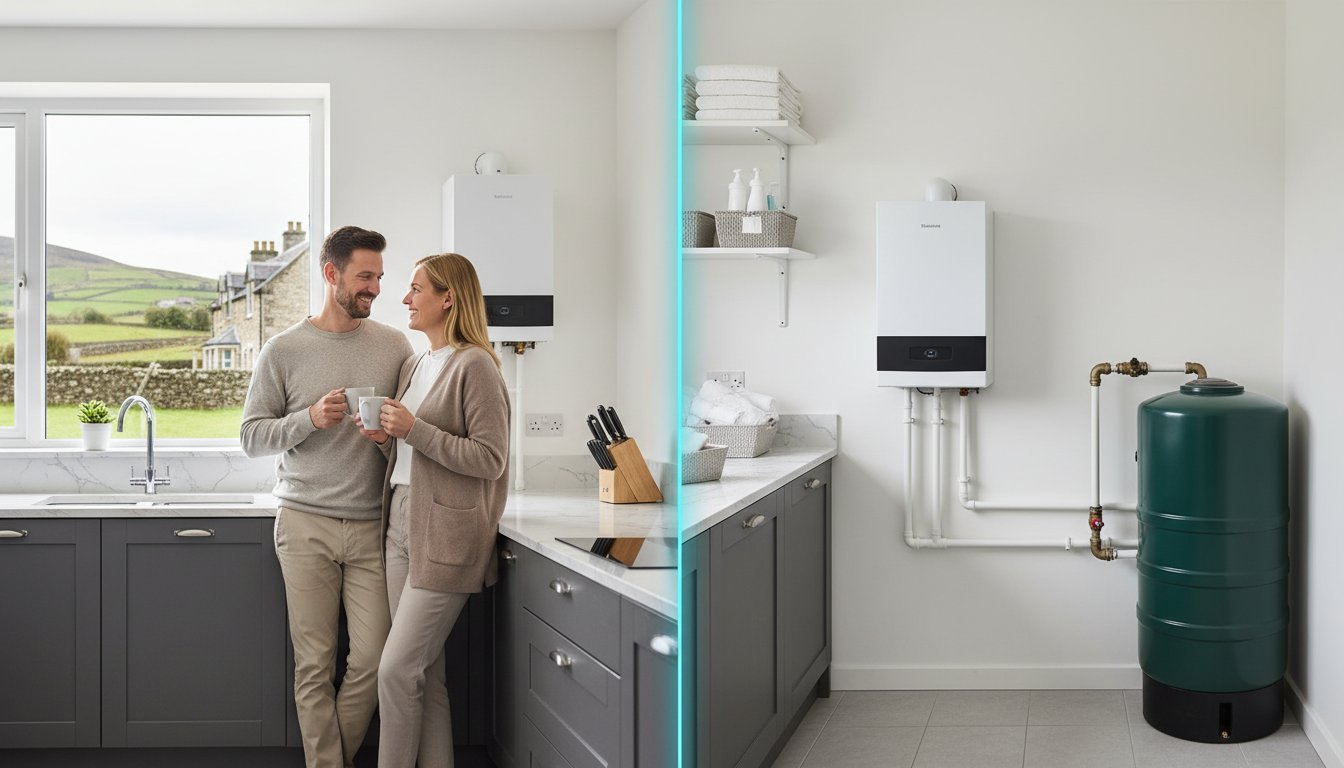
Combi vs System Boiler: Which is Right for Your Dumfries or Moffat Home? (2026 Guide)
Last January, a family in Moffat found themselves shivering in the shower when the hot water cut out just as the dishwasher started. It is a scenario we see across Dumfries and Galloway every winter. You deserve a home that stays warm and provides consistent hot water, even when every tap is running at once. We know that choosing between a combi vs system boiler feels like a technical minefield, especially when you are worried about high energy bills in an older, drafty Scottish property.
You want a reliable system that delivers high efficiency without the headache of unexpected repairs. This 2026 guide explains the critical differences to help you choose the right setup for your specific home. You will discover how to secure a warm house and lower monthly bills with a fixed price installation that eliminates hidden local costs. We will compare water pressure performance, space requirements, and installation speeds to ensure you get the peace of mind you need from a Gas Safe registered expert.
Key Takeaways
- Identify the fundamental differences between a combi vs system boiler to choose between a space-saving unit or a high-capacity hot water cylinder.
- Master the “Bathroom Test” to guarantee your heating system supports multiple showers at once during the busy morning rush.
- Select the ideal boiler for your specific home style, from historic Moffat stone villas to contemporary new-build estates in Dumfries.
- Save on long-term energy costs by comparing the efficiency and installation requirements of modern condensing technology.
- Ensure a hassle-free upgrade with a local Gas Safe registered engineer providing fixed-price quotes and professional South West Scotland service.
Combi vs System Boiler: The Core Differences Explained
Choosing a new central heating system is a significant investment for any homeowner. In 2026, energy efficiency standards and regional weather patterns in Scotland make this decision more critical than ever. The choice usually boils down to a combi vs system boiler. While both units provide reliable warmth, they handle your hot water requirements in very different ways. One focuses on instant delivery, while the other relies on a storage-based approach to manage high demand.
To help navigate these technical choices, you can check out Parallel Plumbing and Heating for a detailed comparison of modern boiler types and their specific benefits.
What is a Combi Boiler?
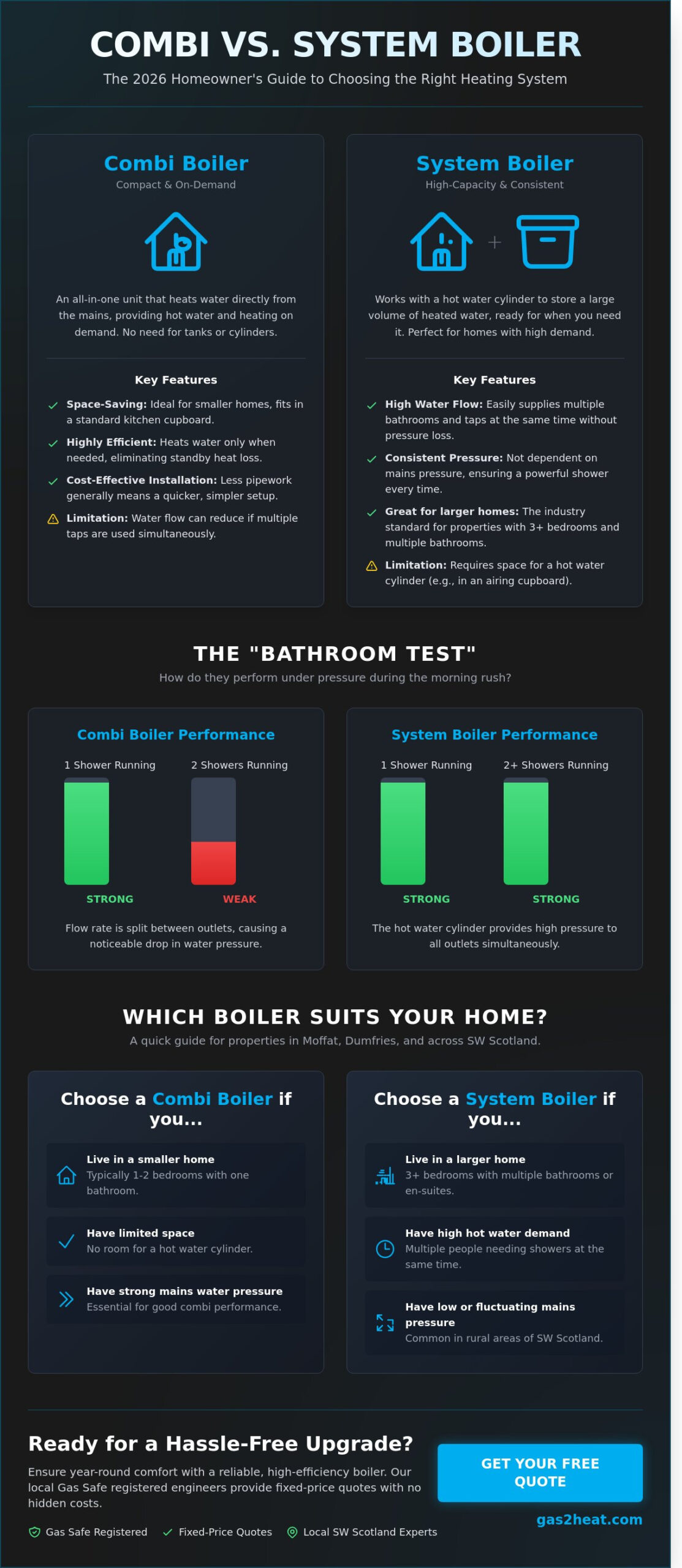
A combination boiler is an all-in-one unit that heats water directly from the mains supply. It’s an on-demand system, meaning it only consumes energy when you turn on a hot tap or your heating clicks on. You don’t need a cold water tank in the loft or a hot water cylinder in an airing cupboard. This makes them ideal for smaller Moffat cottages, modern flats, or homes where cupboard space is valuable. It’s a streamlined, high-efficiency solution that reduces the amount of pipework needed in your property. A combi boiler is a space-saving, high-efficiency unit for single-bathroom homes.
What is a System Boiler?
A system boiler works alongside a separate unvented hot water cylinder to store heated water. Most of the major components, including the pump and expansion vessel, are built into the boiler unit itself. This design creates a tidy installation while providing the power needed for larger households. These systems are the industry standard for properties with multiple bathrooms or high hot water usage. Because the hot water is stored in a cylinder, you can run two or three showers at the same time without a significant drop in pressure. This makes them a dependable choice for larger detached homes across Dumfries & Galloway.
The primary difference between these two technologies is how they manage flow rates. A combi boiler provides hot water instantly but can only serve one or two outlets at once. A system boiler provides a large reservoir of water that handles simultaneous demand with ease. Local homeowners must consider their daily routines carefully. If your household has a high peak demand in the mornings, the stored capacity of a system boiler provides the reliability you need. For smaller households, the efficiency and compact nature of a combi boiler often make it the most cost-effective option for the long term.
- Combi Boilers: Best for 1-2 bedroom homes with limited space.
- System Boilers: Best for 3+ bedroom homes with multiple bathrooms.
- Installation: System boilers require more space for the cylinder.
- Efficiency: Both types are available as high-efficiency, ERP rated models.
Performance Comparison: Hot Water and Heating Efficiency
Choosing between a combi vs system boiler often comes down to how your household uses water. In Dumfries, where many homes feature multiple bathrooms or traditional plumbing, the performance gap is noticeable. A combi boiler heats water on demand, which is efficient for smaller flats. However, if you try to run two showers at once, the flow rate drops significantly. A system boiler stores hot water in a separate cylinder, allowing it to supply multiple taps at full pressure simultaneously. This makes the system boiler the superior choice for larger families who don’t want to coordinate shower times.
Flow Rates and Water Pressure
Combi performance depends entirely on the mains water pressure entering your property. In rural parts of SW Scotland, mains pressure can fluctuate. If your incoming pressure is low, a combi will struggle to deliver a powerful shower. System boilers bypass this issue by using a high-recovery cylinder. This setup provides consistent pressure across all taps. For a detailed 10-point check on your current setup, see our guide on improving heating efficiency. Experts at Homebuilding & Renovating provide a useful boiler performance and efficiency comparison that highlights how system boilers manage high demand more effectively than instantaneous heaters.
Energy Efficiency and ERP Ratings
Modern condensing technology ensures that both boiler types are incredibly efficient. In 2026, most new installations are A-rated, achieving efficiency levels of 92% or higher. There are, however, differences in how they maintain that efficiency:
- Heat Loss: Combi boilers don’t store water, so they have zero standing heat loss. System boilers lose a small amount of heat through the cylinder, though modern 50mm foam insulation keeps this to a minimum.
- Smart Controls: Both systems benefit from Load Compensation. Using a smart thermostat like Tado or Nest can reduce energy bills by 12% by adjusting the boiler’s firing rate.
- Priority Domestic Hot Water (PDHW): High-end system boiler installations now use PDHW. This tech directs 100% of the boiler’s power to the hot water cylinder when needed, then switches back to heating. It ensures your water heats up in under 20 minutes.
If you’re unsure which setup fits your home’s pipework, our local engineers can provide a fixed price quote online in about 60 seconds. We focus on transparent pricing so you can decide based on facts rather than guesswork. Whether you choose a combi or a system model, upgrading from a 15-year-old G-rated boiler can save the average Dumfries household up to £540 per year on gas bills according to recent 2024 energy price cap data.
Pros and Cons: Evaluating Your Options
Choosing between a combi vs system boiler depends on your household’s daily routine and the layout of your property. Both systems offer high-efficiency performance, but they serve different needs. Understanding the trade-offs helps you make a choice that balances comfort with cost-effectiveness.
Combi Boilers
- Pros: They’re incredibly compact, often fitting inside a standard kitchen cupboard. You don’t need a cold water tank in the loft or a hot water cylinder. Installation is usually cheaper and faster because there are fewer components.
- Cons: Hot water flow is limited. If one person uses a tap while another is showering, the pressure drops. They also have higher internal complexity, which can lead to more specific repair needs.
System Boilers
- Pros: These are ideal for large families in Dumfries with multiple bathrooms. They deliver strong water pressure to several taps simultaneously. They’re also compatible with solar thermal systems, helping you reduce your carbon footprint.
- Cons: You need dedicated space for a hot water cylinder, usually in an airing cupboard. If the family uses all the stored hot water, you’ll have to wait for the tank to reheat.
Installation Complexity and Costs
The cost of your upgrade depends heavily on your current setup. Switching from a system boiler to a combi often involves significant pipework changes. Our Gas Safe registered engineers must remove old tanks and cap off redundant pipes, which increases initial labor. However, removing these tanks often creates valuable storage space in your home. We operate with a fixed price philosophy to ensure transparency. You’ll know the total cost before we start, with no hidden fees added later. For a detailed breakdown of local pricing, view our new boiler cost guide.
Maintenance and Longevity
Reliability is essential during a cold snap in the Scottish Borders. Combi boilers contain more moving parts within the unit, while system boilers rely on external pumps and valves. Both systems require professional attention to stay in top condition. An annual service is the only way to maintain your manufacturer warranty and ensure the unit remains ERP rated. This proactive approach identifies small issues before they become expensive failures. Schedule your expert boiler servicing to keep your system running efficiently for years to come.
Selection Guide: Which Boiler Suits Your SW Scotland Property?
Choosing between a combi vs system boiler depends on your home’s footprint and your family’s morning routine. A traditional red sandstone villa in Moffat has different plumbing needs than a 2024 new-build estate in Dumfries. You must consider the physical space available and the peak demand for hot water.
Apply the “7:00 AM Bathroom Test” to your household. If three people need to shower simultaneously while the kitchen tap is running, a combi boiler’s flow rate will likely drop. For properties with three or more bathrooms, a system boiler is the reliable choice because it stores hot water in a dedicated cylinder, ready for immediate use across multiple outlets.
Space is the second major factor. If you’re planning a loft conversion or need extra storage, removing a bulky hot water tank with a combi swap is a smart move. However, if you already have a utility room or a large airing cupboard, a system boiler fits perfectly without taking up valuable kitchen cabinet space. Modern system boilers are also more compatible with future-proofing technologies like solar thermal panels or large-scale underfloor heating projects.
Best for Small to Medium Homes
The combi boiler is the undisputed king of the 1-2 bedroom home in Dumfries and Galloway. It eliminates the need for tanks in the loft, which is vital if you live in a flat or a property with limited roof space. Because it heats water directly from the mains, you don’t have to wait for a cylinder to refill after a bath. You can find more specific advice on choosing the best boiler for your home in our latest regional guide. Use this checklist to see if a combi fits your lifestyle:
- You have limited loft or cupboard storage.
- There is only one main bathroom in the property.
- You want a fast, “on-demand” heating solution.
- Your household has 1-3 occupants.
Best for Large Families and Multiple Bathrooms
For 4+ bedroom houses, a system boiler is usually non-negotiable. It provides a constant, high-pressure supply of hot water to every tap. These units are also the superior partner for underfloor heating installation, as they manage the consistent thermal mass required for large floor areas. A major benefit of this setup is the immersion heater within the cylinder. If your boiler ever requires a repair, you can switch on the electric backup to ensure your family still has hot water.
Ready to upgrade your heating system? Get a fixed price boiler quote from our local Gas Safe engineers today.
Expert Boiler Installation in Moffat and Dumfries
Choosing the right heating system isn’t just about picking a brand from a catalogue. In South West Scotland, your home’s age and location dictate the technical requirements of your setup. You need a local Gas Safe registered engineer who understands the unique plumbing challenges found in Dumfries and Moffat homes. From traditional sandstone properties to modern developments, every building requires a tailored approach to ensure maximum efficiency.
While this guide focuses on South West Scotland, the need for professional gas services is universal; for instance, Plumbing & Boilers London provides similar expert heating and plumbing solutions for residential and commercial properties in the capital.
We don’t believe in guesswork. We measure. A local site survey is vital because it determines the technical success of a combi vs system boiler installation. If your mains pressure is below 1.0 bar or your flow rate is under 10 litres per minute, a standard combi might struggle to provide hot water to multiple taps. We check these specific metrics before you spend a penny. This prevents the common mistake of installing a high-spec boiler that your local infrastructure simply cannot support.
Gas2Heat.com Ltd removes the uncertainty typically associated with trade services. We provide transparent, fixed-price quotes with no hidden extras. The price we quote is the price you pay, regardless of any minor complications we find during the install. Our goal is to provide peace of mind through technical authority and straightforward pricing.
Our Local Installation Process
- Step 1: Free local survey. We visit your property in Dumfries, Moffat, or Lockerbie to assess your current pipework, radiators, and water pressure.
- Step 2: Fixed-price quote. You’ll receive a comprehensive, itemised quote within 24 hours of our visit. We don’t use high-pressure sales tactics.
- Step 3: Professional installation. Our local, certified engineers complete the job quickly. We focus on a clean, efficient install that respects your home.
Why Gas2Heat.com Ltd for Your SW Scotland Home?
We offer 24/7 emergency support because we know how vital a working boiler is during a Scottish winter. Our team has deep knowledge of local water pressure issues and the specific property types found across Dumfries and Galloway. Whether you’re deciding between a combi vs system boiler for a cottage or a large family home, we provide the expertise to make the right choice. We combine the convenience of a modern, tech-enabled business with the reliability of a local professional. This ensures you get rapid response times without sacrificing the personal touch of a community-focused engineer.
Secure Your Home’s Comfort for 2026 and Beyond
Choosing between a combi vs system boiler depends on your household’s peak hot water demand and available cupboard space. Smaller properties in Dumfries often benefit from the compact, tankless design of a combi unit, while larger Moffat homes with three or more bathrooms usually require the stored water capacity of a system setup. Our Gas Safe registered engineers have completed hundreds of local installations across South West Scotland, ensuring every homeowner receives expert advice tailored to their specific property layout. You won’t have to worry about hidden costs or surprise bills because we provide a fixed-price guarantee on every job. This gives you total financial certainty from the moment you receive your estimate. Our local team understands the unique heating requirements of Dumfries and Moffat homes, providing reliable solutions that meet the latest energy efficiency standards. Take the stress out of your home maintenance and upgrade to a high-efficiency system that lowers your carbon footprint and monthly outgoings. It’s time to enjoy a warmer, more efficient home without the typical trade service headaches.
Request a Fixed-Price Boiler Quote for Your Dumfries or Moffat Home
We look forward to helping you find the perfect heating solution for your property.
Frequently Asked Questions
Can I swap my system boiler for a combi boiler?
You can swap your system boiler for a combi boiler to free up valuable space in your airing cupboard. This conversion involves removing the bulky hot water cylinder and rerouting your pipework to the new, compact unit. Our Gas Safe registered engineers usually complete these swaps in 1 to 2 days. It’s a popular choice for Dumfries homeowners who want to declutter their homes and gain extra storage space.
Is a system boiler more expensive to run than a combi?
System boilers are often slightly more expensive to run because they lose heat through the external hot water cylinder. According to the Energy Saving Trust, a modern A-rated boiler operates at over 90% efficiency, but keeping a tank of water warm uses more energy than heating it on demand. When comparing a combi vs system boiler, the combi usually wins on daily running costs for smaller households. You only pay for the hot water you actually use.
Do I need a cold water tank in the loft for a system boiler?
You don’t need a cold water tank in the loft for a modern system boiler. Unlike older regular boilers, a system boiler is a sealed unit that takes its water supply directly from the mains. This setup eliminates the risk of frozen pipes in the attic during a cold Scottish winter. It also frees up loft space for insulation or storage. You only need the boiler unit and a separate hot water cylinder.
What happens to my water pressure if I switch to a combi boiler?
Your water pressure usually improves at the tap because combi boilers deliver hot water at mains pressure. If your current system relies on a gravity-fed tank, you’ll notice a significant boost in shower performance. We always check your local mains flow rate before installation to ensure it meets the 10 to 12 litres per minute required for peak performance. This ensures your new setup provides a powerful and consistent flow throughout your home.
Which boiler type is best for underfloor heating in Scotland?
System boilers are the superior choice for extensive underfloor heating projects in larger homes. They handle high demand across multiple zones more effectively than most standard combis. Since underfloor heating requires consistent flow rates, the stored hot water in a system setup prevents the boiler from cycling on and off too frequently. This reliability ensures your floors stay warm even when the outside temperature drops below 0°C.
How long does it take to install a new combi vs a system boiler?
A like-for-like boiler replacement typically takes 1 day to complete. If you’re converting from a system to a combi, the process usually takes 2 days because we need to remove the old cylinder and update the pipework. Our team offers next day installation to get your heating back up and running quickly. We provide a fixed price quote upfront so you know exactly how long the job will take and what it costs.
Do system boilers provide hot water instantly?
System boilers provide instant hot water to multiple taps simultaneously, provided the storage cylinder is already heated. This makes them ideal for busy households where two people might need a shower at the same time. You won’t experience the cold shower surprise when someone turns on a kitchen tap. While a combi vs system boiler debate often focuses on space, the system boiler’s ability to supply high volumes of water is its main advantage.
Will a combi boiler work in a large 5-bedroom house?
A single combi boiler isn’t usually recommended for a 5-bedroom house with 3 or more bathrooms. While high-output 40kW models exist, they struggle to supply hot water to multiple outlets at once. If two showers run at the same time, the water pressure and temperature will drop. For large Dumfries properties, we typically recommend a system boiler to ensure every family member enjoys a consistent hot water supply without compromise.
