
Converting From Oil to Gas Central Heating in Dumfries: The 2026 Guide
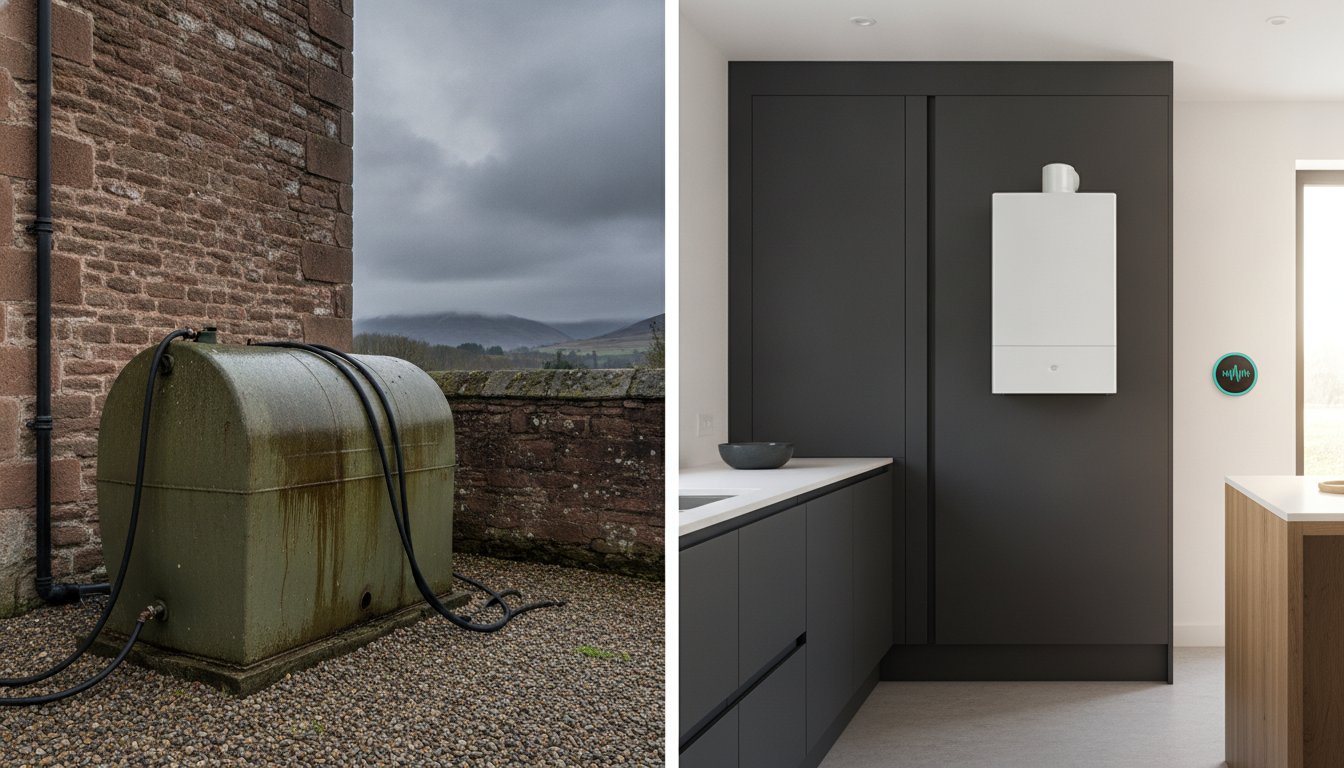
Your garden oil tank isn’t just an eyesore; it’s a constant reminder of unpredictable fuel prices and the hassle of manual deliveries. If you’re tired of monitoring levels and scheduling tankers, you aren’t alone. Many local homeowners are now converting from oil to gas central heating Dumfries to secure a more stable, automated future. It’s a strategic move that replaces a bulky outdoor tank with a streamlined, high-efficiency system that simply works when you need it. Transitioning to mains gas provides the reliability your home deserves while removing the stress of maintaining older, temperamental oil boilers.
This 2026 guide provides a clear, transparent roadmap for your transition. You’ll discover the current SGN connection requirements, the latest installation considerations, and the long-term efficiency benefits of modern gas boilers. We’ll walk you through the entire process, from the initial site survey to the final power flush that protects your new investment. We’ll also address the reality of current Scottish energy grants and help you weigh the upfront investment against the convenience of a modern setup. By the end, you’ll know exactly how to reclaim your outdoor space and lower your monthly energy expenditure with a reliable, modern system.
Key Takeaways
- Compare the efficiency of modern condensing gas boilers against older oil units to see how much energy you’re currently wasting.
- Navigate the logistics of SGN connections in Dumfries and Galloway with our simple checklist for gas-enabled streets.
- Master the full process of converting from oil to gas central heating Dumfries, including the safe decommissioning and removal of your garden oil tank.
- Boost your home’s Energy Performance Certificate (EPC) rating and long-term ROI by switching to a more modern, reliable fuel source.
- Learn why professional power flushing and local Gas Safe expertise are the keys to a trouble-free installation and a warmer home.
Comparing Oil vs. Gas Central Heating in Dumfries & Galloway
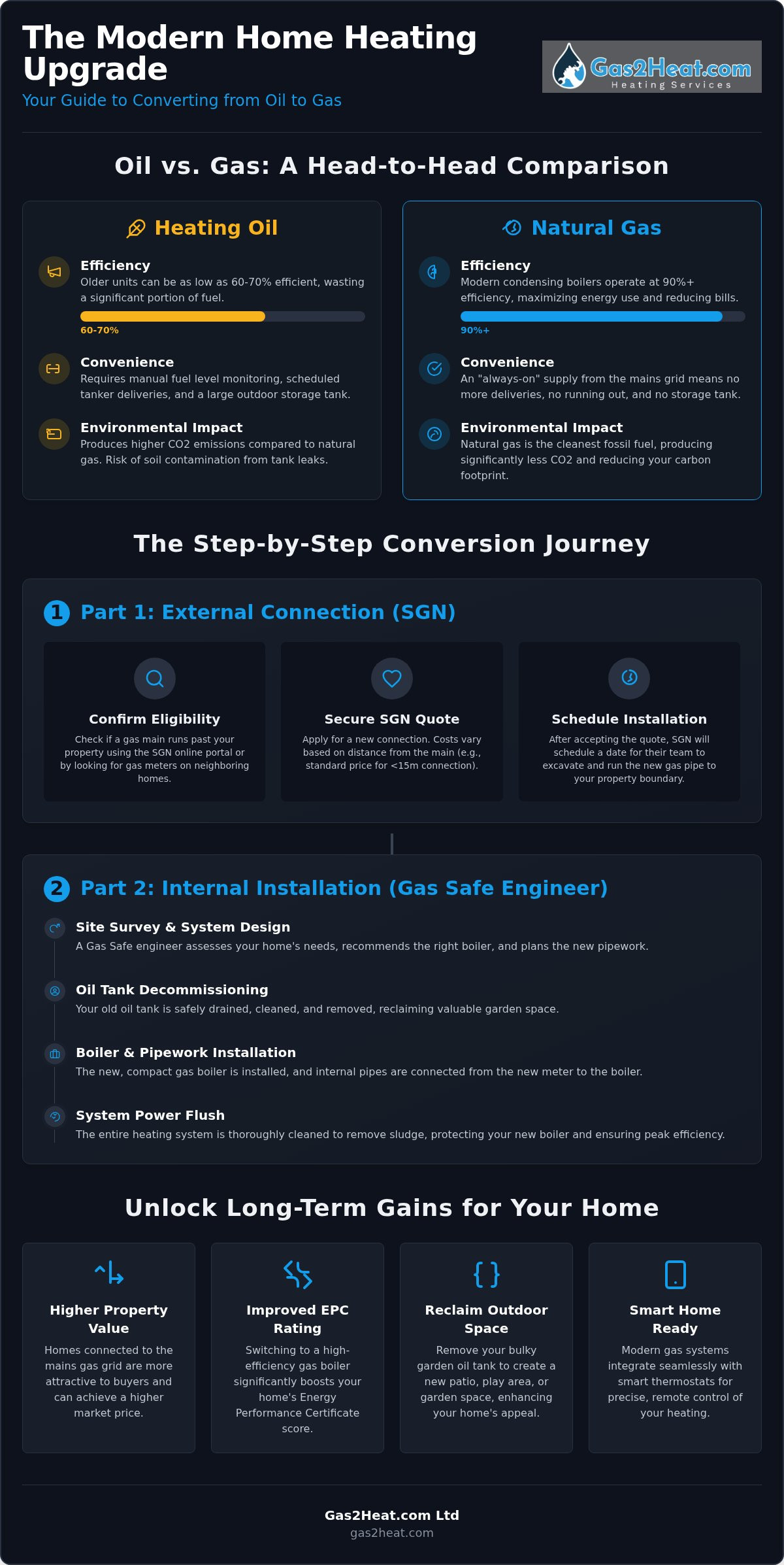
Living in South West Scotland often means managing the unpredictability of rural fuel supplies. For many homeowners, converting from oil to gas central heating Dumfries is the most effective way to gain control over energy costs. Understanding the mechanics of What is Central Heating? is the first step in seeing why gas is the preferred modern standard. While oil prices in 2026 continue to fluctuate wildly, mains gas offers a more predictable tariff. Beyond the price per unit, the efficiency of the hardware itself is a major factor. Modern condensing gas boilers operate at 90% efficiency or higher. Compare this to an older oil unit, which might only reach 60% or 70%, and the fuel waste becomes clear.
The environmental benefit is another key driver for change. Natural gas is the cleanest fossil fuel, producing significantly less CO2 per unit of energy than heating oil. By making the switch, you’re not just saving money; you’re actively reducing your household’s carbon footprint. Maintenance also becomes simpler. Oil systems require frequent nozzle changes and internal cleaning to prevent soot buildup. Gas boilers are cleaner, more reliable, and generally require less intensive annual servicing to maintain peak performance. While SGN metering charges saw a 4.39% increase in June 2026, the overall stability of the gas grid remains a safer bet than the volatile oil market.
Fuel Stability and Convenience
Stop checking your oil gauge in the rain. One of the biggest advantages of mains gas is the “always-on” nature of the supply. You’ll never have to worry about running out of fuel during a cold snap or waiting days for a tanker to navigate icy Dumfries roads. This transition also removes the risk of fuel theft or environmental damage from a leaking tank. Modern gas systems integrate seamlessly with smart thermostats, allowing you to control your heating from your phone with precision that older oil systems cannot match. It’s about removing the “hassle factor” from your daily life.
Space and Aesthetic Benefits
Removing a standard 1,000-liter oil tank can reclaim a significant portion of your garden. This space can be transformed into a new patio, flower bed, or play area, instantly improving your home’s outdoor appeal. Inside the house, the physical footprint is much smaller. A compact, wall-mounted gas boiler takes up far less room than a bulky, floor-standing oil unit. When you’re converting from oil to gas central heating Dumfries, you’re also making your home more attractive to future buyers. Homes connected to the gas grid are often easier to sell and can command a higher property value because the infrastructure is already in place.
Getting Connected: The Logistics of Switching to Mains Gas
The logistics of converting from oil to gas central heating Dumfries involve two distinct parties. While a local engineer handles your internal system, SGN (Scotland Gas Networks) manages the external infrastructure. They own the pipes under the road and are responsible for bringing the gas line to your property boundary. Before you commit to a new boiler, you need to confirm that a gas main actually runs past your home. Most urban areas in Dumfries are well-served, but some outlying streets may require a more extensive connection process.
Confirming your eligibility is straightforward. Follow this quick checklist to see if your street is gas-enabled:
- Check your neighbors: Look for external gas meter boxes on nearby walls.
- Spot the markers: Look for small yellow “G” plates on the pavement or street lamps.
- Use the SGN portal: Enter your postcode into the SGN “Find a Main” tool for instant confirmation.
Distance is the most significant factor in your connection costs. SGN applies a “distance from the main” rule for all new domestic services. Based on the April 2026 rate schedule, a standard connection for a property within 15 meters of the main is priced at £3,157. If your house sits further back from the road, these costs will rise. It’s best to secure your SGN quote early in the planning phase to avoid any financial surprises.
SGN Connection Process in SW Scotland
Once you apply, SGN follows a structured three-step sequence. First, a surveyor visits your property to map the safest route for the new pipe. Second, you’ll receive a formal quote. After you accept and pay, the work is scheduled. Third, the excavation team arrives. They’ll dig a narrow trench through your garden or driveway to lay the service pipe. SGN is responsible for reinstating your surfaces to a high standard, so your driveway won’t be left in a mess. After the pipe is live, your engineer can complete the internal boiler installation.
Grants and Subsidies for 2026
The financial landscape for 2026 is focused heavily on renewable energy. It’s important to know that the Home Energy Scotland Grant currently excludes gas boiler installations, as it prioritizes heat pumps. However, SGN still offers “Help to Heat” schemes for specific households that meet fuel-poverty criteria. Local Dumfries and Galloway council initiatives often focus on insulation, but improving heating efficiency always starts with choosing the right fuel source. If you don’t qualify for a connection grant, the long-term fuel savings of gas remain the primary driver for the investment.
Financial and Efficiency Gains: Is the Conversion Worth It?
Switching fuels is a long-term financial strategy for your home. When you’re converting from oil to gas central heating Dumfries, the primary return on investment comes from narrowing the gap between fuel consumed and heat delivered. Modern gas systems achieve high efficiency ratings that older oil boilers simply can’t match. This shift also has a direct impact on your property’s value. A new gas boiler is one of the most effective ways to improve your home’s Energy Performance Certificate (EPC) rating. This is a critical factor for Dumfries landlords meeting modern regulations or homeowners looking to sell in a competitive market.
Reliability is another hidden financial gain. SW Scotland winters are notoriously damp and cold. Unlike oil, which can thicken or “wax” in external pipes during a deep freeze, mains gas remains consistent. You won’t face the emergency call-out fees often associated with frozen oil lines or failing fuel pumps. Annual servicing for gas boilers is also generally more affordable. The process is cleaner and less labor-intensive than the deep cleaning required for oil-fired heat exchangers, which helps keep your ongoing maintenance budget predictable.
Lowering Your Monthly Outgoings
Cash flow management is a major benefit of the gas grid. You move away from large, unpredictable bulk oil payments to a “pay-as-you-go” monthly bill. This makes household budgeting much simpler because you only pay for what you use. High-efficiency condensing technology ensures that almost every penny spent on fuel is converted into warmth for your radiators rather than being lost through the flue. To maintain these gains, expert boiler servicing is essential. Regular professional checks prevent minor components from failing and keep your energy consumption at its lowest possible level.
System Longevity and Warranty
Gas boilers typically offer better protection for your investment through superior manufacturer warranties. Coverage for gas units is often significantly longer than for oil counterparts; many leading brands offer 10 or 12 years of protection. This is possible because gas is a cleaner-burning fuel that puts less strain on the heat exchanger and internal components. There is also the practical advantage of local support. Finding spare parts for a gas boiler in the Dumfries area is quick and easy. You won’t be left without heating for days while a specialist part is couriered from a distant regional warehouse.
The Step-by-Step Oil to Gas Conversion Process
Converting from oil to gas central heating Dumfries is a multi-stage project that requires careful coordination between external network work and internal plumbing. The process begins with a detailed technical survey. We don’t just look at where the boiler sits; we map out the entire gas run from the new meter position to the appliance. This ensures the pipework is sized correctly to maintain the right pressure for your specific home. Our engineers evaluate your existing radiators and pipework to ensure they’re compatible with the higher operating pressures of a modern gas system.
Once the logistics are settled, the physical transition starts. This involves two parallel paths: removing the old oil infrastructure and installing the new gas hardware. We coordinate these steps to minimize the time your home is without heating. A typical conversion is completed within a few days, but the planning phase is what ensures everything runs smoothly. We prioritize transparency, so you’ll know exactly which days our teams will be on-site and what to expect during each phase of the installation.
Safe Oil Tank Decommissioning
Scottish environmental regulations are strict regarding waste oil disposal. You can’t simply tip out the dregs or leave a half-full tank to rot. A professional team must drain the remaining kerosene, clean the tank of any residual sludge, and transport it to a licensed waste facility. If we find any signs of historic leaks in the soil during the removal, we perform site remediation to prevent long-term contamination. This thorough approach removes the liability of an old, potentially leaking vessel from your property and reclaims your garden space safely.
Internal System Upgrades
Modern boiler installation often involves more than just swapping the unit. We frequently upgrade internal pipe diameters to meet the higher flow rates required by high-output gas boilers. This is also the perfect time to integrate smart controls like Nest or Hive, giving you precise management over your heating schedules from your smartphone. A professional system flush is vital to prevent old oil sludge from damaging the sensitive components of your new gas boiler. This cleaning process ensures your radiators heat up evenly and your new system operates at maximum efficiency from day one. If you’re ready to start your transition, book your technical survey with our local team to get a clear, fixed-price plan.
Professional Gas Conversion Services in Dumfries with Gas2Heat
Gas2Heat specializes in complex projects like converting from oil to gas central heating Dumfries. Our team is based in Moffat, allowing us to serve the entire SW Scotland region with speed and precision. We provide the technical authority of a large firm with the approachable service of a local family business. Every engineer on our team is Gas Safe registered, ensuring your new system meets all safety and performance standards. We take the uncertainty out of trade services by offering clear guarantees and straightforward promises from the very first meeting. Our goal is to provide a seamless experience that replaces your old, high-maintenance oil system with a modern, efficient alternative.
We’ve been serving the local community since 2017, building a reputation for reliability and peace of mind. Our communication rhythm is brisk and purposeful because we respect your time. We deliver information in digestible segments so you never feel overwhelmed by the technical details of your heating upgrade. By choosing a specialist who understands the regional infrastructure, you secure a partner who is deeply focused on your convenience and the long-term performance of your home.
Why Choose a Local Specialist?
Choosing a local expert means working with people who understand the specific infrastructure of Dumfries and Galloway. We know how local housing stock responds to different heating setups because we’ve been working in these homes for years. This regional knowledge is vital for providing reliable plumbing and heating services, especially when you need a team that can reach you quickly during the colder months. We avoid the cold, impersonal feel of national corporations. Instead, we offer transparent pricing and a communication style that keeps you informed at every stage. You won’t face hidden fees or technical jargon; just honest advice and efficient results. Our approach is built on removing the stress typically associated with major home maintenance tasks.
Start Your Conversion Today
Reclaiming your garden and lowering your energy bills shouldn’t be a stressful experience. Our “reassuringly simple” approach ensures that converting from oil to gas central heating Dumfries is a smooth transition for your household. We handle the complex logistics, including the coordination of power flushing to protect your new boiler, so you don’t have to worry about the technical details. Once your system is live, our aftercare and maintenance support ensure it remains in peak condition for years to come. We pride ourselves on being a tech-enabled, modern business that respects your time and prioritizes rapid fulfillment. Start your journey by requesting a local site survey. We provide a logical progression from your initial inquiry to a fully secured, modern heating solution. Contact Gas2Heat for an Oil to Gas Conversion Quote today and experience a more reliable way to heat your home.
Secure Your Home’s Energy Future
Transitioning to mains gas is a strategic upgrade that removes the burden of manual oil deliveries and bulky garden tanks. By switching to a high-efficiency system, you gain predictable monthly bills and a significantly improved EPC rating for your property. Many homeowners are finding that converting from oil to gas central heating Dumfries is the most effective way to modernize their infrastructure before the next winter season hits.
Our team of Gas Safe Registered engineers brings local SW Scotland expertise to every project, ensuring your transition is handled with technical precision. We prioritize transparency, providing reassuring pricing and clear communication from the initial survey through to the final system flush. It’s about removing the uncertainty of trade services and replacing it with a dependable, modern solution that respects your time and your budget.
Request your free oil-to-gas conversion survey in Dumfries today. Take the first step toward a warmer, more efficient home and enjoy the peace of mind that comes with a reliable mains supply.
Frequently Asked Questions
How long does it take to convert from oil to gas heating in Dumfries?
Most internal conversions take between two and three days to complete. This timeframe includes the removal of your old oil boiler and the installation of the new gas unit. The external work performed by SGN to lay the service pipe is scheduled separately and usually happens a few weeks before we arrive. We coordinate closely with you to ensure your home is not without heat for longer than necessary during the switch.
Can I keep my old radiators when switching from oil to gas?
You can usually keep your existing radiators when converting from oil to gas central heating Dumfries. However, we always perform a professional power flush as part of the installation process. This removes years of accumulated oil sludge and magnetite that could damage your new, more sensitive gas boiler. We also check your radiator valves to ensure they can handle the slightly higher pressure of a modern gas system.
Is it expensive to have a new gas line run to my house?
The cost depends entirely on the distance between your property and the nearest gas main. For a standard connection in a Dumfries town, SGN’s 2026 rates indicate a cost of approximately £3,157 for a 15-meter run. If your home is further back from the road, this price increases. It is a significant upfront investment, but it is a one-off charge that connects your home to the grid forever.
What happens to my old oil tank during the conversion?
We manage the full decommissioning and removal of your old oil tank as part of our service. A specialist team drains any remaining fuel, cleans the internal residue, and safely removes the structure from your garden. This process follows strict Scottish environmental regulations for hazardous waste disposal. Once the tank is gone, you reclaim valuable outdoor space that can be used for landscaping, a new patio, or extra storage.
Do I need a new hot water cylinder for a gas boiler switch?
This depends on whether you choose a combi boiler or a system boiler for your home. If you switch to a combi boiler, you can remove the hot water cylinder entirely, which frees up space in your airing cupboard. If you have a large home with multiple bathrooms, you might prefer a system boiler. In that case, we may need to upgrade your existing cylinder to a high-pressure unvented model for better performance.
Is mains gas always cheaper than heating oil in Scotland?
Mains gas is generally more cost-effective than heating oil due to its higher combustion efficiency and more stable pricing. While oil prices fluctuate based on global markets and delivery surcharges, gas offers a more predictable “pay-as-you-go” billing structure. Modern gas boilers operate at over 90% efficiency, meaning you get more heat for every pound spent compared to older, less efficient oil-fired appliances common in rural South West Scotland.
Will a gas conversion improve my home’s EPC rating?
A gas conversion is one of the most effective ways to boost your Energy Performance Certificate (EPC) rating. Because gas is a cleaner fuel with lower carbon emissions than oil, the software used for EPC assessments views it more favorably. This improvement makes your home more attractive to potential buyers and helps Dumfries landlords meet the increasingly strict energy efficiency standards required for rental properties in Scotland.
What is the best type of gas boiler for a large Dumfries home?
For larger properties in Dumfries or Lockerbie, a high-output system boiler paired with an unvented hot water cylinder is often the best choice. This setup provides excellent water pressure to multiple bathrooms simultaneously, which a standard combi boiler might struggle to achieve. During our initial survey, we calculate your home’s specific heat loss and hot water demand to recommend a system that ensures total comfort even during the coldest months.
