
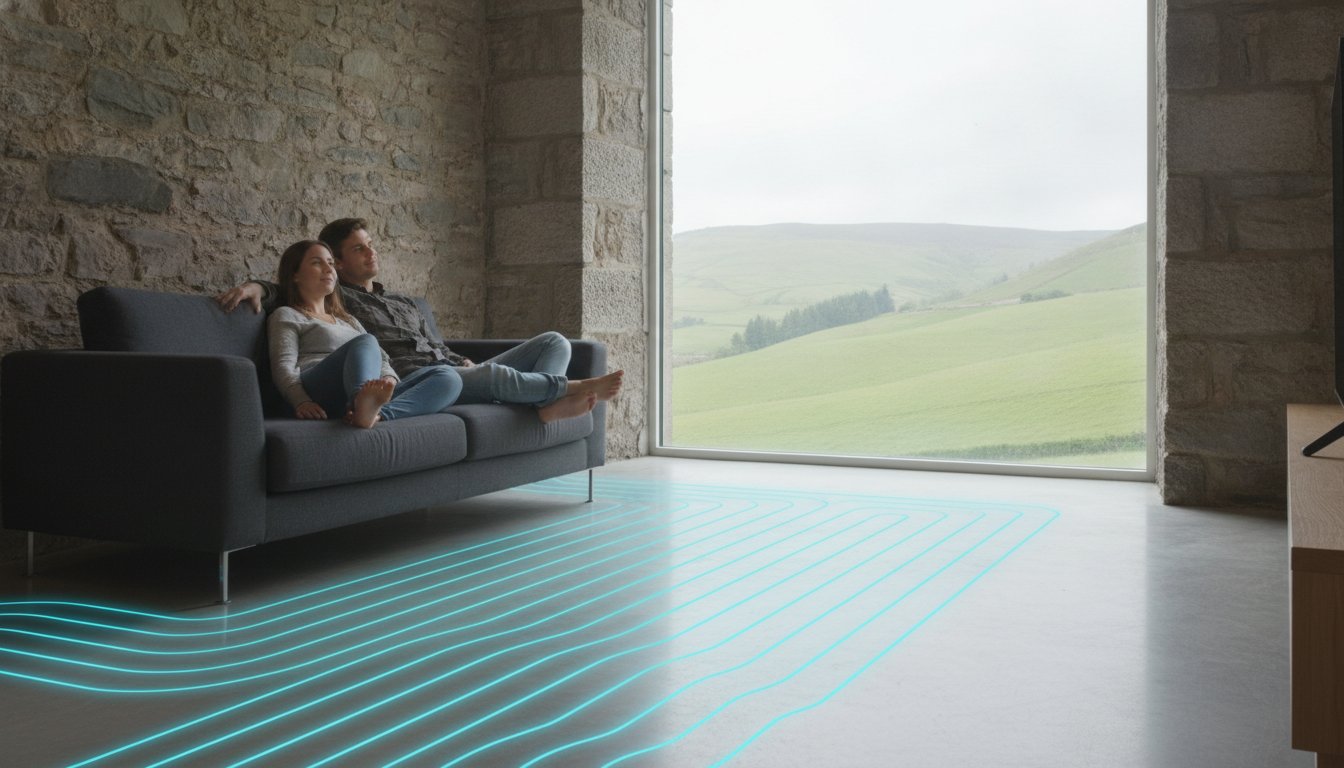
Expert Underfloor Heating Installation in Moffat: The 2026 Homeowner’s Guide
What if your home’s high ceilings and thick stone walls weren’t a heating challenge, but actually your biggest comfort asset? Choosing expert underfloor heating installation in Moffat turns that vision into a reality by using the floor itself as a giant, efficient radiator. Most homeowners in the Scottish Borders accept that cold spots and bulky radiators are just part of living in a traditional property. You’ve likely struggled with high energy bills and limited furniture options because of poorly placed heaters.
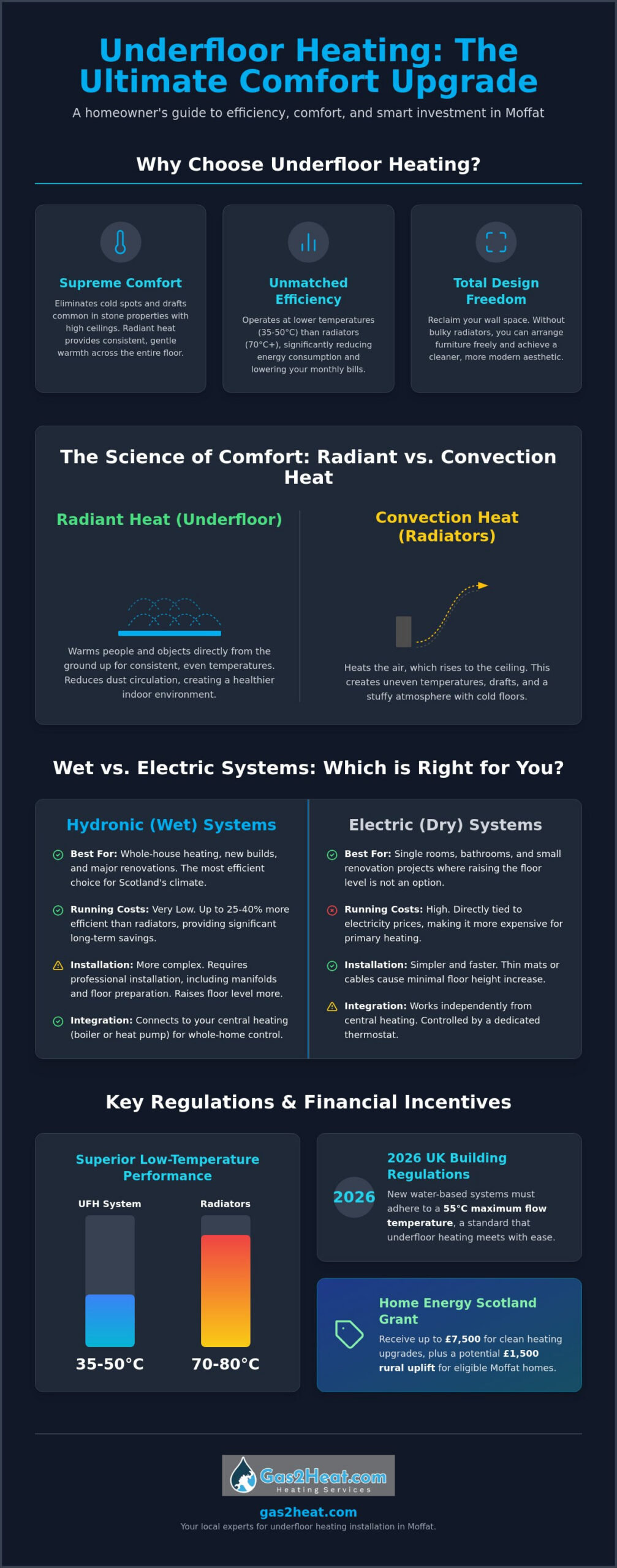
It’s time to change that. You’ll discover how to transform your home’s comfort with efficient systems tailored for Moffat’s unique climate. We’ll cover the latest 2026 UK building regulations, including the 55°C maximum flow temperature requirement for water-based systems. You’ll also learn about the Home Energy Scotland grant that provides up to £7,500 for clean heating upgrades, plus an additional £1,500 rural uplift for eligible homes. This guide previews everything from boiler compatibility to smart zone controls, ensuring your renovation is both simple and financially smart.
Key Takeaways
- Compare hydronic and electric systems to find the most cost-effective solution for your specific room layout and property size.
- Eliminate draughts and cold spots in traditional stone properties by utilizing radiant heat that warms objects rather than just the air.
- Verify how manifolds and blending valves allow your existing boiler to power modern underfloor zones safely and efficiently.
- Partner with local experts for your underfloor heating installation in Moffat to ensure your project meets all 2026 performance and safety standards.
- Learn why professional floor preparation and technical heat loss calculations are essential to maximize efficiency and reduce monthly energy bills.
Why Underfloor Heating is the Ultimate Comfort Upgrade for Moffat Homes
Think of your floor as one large, efficient heat emitter. Unlike traditional radiators that blast heat from a single point, Underfloor heating (UFH) uses the entire surface area of your room to provide consistent warmth. This technology eliminates the draughts and cold spots common in high-ceilinged Scottish homes. It’s a reliable way to ensure every corner of your living space stays comfortable, regardless of the weather outside. You’ll notice the difference immediately when walking across a floor that radiates gentle, even heat.
Efficiency is at the heart of this system. Standard radiators require water temperatures of 70°C or higher to heat a room effectively. Underfloor systems operate at much lower temperatures, usually between 35°C and 50°C. This lower threshold puts less strain on your heating source and reduces energy consumption. Investing in underfloor heating installation in Moffat is a smart move for anyone looking to cut long-term running costs while enjoying superior comfort levels. It’s a modern solution that aligns perfectly with the shift toward lower-temperature heating across the UK.
Design freedom is another major advantage that homeowners appreciate. Removing bulky radiators lets you reclaim valuable wall space that was previously unusable. This is especially helpful in traditional Moffat cottages where layout options are often limited by radiator placement. You can finally arrange your furniture exactly how you want it; to see how bespoke furniture can truly transform these reclaimed spaces, you can discover Kobb Interiors Ltd. You won’t have to worry about blocking your heat source or compromising the aesthetic of your room with dated metal units.
Radiant Heat vs. Convection: The Science of Comfort
Radiators work through convection, which heats the air and causes it to rise. This often results in a stuffy atmosphere where the ceiling is warm but your feet stay cold. Radiant heat is different. It warms people and objects directly, similar to the feeling of sun on your skin. This method doesn’t rely on air movement, which significantly reduces dust circulation. It’s a much healthier environment for people with allergies or respiratory issues. In Moffat’s iconic stone properties, the floor’s thermal mass absorbs this heat and releases it slowly, maintaining a steady temperature throughout the day even after the boiler cycles off.
Improving Your EPC Rating in South West Scotland
Upgrading your heating system is one of the most effective ways to boost your property’s Energy Performance Certificate (EPC) rating. A higher rating makes your home more attractive to future buyers and can increase its market value in the local Dumfries & Galloway market. Professional underfloor heating installation in Moffat is recognized as a high-efficiency solution that modernizes older properties. You can learn more about improving heating efficiency in Dumfries & Moffat by exploring our comprehensive local guide. This upgrade ensures your home meets modern energy standards while providing an unmatched level of luxury.
Wet vs. Electric Systems: Choosing the Right Solution for South West Scotland
Selecting the right technology is the first step toward a warmer home. You have two primary choices: hydronic (wet) systems and electric (dry) systems. Wet systems use a network of pipes to circulate warm water beneath your floor. Electric systems rely on thin heating cables or mesh mats. While both provide radiant heat, they serve very different purposes. Your choice will dictate your long-term energy costs and the overall comfort of your property.
Efficiency should be your main priority. For most homeowners, wet systems are the superior choice for whole-house heating. They integrate seamlessly with your central heating source, whether that’s a high-efficiency boiler or a modern heat pump. According to the Centre for Sustainable Energy, the suitability of each system depends heavily on your insulation levels and how you use the room. For an underfloor heating installation in Moffat, where winters are long and cold, the lower running costs of a wet system provide a massive financial advantage over time.
Don’t ignore the physical requirements of the installation. Electric mats are incredibly thin and barely raise the floor level. This makes them popular for quick bathroom refreshes; for those interested in high-quality components, check out Simmaxx to learn more about specialized electric heating and energy solutions. Wet systems are different. They require pipes to be embedded in a layer of screed or fitted into specialized trays. This adds “build-up” height to your floor. Plan for this early in your renovation to avoid issues with door clearances or skirting boards. If you want a system that handles the heavy lifting of heating a large home, the extra preparation for a wet system is always worth the effort.
When to Choose a Wet System
Opt for a wet system if you’re conducting a major renovation or building an extension. It’s the most effective way to heat large, open-plan kitchen diners or living rooms. These systems work exceptionally well when paired with new boiler installations, allowing you to optimize your entire home’s energy profile. If you’re replacing floors anyway, the pipework is straightforward to install and offers the most consistent warmth for your investment.
The Limitations of Electric UFH
Electric systems are often tempting because they’re faster to fit. However, the high cost of electricity in 2026 makes them expensive to run as a primary heat source. They often struggle to heat large rooms with high ceilings, which are common in Moffat. You’ll also find they lack the sophisticated multi-zone control options available with hydronic setups. Use electric mats for small ensuites, but stick to wet systems for your main living areas. If you’re ready to upgrade, you can view our underfloor heating installation services to find the best fit for your home.
Compatibility Check: Can Your Existing Boiler Power Underfloor Heating?
Connecting a wet system to your current central heating is a practical move for most homeowners. Most modern boilers are fully compatible with floor-based heating, but the connection requires specific hardware to bridge the gap between your boiler and the floor pipes. The manifold acts as the central hub for this setup. It organizes the flow of water to various rooms, ensuring each loop receives the right amount of heat. Because underfloor pipes operate at lower temperatures than standard radiators, a blending valve is a critical addition. This valve mixes hot water from the boiler with cooler return water, protecting your floor finishes from excessive heat and maintaining a steady, safe temperature.
Your system also requires a dedicated circulation pump. While your boiler has an internal pump to move water through radiators, pushing water through hundreds of meters of floor tubing demands extra power. A secondary pump at the manifold provides the necessary “push” to keep water moving efficiently through every circuit. Without this, you might experience slow warm-up times or cold spots in larger rooms. Getting these technical details right during your underfloor heating installation in Moffat is what separates a high-performance system from one that struggles to stay warm. We focus on these technical foundations to ensure your home stays comfortable during the coldest Scottish winters.
Is Your Boiler Efficient Enough?
Condensing boilers are the ideal partner for underfloor systems. They achieve their highest efficiency levels when return water temperatures are low, which is exactly how underfloor heating operates. You’ll need to verify that your boiler’s kilowatt (kW) output is high enough to handle the extra demand of the floor loops alongside your hot water requirements. Before you commit to a new project, it’s wise to book an expert boiler servicing to confirm your unit is healthy and capable. A well-maintained boiler ensures your new heating investment runs smoothly without unexpected breakdowns or efficiency drops.
Zoning Your Home for Maximum Efficiency
One of the best features of a manifold-based system is the ability to create distinct heating zones. You don’t have to heat the entire house just to stay warm in the lounge. You can set the kitchen to 18°C for cooking while keeping the living room at a cozy 21°C. Integrating smart thermostats like Nest or Tado with your manifold gives you total control from your smartphone. This precision prevents energy waste in guest rooms or hallways you aren’t using. It’s a simple way to optimize your underfloor heating installation in Moffat, giving you a tailored climate in every room while keeping your energy bills under control.
The Installation Journey: What to Expect in Your Moffat Property
Every successful project begins with a detailed technical survey. We don’t just look at the floor; we calculate the specific heat loss of your room based on its size, window area, and insulation levels. This is vital in Moffat, where older stone properties lose heat differently than modern builds. Once we have the data, we move to floor preparation. High-quality insulation is non-negotiable. Without it, you’re simply heating the ground beneath your house. For the 20% of Scottish homes built before 1919, this step is the single most important factor in system performance and energy savings.
Next comes the pipework phase. We lay the loops in a precise pattern to ensure even heat distribution across the entire surface. Before any screed or flooring goes down, we perform a rigorous pressure test. This guarantees the system is 100% leak-proof and ready for decades of use. After the final floor finish is laid, we commission the system. This involves balancing the manifold so that every room reaches its target temperature at the same time. It’s a meticulous process that ensures your underfloor heating installation in Moffat operates at peak efficiency from day one. Book your professional underfloor heating installation in Moffat to receive a bespoke heat loss calculation for your home.
Floor Finishes: Tiles, Wood, or Carpet?
Tile and stone are the champions of underfloor heating because they have excellent thermal conductivity. They heat up quickly and retain warmth long after the system turns off. If you prefer carpet, you must pay attention to the tog rating. To ensure effective heat transfer, the combined tog value of your carpet and underlay must not exceed 2.5. Engineered wood is also a great option, provided it’s installed with a suitable moisture barrier to prevent warping. Avoid using thick, heavy rugs in these areas, as they act as an “insulation trap” that prevents heat from reaching the room.
Challenges in Moffat’s Period Properties
Many homes in the Scottish Borders feature suspended timber floors or traditional stone foundations. You don’t always need to dig up your floors to enjoy radiant heat. We use low-profile systems specifically designed for renovations that sit directly on top of existing subfloors with minimal height build-up. These systems are perfect for maintaining the breathability of older stone walls while providing modern warmth. We also ensure that any installation manages moisture correctly, protecting the structural integrity of your period property while adhering to the 2026 maximum flow temperature regulation of 55°C.
Expert Underfloor Heating Installation by Gas2Heat.com Ltd
Secure your home’s comfort with a team that understands the specific demands of the Scottish Borders. At Gas2Heat.com Ltd, we provide a streamlined, professional approach to underfloor heating installation in Moffat. We don’t just lay pipes; we design high-performance systems that integrate perfectly with your existing property. Our engineers are Gas Safe Registered, ensuring that every connection to your gas supply is safe, legal, and optimized for efficiency. We handle the entire project from the initial heat loss calculations to the final plumbing and heating checks, removing the stress usually associated with major home upgrades.
Transparency is the foundation of our service. You’ll receive clear, straightforward pricing with no hidden complications or unexpected fees. We value your time and prioritize rapid results, moving you quickly through the decision-making process with digestible technical segments. Our modern, tech-enabled approach to scheduling ensures that your installation stays on track. You can rely on our technical authority and approachable service to deliver a heating solution that provides peace of mind for years to come. We bridge the gap between traditional trade expertise and contemporary customer convenience.
Why Choose a Local Moffat Specialist?
Choosing a local expert means you benefit from a team that knows the local architecture and climate. We understand the specific water pressure challenges and grid requirements unique to Dumfries and Galloway properties. Our family-owned values mean we treat your home with the respect it deserves, while our professional standards match any national corporation. Being local also allows us to provide rapid response times for aftercare and annual maintenance. We are always nearby to ensure your system continues to operate at the 2026 standard of 55°C flow temperature for maximum efficiency.
Get Your Custom UFH Quote Today
Start your journey toward a warmer, more efficient home with a free initial consultation. We provide all Moffat and Dumfries residents with a detailed heat loss report as part of our quoting process. This report ensures your system is sized correctly for your specific room dimensions and insulation levels. Don’t settle for generic estimates when you can have a bespoke plan tailored to your property’s needs. Contact Gas2Heat for a professional underfloor heating quote and discover how simple transforming your home’s comfort can be. Our team is ready to guide you from your first enquiry to a perfectly heated floor.
Transform Your Living Space with Radiant Warmth
Upgrading your home doesn’t have to be a stressful process. You now understand that wet systems offer the best long-term efficiency for our local climate. You also know that professional insulation and technical heat loss calculations are the keys to success in traditional stone buildings. By choosing a specialist for your underfloor heating installation in Moffat, you ensure your project meets all 2026 regulations while maximizing your property’s value. Our team of Gas Safe Registered Engineers brings years of experience to every job, specifically focusing on the unique challenges of Scottish period properties.
As a Moffat-based family business, we take pride in delivering transparent pricing and reliable aftercare. We’re here to help you move from cold floors and high energy bills to a home that feels warm and welcoming in every corner. Don’t let another winter pass with inefficient radiators and draughty rooms. Take the first step toward a more comfortable future today. Book Your Moffat Underfloor Heating Survey Now and let’s start planning your home’s transformation.
Frequently Asked Questions
How much does underfloor heating installation cost in Moffat?
The total investment for your project depends on the room dimensions and the level of subfloor preparation required. Factors such as your choice between wet or electric systems and the type of final flooring will influence the final quote. We provide a bespoke price after a technical survey to ensure total transparency and accuracy for every homeowner.
Can I install underfloor heating under existing floorboards?
Yes, you can install specialized low-profile systems directly over existing floorboards or between joists. These solutions are ideal for renovations where you want to avoid significant structural changes to your home. We assess your floor height and stability to recommend the most efficient piping layout for your specific property type.
How long does it take to install a wet underfloor heating system?
A standard single-room installation usually takes between two to four days from initial preparation to final testing. Whole-house projects for an underfloor heating installation in Moffat typically require one to two weeks depending on the floor construction and drying times for screed. We coordinate every stage to minimize disruption to your daily routine.
Is underfloor heating expensive to run with a gas boiler?
Underfloor heating is actually more cost-effective to run than traditional radiators because it operates at much lower water temperatures. Your gas boiler won’t have to work as hard to maintain a comfortable environment. This efficiency reduces your monthly energy consumption while providing a more consistent and comfortable level of warmth throughout your home.
Does underfloor heating take a long time to warm up?
Warm-up times vary based on the system type and the floor finish you choose. Wet systems embedded in concrete screed take longer to reach temperature but retain warmth for many hours after the boiler turns off. Modern smart controls allow you to schedule your heating so the house is perfectly warm exactly when you need it.
Can underfloor heating replace radiators entirely in a stone cottage?
Underfloor heating can replace radiators entirely if your property has adequate insulation and a professional heat loss calculation is performed. In older stone cottages, we recommend high-performance insulation boards beneath the pipes to prevent heat escaping into the ground. This ensures the system provides enough radiant heat to keep the entire room cozy without bulky metal units.
What happens if an underfloor heating pipe leaks?
Leaks are extremely rare because the pipes used in underfloor heating installation in Moffat are made from continuous lengths of durable PEX or PERT with no joints under the floor. We perform rigorous pressure tests before the floor is sealed to guarantee integrity. In the unlikely event of a problem, thermal imaging cameras can pinpoint the exact location without needing to lift the entire floor.
Do I need a special boiler for underfloor heating?
Most modern condensing boilers are perfectly compatible with underfloor systems. You don’t need a specialized unit, but you do require a manifold and a blending valve to regulate the water temperature correctly. These components ensure the water entering your floor loops is at the correct, safe level for your chosen floor finish and property type.
