
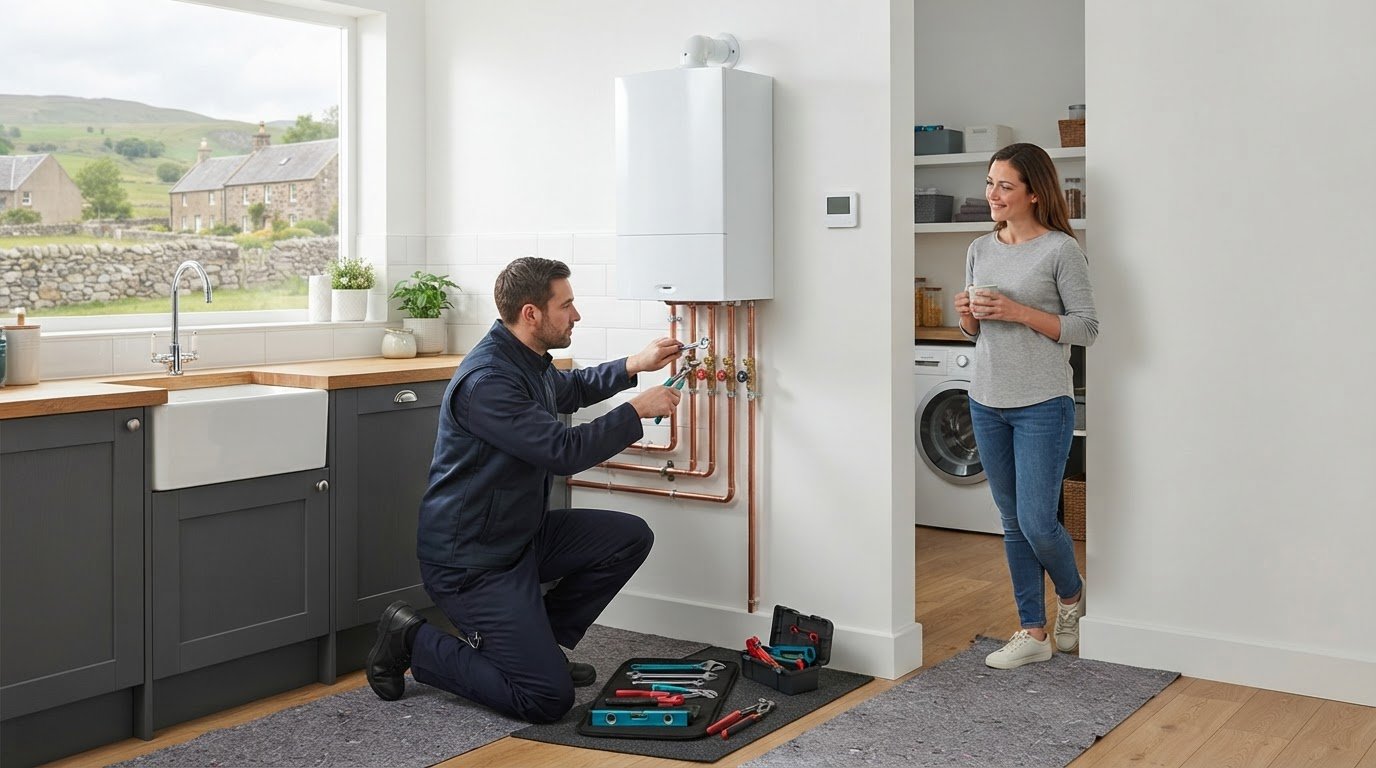
How Long Does It Take to Fit a New Boiler? A Homeowner’s Guide
A straightforward, like-for-like boiler replacement in the same position can take around 4 to 6 hours. Changing the boiler type or moving it can extend the work to several days. So, how long does it take to fit a new boiler in your home? It depends on the work involved, not just the new boiler. A clear timeframe also helps you plan for any period without heating or hot water.
This guide covers typical installation times and the factors that can change the schedule. You’ll find out how the boiler type, location, access and existing pipework can affect the work, and what to ask your engineer before installation day. A local Gas Safe registered engineer can assess your boiler and heating system, then provide a schedule based on your property. Preparing the work area can also help the day run smoothly.
Key Takeaways
- How long does it take to fit a new boiler? It depends on whether the work is a straightforward replacement or includes changes to your heating system.
- Knowing the main installation stages can help you plan for when heating and hot water may be unavailable.
- Boiler location, access and the condition of existing components can all affect the schedule. Ask your engineer which factors apply to your home.
- Clear the work area, confirm parking arrangements and check who needs to be at home to help avoid preventable delays.
- A property-specific assessment from a local engineer is more useful for planning than a general estimate.
How long does it take to fit a new boiler? The usual timeframe
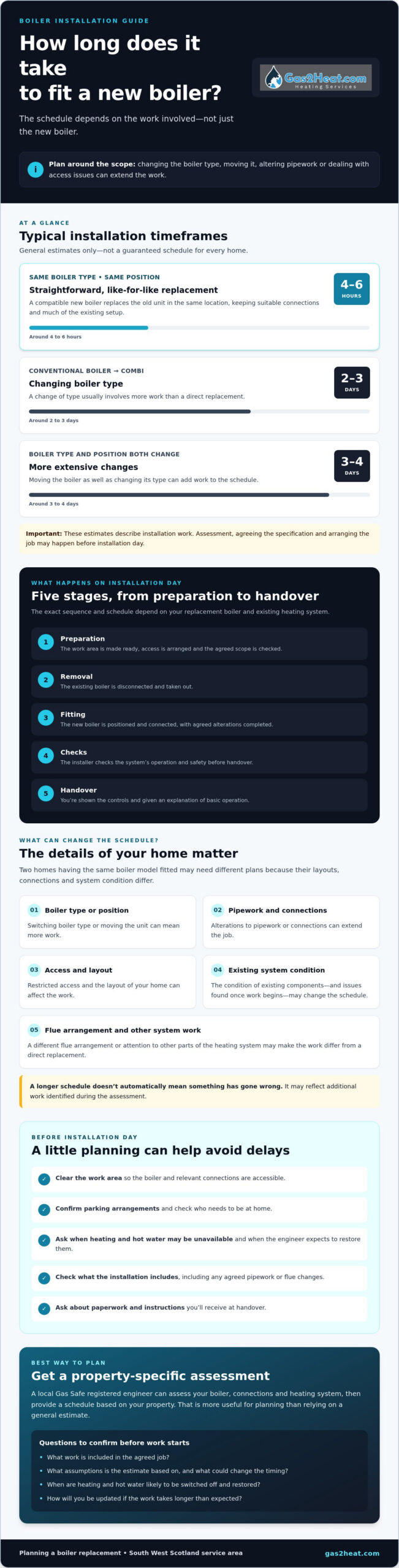
A straightforward, like-for-like boiler replacement in the same location typically takes around 4 to 6 hours. A change in boiler type usually involves more work. Switching from a conventional boiler to a combi can take 2 to 3 days, while changing both the type and location may take 3 to 4 days. These are general estimates, not a guaranteed schedule for every home.
The answer to how long does it take to fit a new boiler depends on what needs to change in your home’s central heating system. Ask the engineer to assess the existing boiler, connections and pipework. Then confirm the expected work period and when heating and hot water are likely to be available again.
There can also be a difference between the time spent fitting the boiler and the full project timeline. An assessment, agreeing the specification and arranging the work may all happen before installation day. Check what the schedule covers so you can plan around the full process.
What counts as a straightforward boiler replacement?
A like-for-like replacement generally means removing the old boiler and fitting a compatible new one in the same position, while keeping suitable connections and much of the existing setup. This can make the on-site work simpler than a project that changes the system. However, “like-for-like” doesn’t guarantee a particular duration. The layout of your home and the condition of existing components still matter. Ask the engineer to confirm the job’s scope before giving you an estimate.
When should you expect the job to take longer?
Allow for extra time if the boiler is moving, the type is changing, pipework needs altering or other parts of the system need attention. Restricted access and unexpected conditions found once work begins can also affect the schedule. Ask what assumptions the estimate is based on, what could change the timing, and how the engineer will update you if the work takes longer than expected. This gives you a more realistic plan than relying on a generic duration.
What happens during a new boiler installation, stage by stage?
A boiler installation generally involves preparation, removal, fitting, checks and handover. The precise sequence depends on the replacement boiler and the existing central heating system, so not every home follows the same checklist or schedule. Before work starts, ask when heating and hot water are likely to be switched off and when the engineer expects to restore them. That makes it easier to plan for the disruption.
From preparation to fitting the new boiler
The engineer will prepare the work area, which may involve protecting nearby surfaces and making the boiler and relevant connections accessible. They’ll disconnect and remove the old unit, then fit the replacement and connect the components included in the agreed job. If the new boiler needs a different flue arrangement or pipework changes, the work may differ from a direct replacement. Confirm what the installation includes before the start date.
- Preparation: The work area is made ready, and the engineer checks the agreed scope.
- Removal: The existing boiler is disconnected and taken out.
- Fitting: The new boiler is positioned and connected to the system, with agreed alterations completed.
- Checks: The installer checks the system’s operation and safety before handover.
- Handover: You’re shown the controls and given an explanation of basic operation.
Checks, handover, and getting the heating running
Testing the system and explaining the controls are part of the job, not steps to rush through at the end. Ask the engineer to show you how to operate the heating and hot water settings. Check which paperwork, boiler instructions and relevant installation records you’ll receive, and raise any questions before the installer leaves.
Before installation day, ask for a job-specific outline and confirm when heating and hot water may be unavailable. If the engineer finds an issue or the work needs to change from the agreed scope, ask how that affects the remaining schedule. Homeowners in Gas2Heat’s South West Scotland service area can discuss their existing setup as part of a boiler installation.
What can make a new boiler installation take longer?
The main factor is the scope of the work. Two homes having the same boiler model fitted may need different plans because their layouts, connections and system condition differ. A longer schedule doesn’t automatically mean something has gone wrong. It may reflect additional work identified during the assessment.
| Type of work | What it may involve | Schedule considerations |
|---|---|---|
| Like-for-like replacement | Fitting a compatible boiler in the existing position and retaining suitable connections. | Often involves fewer changes, but access and the condition of existing components still matter. |
| Boiler relocation | Moving the boiler to another part of the home, potentially requiring pipework or flue changes. | Ask how the new position affects access, the work involved and the proposed schedule. |
| System alterations | Changing pipework or addressing issues found in the existing heating system. | The engineer needs to assess the specific work before estimating its effect on timing. |
Like-for-like swap versus boiler relocation
Keeping the boiler in its current position can avoid some of the work involved in moving it. Relocation may require new or altered pipework, a different flue arrangement, or additional work to reach the new location. These are possibilities, not inevitable complications. If you’re considering a move, ask whether the schedule includes all the work needed at both the old and new positions.
Existing system condition and additional work
Pipework and other heating-system components may need attention if the engineer finds a problem or incompatibility during the assessment. Restricted access can also affect how easily the work can be completed. A system flush may be recommended in some circumstances, but it isn’t automatically needed with every boiler replacement. Ask what the engineer has found, why any additional work is recommended, and whether it changes the timetable.
These factors help explain how long does it take to fit a new boiler in your home, but an assessment is needed to establish the likely scope. The Chartered Institute of Plumbing and Heating Engineering (CIPHE) provides information about the plumbing and heating profession. For your project, ask the installer to explain the estimate’s assumptions and what might prompt a schedule change. A clear plan based on your property is more useful than assuming every replacement takes the same amount of time.
How to prepare your home and reduce avoidable delays
A clear work area and an agreed plan can help installation day run smoothly. Tell the engineer about the boiler’s location, access to the property and any parking arrangements. If the boiler is in a cupboard, loft or tight space, mention it early so the engineer can account for it when planning the work.
Ask what the schedule includes and what might change it. Confirm expected arrival and finish times, and when heating or hot water may be unavailable. Check whether someone needs to remain at home and agree who will move belongings or clear the boiler area. If you’re comparing options, share details about your current boiler and system when discussing a boiler installation.
Questions to ask before installation day
- What work is included, and what could affect the agreed schedule?
- When are heating and hot water likely to be unavailable, and when might they be restored?
- Is there anything I need to move, and are there access or parking arrangements to confirm?
- Does anyone need to stay at home or be available at a particular stage?
A simple checklist for installation day
- Clear safe access to the existing boiler and agreed work areas, including the route through the home.
- Confirm where the engineer can park and whether any access instructions are needed.
- Move belongings from the work area if agreed, and keep children and pets away from the working zone.
- Keep a note of questions about the controls so you can raise them during handover.
Preparation can reduce avoidable hold-ups, but it can’t account for every issue an engineer might discover once work begins. A property-specific schedule is still the best guide to how long does it take to fit a new boiler in your home. Ask for an update if the work or expected finish time changes.
If you’re in Gas2Heat’s South West Scotland service area, you can discuss your boiler installation timing and share details about your home’s setup. This gives the engineer useful context for explaining what to expect.
Planning a new boiler fitting with Gas2Heat in South West Scotland
A property-specific assessment gives you a more useful installation schedule than a generic estimate. The engineer can consider your current boiler, its location, the existing heating system and any changes you’re considering. That helps clarify the work involved and what could affect the timing, including when heating and hot water may be unavailable.
Gas2Heat.com Ltd is a family-owned heating specialist with local Gas Safe registered engineers. Its service area includes Moffat and towns such as Dumfries, Lockerbie, Annan, Lochmaben, Thornhill, Gretna and Castle Douglas. If you live nearby, check that your town is within the company’s coverage when making an enquiry.
What to share when requesting an installation assessment
Give the engineer a clear starting point. Share the current boiler type if you know it, where it is located and any issues you’ve noticed. Say whether you want to keep it in place or are considering a move, and mention access details such as a loft location, tight cupboard or parking limitation. Photos may help explain the setup, but the engineer will confirm whether an assessment is needed to establish the scope.
You can also share preferred dates, though this doesn’t confirm availability. Ask how the engineer will verify the proposed work and when you’ll receive an expected schedule. It’s useful to find out what assumptions the estimate depends on and how you’ll be updated if the scope changes.
Get a schedule suited to your home
The answer to how long does it take to fit a new boiler depends on the installation requirements at your property. An engineer who assesses your existing setup is better placed to explain the likely work period than a broad estimate alone. This is particularly helpful if the boiler may need a different position or changes to the existing system.
If you’re in Moffat, Dumfries, Lockerbie, Annan, Lochmaben, Thornhill, Gretna, Castle Douglas or a nearby town in Gas2Heat.com Ltd’s South West Scotland coverage, discuss your home, the replacement you have in mind and the schedule you need to plan around. Ask for a job-specific assessment and confirm the likely installation timeframe before arranging the work.
Plan your boiler installation with confidence
So, how long does it take to fit a new boiler? A straightforward replacement may take hours, while changing the boiler type, position or existing system can extend the work. The most reliable schedule comes from an engineer assessing your home and explaining when heating and hot water may be unavailable.
Before installation day, confirm what the job includes, clarify access and parking, and prepare the work area. These steps can help avoid preventable delays, though your property’s setup determines the scope.
For homeowners in Moffat and surrounding South West Scotland towns, Gas2Heat is a family-owned business with local Gas Safe registered engineers. Discuss your current boiler, any planned changes and the timing you need to plan around. Discuss your boiler installation and expected timescale with Gas2Heat to take the next step with a clearer plan.
Frequently Asked Questions
How long does it usually take to fit a new boiler?
A straightforward, like-for-like replacement in the same location typically takes around 4 to 6 hours. The answer to “how long does it take to fit a new boiler” can change if the job involves a different boiler type, relocation or system alterations. Those projects may take several days. Treat these figures as general estimates and ask your engineer to confirm a schedule after assessing your home.
Can a new boiler be fitted in one day?
Yes, a simple replacement can often be completed in a day, particularly when a compatible boiler is fitted in the same position. A straightforward like-for-like swap may take around 4 to 6 hours, while a simple combi replacement can often be done within one day. Changes to pipework, boiler type or location can extend the work, so confirm the likely duration for your specific installation.
What can make a boiler installation take longer?
Moving the boiler, changing its type, altering pipework or addressing issues with existing components can add work. Restricted access to the boiler or installation area may also affect the schedule. These factors don’t automatically mean there’ll be a delay. The engineer needs to assess the property and agree the work involved. Ask what assumptions the estimate depends on and how you’ll be updated if the scope changes.
Will I have heating and hot water while the boiler is being fitted?
Usually, your heating and hot water will be unavailable for at least part of the installation because the existing boiler must be disconnected before the replacement can be connected and checked. The exact interruption depends on the work and its progress. Ask your installer when the supply is expected to be switched off and restored, and make a practical plan for your household during that period.
Does replacing a boiler take longer than installing one in a new home?
Not necessarily. A like-for-like replacement may be relatively quick if the existing position and connections are suitable. In a new home, the installation depends on the property’s build stage, system design and access to the relevant areas. There isn’t one standard comparison for every project. Ask the installer to explain what work is included and provide a schedule based on the property and installation requirements.
How should I prepare my home for a new boiler installation?
Clear access to the boiler and agreed work areas, and confirm parking or entry arrangements with the installer beforehand. Ask whether you or the engineer should move belongings, and keep children and pets away from the work zone. Agree expected arrival and finish times, plus when heating or hot water may be unavailable. Write down questions about the controls so you can ask during handover.
Do I need to be at home while a new boiler is fitted?
Confirm this with your installer before the appointment, as access and handover arrangements can vary with the job. Ask whether someone must be present throughout, whether you need to be available at specific stages, and who will let the engineer in. Make a clear plan for the controls demonstration and handover of relevant instructions. Gas2Heat serves Moffat, Dumfries, Lockerbie, Annan, Lochmaben, Thornhill, Gretna and Castle Douglas.

Leave a Reply
You must be logged in to post a comment.