
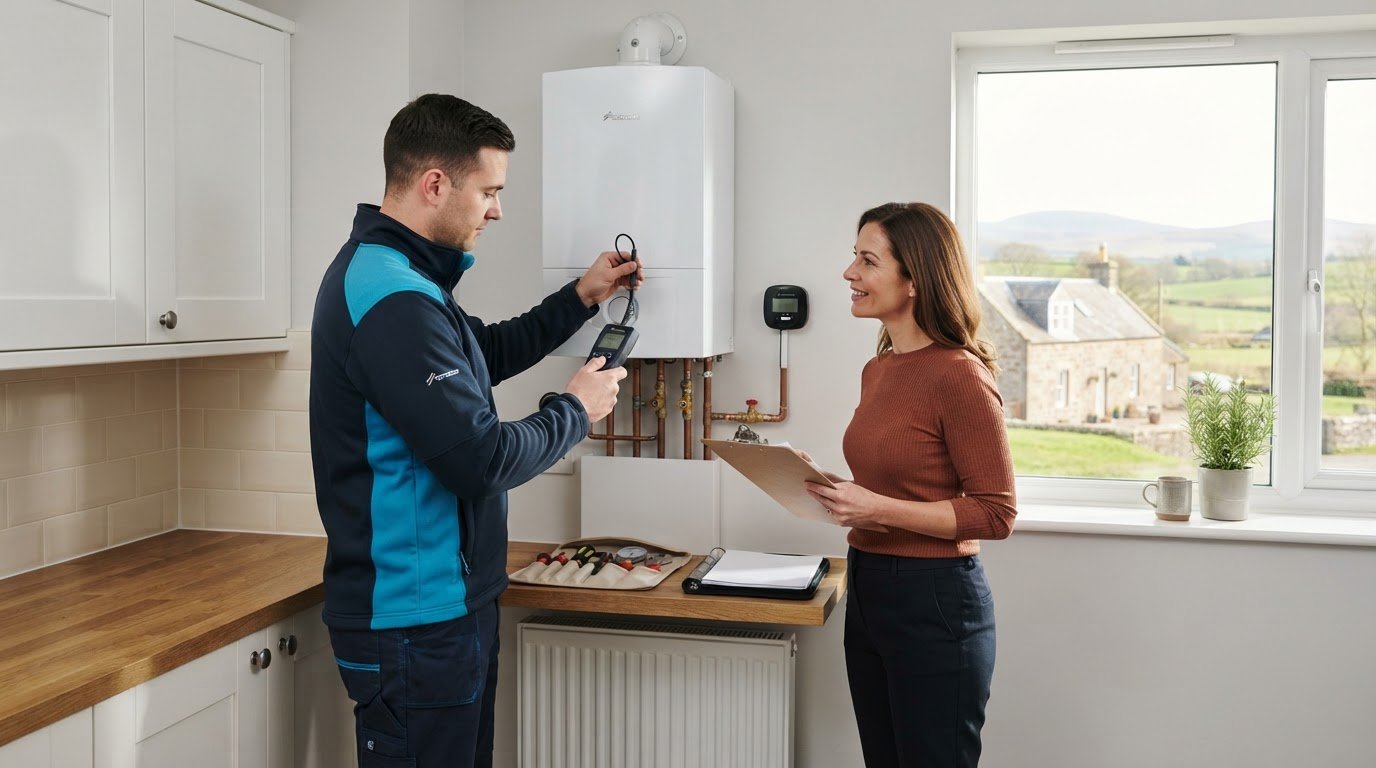
Landlord gas safety checks in Gretna and your duties
For a landlord gas safety check in Gretna, you remain responsible for making sure the gas appliances you provide are maintained and safe. The Gas Safety (Installation and Use) Regulations 1998 place this duty on landlords, according to The National Archives. Arrange a check every year: asking tenants to report problems doesn’t transfer your responsibility for the checks.
It’s understandable to want a clear routine, especially when a tenancy is changing or a certificate is due for renewal. A reliable schedule helps you keep records current, give tenants the information they need and address any safety issues identified during an inspection.
This guide explains what a gas safety record must contain, when to renew the check, how long to keep records and what to do if access is difficult. You’ll also learn what the inspection covers and how a qualified engineer can help you meet your obligations in Gretna.
Key Takeaways
- Keep responsibility for arranging checks and maintaining the gas appliances and fixtures you provide; tenants can report issues but don’t take over this duty.
- Use a Gas Safe registered engineer for the safety check, and make sure the record identifies and is signed by the person who carried it out.
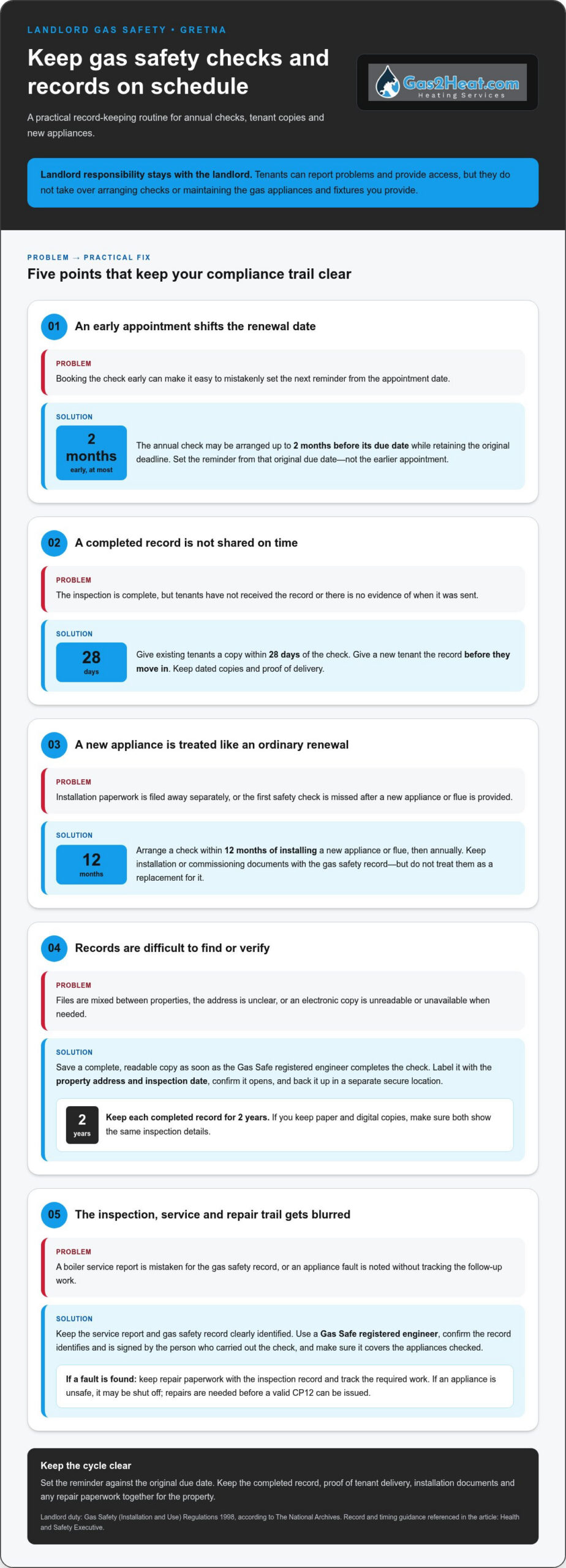
- Give existing tenants a copy of the completed record from the gas safety check within 28 days, according to the Health and Safety Executive, and keep your own record for 2 years.
- Plan the annual check ahead: the Health and Safety Executive allows it up to 2 months before its due date while retaining the original deadline.
- Build a renewal reminder into your tenancy records so you can arrange the next check and deal promptly with any safety issues found.
Can I keep the Landlord’s gas safety record electronically?
Yes. An electronic gas safety record can make it easier to organise inspection documents by property, appliance and tenancy. Keep a clear, complete copy that you can retrieve and share when needed. A digital folder labelled with the property address and inspection date helps distinguish the current record from older files.
For each property, save the record as soon as the Gas Safe registered engineer completes the check. Check that the file opens, the details are readable and the address matches the rental property. Back it up in a separate secure location, such as an organised business storage system. If you keep paper records too, make sure both versions show the same inspection details.
The Health and Safety Executive says UK landlords must give existing tenants a copy of the gas safety check record within 28 days of completing the check. Send the electronic copy in a way the tenant can access, and keep evidence of when you sent it. Give a new tenant the record before they move into a property with gas appliances. Store each completed record for 2 years.
Plan renewal before the deadline. The Health and Safety Executive says landlords may arrange an annual gas safety check up to 2 months before its due date while retaining the original deadline. Add a calendar reminder using the existing due date, not the earlier appointment date. This keeps the next renewal from drifting forward after an early inspection.
For a new boiler or another new appliance, keep the installation paperwork with the gas safety record. The Health and Safety Executive says landlords must arrange a check within 12 months of installing a new appliance or flue they provide, and annually thereafter. Keep the record and any installation or commissioning documents together, but don’t treat one as a replacement for the other.
A boiler service and a landlord gas safety check may be arranged at the same appointment. They serve different purposes, so keep the service report and gas safety record clearly identified. Make sure the record covers the appliances checked. If the engineer identifies a fault, keep the record and repair documentation together, and track required repairs before using the appliance again.
Failing to provide tenants with a gas safety record can have serious consequences. Keep dated copies and proof of delivery to show your records and tenant communication are in order.
Gas Safe registered engineers
Only a Gas Safe-registered engineer is qualified to carry out a UK landlord gas safety check. Gas Safe Register replaced CORGI on 1st April 2009, so an old CORGI reference doesn’t establish that an engineer is currently registered. Companies and engineers working with gas appliances must belong to Gas Safe Register. That requirement applies to checks and maintenance on gas equipment provided for tenants in domestic premises.
Which Gas Safe registered engineers offer landlord gas safety checks near Gretna? Choose an engineer who is registered and qualified for the gas work required at your property. Before arranging a visit, describe the appliances and confirm the engineer’s registration covers that work. A check supports your compliance records only when the person completing it is appropriately registered.
Make the appointment practical and specific. Give the engineer the property address, explain which appliances tenants use and arrange access to each one. For example, if a home has a boiler, gas hob and gas fire, identify all three when booking. This clarifies what the inspection needs to cover and reduces the risk of overlooking an appliance.
During the visit, the engineer examines the gas appliances, pipework and flues within the scope of the check. The inspection can include looking for leaks, checking ventilation and confirming that appliances operate correctly. Flue performance, combustion, appliance pressure and heat input also matter. Ask the engineer to explain any defect in plain terms and record the outcome for each appliance checked.
- Before the visit: list the gas appliances and arrange access to them.
- At the property: make sure the engineer can reach the appliances, controls and relevant flues.
- After the check: retain the completed gas safety record and note any required action.
A registered engineer may identify an appliance that needs attention rather than simply completing a routine check. Take the findings seriously. During the annual gas safety check, if an appliance is unsafe, it may be shut off and recorded; repairs are needed before a valid CP12 can be issued. Keep any repair paperwork with the inspection record so you can follow the issue from the engineer’s finding to its resolution.
For a landlord in Gretna, using a Gas Safe registered engineer is essential to meeting gas safety obligations. Confirm the engineer’s registration and relevant qualification before the appointment, then keep the completed record with the property’s compliance documents. This gives you a clear record of who carried out the inspection, what was checked and what action followed.
Can I delegate responsibility to tenants for maintenance and gas safety checks?
No. Tenants can report faults and provide access, but the landlord remains responsible for gas safety. Clear communication helps complete checks and address problems without confusion over who must arrange the work.
Landlord Responsibilities for Gas Safety
The Gas Safety Regulations 1998 place responsibility on landlords to ensure that gas appliances and fixtures are maintained and safe to use, according to The National Archives. This applies to gas equipment provided in residential properties. A tenancy agreement can explain how tenants should report faults, but it doesn’t transfer the landlord’s legal responsibility for maintenance and safety.
Keep an inventory of the appliances, fittings and flues you provide. Include the boiler, cooker connections and any gas fire, then record how access will be arranged for inspection. If a tenant reports a fault, arrange appropriate attention rather than asking them to manage repairs themselves.
Appliance and Flue Safety Checks
Checks cover the appliances and flues provided for tenants, including whether equipment operates correctly, has adequate ventilation and can safely discharge combustion products. The inspection also considers flue performance and combustion. Ask the engineer to identify each appliance checked and record any defect, so you can match the findings to the equipment in your property inventory.
The Health and Safety Executive says UK landlords must arrange a gas safety check within 12 months of installing a new appliance or flue they provide, and annually thereafter. Tenants can help by allowing access, but the landlord must arrange the inspection and retain the resulting gas safety certificates.
If a tenant prevents access, keep a clear record of your attempts to arrange the check and communications about entry. The Health and Safety Executive recommends at least three attempts, with the approach suited to the circumstances. Offer practical appointment options and explain why access is needed, while continuing to manage the duty yourself.
Installation also needs attention. Work on gas appliances must be carried out by a Gas Safe registered engineer, and relevant Building Regulations apply to boiler installation. The stated Building Regulations requirement calls for boilers to have a minimum efficiency of 86%. Keep installation paperwork alongside the appliance details, then arrange the required safety check.
Gas appliances in rooms converted to sleeping accommodation have specific safeguards. Since 31 October 1998, a gas fire, space heater or water heater above 14 kilowatts gross input must be room sealed in that setting. At 14 kilowatts or less, it must be room sealed or have an atmosphere-sensing device.
What should landlords do if a gas appliance fails a safety check? Take the engineer’s findings seriously: an unsafe appliance may be shut off and recorded. Repairs are needed before a valid CP12 can be issued.
Information required on a gas safety certificate
A landlord gas safety record, often called a CP12, documents the annual inspection of gas equipment in a rental property. Review the information carefully so tenants can identify the property, understand the inspection outcome and see who carried out the work.
Gas Safety Certificate Information
The record must include the name and signature of the person who carried out the check. Confirm these details are present and legible. Then compare the property details and listed appliances with the rental home, such as its boiler, gas hob or fire. This comparison can reveal a missing appliance or a record filed against the wrong address.
Read the inspection outcome for each appliance covered. If the engineer records a defect or an unsafe appliance, don’t treat the certificate as proof that the issue has been resolved. During the annual gas safety check, an unsafe appliance may be shut off, and repairs are needed before a valid CP12 can be issued. Keep repair documents with the inspection record.
Checking Certificate Validity
How can tenants check whether their landlord’s gas safety certificate is valid? Compare the address and appliances with the home, then check the inspection date and the engineer’s name and signature. A landlord gas safety report lasts for 12 months, so tenants can use its date to understand whether the annual record remains current.
Tenants should ask their landlord for a copy if they haven’t received one. The Health and Safety Executive says landlords must give existing tenants a copy within 28 days of completing the check. New tenants must receive the record before moving into a property with gas appliances. Keep the copy accessible, whether it arrives on paper or electronically.
For landlords, a simple document review before sharing the annual CP12 can catch errors early. Confirm that the property address is correct, the inspection details are readable, and the engineer’s name and signature appear. Match the appliances on the record against the property inventory. If a boiler or cooker is missing from the paperwork, clarify the discrepancy before relying on that record.
Keeping inspection records organised with other property documents can make them easier to find. Use a separate folder for each rental address, with the current CP12 easy to identify. For comprehensive property compliance alongside gas records, landlords who require electrical inspection and testing can consult Lyall Property Services to ensure all safety certifications stay up to date. Keep earlier records in date order rather than replacing them. This gives you a clear inspection history and helps distinguish the latest result from previous findings.
Give tenants the record in a format they can open and retain. For an electronic copy, use a readable file and keep evidence of when it was sent. For a paper copy, retain a duplicate in the property file. If a tenant reports carbon monoxide concerns or a boiler fault, treat that as a separate safety issue, not a substitute for reviewing the inspection record.
Annual gas safety checks and certificate renewal
Use the certificate’s expiry date to plan the next inspection, then record the appointment and outcome. A landlord gas safety report lasts for 12 months, so a clear schedule for annual checks helps prevent a gap between checks.
The Health and Safety Executive says landlords may arrange an annual gas safety check up to 2 months before its due date while retaining the original deadline. An early appointment can help avoid a last-minute scramble, particularly when tenant access or engineer availability affects scheduling. Keep the original renewal date in your records, even when the inspection happens earlier.
Set a reminder using the date on the current certificate, then arrange the next inspection with a Gas Safe registered engineer. Record the appointment against the rental address and note which appliances need checking. For example, if the property has a boiler, gas hob and gas fire, include the appliance list with the renewal reminder. This helps you prepare access and compare the new record with the previous one.
A new annual gas safety certificate provides 12 months of compliance from the expiry date of the previous certificate. This means an early check doesn’t automatically bring the next deadline forward. Keep both certificates in date order, and use the previous expiry date to track the next renewal. Clear filing helps landlords distinguish the current certificate from an older inspection record.
After the visit, review the certificate before closing the renewal task. Check that the property and appliance details are correct, and note any safety findings that require follow-up. If an engineer identifies an unsafe appliance, they may shut it off and record the issue. If the inspection identifies an issue, arrange any necessary follow-up and keep records with the inspection paperwork.
- Before the appointment: use the certificate expiry date to set a reminder and arrange access.
- At renewal: make sure the inspection covers the gas appliances provided at the property.
- After the check: file the new record and track any repairs or safety actions.
For a property with several gas appliances, a simple inventory helps you compare each annual inspection with the last. Update it when appliances are replaced or removed, and keep installation paperwork alongside the relevant certificate. This creates a practical history for the property without confusing an installation document with a gas safety record.
Keep renewal straightforward by arranging the next landlord gas safety certificate before the current record expires.
Gas2Heat.com: Boiler Installation
Gas2Heat.com Ltd can help Gretna landlords arrange an annual Landlord Gas Safety Certificate and keep their heating paperwork organised. If an inspection identifies a boiler fault, Boiler Repairs address the repair need; for a replacement, Boiler Installation is the relevant next step. Boiler Servicing is also available for routine boiler maintenance, but it doesn’t replace the separate gas safety check or its record.
Turn to Gas2Heat.com Ltd when a certificate is due, a boiler needs attention, or you’re planning an installation. Share the property details and the work you need so the next step is clear. Contact Gas2Heat.com Ltd or visit gas2heat.com to discuss your requirements.
Make your next gas safety step clear
A landlord gas safety check in Gretna is one part of managing a rental property’s heating safely. Use your property records to identify what needs attention next, whether arranging an inspection or addressing a boiler issue. Keeping safety paperwork and maintenance actions organised makes future decisions easier for you and clearer for tenants.
When the boiler needs work beyond the inspection, Gas2Heat.com Ltd offers Boiler Servicing, Boiler Repairs and Boiler Installation. These services address maintenance, faults or replacement needs, while a gas safety check remains a separate task. Choose the next step based on the issue identified and keep the resulting paperwork with the property’s records.
Take one practical action now: note the next task for the property and make sure it has an owner and a place in your records. For help with a check or related boiler work, contact Gas2Heat.com Ltd about your check. A clear plan can make your next maintenance decision more manageable.
Frequently Asked Questions
Is the landlord able to access a property for safety checks?
Yes, arrange access with the tenant so the engineer can inspect the gas appliances and flues. Agree a suitable appointment, explain which areas need access and keep the relevant messages. If the tenant cannot attend, discuss another arrangement rather than entering unexpectedly. For example, confirm access to the boiler cupboard and any room containing a gas fire before the visit.
Are there any defences available if a tenant refuses access and the certificate lapses?
A tenant’s refusal doesn’t transfer the landlord’s responsibility, but a clear record of access attempts is important. The Health and Safety Executive recommends at least three attempts, with the approach suited to the circumstances. Keep dated messages, appointment details and replies, then continue offering practical access arrangements. This creates a useful record of your efforts to arrange the inspection.
What are a landlord’s legal gas safety check requirements in Scotland?
Landlords in Scotland are responsible for keeping the gas appliances and fixtures they provide maintained and safe. The Gas Safety Regulations 1998 place this responsibility on landlords, according to The National Archives. In practice, keep the inspection record for the property, arrange checks for provided gas equipment and ensure tenants receive the required record. Keep appliance and tenancy documents together to make compliance easier to manage.
How often must landlords arrange a gas safety check in Gretna?
Arrange a check at least every 12 months for gas appliances provided to tenants. For a landlord gas safety check in Gretna, use the current record’s due date to plan the next appointment. The Health and Safety Executive allows an annual check up to 2 months before its due date while retaining the original deadline. Set a reminder against that original date, even after an early inspection.
What must an annual landlord gas safety check cover, and what is a CP12 certificate?
A CP12 is the common name for a landlord’s annual gas safety record. The inspection covers provided gas appliances, pipework and flues, including checks for leaks, correct operation and adequate ventilation. The engineer also checks flue performance, combustion, operating pressure and heat input. Compare the record with the appliances in the property, such as its boiler, hob or gas fire, to spot omissions.
How soon must landlords give tenants a copy of the gas safety record?
Give existing tenants a copy within 28 days of completing the check, according to the Health and Safety Executive. A new tenant must receive the current record before moving into a property with gas appliances. Keep evidence of delivery, such as a dated email or a note confirming a paper copy was handed over. This helps you track the deadline for each tenancy.
Who is qualified to carry out landlord gas safety checks in Gretna?
Only a Gas Safe registered engineer is qualified to carry out a landlord gas safety check in Gretna. Before arranging an appointment, make sure the person doing the inspection is registered for gas work. Ask who will attend and keep their name with the completed record. This links the inspection and its findings to the engineer responsible for carrying it out.
