
LPG Boiler Servicing in Scotland: The 2026 Homeowner’s Guide
For a rural Scottish home in 2026, your LPG boiler isn’t just a household appliance; it’s the primary lifeline that keeps your family safe from the biting winter cold. Maintaining an off-grid system requires more than a standard checkup. It demands a specialist who understands the unique pressures of stored fuel and the specific safety protocols required for rural properties. We understand the stress of finding a qualified engineer who holds the correct LPG Gas Safe tickets in areas like Moffat and Dumfries. It’s natural to worry about potential fuel leaks or the high cost of heating an older home when efficiency starts to slip.
This guide clarifies why professional LPG boiler servicing in Scotland is essential for your peace of mind and financial predictability. We’ll show you how to validate that your system meets 2026 safety standards while maximizing every litre of fuel you buy. You’ll learn what happens during a specialized inspection, how to spot the signs of a failing system, and the steps you can take to ensure your home remains safe, certified, and warm all year round.
Key Takeaways
- Understand the critical safety differences between mains gas and LPG, including why it’s vital that your engineer holds specific qualifications for stored fuel.
- Learn exactly what to expect during professional LPG boiler servicing in Scotland, from thorough component cleaning to flue system safety checks.
- Discover how the harsh Scottish climate affects your boiler’s performance and why proactive maintenance is the best way to prevent mid-winter breakdowns.
- Gain insights into maintaining your entire fuel system, including essential safety clearances for bulk tanks and the condition of flexible pigtail hoses.
- See why local expertise in South West Scotland ensures your off-grid heating system remains efficient, lowering your fuel costs and keeping you compliant with 2026 standards.
Why LPG Boiler Servicing is Vital for Rural Scottish Homes
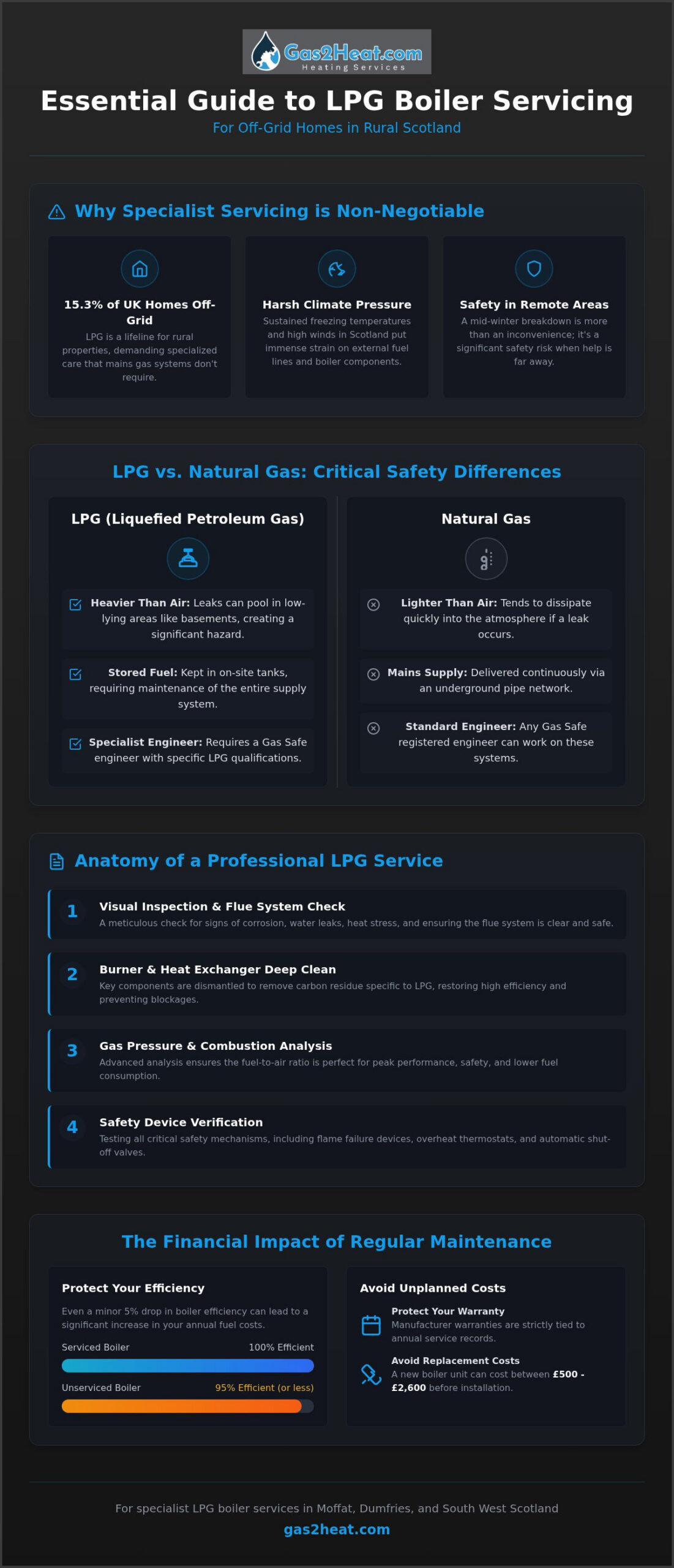
For roughly 15.3% of households in Great Britain that remain off the gas grid, Liquefied Petroleum Gas (LPG) is a reliable and high-performance heating solution. In rural Scotland, this fuel is the primary lifeline for domestic warmth. It offers the same instant control as natural gas but requires a more specialized approach to maintenance. Unlike properties in urban centers, rural homes often face the full force of the Scottish climate. Sustained freezing temperatures and high winds put immense pressure on external fuel lines and boiler components. Without regular LPG boiler servicing Scotland homeowners risk their systems failing exactly when they are needed most.
The financial stakes are also higher for off-grid users. Because the cost per unit of LPG is generally higher than mains gas, efficiency is your best defense against rising bills. Even a minor 5% drop in boiler efficiency can lead to a noticeable increase in your annual fuel spend. Regular maintenance ensures your system extracts the maximum heat from every litre of fuel. Beyond the immediate costs, manufacturer warranties for brands like Worcester Bosch or Vaillant are strictly tied to annual service records. Failing to book your service could leave you facing the full cost of a major repair if a component fails prematurely.
The Unique Challenges of Off-Grid Heating
Reliability is the top priority for residents in Moffat, Thornhill, or the surrounding Borders. A total breakdown in a remote area is more than a simple inconvenience; it’s a safety risk. LPG systems also face internal challenges that mains gas systems don’t. Over time, heavy ends and sediment can settle in storage tanks and find their way into the boiler’s delicate internal parts. Proactive maintenance allows an engineer to clear these deposits before they cause a lockout. Scheduling your service before the first winter freeze ensures your system is primed to handle the heavy workload of a Scottish winter.
Maximizing Efficiency and Reducing Fuel Waste
Our engineers use advanced combustion analysis to verify that your boiler is burning fuel cleanly and safely. This process measures the ratio of fuel to air, ensuring peak performance and a lower carbon footprint for your home. By choosing expert boiler servicing, you are protecting a significant investment. A modern LPG boiler unit can cost between £500 and £2,600 before installation. Regular LPG boiler servicing Scotland is the most cost-effective way to extend the lifespan of this hardware while ensuring your home stays warm and compliant with 2026 safety standards.
What Happens During a Professional LPG Boiler Service?
A professional service is a comprehensive health check for your heating system. It goes far beyond a simple visual scan. Every engineer from our team follows the strict guidelines set by the Gas Safe Register to ensure your appliance operates within safe parameters. When you book LPG boiler servicing Scotland, you receive a detailed breakdown of your boiler’s performance and safety status. This transparent approach removes the guesswork from maintenance and gives you total peace of mind before the winter months arrive.
We start with a meticulous visual inspection of the entire appliance and the surrounding flue system. We look for signs of corrosion, water leaks, or heat stress that could indicate a deeper mechanical problem. Next, we dismantle the burner and heat exchanger for a thorough clean. LPG can leave specific carbon residue if the combustion isn’t perfectly balanced. This cleaning process is vital for maintaining high efficiency and preventing the burner from becoming partially blocked over time.
Technical testing follows the cleaning phase. We test the gas pressure and flow rates to ensure they match the manufacturer’s specifications. These settings are different for LPG compared to mains gas. We also verify that all safety devices function correctly, including:
- Flame failure devices that cut gas if the pilot goes out
- Overheat thermostats that prevent system damage
- Automatic gas shut-off valves for emergency protection
Professional LPG boiler servicing Scotland ensures these critical components are ready to protect your home in an emergency. If any part shows signs of wear, we’ll identify it early to prevent a costly breakdown later.
The Technical LPG Checklist
We compare the operating pressure at your boiler against the output from your tank regulator. Discrepancies here often point to a failing regulator or a potential blockage in the supply line. Our engineers also inspect the burner for soot patterns unique to LPG combustion, which can signal an incorrect air-to-fuel ratio. Flue gas analysis is the most critical part of an LPG service because it provides a digital readout of the boiler’s combustion efficiency and carbon monoxide output.
Ventilation and Safety Clearances
LPG boilers have stricter ventilation requirements than natural gas units because the fuel is denser and heavier than air. We check for “compartment ventilation” in modern Scottish home designs to ensure the boiler has a constant supply of fresh air for safe combustion. During the colder months, we also verify that your flue terminal is clear of snow, ice, or seasonal debris. This prevents dangerous exhaust gases from backing up into your living space. If you haven’t had your system checked this year, it’s easy to schedule your boiler service with a local expert.
LPG vs. Natural Gas: Understanding the Safety Differences
Many homeowners assume that all gas is essentially the same. This is a dangerous misconception. While natural gas is lighter than air and rises, LPG is significantly denser. If a leak occurs, LPG does not dissipate into the atmosphere. Instead, it sinks and pools at floor level, filling voids like cellars, cupboards, or drainage points. This physical characteristic makes professional LPG boiler servicing Scotland a critical safety requirement rather than an optional task. It ensures that your system’s seals and connections are robust enough to prevent the silent accumulation of fuel at ground level.
Because of these differences, the Gas Safe Register requires engineers to hold specific LPG-qualified tickets. A standard domestic gas qualification for mains gas does not legally authorize an engineer to work on your off-grid system. We ensure all our engineers serving the SW Scotland region are fully certified for both fuel types. This ensures your system is handled by someone who understands the high-pressure nature of stored fuel and the specific risks involved in rural installations. Using a non-specialist engineer is not just illegal; it’s a gamble with your home’s safety.
The “Heavier Than Air” Risk Factor
The pooling nature of LPG dictates strict rules for boiler placement. You should never install an LPG appliance in a cellar or basement without specialized safety measures and forced ventilation. Standard safety checks must confirm that low-level vents remain unobstructed. This allows any escaped gas to clear rather than accumulating into an explosive mixture. If you ever smell gas in your rural property, the protocol is specific: extinguish all flames, don’t operate electrical switches, and evacuate the building immediately. Unlike mains gas, you can’t simply open a high window and expect the gas to clear. Carbon monoxide detectors also need strategic placement as part of a broader LPG safety plan to ensure they provide early warnings in these unique environments.
Legal Requirements for Landlords
If you manage a holiday let or a rural rental in Dumfries & Galloway, your legal obligations are stringent. You must hold a valid landlord gas safety certificate that specifically lists your LPG appliances. A standard certificate for a natural gas property will not suffice during a local authority inspection or a safety audit. Under the Repairing Standard of the Housing (Scotland) Act, you have a 24-hour window to address a total loss of heat or hot water, making a reliable system essential for compliance.
Annual inspections are the minimum requirement, but many owners of high-turnover holiday lets opt for more frequent checks. This proactive stance protects your guests and validates your insurance policy. Most insurers will void a claim if they discover uncertified work or an expired safety certificate. Investing in regular LPG boiler servicing Scotland ensures your property remains compliant with 2026 standards, protecting both your financial investment and your tenants’ safety.
Beyond the Boiler: Maintaining Your LPG Storage and Supply
Maintaining your off-grid heating system involves more than just checking the unit inside your kitchen or utility room. The external supply infrastructure is equally vital for safety and performance. When we perform LPG boiler servicing Scotland, we extend our inspection to the bulk tank or cylinder array. This ensures that the fuel reaching your boiler is at the correct pressure and free from contaminants. Neglecting these external components often leads to intermittent faults that homeowners mistakenly attribute to the boiler itself. A truly reliable system requires a holistic approach to maintenance that covers every inch of the fuel line.
Bulk Tank and Cylinder Safety
Your LPG tank requires a “no-fly zone” to operate safely. This means keeping the area within three meters of the tank clear of overgrown vegetation, combustible debris, or new garden structures. During our rural inspections in areas like Lockerbie and Moffat, we often find that encroaching shrubs can block the tank’s pressure relief valves. We also check for signs of physical damage or corrosion on external pipework. Delivery drivers need clear, unobstructed access to your tank all year round. Ensuring your storage area is well-maintained prevents delivery delays and reduces the risk of accidental damage during the refilling process.
The Role of the Regulator
Regulators are the unsung heroes of your heating system. They reduce the high pressure from the tank to a stable level that your boiler can handle. If a regulator begins to fail, you might notice your boiler locking out or making unusual noises. We also inspect the “pigtails,” which are the flexible hoses connecting your cylinders to the regulator. These hoses have a limited lifespan and require replacement every few years to prevent cracks and leaks. Integrating these checks into your overall heating efficiency strategy ensures that no fuel is wasted before it even reaches the burner.
Underground supply lines also play a role in your system’s health. Over time, ground movement can impact these lines, leading to subtle pressure drops that affect boiler performance. In 2026, many Scottish homeowners are also adopting smart telemetry systems. These monitors provide real-time data on your fuel levels, ensuring you never face a total run-out during a cold snap. By combining modern monitoring with professional LPG boiler servicing Scotland, you create a heating system that is both resilient and cost-effective. If you want to ensure your entire fuel supply is winter-ready, book your LPG system health check with our specialist team today.
Reliable LPG Heating Specialists in Moffat and SW Scotland
Selecting a provider for LPG boiler servicing Scotland shouldn’t involve guesswork. While many national firms prioritize the Central Belt, we focus our expertise on the specific needs of rural properties in the South West. Gas2Heat is a family-owned business established in 2017. We blend a commitment to honest, approachable service with a streamlined, tech-enabled approach to logistics. Our engineers understand the Moffat and Dumfries climate because they live here too. They know that a reliable heating system isn’t a luxury in this part of the country; it’s an absolute necessity for safe living.
Our Local Service Area
We offer a rapid response for homes across Moffat, Dumfries, Lockerbie, and Annan. Our engineers carry the precise Gas Safe tickets required for LPG work, which is a specialized field distinct from mains gas maintenance. Whether your home uses a modern combi-boiler or an older system boiler, we have the technical authority to ensure it meets 2026 safety standards. We are proud to support our local community with reliable plumbing and heating services. By choosing a local specialist, you avoid the delays and high call-out fees often associated with city-based contractors.
Booking Your 2026 LPG Service
The Gas2Heat promise is centered on transparent pricing and no-hassle scheduling. We remove the uncertainty from trade services by providing clear segments of information and direct communication. When you book with us, you aren’t just getting a certificate; you’re getting a comprehensive safety audit. To prepare for your engineer’s visit, please ensure there is easy access to both the boiler unit and your external fuel storage area. This helps our team work efficiently and ensures we can check every critical component of your fuel delivery system.
Our team will guide you through the entire process, from the initial inspection to the final performance report. We prioritize your peace of mind by ensuring every safety device is functional and every combustion parameter is optimized. Secure your home against the winter freeze by scheduling your annual check-up now. Contact us today for a professional and dependable LPG boiler check that respects your time and your budget. We’ll ensure your off-grid system remains safe, efficient, and fully compliant with all current Scottish regulations.
Secure Your Off-Grid Comfort for 2026
Maintaining an off-grid home in rural Scotland demands a proactive approach to heating safety. You’ve learned how LPG’s physical properties make specialized inspections vital for preventing hazardous leaks and ensuring peak efficiency during the harsh winter months. By focusing on both your internal appliance and the external storage infrastructure, you can avoid the high costs of fuel waste and unexpected breakdowns. Ensuring your system meets the latest safety standards isn’t just about compliance; it’s about protecting your family’s lifeline to warmth.
Gas2Heat provides the technical authority and regional expertise needed to keep your property safe. As a Moffat-based family business serving Dumfries and Galloway since 2017, our Gas Safe registered LPG specialists remove the uncertainty from trade services with transparent scheduling and professional care. Don’t wait for the first freeze to check your system’s health. Book your expert LPG boiler service with Gas2Heat today for total peace of mind. Professional LPG boiler servicing Scotland is your best investment for a safe and reliable winter. We look forward to helping you keep your home efficient and comfortable all year round.
Frequently Asked Questions
Is an LPG boiler service different from a natural gas service?
Yes, an LPG service includes specialized checks that aren’t required for natural gas systems. Our engineers inspect the external regulators, flexible pigtails, and bulk tank clearances to ensure the high-pressure fuel delivery is stable. Because LPG is denser than air, we also pay closer attention to low-level ventilation in your boiler room. These specific safety protocols are essential for protecting rural properties in Moffat and Dumfries from the unique risks of stored fuel.
How often should I have my LPG boiler serviced in Scotland?
You should book a service every 12 months to maintain safety and efficiency. Annual servicing is a mandatory requirement for most manufacturer warranties, including those from Worcester Bosch and Vaillant. In SW Scotland, the harsh winter climate puts extra strain on your heating system. Regular maintenance ensures your boiler is ready for the freezing months and helps prevent the stress of a total breakdown when you need warmth the most.
Can any Gas Safe engineer service my LPG boiler?
No, only engineers with specific LPG tickets on their Gas Safe registration can legally work on these systems. A standard natural gas qualification doesn’t cover the unique safety requirements of liquid petroleum gas. Always ask to see the back of an engineer’s ID card to verify their LPG credentials. Our team at Gas2Heat holds all the necessary certifications to provide professional LPG boiler servicing Scotland across the Dumfries and Galloway region.
What are the signs that my LPG boiler needs an urgent repair?
Look for yellow or orange flames, soot marks around the casing, or persistent pilot light failures. Unusual banging or whistling noises often indicate a buildup of limescale or a failing pump. If you smell a gassy odor near the floor, evacuate immediately as this suggests an LPG leak. Prompt action prevents minor faults from becoming dangerous emergencies. We provide rapid response repairs for homeowners in Lockerbie, Annan, and the surrounding rural areas.
Do I need to check my LPG tank as part of the boiler service?
Yes, a professional service should always include a visual inspection of your storage tank and external pipework. We check for signs of corrosion, physical damage, and the condition of the main regulator. It’s also vital to ensure the “no-fly zone” around your tank is clear of vegetation and debris. This holistic approach ensures that your entire fuel supply chain is functioning correctly, not just the boiler unit inside your home.
Is LPG more expensive to maintain than mains gas?
The maintenance costs are broadly similar, though LPG systems require specialized attention to external components like regulators and hoses. These parts have a limited lifespan and must be replaced periodically to ensure safety. While the fuel itself can be more expensive per unit, regular LPG boiler servicing Scotland keeps your consumption as low as possible. Proactive care is always more cost-effective than paying for emergency parts and labor during a winter breakdown.
What happens if my LPG boiler fails its safety inspection?
If an engineer identifies a “Dangerously Unsafe” or “At Risk” fault, they are legally required to isolate the appliance for your safety. We’ll provide a clear, transparent explanation of the issues and a detailed quote for the necessary repairs. Our goal is to resolve the problem as quickly as possible so your home stays warm. We prioritize transparency and honesty, ensuring you understand exactly what’s needed to meet current 2026 safety standards.
Will a service help reduce my LPG fuel consumption?
Yes, cleaning the heat exchanger and burner significantly improves how effectively your boiler converts fuel into heat. We use digital flue gas analyzers to optimize the combustion process, ensuring you aren’t wasting money on unburnt gas. Even a small efficiency gain can lead to noticeable savings on your annual fuel bills. Given that LPG prices remain a significant concern for off-grid homes, maintaining peak performance is the best way to control your energy costs.
