
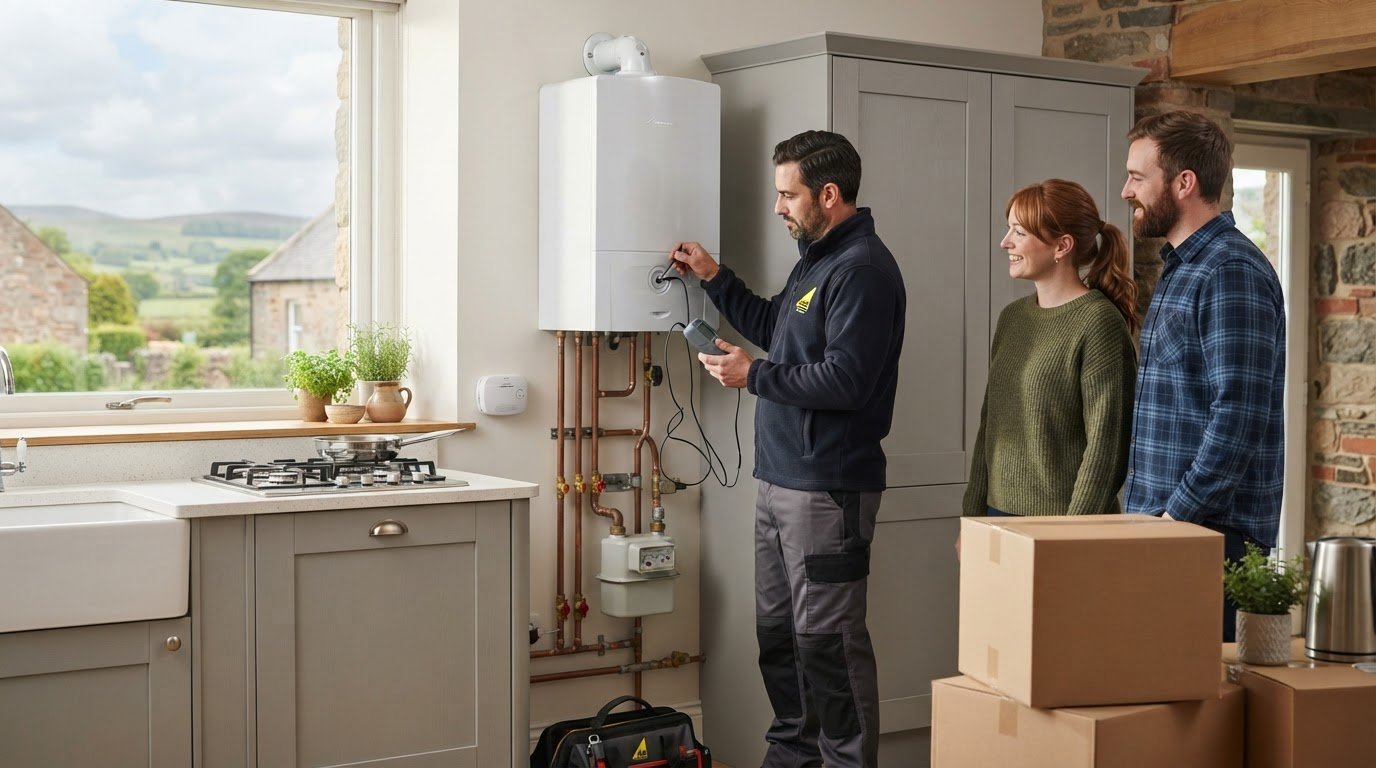
Moving Into a New Home? Your Gas Safety Check Checklist
What if the boiler looks fine, but its safety history is missing? Before using appliances in a new property, check what you can safely see and find out what the previous owner or landlord has recorded. Use this moving into a new home gas safety check checklist to take clear, practical steps.
It’s understandable to feel unsure when you don’t know when the boiler was last serviced or whether other gas appliances have been checked. A landlord gas safety record and routine checks for a homeowner aren’t the same thing, so knowing which documents to request matters.
This guide explains what to look for before using your appliances, which records to request, and which warning signs need prompt attention. You’ll also learn when to arrange an inspection with a Gas Safe registered engineer. If the property’s history is unclear, a professional check can help you understand the next steps and plan boiler maintenance.
Key Takeaways
- Use a simple visual checklist before using gas appliances, but remember that looking over an appliance cannot confirm it’s safe.
- Ask the previous owner, landlord or agent for appliance instructions, service history and any available safety records.
- A moving into a new home gas safety check can help clarify what needs attention when records are old, missing or unclear.
- Know which warning signs call for immediate action and when to arrange professional help from a Gas Safe registered engineer.
- Find out how to arrange a local check across Moffat and South West Scotland, and what property details to have ready.
Moving into a new home: what to check before using gas appliances
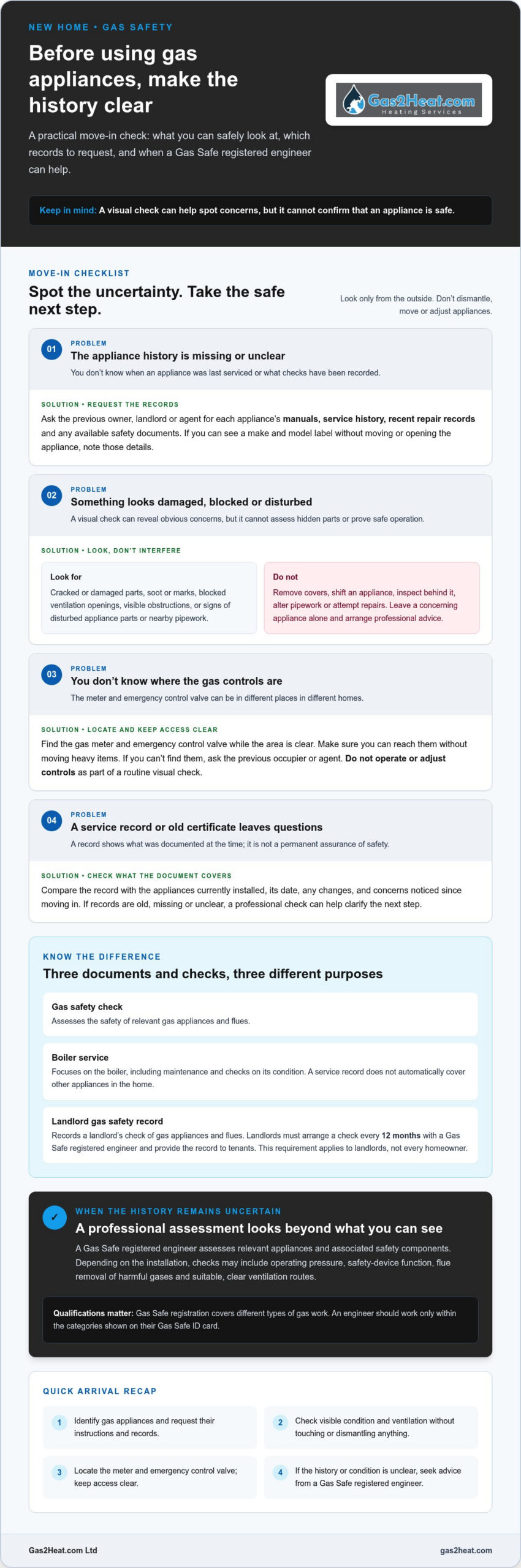
Before using the boiler, cooker or gas fire, make a calm visual check. Identify which appliances use gas, locate the gas meter and emergency control valve, and make sure you can reach them without moving heavy items. Ask the previous owner, landlord or agent for the appliance instructions, service records and any available gas safety documents.
- Look for obvious damage, blocked vents or signs that an appliance or nearby pipework has been disturbed.
- Keep appliance areas clear of stored items and visible obstructions.
- Check which instructions and records are available, and note appliance details you can see safely.
A visual check is not a professional gas safety inspection. It can help you spot concerns, but it cannot confirm that an appliance is operating safely or that hidden parts are in good condition. If the property’s history is unclear or something doesn’t look right, arrange a professional moving into a new home gas safety check.
What to inspect on arrival without dismantling anything
Look at each appliance from the outside. Check for cracked or damaged parts, soot or marks around the appliance, objects covering ventilation openings, and anything that appears newly fitted or disturbed. Don’t remove covers, shift an appliance to inspect behind it, alter pipework or attempt repairs. If you notice a concern, leave the appliance alone and arrange professional advice.
Locate the meter and emergency control valve while the area is clear. Make sure you know how to access them if needed, but don’t operate or adjust anything as part of a routine inspection. Their location varies between homes, so ask the previous occupier or agent if you can’t find them.
Which records should you request from the previous occupier?
Request the manuals, service history and records of recent repairs for each gas appliance. Ask for any available safety documents as well. These records can show what work was carried out and when, but they are not a permanent assurance of safety and don’t replace a current professional assessment.
If you can see an appliance’s make and model label without moving or opening it, write down those details. They can help identify the equipment when arranging future servicing or discussing a concern. For general background on the UK legal framework, see the Gas Safety (Installation and Use) Regulations 1998. If paperwork is missing or the history remains uncertain, a check by a Gas Safe registered engineer can give you a clearer picture.
What a professional gas safety check examines in a Scottish home
A professional gas safety check is an assessment by a Gas Safe registered engineer to establish whether relevant gas appliances and their associated components are operating safely. Unlike a visual checklist, it involves appropriate checks of an appliance’s operation and safety features. The work depends on the appliances and installation in the property, so the scope can vary from home to home.
Gas Safe registration covers different types of gas work. An engineer must work only within the qualifications shown on their Gas Safe ID card, which indicates the categories of work they’re qualified to carry out. The official UK Gas Safety Regulations set out the wider legal framework for gas installations and appliances.
How an engineer assesses appliances, flues, and ventilation
The engineer assesses relevant appliances and associated safety components. Depending on the installation, this may include checking operating pressure, the function of safety devices, and whether harmful gases can be removed safely through the flue. They’ll also consider whether ventilation routes are clear and suitable for the appliance. These are professional checks, not DIY tests. Don’t try to test a flue or adjust an appliance yourself.
For a buyer or new occupier, this assessment can turn uncertainty about an installation’s history into a clearer understanding of its condition. If the engineer finds a concern, they can explain what it means and what action is needed.
Gas safety check, boiler service, or landlord record?
These terms describe related but different things. A gas safety check assesses the safety of relevant gas appliances and flues. A boiler service focuses on the boiler itself, including maintenance and checks on its condition. A service record is useful, but it isn’t automatically a gas safety record covering other appliances in the home.
Landlord gas safety documentation records a landlord’s check of gas appliances and flues. In the UK, landlords must arrange a check every 12 months with a Gas Safe registered engineer and provide the record to tenants. This requirement applies to landlords; it doesn’t mean every homeowner receives or needs a landlord record. For more on landlord-specific responsibilities, read the landlord gas safety certificate guide.
If you’re moving into a new home and the documents don’t make the appliance history clear, a professional check can help identify the appropriate next step. Gas2Heat.com Ltd provides gas safety checks and boiler servicing through local Gas Safe registered engineers.
Old certificate or no paperwork? How to judge what you need next
A gas safety record or service history helps explain what work was carried out and when. It’s a dated snapshot, not a promise that an appliance will remain safe indefinitely. Consider the document date alongside any changes to the appliances and any concerns you’ve noticed since moving in.
| What you find | What to consider next |
|---|---|
| A recent record | Check which appliances it covers and whether they match what’s installed now. It gives useful context, but doesn’t guarantee their condition today. |
| An older record | Note its date and whether appliances or the installation have changed since. If you’re unsure what it covers, seek professional advice. |
| No paperwork or unclear details | Ask the previous owner, landlord or agent for any available records. If the history remains unclear, arrange a professional assessment. |
| Visible damage or unusual behaviour | Don’t rely on an old certificate to dismiss a current concern. Stop using the affected appliance if you’re worried, and seek professional help. |
Missing paperwork is a reason to seek clarity, not proof of an unsafe appliance. A moving into a new home gas safety check can help assess relevant appliances when records are absent or don’t match what you find.
Does an existing gas safety record mean the home is safe now?
No record can guarantee an appliance’s future condition. It shows that checks were carried out on a particular date and should identify the appliances covered. A boiler service record may document boiler maintenance without covering every gas appliance or flue in the property. Compare the paperwork with the equipment actually present, and take later changes or concerns into account.
When should you arrange a fresh check after moving?
Arrange professional advice if records are missing, unclear or don’t match the installed appliances. The same applies if an appliance shows visible damage or behaves unusually. Don’t dismantle it or try to repair it yourself. An owner-occupier can arrange a check for reassurance; landlord requirements are separate. In Scotland, landlords must arrange annual gas safety checks for relevant appliances and flues, using a Gas Safe registered engineer, and provide tenants with the record.
A safety check and a boiler service have different purposes. Learn more about professional boiler servicing in South West Scotland and routine maintenance.
Move-in gas safety checklist: warning signs and what to do
Keep this sequence in mind: observe, don’t interfere, respond to warning signs, then arrange professional help where needed. A gas smell or suspected leak is an emergency. Missing paperwork by itself is a routine reason to seek clarity, not an emergency.
- Observe. Notice unusual smells or sounds, visible soot, damage to pipework, or an appliance that isn’t working as expected. Don’t dismiss a concern just because the appliance still runs.
- Avoid interference. Don’t remove covers, touch pipework, try repairs or investigate a suspected leak yourself. If you smell gas, don’t operate electrical switches or use naked flames.
- Respond to warning signs. If you suspect a gas leak, leave the property and call the National Gas Emergency Service on 0800 111 999 from outside. Follow the operator’s instructions. This is the emergency contact for Scotland as well as England and Wales.
- Arrange professional help. For concerns that aren’t an immediate suspected leak, have the appliance assessed by a Gas Safe registered engineer. Keep it unused if you’re worried about its condition.
Warning signs that need prompt attention
Act promptly if you notice a smell of gas, hissing near pipework, visible damage, soot or black marks around an appliance, or unusual operation such as a flame that looks different from normal. Headaches, dizziness or nausea can also be warning signs of exposure to carbon monoxide. Move to fresh air and seek urgent help if anyone feels unwell. Don’t try to diagnose the cause or test the appliance yourself.
Suspected gas leak? Leave and call the emergency service. Unclear records without danger signs? Arrange a professional assessment.
A simple first-week checklist for new occupants
Once there’s no immediate concern, keep key details together so they’re easy to find:
- Note the locations of gas appliances, the meter and the emergency control valve.
- Keep available manuals, service records and safety documents together.
- Save the National Gas Emergency Service number and official emergency guidance.
- Keep ventilation openings and appliance areas clear. Don’t alter the installation.
If the appliance history or condition still feels uncertain, arrange a professional moving into a new home gas safety check. Gas2Heat.com Ltd’s local Gas Safe registered engineers serve Moffat, Dumfries and surrounding South West Scotland areas. Find out about a professional gas safety check with Gas2Heat.com Ltd.
Arrange a local gas safety check in Moffat and South West Scotland
Arrange a professional check if the home’s gas appliance history is unclear, records don’t match the equipment installed, or you’ve noticed a concern that needs assessment. A moving into a new home gas safety check can help you understand the condition of relevant appliances and any follow-up that may be needed. Gas2Heat.com Ltd provides gas safety and maintenance support through local Gas Safe registered engineers across Moffat, Dumfries, Lockerbie, Annan, Lochmaben, Thornhill, Gretna, Castle Douglas and surrounding South West Scotland areas.
What to prepare when arranging a professional visit
A few details can help the engineer understand the property and the reason for your appointment. Gather what you know, even if some information is incomplete:
- Property address: Include any useful access details.
- Known gas appliances: List the boiler, cooker, fire or other appliances you’re aware of. If you can see their make and model without moving anything, note those details.
- Available records: Set aside manuals, service history, repair records and any gas safety documents.
- Observed concerns: Describe unusual operation, visible damage or other issues, and when you noticed them.
Clear access to appliances and relevant areas helps the visit proceed smoothly. Before the appointment, move stored items that block access, but don’t remove appliance covers, shift connected equipment or alter pipework. If you suspect a gas leak, follow emergency guidance rather than waiting for a routine appointment.
Continue caring for the home’s heating system
A safety check and a boiler service have different purposes. Once you’ve dealt with move-in questions, planned boiler servicing can support ongoing maintenance by giving the boiler professional attention. Keep service records with your property documents so you can refer to them later and share them if further work is needed.
Gas2Heat.com Ltd is a family-owned heating specialist serving homes across South West Scotland. Its services include boiler servicing, repairs, landlord gas safety certificates, power flushing, smart thermostat installation and underfloor heating installation. Keep details of your appliances, paperwork and concerns ready when arranging support.
Explore gas safety and heating support from Gas2Heat.com Ltd.
Make your new home’s heating a confident start
A careful move-in check helps you spot visible concerns, locate essential controls and gather the appliance records you’ll need. But a visual look and an old certificate can’t confirm an appliance’s condition today. If records are missing or unclear, or something seems wrong, arrange a professional moving into a new home gas safety check. Treat a suspected gas leak as urgent and follow official emergency guidance.
Gas2Heat.com Ltd is a family-owned heating specialist with local Gas Safe registered engineers serving Moffat, Dumfries and towns across South West Scotland, including Lockerbie, Annan, Lochmaben, Thornhill, Gretna and Castle Douglas. Professional support can help clarify what needs attention and connect a safety check with ongoing boiler care.
Arrange a gas safety check with Gas2Heat.com Ltd and take the next step towards settling into your new home with greater confidence.
Frequently Asked Questions
Should I get a gas safety check when moving into a new home?
Consider arranging one if you can’t establish the appliances’ history, records are missing or unclear, or you’ve spotted a concern. Owner-occupiers aren’t generally legally required to arrange annual checks, but regular checks by a Gas Safe registered engineer are recommended. A moving into a new home gas safety check can help you understand the condition of the appliances and what, if anything, needs attention.
What does a gas safety check include in a home?
A professional check assesses relevant gas appliances and associated safety components. Depending on the installation, an engineer may check operating pressure, safety devices, ventilation and whether harmful gases can leave through the flue safely. The exact scope depends on the appliances in the property. It’s different from a visual check, which can help you notice obvious issues but can’t confirm that an appliance is safe to use.
Is a landlord gas safety certificate needed when I buy a home?
No, a buyer moving into a home as an owner-occupier doesn’t need a landlord gas safety certificate simply because they’ve bought the property. The certificate relates to a landlord’s gas safety duties when letting a home. If you’re buying a property to rent out, you’ll need to understand and meet the landlord requirements, including arranging checks of relevant gas appliances and flues by a Gas Safe registered engineer.
Can I check my new home’s gas appliances myself?
You can look for visible damage, blocked ventilation, soot or signs of disturbance, and keep appliance areas clear. You can also identify the appliances and locate the gas meter and emergency control valve. Don’t remove covers, alter pipework, test a flue or attempt repairs. These observations can flag concerns, but gas work and a professional appliance assessment must be carried out by a Gas Safe registered engineer qualified for that work.
What should I do if I smell gas after moving in?
Leave the property and call the National Gas Emergency Service on 0800 111 999 from outside. Don’t operate electrical switches, use a naked flame or investigate the suspected leak yourself. Follow the emergency operator’s instructions. If anyone feels unwell, get to fresh air and seek urgent medical help. Don’t treat a gas smell as a routine maintenance issue or wait for a planned appointment.
Does an old gas safety certificate prove my new home is safe?
No. A gas safety record documents the checks carried out on a particular date and the appliances covered. It can provide helpful context, but it can’t guarantee an appliance’s condition now or account for changes made afterwards. Compare the record with the appliances currently installed, consider its date, and take any newer concerns seriously. If documents are missing or don’t match, arrange professional advice rather than relying on old paperwork alone.
Should I book a boiler service as well as a gas safety check?
They serve different purposes. A gas safety check assesses the safety of relevant gas appliances and flues, while a boiler service focuses on the boiler’s condition and maintenance. If the service history is unclear, arranging servicing can help establish a maintenance baseline, but it doesn’t automatically replace a wider gas safety check. Gas2Heat’s local engineers serve Moffat, Dumfries, Lockerbie, Annan, Lochmaben, Thornhill, Gretna and Castle Douglas.

Leave a Reply
You must be logged in to post a comment.