
Power Flushing in Dumfries & Moffat: The Complete 2026 Guide to Heating Efficiency
Why pay for a 21-degree thermostat setting when your living room struggles to reach 17? It’s frustrating to watch your monthly gas bills rise while your radiators stay stubbornly cold at the bottom. You’ve likely noticed your boiler making a loud “kettling” noise, which is a clear sign that internal debris is forcing your system to work overtime. Ignoring these signs often leads to a premature £3,000 boiler replacement, yet many homeowners hesitate to book a power flushing service because they fear the process might cause system leaks.
We agree that your home should be a sanctuary of warmth, not a source of financial stress or mechanical noise. This 2026 guide reveals how a professional deep clean restores your heating performance and can cut your energy consumption by up to 15% based on typical UK system improvements. We’ll walk you through the transparent Gas2Heat process, show you how we protect your pipework, and explain why this simple maintenance step is the most effective way to extend your boiler’s lifespan in Dumfries and Moffat. Discover how to get your central heating back to its high-efficiency best with total peace of mind.
Key Takeaways
- Restore your heating system’s performance and lower your energy bills by understanding the critical benefits of professional power flushing.
- Learn to identify the warning signs of magnetite sludge, including cold spots and noisy boilers, before they lead to costly repairs.
- Determine the most cost-effective cleaning method for your Moffat or Dumfries home by comparing deep cleans with standard chemical treatments.
- Follow our expert diagnostic guide to assess your system’s health safely using simple, home-based testing techniques.
- Discover the Gas2Heat step-by-step process for a mess-free service that provides long-term protection for your boiler and radiators.
What is Power Flushing and Why is it Essential for Dumfries & Galloway Homes?
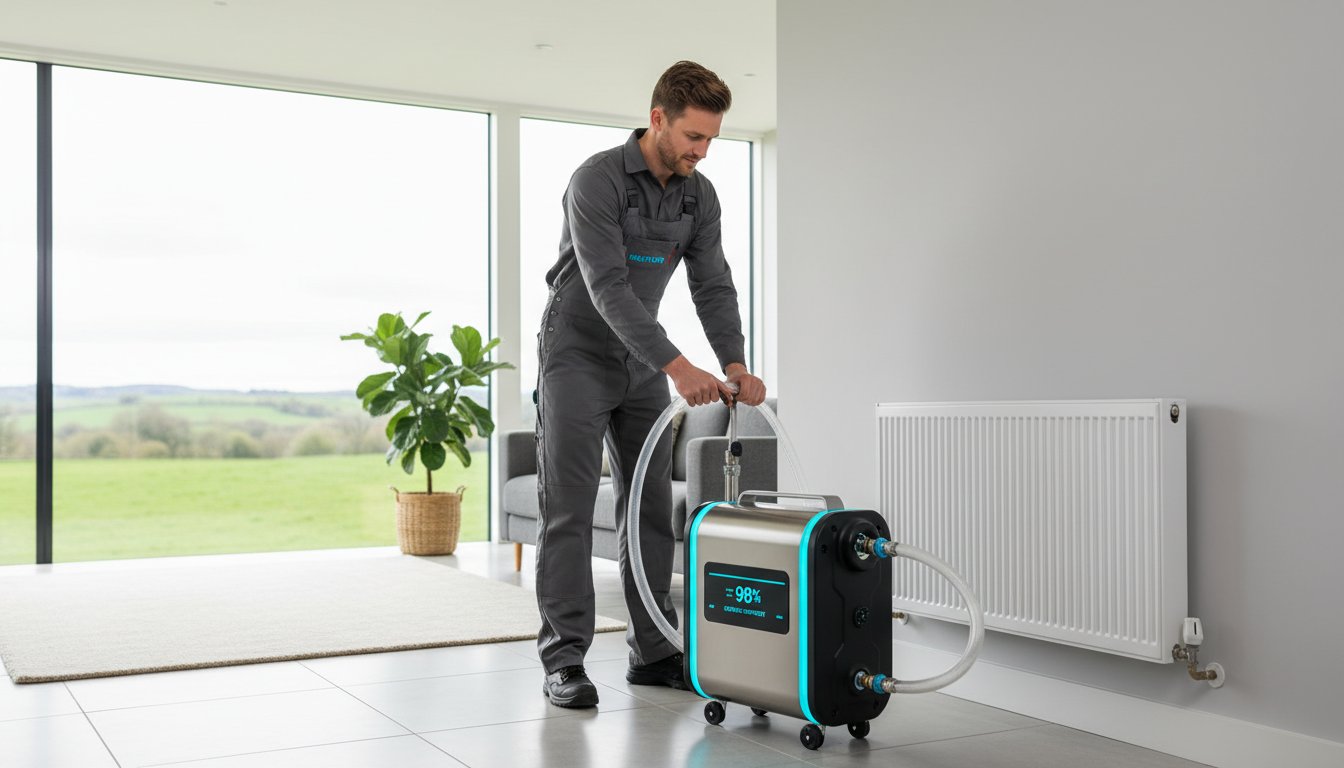
Power flushing is a high-velocity, low-pressure deep clean designed to purge your radiators and pipework of magnetite sludge. If you’ve wondered What is a central heating system? and why it eventually loses its punch, the answer usually lies in internal corrosion. Over time, the water in your pipes reacts with metal surfaces to create a thick, black debris. A Gas Safe registered engineer uses a specialised pumping unit to force cleaning chemicals through your system at high speeds. This process is vital for maintaining heating efficiency across South West Scotland, ensuring your boiler doesn’t work harder than it needs to during our harsh winters.
The Core Purpose: Restoring Your System to “As New” Condition
A professional power flushing service removes up to 95% of internal corrosion and debris. This restores the heat transfer efficiency that often degrades after just 60 months of operation. Many homeowners mistakenly believe a standard “drain down” is enough to clear their pipes. It isn’t. Draining a system only removes loose water, whereas a professional flush uses high-velocity flow to dislodge stubborn, baked-on magnetite. This is essential for modern high-efficiency boilers. These units have narrow waterways that block easily, leading to “kettling” noises and component failure. By restoring the system to an “as new” state, you protect your boiler’s warranty and ensure rapid heat distribution.
The Local Context: Why Moffat and Dumfries Systems Struggle
Properties in the Scottish Borders face unique plumbing challenges. Moffat’s historic stone cottages often feature older iron pipework that’s highly susceptible to internal oxidation. In contrast, modern Dumfries builds frequently suffer from flux residues left during installation, which accelerate corrosion if not professionally treated. Local water characteristics in Dumfries & Galloway can also lead to faster mineral buildup compared to other UK regions.
With the 2026 energy price climate remaining a concern for local families, system health is now a major financial priority. Industry data from the Carbon Trust indicates that even a 1mm layer of scale or sludge can reduce heating efficiency by 7%. For a typical Dumfries household, this means paying significantly more for less heat. A clean system can reduce fuel bills by up to 15%, making it a smart, proactive investment. Our local engineers provide a fixed price service that removes the uncertainty of home maintenance, giving you total peace of mind.
The Science of Central Heating Sludge: Understanding Magnetite
Magnetite is the primary cause of heating failure in Dumfries and Moffat homes. This black iron oxide forms when oxygen in the system water reacts with the internal steel surfaces of your radiators. It isn’t just dirty water; it’s a heavy, metallic debris that constantly circulates through your pipes. Because magnetite is denser than water, it naturally settles at the lowest points of your system. This is why you often feel radiators that are stone cold at the bottom while the top remains warm.
This sludge acts as a powerful thermal insulator. Instead of heat transferring from the water to the room, the debris traps it inside the radiator. Your boiler must burn significantly more gas to overcome this resistance. Beyond wasted energy, the abrasive nature of these particles causes physical damage. Magnetite particles often seize central heating pumps or block the narrow channels of a heat exchanger. Replacing these parts can cost upwards of £400, making preventative maintenance a much more cost-effective strategy.
Identifying these issues early prevents total system failure. You can often spot the symptoms that indicate a powerflush is needed by checking the clarity of the water when you bleed a radiator. If the liquid is dark or thick, your efficiency is already compromised.
The Chemical Reaction Inside Your Pipes
Oxygen introduced through tiny leaks or open-vented systems reacts with untreated metal to create a corrosive internal environment. While limescale is a calcium build-up common in hard water areas, black sludge is a product of metal decay. Modern high-efficiency boilers are particularly vulnerable because they often use aluminium heat exchangers. These components are designed for rapid heat transfer but have very narrow waterways. Even a small amount of debris can cause a complete blockage, leading to the boiler overheating and shutting down.
How Sludge Increases Your Carbon Footprint
System debris has a direct correlation with wasted fossil fuels. Industry data suggests that a heavily fouled system can be up to 15% less efficient than a clean one. This means for every £100 you spend on heating, £15 is wasted simply trying to push heat through layers of sludge. Keeping your system clean through power flushing helps your home meet modern eco-standards and reduces your annual CO2 emissions. It’s an environmentally responsible choice that extends the lifespan of your hardware, preventing the need for premature and carbon-intensive manufacturing of replacement radiators.

Power Flushing vs. Chemical Cleaning: Choosing the Right Solution
Homeowners in Dumfries often face a choice between a quick chemical circulate and a comprehensive power flush. These methods aren’t interchangeable. A chemical flush involves adding cleaning agents to your system and letting the boiler’s internal pump move them around. This works for minor maintenance, but it lacks the force to shift heavy magnetite. If your radiators have significant cold spots, a standard chemical circulate won’t solve the underlying issue.
Many people worry that power flushing might damage older pipework in Moffat’s traditional stone properties. This is a common myth. The process relies on high flow rates, not high pressure. Most systems operate at under 2 bar during the procedure, which is less pressure than a typical power shower. It’s the velocity of the water, combined with specialised magnets and chemicals, that scours the internal walls of your pipes safely.
Comparing the Methods: Power Flush vs. Chemical Flush
- Flow Velocity: A power flush uses an external pumping station capable of moving 90 to 150 litres of water per minute. A boiler’s internal pump rarely exceeds 20 litres per minute.
- Debris Removal: Power flushing uses high-strength magnets to capture black iron oxide (sludge) before it can settle back into the system.
- Warranty Compliance: To meet BS 7593:2019 standards and validate a new boiler warranty, manufacturers often mandate a full system flush rather than a simple chemical top-up.
We recommend a full flush if your system hasn’t been cleaned in over five years or if you’re upgrading to a high-efficiency condensing boiler. It’s the only way to ensure your new investment isn’t immediately contaminated by old debris.
The Investment: Cost vs. Long-Term Savings
While a professional power flushing service requires a higher initial investment than a basic chemical treatment, the ROI is measurable. According to data from Gastec at CRE, a clean system can improve heating efficiency by up to 15%. For a standard three-bedroom home in South West Scotland, this translates to significant annual savings on gas bills. You’ll also prevent the “hidden costs” of system neglect, such as premature pump failure or cracked heat exchangers.
Regular maintenance is essential for system longevity. Combining a clean system with annual boiler servicing ensures your components last their full expected lifespan. At Gas2Heat, we believe in complete transparency. We provide fixed-price quotes for every job, so you won’t see unexpected surcharges on your final bill. We focus on getting your home warm quickly and keeping it that way without the stress of hidden fees.
Identifying the Signs: Does Your Moffat Property Need a Power Flush?
Don’t wait for a total system failure during a Dumfries frost to assess your heating. You can identify the need for power flushing through a simple diagnostic check at home. Most homeowners only notice an issue when a room feels chilly, but the internal damage often starts months earlier. By spotting these signs now, you avoid the 15% increase in fuel consumption typically caused by system sludge.
The most effective DIY diagnostic is the “Touch Test”. After your heating has been running for 30 minutes, carefully feel the surface of your radiators. If the top is hot but the bottom-centre remains stone cold, you have a classic case of magnetite buildup. This heavy, black iron oxide settles at the lowest point of the radiator, creating a physical barrier that prevents hot water from circulating. For a more detailed diagnostic, see our 7 signs your radiators need flushing guide.
The Radiator Checklist
- Water Colour: When you bleed your radiators, the water should be clear. If it looks like black ink or contains gritty particles, your system is corroding internally.
- Cold Spots: Sludge blocks the bottom-centre of the panel first. This forces the boiler to run for longer cycles to compensate for the lost heat output.
- Slow Warm-up Times: In larger Dumfries properties, rooms furthest from the boiler often take 45 minutes or longer to reach temperature when the system is fouled.
Boiler and Pump Warning Signals
Your boiler often provides audible clues before it locks out. “Kettling” is a common symptom where the unit sounds like a whistling tea kettle or makes loud banging noises. This occurs when sludge or limescale restricts water flow through the heat exchanger, causing the water to flash-boil instantly. It’s a high-stress state for any appliance and often leads to the frequent failure of the circulation pump.
It’s also vital to realise that smart thermostats can actually mask efficiency issues. Because these devices are designed to reach a specific set-point at any cost, they’ll simply keep your boiler burning gas for longer to overcome the cold spots in your radiators. You might stay warm, but your energy bills will reflect the hidden struggle of a dirty system. If your pump is hot to the touch or your boiler vibrates during startup, the internal friction from contaminated water is likely the cause. Once your system is clean, pairing it with smart thermostat installation can help you take full control of your heating schedule and reduce wasted energy further.
The Gas2Heat Approach: Expert Power Flushing in South West Scotland
We provide a methodical, high-performance solution for homeowners across Dumfries, Moffat, and Lockerbie. Our engineers understand that local heating systems vary, from modern new-builds to traditional stone cottages. This local expertise allows us to balance your system perfectly; ensuring heat reaches every corner of your property without cold spots. We combine the physical cleaning of power flushing with the latest technology. Integrating smart thermostat benefits after a flush allows you to monitor your newly efficient system in real-time, which maximises your energy savings across South West Scotland.
What to Expect on the Day
Your home’s cleanliness is our priority. Before we start, we lay down protective sheets and use waterproof barriers to safeguard your carpets and furniture. A professional system restoration is a comprehensive 8-hour process. We never rush these jobs. Rushing leads to leftover debris that can quickly settle back into your pipework. Our team uses high-velocity pumps and magnetic filtration units during the flush to pull out every gram of black iron oxide. The final stage involves adding premium chemical inhibitors. These chemicals create a protective layer on the internal surfaces of your radiators, which prevents the chemical reaction that causes sludge to form in the first place.
- Protection: We secure your Moffat home with heavy-duty floor covers before any equipment enters.
- Agitation: We use specialised tools to vibrate radiators, loosening stubborn deposits that a standard flush misses.
- Verification: We test the pH levels and turbidity of the water to ensure the system is completely neutralised.
Post-Flush Benefits and Maintenance
We don’t just pack up and leave once the water runs clear. Every customer receives a detailed “System Health Report”. This report provides data on the temperature differential across your radiators, giving you clear evidence of the improvement. To maintain these results, we recommend installing a magnetic filter like the Adey MagnaClean. These filters act as a permanent shield, catching over 95% of magnetic debris before it can damage your boiler pump or heat exchanger.
Keeping your system Gas Safe and efficient requires regular check-ups. You can use our tech-enabled booking system to schedule your annual safety inspection, ensuring your heating remains reliable throughout the coldest Scottish winters. Our fixed price approach means you know exactly what you’re paying for, with no hidden costs or surprises after the power flushing is completed. This transparency is why we’re the trusted choice for heating maintenance in the Dumfries and Galloway region.
Protect Your Heating System and Lower Your Bills
Don’t let magnetite sludge compromise your comfort or increase your energy bills this year. A professional power flushing service clears out the internal blockages that cause cold radiator spots and noisy boiler operation. By restoring the flow of water throughout your pipes, you can improve heat distribution and reduce energy consumption by up to 15% based on Gastec industry figures. Our Gas Safe Registered Engineers are specialists in South West Scotland heating systems, ensuring your property stays warm regardless of the weather in Dumfries or Moffat. We provide a Fixed-Price Guarantee so you won’t face any hidden costs or surprise fees when the job is finished. It’s a straightforward way to protect your boiler and extend the life of your central heating components. Take control of your home’s efficiency with a local team that values transparency and rapid results.
Get a Fixed-Price Power Flush Quote in Dumfries & Moffat Today
Your heating system is the heart of your home, so give it the professional care it deserves to keep your family warm all year round.
Frequently Asked Questions
How much does power flushing cost in Dumfries & Galloway?
Expect to pay between £300 and £600 for a professional service depending on the size of your heating system. According to 2024 industry data from Checkatrade, the average cost for a standard three-bedroom home in the UK is approximately £450. We provide a fixed price quote before any work begins, ensuring there are no hidden costs or surprises when the job is finished.
Will a power flush cause my old radiators to leak?
A power flush won’t create leaks in healthy pipes, but it can occasionally reveal pre-existing corrosion holes that were previously plugged by thick sludge. While our equipment uses high-velocity water, it operates at a low pressure to ensure your system remains safe throughout the process. Our local engineers perform a 100% system inspection before starting to identify any thin spots or vulnerable joints in your radiators.
How long does a professional power flush take to complete?
A professional power flushing service typically takes between 6 and 10 hours to complete for a standard semi-detached property. If your system has more than 10 radiators or hasn’t been maintained for over 15 years, the process may require a full day of onsite work. Our engineers aim for a hassle-free experience, arriving early to ensure your heating is back up and running at peak efficiency by the evening.
Can I power flush my central heating system myself?
You shouldn’t attempt a DIY power flush because it requires specialist high-flow pumping equipment and professional-grade chemicals that aren’t available to the general public. Improper use of hire equipment can lead to 50% of the sludge remaining in the system or cause internal damage to your boiler’s heat exchanger. Our Gas Safe registered experts follow BS 7593:2019 standards to guarantee a thorough clean that protects your manufacturer’s warranty.
How often should a central heating system be power flushed?
Most modern heating systems require a flush every 5 to 6 years to prevent the accumulation of magnetite and debris. If you notice that 25% or more of your radiator surface feels cold, it’s a clear sign that sludge is restricting the heat flow. Regular maintenance can extend the lifespan of your boiler by up to 7 years, preventing the need for expensive emergency repairs or premature component failure.
Is power flushing necessary before installing a new boiler?
Yes, power flushing is a mandatory requirement for 100% of major boiler manufacturers to ensure the new unit isn’t contaminated by old debris. Installing a high-efficiency boiler into a dirty system can reduce its operational efficiency by 15% immediately and may void your warranty. Brands like Worcester Bosch and Vaillant specify that the system must be cleaned to British Standards before a new installation is commissioned.
Will power flushing make my house warmer and my bills lower?
You’ll notice a significantly warmer home and lower energy bills because the process restores 100% heat distribution to your radiators. According to the Gastec Training group, removing internal sludge can improve heating efficiency by up to 14%. This efficiency boost can save a typical UK household approximately £90 per year on gas bills, making it a cost-effective investment for your home’s long-term comfort. To maximise these savings further, consider our guide to smart thermostat installation in Moffat and Dumfries, which can reduce annual energy consumption by an additional 31%.
