
What is a System Power Flush? A Homeowner’s Guide to Heating Efficiency
Is your heating system actually broken, or is it just suffocating under years of hidden debris? It is incredibly frustrating to watch your energy bills rise while your radiators stay stubbornly cold at the bottom or your boiler makes unsettling noises. You might feel like a costly replacement is the only way out, but the reality is often much simpler. Understanding what is a system power flush is the first step toward reclaiming a warm home without the price tag of a brand-new installation.
We agree that you shouldn’t have to choose between a cold house and high monthly costs. A power flush acts like a restorative medical procedure for your pipework, clearing out the metallic sludge that forces your boiler to work twice as hard. This guide shows you how this professional service restores your heating efficiency, lowers your bills, and protects your equipment from unexpected breakdowns. We will walk you through the technical process, the British Standards involved, and how to tell if your home is a candidate for this essential maintenance.
Key Takeaways
- Understand what is a system power flush and how this high-velocity deep clean removes the metallic sludge currently choking your radiators.
- Identify the critical warning signs of a failing system, from stubborn cold spots on your radiators to loud “kettling” noises coming from your boiler.
- Gain a clear timeline of the professional cleaning process, which typically takes between 6 and 10 hours to fully restore your home’s warmth.
- Learn how a power flush protects your boiler warranty and why it is a safer, more effective alternative to simply ignoring heating issues.
- See why local expertise in South West Scotland ensures your heating system is handled by professionals who understand regional property demands.
What is a System Power Flush and How Does It Work?
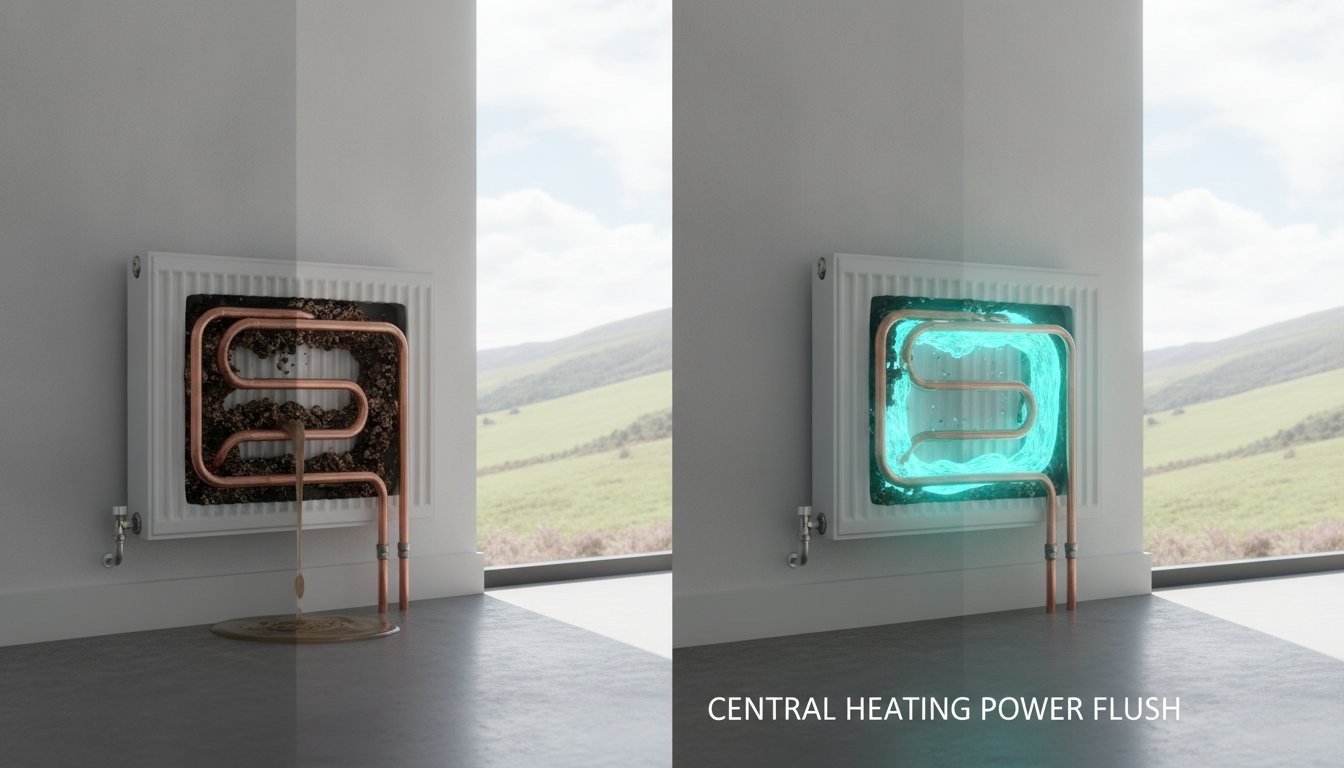
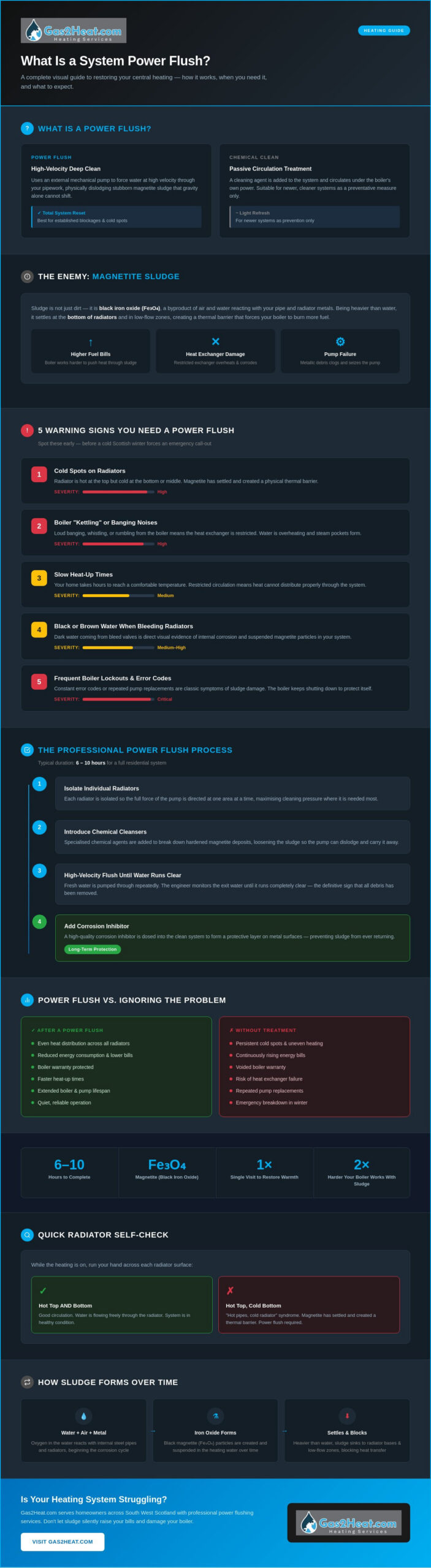
Many homeowners ask, “what is a system power flush?” when they realize their heating isn’t performing like it used to. Simply put, it’s a high-velocity, low-pressure deep clean designed to restore your central heating system to its original efficiency. Unlike a standard drain-down, which relies on gravity and often leaves heavy deposits behind, a power flush uses mechanical force to move debris that would otherwise stay stuck. We use specialized pumping machines and targeted cleaning chemicals to dislodge the “sludge” that builds up over years of operation.
Magnetite is the primary cause of radiator blockages and internal corrosion, forming a thick, black substance that settles in the heart of your system. If left untreated, this metallic debris can cause significant damage to your boiler’s heat exchanger and pump.
During the procedure, our engineers follow a professional sequence to ensure a thorough clean:
- Individual radiators are isolated to focus the full force of the pump on one area at a time.
- Specialized chemical cleansers are introduced to break down hardened magnetite.
- Fresh water is flushed through the pipework until the exit water runs completely clear.
- A high-quality corrosion inhibitor is added at the end to prevent the sludge from returning.
The Science of Sludge: Why Your System Gets Dirty
Sludge isn’t just dirt; it’s a byproduct of a chemical reaction. When air and water react with the internal metal components of your pipes and radiators, they create black iron oxide. In the damp, cold climate of South West Scotland, your heating system often works overtime during the long winter months. This constant thermal cycling can accelerate the rate of internal corrosion if the water isn’t properly treated. Magnetite is heavier than water, so it naturally settles in low-flow areas like the bottom of your radiators. This buildup creates a thermal barrier, meaning your boiler has to burn more fuel just to push heat through the thick layer of grime.
Power Flush vs. Chemical Clean: Knowing the Difference
Choosing the right treatment depends on the age and health of your pipework. A chemical clean is a passive treatment where we add a cleaning agent to the system and let it circulate under the boiler’s own power. It’s often sufficient for newer, cleaner systems as a preventative measure. However, if you’re already experiencing circulation issues or cold spots, a power flush is required. The mechanical force of an external pump is the only way to shift established blockages that a simple chemical additive cannot dissolve on its own. While a chemical clean is a light refresh, a power flush is a total system reset.
5 Signs Your Heating System Needs a Power Flush
Recognizing the early warning signs of a clogged system can save you from a total breakdown during a cold Scottish winter. If you’ve been wondering what is a system power flush and whether your home requires one, your radiators are likely already sending you signals. Look out for these five key indicators that your central heating is struggling to perform.
- Cold spots: Radiators that are cold at the bottom or middle but hot at the top indicate a heavy buildup of sludge.
- Noisy operation: Excessive banging, whistling, or “kettling” sounds coming from your boiler suggest the heat exchanger is restricted.
- Slow heat-up times: If your home takes hours to reach a comfortable temperature, the system is working inefficiently.
- Dirty water: Bleeding your radiators and seeing black or brown water is a clear sign of internal corrosion.
- Frequent breakdowns: If your boiler frequently locks out with error codes or requires constant pump replacements, sludge is the likely culprit.
Don’t wait for your heating to fail completely. Identifying these symptoms early allows you to take action before a minor blockage turns into a major repair bill. A system reset through a power flush can often resolve these issues in a single visit.
Identifying Cold Spots and Circulation Issues
Check your radiators safely by running your hand across the surface while the heating is on. If the top is hot but the bottom is stone cold, you have “hot pipes, cold radiator” syndrome. This happens because heavy magnetite settles at the base, creating a physical barrier that prevents hot water from circulating. Monitoring your home’s heating efficiency helps you spot these issues before they impact your wallet. A system that can’t circulate water properly will force your boiler to run longer, driving up your gas bills without actually warming your rooms.
Boiler Noises and “Kettling” Explained
When sludge accumulates in the narrow channels of your boiler’s heat exchanger, it causes localized overheating. This leads to a phenomenon known as “kettling,” where water trapped behind the sludge begins to steam and bubble, much like a kitchen kettle. According to the Energy Saving Trust, keeping your boiler well-maintained is essential for long-term reliability. Ignoring these noises can lead to cracked components or a full system failure. A power flush acts as a vital preventative measure, clearing the path for water to flow freely and quietly again. If you notice these sounds, it’s wise to book a professional assessment to protect your investment.
What to Expect During a Professional Power Flush
Knowing what is a system power flush involves understanding the meticulous, day-long commitment required to do the job right. A professional flush isn’t a quick spray; it’s a comprehensive process that typically takes between 6 and 10 hours. This duration depends on the number of radiators in your home and how much sludge has accumulated. We focus on quality over speed to ensure every trace of magnetite is gone before we leave.
The procedure follows a logical, step-by-step progression:
- Initial system inspection and water testing.
- Connection of the high-velocity pumping station.
- Chemical circulation to loosen debris.
- Individual radiator flushing and agitation.
- Final system neutralisation and inhibitor application.
Preparation and System Connection
We treat your home with the same respect as our own. Our engineers begin by protecting your carpets and surfaces with waterproof dust sheets and floor covers. To minimize disruption to your plumbing, we usually connect the power flushing machine at the central heating pump or a convenient radiator. This setup allows us to circulate water through the entire circuit without removing every radiator from the wall. Crucially, the system remains under low pressure throughout the entire procedure. This protects your joints and seals while the high-velocity water flow does the heavy lifting.
The Individual Radiator Flush
The real work happens when we isolate each radiator one by one. By focusing the pump’s full power on a single unit, we can shift heavy deposits that a general flush would miss. We use specialized vibration tools, often called agitators, to tap the base of the radiator. This loosens stubborn, hardened magnetite that has settled in the corners. We monitor the water clarity at every stage. We only move to the next radiator when the water passing through the magnetic filter runs crystal clear. Once the entire system is clean, we add a high-quality chemical inhibitor. This final step creates a protective layer on the internal metal surfaces, preventing future corrosion and keeping your heating efficient for years to come.
Addressing the Risks: Will a Power Flush Cause Leaks?
A common worry for homeowners is whether the process might damage their pipework. When considering what is a system power flush, it’s vital to understand that the procedure does not create leaks; it simply reveals existing ones that were already there. Over time, corrosion can eat away at the internal metal of your radiators. In heavily neglected systems, the very sludge we are trying to remove can sometimes act as a temporary plug for a pre-existing pinhole. Clearing that debris exposes the flaw, but it didn’t cause it.
Our professional engineers always perform a thorough pre-flush inspection to assess your system’s overall integrity before we begin. We look for signs of advanced corrosion, thinning metal, or weeping joints that might indicate a radiator is nearing the end of its life. While discovering a weak spot during a service might seem inconvenient, it is far better than facing an emergency burst in the middle of a freezing winter. Finding these issues during a controlled, professional visit gives you the peace of mind that your home is truly protected. We’d much rather identify a problem while we are already on-site with the tools to fix it than have you wake up to a flooded lounge on Christmas Day.
Sludge as a Temporary Seal
Corrosion is a silent process. As magnetite builds up, it often masks the damage it’s causing to the radiator walls. If a radiator is particularly old or has been poorly maintained, removing that layer of grime might expose a tiny hole. This is why we don’t just hook up the machine and hope for the best. We analyze the age of your installation and the quality of the water currently inside your pipes. If we determine that your system is too fragile for a full power flush, we’ll recommend a more gentle approach to ensure your home stays dry. We prioritize the safety of your property above all else and won’t perform a service that puts your home at unnecessary risk.
The Safety of Low-Pressure Flushing
There is a common myth that a power flush uses high-pressure water like a jet wash. This is simply not true. The machines we use are designed for high velocity, not high pressure. In fact, the pressure used during the flush is often lower than the standard operating pressure your boiler uses every day. This makes it a safe and effective way to clean your pipework without stressing the joints or forcing seals to fail. For the best results, you should always rely on expert plumbing and heating services to manage the process. If you’re concerned about the age of your radiators, request a professional inspection to see if your system is ready for a deep clean.
Why South West Scotland Homeowners Choose Gas2Heat for Power Flushing
Choosing a local specialist means hiring a team that understands the specific demands of properties in the Dumfries and Galloway region. When you ask what is a system power flush, you deserve an answer that reflects the reality of your local area. Our engineers bring deep regional expertise to every home, ensuring your heating is ready to handle the unique challenges of the Scottish climate. We don’t just provide a service; we deliver long-term reliability through a tech-enabled, transparent approach.
Homeowners across the South West choose us because we prioritize their convenience and peace of mind:
- Gas Safe Registered: Every engineer is fully certified and follows strict safety protocols.
- Fixed-Price Quotes: We provide clear, upfront pricing with no hidden complications or surprise fees.
- Professional Equipment: We use the latest high-velocity flushing technology to ensure a 100% clear flow.
- Integrated Care: Our flushing service works seamlessly with your existing maintenance or boiler protection plans.
Local Knowledge and Regional Service
We take pride in serving communities from Annan to Castle Douglas with a rapid and dependable response. The damp, cold conditions in the Scottish Borders mean your heating system works harder and longer than in many other parts of the UK. This constant use accelerates the buildup of magnetite, making regular system resets essential. We believe that professional boiler servicing should always include a detailed water quality check. By identifying issues before they cause a breakdown, we help keep homes across South West Scotland warm and efficient all year round.
The Gas2Heat.com Ltd Quality Guarantee
We understand that inviting engineers into your home can be stressful, so we operate with a strict “no-mess” promise. Our team uses protective covers and specialized containment systems to ensure your property remains spotless throughout the day. We don’t just tell you the system is clean; we prove it. Our engineers use digital water analysis and thermal imaging to verify that every radiator is heating evenly and that the corrosion inhibitor is at the correct concentration. Understanding what is a system power flush is only half the battle; you also need a team that can execute the process safely in older Scottish homes. Take the first step toward a more efficient home and book your power flush consultation with our Moffat team today.
Secure a Warmer, More Efficient Home
Investing in your heating system today prevents the stress of a total breakdown tomorrow. By removing years of accumulated magnetite and sludge, you restore the circulation your radiators need to heat your home effectively. You’ve learned about the technical process, the warning signs to watch for, and exactly what is a system power flush. This professional deep clean is the most effective way to lower your monthly energy costs while extending the lifespan of your existing boiler.
We are a local, Moffat based family business dedicated to keeping South West Scotland warm. Our Gas Safe Registered engineers provide fixed price efficiency restoration; this ensures you get expert results without any hidden complications or surprise fees. Don’t let a clogged system drive up your bills or leave you in the cold this winter. Restore your heating efficiency-Book a professional power flush with Gas2Heat today. You deserve a heating system that works as hard as you do and provides the reliable warmth your family needs.
Frequently Asked Questions
How much does a power flush cost in South West Scotland?
The cost of a power flush depends primarily on the size of your property and the total number of radiators in your system. We provide transparent, fixed-price quotes rather than hourly rates to ensure you know exactly what you’ll pay before we start. Factors such as the age of your pipework and the severity of the magnetite buildup also play a role in the final price. Contact our Moffat team for a bespoke quote tailored to your specific home.
How long does a power flush take for a 3-bedroom house?
A thorough power flush for a typical 3-bedroom home usually takes between 6 and 8 hours to complete. This timeframe allows our engineers to isolate every radiator and ensure the water in each circuit runs crystal clear. While some larger properties may require a full 10-hour day, we never rush the process. We prioritize a deep, effective clean to guarantee your heating system’s long-term reliability and efficiency.
Can you power flush a combi boiler system?
Yes, you can and should power flush systems equipped with modern combi boilers. Combi boilers feature very narrow channels within their heat exchangers that are highly sensitive to even small amounts of sludge. A professional flush protects these delicate internal components from blockages and prevents the “kettling” noises often caused by debris. It’s a standard maintenance task that helps your combi boiler reach its maximum rated efficiency.
Is a power flush necessary before installing a new boiler?
Most boiler manufacturers require a full system flush to validate your new appliance’s warranty. Installing a high-efficiency boiler into a dirty system allows old sludge to immediately enter and damage the new heat exchanger. Adhering to the BS 7593:2019 code of practice ensures you comply with UK Building Regulations. This step protects your investment and ensures your new installation isn’t compromised by pre-existing corrosion from your old pipework.
How often should a central heating system be power flushed?
Most systems benefit from a power flush every 5 to 10 years depending on the quality of the installation and maintenance history. If you have a high-quality magnetic filter and maintain your corrosion inhibitor levels, you may need it less frequently. We check your water quality during your annual boiler service to determine the health of your system. This proactive approach helps you decide when a flush is truly necessary to maintain peak performance. For those interested in the standards of residential plumbing and heating care, you can learn more from the experts at Brass Tacks Plumbing & HVAC.
Will a power flush make my radiators hotter?
A power flush will significantly improve the heat output of your radiators by removing the sludge that acts as an insulator. When magnetite settles at the bottom of a radiator, it prevents hot water from reaching the metal surface, leaving you with cold spots. Once we clear these blockages, the entire radiator surface can emit heat again. You’ll notice your rooms warming up much faster and your home feeling more comfortable overall.
Can I do a power flush myself with a hired machine?
DIY power flushing is not recommended because it requires technical expertise and high-strength chemicals that aren’t available to the general public. Professional machines operate at high velocities that can cause leaks if the system isn’t correctly assessed first. Our Gas Safe registered engineers use diagnostic tools to monitor flow rates and water chemistry throughout the day. Hiring an expert ensures the job is done safely and effectively without risking damage to your boiler.
What happens if I don’t get a power flush when my system needs one?
Ignoring the need for a flush leads to significantly higher energy bills and eventual system failure. Sludge buildup forces your boiler’s pump to work harder, which leads to premature wear and expensive emergency repairs. Understanding what is a system power flush helps you see it as a preventative measure rather than an optional luxury. Regular cleaning prevents the internal corrosion that eventually leads to cracked heat exchangers and flooded homes. To explore more about professional HVAC maintenance, read more.
