

Winter Heating Preparation Scotland: The 2026 Homeowner’s Checklist
What if the most expensive mistake you make this year isn’t a luxury holiday, but assuming your boiler is ready for the first frost just because it’s currently working? You’ve likely felt that familiar worry as the nights draw in across South West Scotland. It’s the stress of rising energy costs and the fear of a sudden breakdown during a freezing January night. Effective winter heating preparation Scotland is about more than just turning the dial up; it’s about ensuring your system is efficient enough to keep costs low and reliable enough to never leave you in the cold.
We understand that trade services can feel complicated and overwhelming. You might wonder if power flushing is actually necessary or if your current thermostat is wasting money. This 2026 homeowner’s checklist simplifies the process by providing a clear, professional roadmap to a warmer home. You’ll learn how to identify hidden system issues, optimize your boiler performance, and gain the peace of mind that comes from knowing your family is safe and your bills are under control. We cover everything from essential Gas Safe servicing to the latest smart technology upgrades available in the Borders region.
Key Takeaways
- Start your winter heating preparation Scotland by September to avoid the peak season rush and ensure your system is ready before the first frost.
- Follow a proactive maintenance routine by checking boiler pressure and radiator health to prevent sudden breakdowns during freezing temperatures.
- Boost system efficiency and lower your energy bills by clearing internal sludge through professional power flushing and installing smart controls.
- Identify and insulate vulnerable pipes in unheated areas like lofts and garages to prevent the significant damage caused by winter bursts.
- Prioritize safety by ensuring all heating work is performed by a Gas Safe registered engineer with local expertise in South West Scotland.
Understanding the Scottish Winter Heating Season
While standard advice often suggests the heating season begins in October, residents in South West Scotland know that the damp chill can settle in much earlier. Effective winter heating preparation Scotland requires a proactive approach that begins in September. This isn’t just about ensuring the house feels warm; it’s about shifting from a system that simply “turns on” to one that is fully optimised for the 2026 energy landscape. With energy prices remaining a primary concern for households, every percentage point of efficiency you gain during autumn directly translates to lower monthly bills when the frost arrives.
The climate in the Borders and surrounding areas presents unique challenges for central heating systems. High humidity levels combined with sudden temperature drops put significant strain on boiler components. Preparing early allows you to transition your system from its summer dormancy to full winter capacity without the stress of a total breakdown during a cold snap. It’s the difference between a system that struggles to meet the thermostat’s demands and one that runs quietly and efficiently in the background.
Why Preparation Starts in Early Autumn
Securing a professional inspection in September or early October is a strategic move. This timing helps you avoid the inevitable winter rush that overwhelms heating engineers in Moffat and Dumfries once the first major freeze hits. During an early autumn check, engineers can identify small leaks, strange noises, or minor component wear that would otherwise escalate into expensive emergency repairs in December. You don’t want to discover a faulty pump or a blocked flue when every local specialist is already fully booked. Early action ensures your home is ready for that first overnight frost, providing immediate peace of mind.
Common Heating Failures in South West Scotland
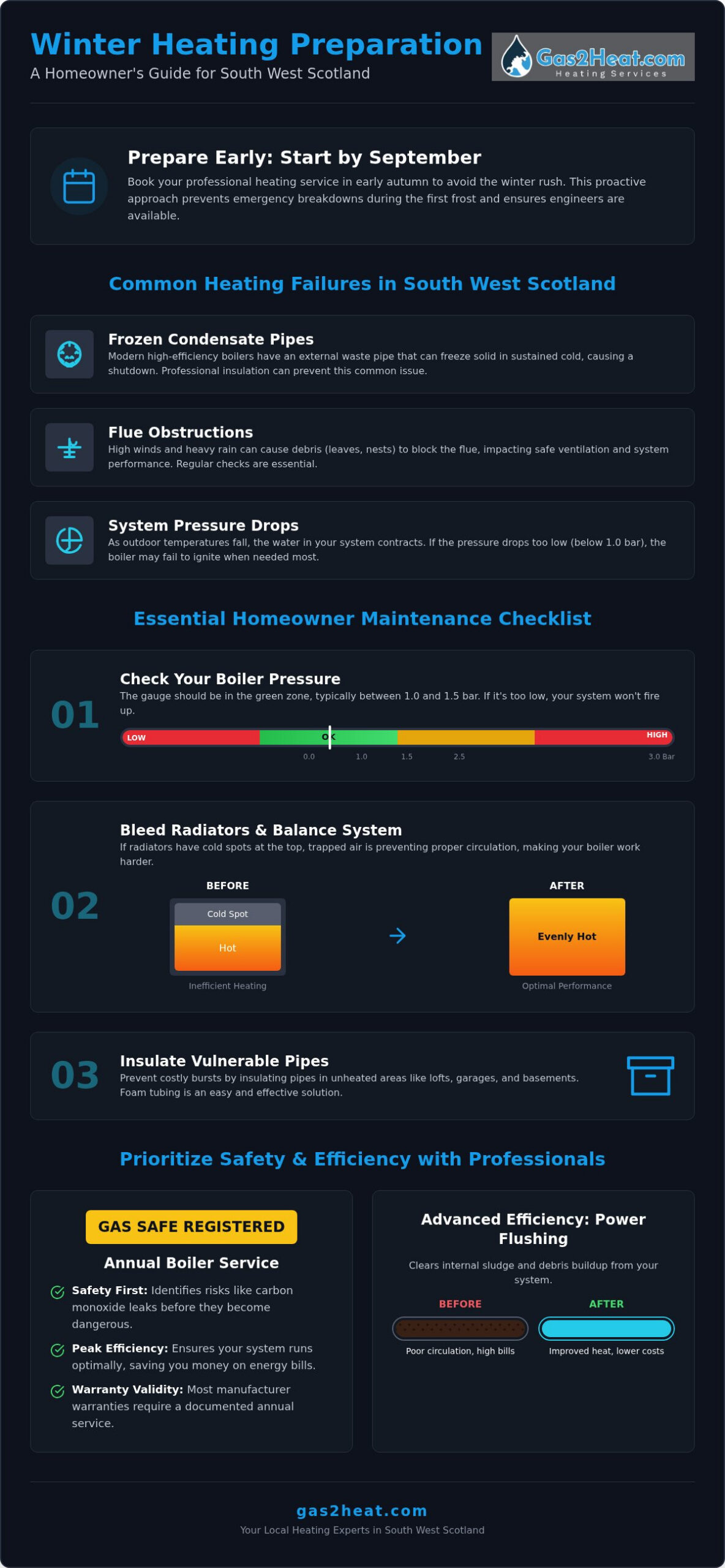
Local conditions in South West Scotland often lead to specific technical failures that homeowners can avoid with the right preparation. Some of the most frequent issues include:
- Frozen Condensate Pipes: Modern high-efficiency boilers produce waste water that travels through an external pipe. In the Borders, sustained freezing temperatures often cause these pipes to ice up, leading to an immediate boiler shutdown.
- Flue Obstructions: High winds and heavy rain characteristic of the region can sometimes displace flue terminals or cause debris buildup, affecting safe ventilation.
- System Pressure Drops: As the external temperature dips, the water inside your system contracts. If your boiler isn’t topped up to the correct levels, it may fail to fire up when you need it most.
Addressing these regional risks through professional servicing, including the drainage and plumbing expertise of CH Enviro, ensures your plumbing infrastructure remains resilient regardless of how harsh the Scottish winter becomes.
Essential Boiler and Central Heating Maintenance
Maintaining your heating system is the most effective way to avoid emergency call-outs during a cold snap. While some tasks require a professional, homeowners can perform a basic five-step health check to get their winter heating preparation Scotland moving in the right direction. Start by checking your boiler pressure; it should typically sit between 1.0 and 1.5 bar on the pressure gauge. If it’s too low, your system won’t fire up. You should also perform a visual inspection of your external flue and vents to ensure no debris or bird nests are blocking the airflow. Finally, test your heating controls and timers now. Don’t wait for a sub-zero night to discover your thermostat isn’t communicating with the boiler.
The Critical Importance of an Annual Boiler Service
A professional inspection is the only way to guarantee your system is safe and operating at peak performance. Securing expert boiler servicing in Moffat is about more than just a quick check. It’s the foundation of your winter safety. A Gas Safe registered engineer examines internal components that you cannot see, such as the heat exchanger, burner, and seals. These checks identify microscopic cracks or carbon monoxide risks before they become life-threatening. Additionally, most manufacturer warranties require a documented annual service to remain valid. Regular maintenance ensures you don’t lose that financial protection if a major part fails in the future.
Bleeding Radiators and Balancing the System
If your radiators have cold spots at the top, they likely have trapped air. This prevents the hot water from circulating fully, forcing your boiler to work harder and increasing your bills. You can resolve this by using a radiator key to bleed the air until water begins to trickle out. If you notice “cold spots” at the bottom of the radiator, this often signals a buildup of internal sludge, which may require a professional solution. Balancing your system by adjusting Thermostatic Radiator Valves (TRVs) is also essential. It allows you to control the heat room-by-room, ensuring you aren’t wasting energy heating unused spaces like guest bedrooms or storage areas.
Small maintenance steps today prevent large repair bills tomorrow. If you’re unsure about your system’s health, you can book a professional boiler check with a local expert to secure your home for the months ahead.
Advanced Efficiency: Power Flushing and Smart Controls
Advanced winter heating preparation Scotland involves looking beyond the surface of your radiators. Over years of operation, the water in your central heating system reacts with metal pipes to create iron oxide, commonly known as black sludge. This debris settles in the lowest parts of your radiators and pipes, creating a thick barrier that prevents hot water from circulating effectively. Your boiler then runs for longer cycles to reach the desired temperature, which unnecessarily inflates your energy bills. Power flushing is the professional solution to this problem. It uses a high-velocity, low-pressure machine to circulate specialized chemicals through your entire system, stripping away sludge and restoring your pipes to their original efficiency.
By removing these internal blockages, you don’t just save money on gas; you also protect the most expensive components of your heating system. A clean system reduces the physical strain on your pump and heat exchanger, significantly extending their lifespan. Integrating this deep clean with modern controls ensures your system is fully optimized for the 2026 heating season.
Is Power Flushing Necessary for Your System?
You can often tell if your system is struggling by touching your radiators while the heating is on. If the bottom remains cold while the top is hot, sludge has likely settled at the base. Other warning signs include a noisy boiler or a pump that constantly struggles to start. Power flushing removes this debris, which prevents the heat exchanger from overheating or failing. For a deeper look at how this process fits into your long-term maintenance plan, see our guide on improving heating efficiency in Dumfries and the wider Borders region.
Upgrading to Smart Thermostats for Energy Savings
Traditional timers are often too rigid for modern life, leading to heated homes when no one is there. Smart thermostats provide precision control via your smartphone, allowing you to adjust temperatures from anywhere. Features like “geofencing” are particularly useful for residents in Lockerbie or Annan who commute for work. This technology detects when your phone leaves a specific radius and automatically lowers the heating, ensuring you never waste money heating an empty house. Most modern boilers are fully compatible with smart controls, and the installation process is straightforward, providing an immediate return on investment through lower monthly outgoings.
Protecting Your Home’s Plumbing Infrastructure
A high-performing boiler is only half the battle. Your home’s plumbing infrastructure acts as the delivery system for that warmth, and it remains highly vulnerable to the extreme temperatures of a Scottish winter. When water freezes, it expands. This physical change can exert enough pressure to split copper or plastic pipes, leading to devastating water damage once the thaw begins. Your winter heating preparation Scotland must include a thorough audit of every unheated space in your property, from the loft to the garage. Simple preventative measures taken now will save you from the chaos of an emergency plumbing repair during a blizzard.
If the winter chill causes more significant issues like external pipe splits, experts like T.M. Drainage can provide specialized no-dig repairs to restore your system without major excavation.
Don’t forget your outdoor taps. Disconnect garden hoses and shut off the internal isolation valve for external taps if possible. Leaving a hose attached allows water to remain trapped in the faucet. This is a common cause of internal pipe bursts just inside the kitchen or utility room wall, as the ice pressure travels back into the property.
Pipe Lagging and Preventing Frozen Pipes
Insulation is your primary defense. Choose high-quality foam lagging with a minimum thickness of 19mm for pipes in cold areas. In particularly exposed spots, 25mm thickness provides better protection against sustained sub-zero temperatures. Pay special attention to your condensate pipe. If this freezes, your boiler will shut down as a safety precaution. Wrapping this external pipe in weather-proof insulation is a quick, effective fix. If you suspect a pipe has already frozen, turn off the main water stopcock immediately. Use a hairdryer on a low setting or a hot water bottle to thaw the area slowly. Never use a blowtorch or open flame.
Draught-Proofing and Loft Insulation Basics
The success of your winter heating preparation Scotland depends heavily on who you trust with your system. South West Scotland features a diverse range of housing, from traditional stone-built cottages in the Borders to modern detached homes in Dumfries. These properties have vastly different insulation needs and pipework configurations. A local expert understands how the regional climate affects these specific building types. They know exactly where a condensate pipe is likely to freeze in an older Moffat property or how to calibrate a modern boiler for maximum efficiency in a new-build Annan home.
Safety must always be your primary concern. Any work involving gas appliances is legally required to be performed by a Gas Safe registered engineer. This isn’t just a recommendation; it’s a critical safety standard that protects your family from the risks of gas leaks and carbon monoxide poisoning. Professional engineers carry a Gas Safe ID card that lists the specific types of gas work they are qualified to handle. Always ask to see this card before any work begins on your property.
Choosing a Gas Safe Registered Engineer in Moffat
Verifying an engineer is a simple process that provides immediate peace of mind. You can check the Gas Safe Register online to ensure a business is currently licensed. Choosing a local, family-owned specialist like Gas2Heat ensures you receive a personalized service from experts who value their reputation in the community. We focus on transparent communication and efficient scheduling to get your home ready for the cold months without unnecessary delays. If your current system is outdated or beyond repair, you can request a detailed quote for a boiler installation in Dumfries to secure a more reliable heating source for 2026.
Emergency Repair Readiness and Landlord Duties
For those who manage rental properties, winter preparation involves specific legal obligations. Landlords must ensure their tenants are safe by securing annual landlord gas safety certificates. It’s best to complete these inspections before the peak winter season to avoid any lapses in compliance. Beyond legal duties, every homeowner should have an emergency readiness plan. This includes:
- Engineer Contact Details: Keep your local heating expert’s number saved in your phone and displayed in your utility room.
- Stopcock Location: Ensure everyone in the house knows how to turn off the main water supply if a pipe bursts.
- Emergency Kit: Keep torches, spare batteries, and thermal blankets in an accessible location in case of a winter power cut.
Taking these professional steps now removes the uncertainty of the winter months. Booking a priority health check ensures your system is optimized, safe, and ready to perform when the Scottish snow begins to fall.
Secure Your Home for a Worry-Free Winter
A proactive approach to your winter heating preparation Scotland is the most effective way to eliminate the stress of sudden breakdowns and high energy costs. Starting your checks in early autumn ensures your system is fully optimized before the first frost hits. We’ve covered how essential boiler maintenance, internal system cleaning through power flushing, and smart control upgrades create a resilient home. These steps protect your property and ensure your family stays warm throughout the harshest Scottish months.
Our Gas Safe Registered Engineers bring the local expertise required to handle the unique housing stock of South West Scotland. As Moffat-based specialists, we’re proud to serve households across Dumfries, Lockerbie, and Annan with transparent, reliable service. Avoid the winter rush and secure your peace of mind today. Book your expert boiler service with Gas2Heat today and move into the 2026 heating season with absolute confidence. Your warm, efficient, and safe home is just one professional check away.
Frequently Asked Questions
When is the best time to start winter heating preparation in Scotland?
The ideal time to begin winter heating preparation Scotland is in September or early October. Starting during early autumn allows you to beat the peak season rush for engineers in Dumfries and Lockerbie. You can identify minor leaks or pressure drops before they escalate into emergency repairs during a cold snap. This proactive schedule ensures your system is fully optimized and safe before you rely on it daily for warmth.
How can I tell if my boiler needs a professional service before winter?
Look for warning signs such as unusual banging or whistling noises, a pilot light that frequently goes out, or a yellow flame instead of a crisp blue one. If your boiler pressure keeps dropping or your radiators take longer than usual to heat up, it’s time for a professional check. Even without these symptoms, an annual service is essential to validate manufacturer warranties and ensure no carbon monoxide leaks are present.
Will power flushing really lower my energy bills this winter?
Yes, power flushing can significantly lower your energy bills by restoring the efficiency of your central heating system. Over time, black sludge builds up inside your pipes and radiators, forcing your boiler to work harder to achieve the same temperature. By removing these internal blockages, water circulates more freely and heat transfers more effectively. This process reduces the fuel consumption of your boiler and extends the lifespan of expensive internal components.
What should I do if my condensate pipe freezes?
Thaw the pipe slowly using a hot water bottle or by pouring warm, not boiling, water over the frozen section. You’ll usually know it’s frozen if your boiler displays a fault code and shuts down during a freezing night in Annan or Moffat. Once the ice melt allows the water to drain, reset your boiler to resume normal operation. To prevent this from happening again, consider fitting weather-proof foam lagging to the external pipework.
Can I install a smart thermostat on an older boiler system?
Most older boiler systems are compatible with modern smart thermostats, provided they have a standard wired or wireless connection point. Upgrading allows you to control your heating from a smartphone, which is particularly useful for residents in Thornhill or Gretna who want to manage energy use remotely. Our engineers can assess your current setup and handle the smart thermostat installation to ensure seamless communication between the new controls and your existing boiler hardware.
What are the legal gas safety requirements for Scottish landlords in 2026?
Landlords in Scotland must legally secure a Landlord Gas Safety Certificate every 12 months for all gas appliances in their rental properties. This inspection must be performed by a Gas Safe registered engineer who will provide a CP12 record. In 2026, compliance remains a strict requirement to ensure tenant safety. We recommend booking these inspections in late summer to avoid any lapses in certification before the high-demand winter season begins in South West Scotland.
How do I bleed my radiators if they have cold spots?
Turn off your central heating and let the system cool down before you begin. Insert a radiator key into the valve at the top of the radiator and turn it slowly anti-clockwise until you hear a hissing sound. This is the trapped air escaping. Once water begins to trickle out, close the valve firmly. Check your boiler pressure afterwards, as bleeding radiators can cause the system pressure to drop below the recommended 1.0 to 1.5 bar level.
Is underfloor heating efficient enough for the Scottish climate?
Underfloor heating is highly efficient for the Scottish climate, especially when integrated into your winter heating preparation Scotland plans. Unlike traditional radiators that create hot spots and draughts, underfloor systems provide a consistent, radiant heat that warms the room from the ground up. This allows you to run your boiler at lower temperatures while maintaining comfort. It’s an excellent long-term investment for properties in Castle Douglas or Lochmaben seeking modern, cost-effective warmth.
