
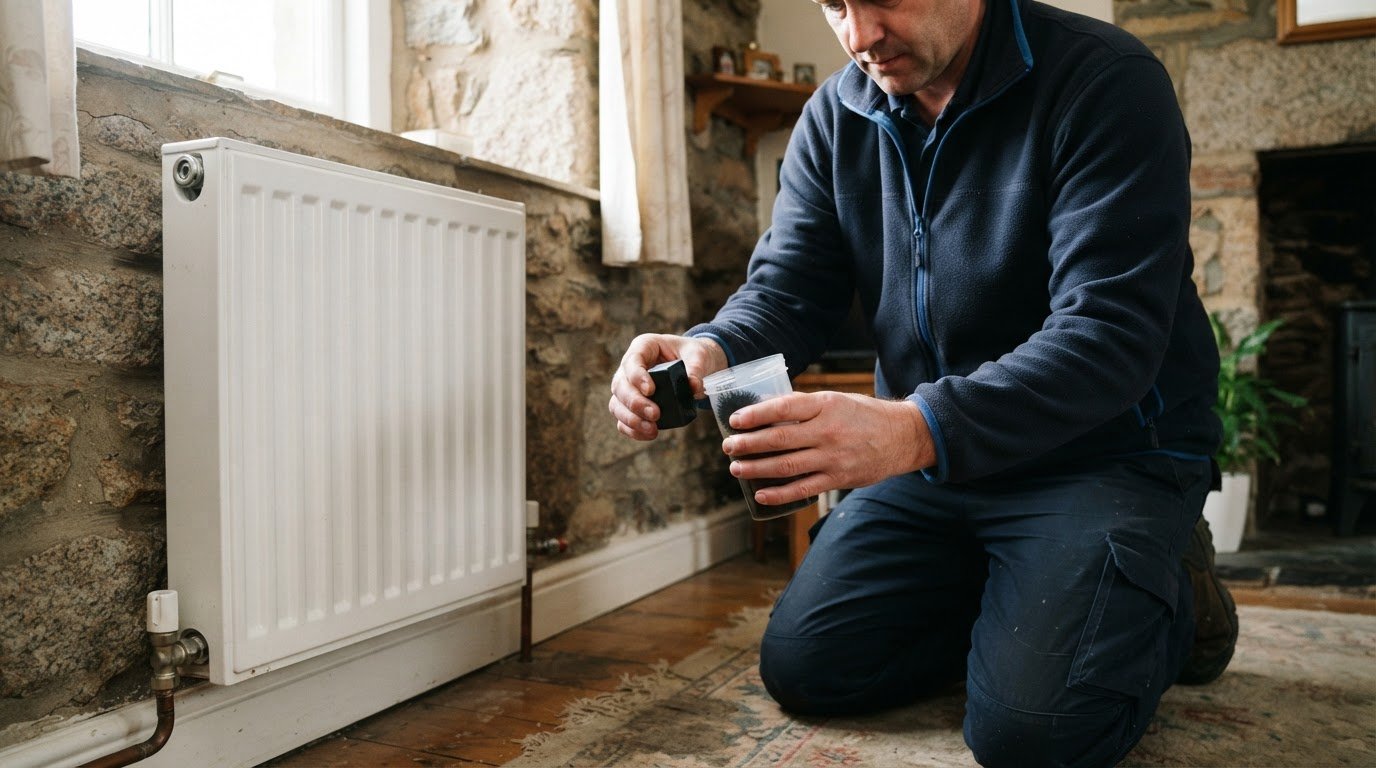
Signs of sludge in central heating and what to look for
Cold spots at the bottom of radiators, slow warm-up, uneven room temperatures, unusual boiler noises and dark water when bleeding a radiator are common signs of sludge in a central heating system. If several occur together, sludge is a likely cause, though a single symptom may have another explanation.
It’s frustrating when your heating doesn’t warm your home evenly, especially when turning up the thermostat makes little difference. Sludge can collect in radiators and pipework, restricting water flow and reducing how effectively the system heats your home.
Read on to learn how sludge affects radiator temperatures and what other signs to look for. You’ll also find out how system water is checked during an annual boiler service, including what an engineer looks for when assessing sludge and protective chemicals. This can help you understand when a cold radiator needs attention beyond bleeding, and what may help keep your heating system working properly.
Key Takeaways
- Notice where a radiator stays cold: temperature patterns can help distinguish a circulation problem from trapped air.
- Dark water when bleeding a radiator, unusual heating noises or repeated uneven warmth can point to sludge.
- An annual boiler service includes checks of system water and protective chemicals that help limit corrosion.
- Learn how inhibitor and magnetic filters help protect heating components, and when persistent symptoms call for further attention.
Checking system water during an annual boiler service
Checking system water can reveal corrosion and sludge before poor circulation affects more of the heating system. During an annual service, an engineer can assess the water and the chemicals that protect radiators, pipework and the boiler.
Effects on Efficiency and Energy Bills
Sludge restricts water flow, so the boiler may have to work harder to circulate heat. Radiators can take longer to warm, rooms may stay cooler than expected, and energy bills may rise. These effects can build gradually as reduced circulation makes it harder to distribute heat around the home.
Blockages and Boiler Damage
As sludge collects in radiators and pipework, it can narrow or block water passages. Restricted flow can contribute to kettling, a noise associated with water heating around the boiler’s heat exchanger. Continued build-up may damage boiler components or cause a breakdown. A blockage can therefore affect more than radiator temperatures: it can also lead to a fault in the appliance.
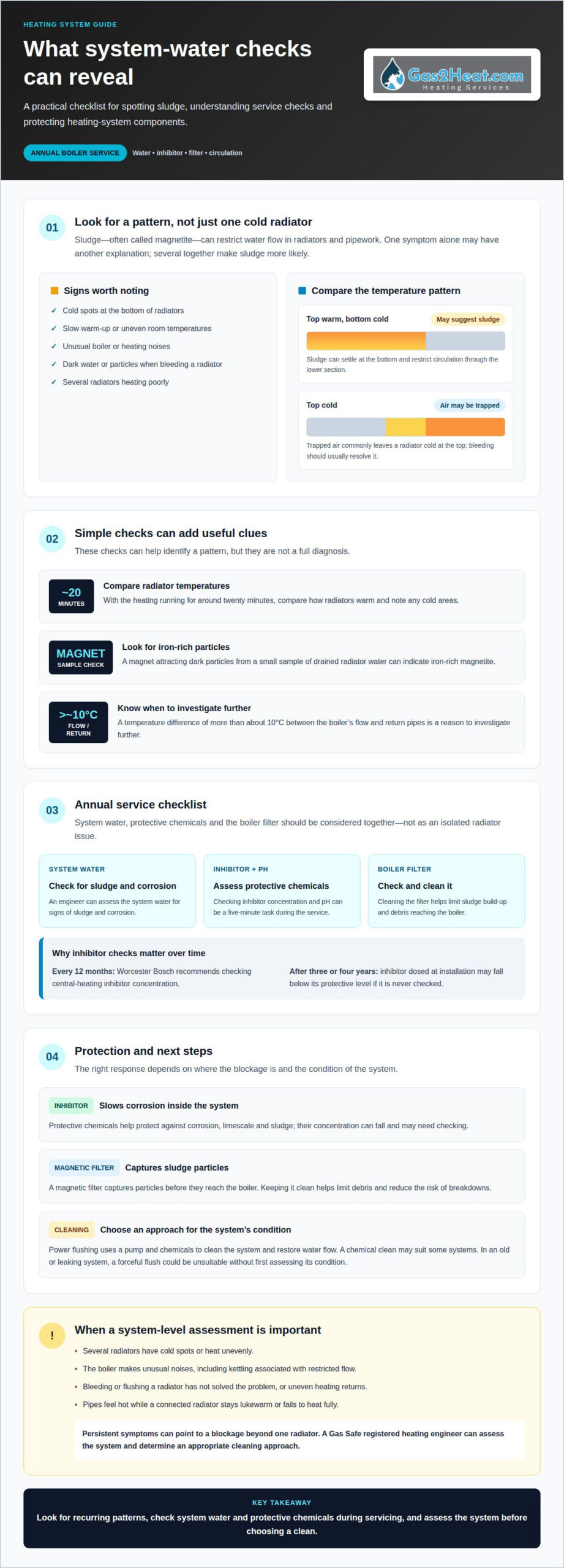
At an annual service, the engineer should check the heating-system water for sludge and assess whether the system has the correct level of protective chemicals. Checking inhibitor concentration and pH can be a five-minute task during the service. Worcester Bosch recommends checking central-heating inhibitor concentration every 12 months. A system dosed at installation may fall below its protective level after three or four years if it is never checked.
The boiler filter also needs attention during an annual service. Cleaning it helps limit sludge build-up, while regular checks of the central-heating water can help reduce the risk of blocked pipes and breakdowns. An engineer can assess the water, filter and system together, rather than treating a slow-heating radiator as an isolated problem.
Boiler warranty terms set the conditions for cover, so don’t assume sludge-related damage will be treated like an unrelated component fault. Sludge may also affect home boiler insurance cover, potentially leaving repairs uncovered after a breakdown. Keep up with servicing and ask for the system-water findings to be explained alongside any recommended work.
Is there sludge in my central heating system?
Sludge, often called magnetite, is dark material formed when water reacts with metal in radiators and pipes. A combination of symptoms and simple checks can help distinguish it from other faults.
Distinguishing Sludge from Other Heating Faults
Sludge can restrict circulation, while trapped air commonly leaves a radiator cold and may be resolved by bleeding it. A faulty pump can also disrupt circulation, so one cold radiator alone doesn’t identify the cause. Look for a pattern: cold spots across several radiators, dark particles in radiator water or persistent poor heating are stronger signs of sludge than an isolated cold radiator.
DIY Magnet and Temperature Checks
With the heating running for around twenty minutes, compare how radiators warm and note any cold areas. A magnet attracting dark particles from a small sample of drained radiator water can indicate iron-rich magnetite. These checks are clues, not a full diagnosis: a temperature difference of more than about 10°C between the boiler’s flow and return pipes is a reason to investigate further.
Inhibitor chemicals slow corrosion inside the system and help protect against limescale and sludge. Their protective concentration can fall, so a heating engineer can check the inhibitor level and pH. A magnetic filter captures sludge particles before they reach the boiler; keeping it clean helps limit debris and reduce the risk of breakdowns.
Power flushing uses a pump and chemicals to clean the system, break down sludge and restore water flow. It isn’t always the only option: the method depends on the build-up and the system’s condition, and a chemical clean may suit some systems. In an old or leaking system, a forceful flush could be unsuitable without first assessing its condition. An engineer should determine the appropriate approach before cleaning begins.
Call a Gas Safe registered heating engineer if several radiators have cold spots, the boiler makes unusual noises or flushing a radiator hasn’t solved the problem. A persistent blockage may need a system-level assessment rather than repeated radiator bleeding.
Radiators that are hot at the top and cold at the bottom
A radiator that warms at the top but stays cold below may have sludge restricting water flow. Compare several radiators, as one cold area alone doesn’t identify the cause.
Uneven Heat Across Radiators
Sludge can settle at the bottom of a radiator and block water from circulating through its lower section. The top may stay warm while the bottom remains cold, or distinct cold spots may appear across the panel. Check whether the same pattern occurs on other radiators. Several affected radiators suggest a wider circulation issue rather than one isolated problem.
Restricted Heating in Radiators and Pipework
Sludge can also collect at low points in pipework, including tight bends, restricting flow before water reaches a radiator. Pipes may feel hot while the connected radiator stays lukewarm or fails to heat fully. If radiators take a long time to warm or never reach the required temperature, restricted circulation is one possible explanation.
Compare the pattern with trapped air. Air commonly leaves a radiator cold at the top, and bleeding it should usually resolve the problem. Sludge more often creates cold spots at the bottom. If bleeding doesn’t improve the temperature, or uneven heating returns, repeated bleeding won’t clear sludge from the system.
A radiator flush can help address sludge concentrated in one radiator. But if cold spots remain, or several radiators and sections of pipework heat poorly, the obstruction may extend beyond that unit. A system assessment can establish whether cleaning needs to cover more of the pipework and radiators.
Power flushing uses a pump and chemicals to clean the central heating system and restore water flow. It may be considered when sludge affects multiple radiators or a local radiator flush hasn’t solved the problem. The system’s condition and the locations where sludge has settled help determine the appropriate cleaning method.
Note which radiators have cold bottoms and whether the pattern changes after bleeding. These observations help distinguish a local radiator issue from restricted circulation across the heating system.
Common signs of sludge in a central heating system
Sludge can affect the boiler, radiators and circulation in different ways. Look for several clues together rather than relying on one symptom to identify the cause.
- Unusual noises: Gurgling, whistling, popping or kettling can accompany restricted water flow around the boiler and heating system.
- Repeated bleeding: Needing to bleed radiators more often may indicate a developing circulation problem. Bleeding removes air, not sludge.
- Hot pipes, cold radiators: If radiator pipes heat up but the radiator stays cold, water may not be circulating through it properly.
- Dark radiator water: Brown or black liquid released during bleeding can indicate sludge and magnetite in the system.
- Pump problems: A leaking or failing boiler pump can be another warning sign, particularly alongside cold radiators.
- Dirt inside boiler parts: Debris found inside components during removal or replacement can point to sludge circulating through the system.
Each clue can have other causes, so consider the overall pattern. Two or more signs together make sludge a more likely explanation than one isolated symptom. For example, repeated radiator bleeding alongside cold radiators and dark water gives an engineer several indicators to investigate.
A magnetic filter captures sludge particles before they reach the boiler, but it doesn’t clear existing build-up from radiators and pipework. Inhibitor helps slow corrosion, while a power flush may be used to clean a system affected by sludge. The right response depends on where debris has collected and how widely circulation is restricted.
If several symptoms persist, or a radiator flush hasn’t resolved cold spots, arrange an assessment before the blockage causes further disruption. Book a power flush when system cleaning is needed to remove sludge and restore water flow.
Gas2Heat.com Ltd: Underfloor Heating Installation
Gas2Heat.com Ltd can help when sludge symptoms point to a heating fault that needs professional attention. A boiler service includes checking system water, while boiler repairs address faults affecting boiler operation. Sludge should be assessed and dealt with as a heating-system issue, not treated as a reason to install underfloor heating.
If you’re planning a broader change to how your home is heated, Gas2Heat.com Ltd also provides underfloor heating installation. Boiler installation is another option when you’re replacing an appliance, rather than a substitute for investigating cold radiators or restricted circulation. Choosing the right work depends on whether you need maintenance, a repair or a heating upgrade.
For help deciding on the next step for your heating system, contact Gas2Heat.com Ltd.
Make your next heating decision with confidence
Recurring heating trouble is useful information, not just an inconvenience. Record when it starts, whether it returns after the system has been off and which rooms are affected. Note any recent changes to heating controls and what service work has been done. This gives an engineer a clearer starting point and helps avoid repeating fixes that haven’t addressed the cause.
The signs of sludge in a central heating system can point to a problem that needs attention, but decisions about cleaning or repair should reflect the system’s condition. A clear record of symptoms helps focus the next conversation and supports a practical plan for maintaining your heating. Keep your notes with your boiler service information so they’re available when needed.
Gas2Heat.com Ltd can help you consider the next step for your boiler and heating system. Contact Gas2Heat.com Ltd for help and take a clear next step towards reliable heating at home.
Frequently Asked Questions
Why are my radiators cold?
Radiators can stay cold because trapped air, sludge, a closed valve or poor circulation stops hot water reaching them. If one radiator is cold at the top, trapped air is a common cause, and bleeding may help. If several radiators remain cool or heat unevenly again afterwards, note which rooms are affected. That pattern can help an engineer narrow down the fault.
Can flushing radiators help improve efficiency?
Yes, flushing can improve circulation when debris or sludge restricts water flow. A radiator flush addresses build-up in that radiator, while a power flush cleans the wider heating system using a pump and chemicals. The appropriate method depends on how far the debris has spread and the system’s condition. Flushing won’t fix unrelated faults, such as a faulty valve.
How can you prevent sludge building up in the first place?
Reduce the risk of build-up by maintaining the system’s protective inhibitor, keeping the boiler filter clean and including water checks in regular servicing. Inhibitor slows corrosion, while a magnetic filter captures particles before they reach the boiler. After heating-system work or water loss, the system’s protection may need attention. An engineer can assess the inhibitor level and filter condition as part of system maintenance.
What is radiator sludge?
Radiator sludge is dark debris, often called magnetite, formed when system water reacts with metal in radiators and pipes. It contains rusted or dissolved metal particles that can circulate through the heating system before settling in areas with low flow. Unlike trapped air, sludge is solid contamination. It can restrict water movement through radiators, pipework and boiler components.
What are the common signs of sludge in a central heating system?
Look for a cluster of symptoms, such as dark water when bleeding a radiator, repeated bleeding or rooms that heat unevenly. Gurgling, whistling or kettling noises can also accompany restricted circulation. A pump leak or dirt found inside boiler parts during a repair adds another clue. Several signs together are more informative than one cold radiator alone.
Why do radiators get cold spots at the bottom when heating sludge builds up?
Sludge particles settle in low points, including the bottom of radiators, and can obstruct water flow through that section. The upper panel may still warm while the lower area stays cold, leaving less of the radiator to heat the room. This differs from trapped air, which commonly makes a radiator feel cold at the top.

Leave a Reply
You must be logged in to post a comment.